

With the rise and subsequent embrace of AI technologies in our daily lives, the question of how much AI distorts perceptions of reality is a frequent topic. In Yeon Sang-ho‘s latest, Paradise Lost (Sillagwon), the film explores the use of such technologies as a tool for processing grief after a bus full of kids goes missing, with some turning up dead. Fiction is meant to be an escape, but when reality threatens to consume everything one mother holds dear, how far can she be pushed before finally letting go?
Paradise Lost sets the scene prior to the kidnapping. Tiny details in the dialogue paint a picture of the young Ryu Sun-woo, with information that becomes relevant much later.
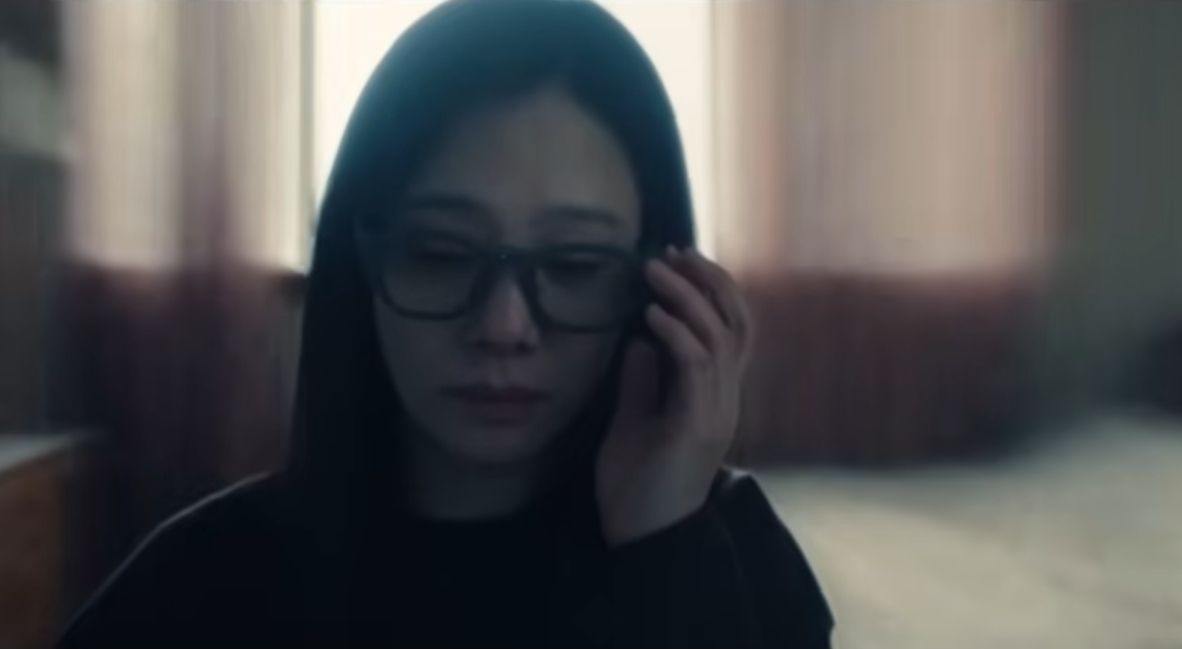
As a single mother, Ryu So-young (Kim Hyun-joo) does her best to parent, but is stretched thin. Once he, along with the other children, goes missing on their way to camp, the guilt that mounts in So-young is so thick that it’s practically suffocating.
Yeon Sang-ho tackles the subject of AI in Paradise Lost as a tool to navigate (or hold onto) grief.
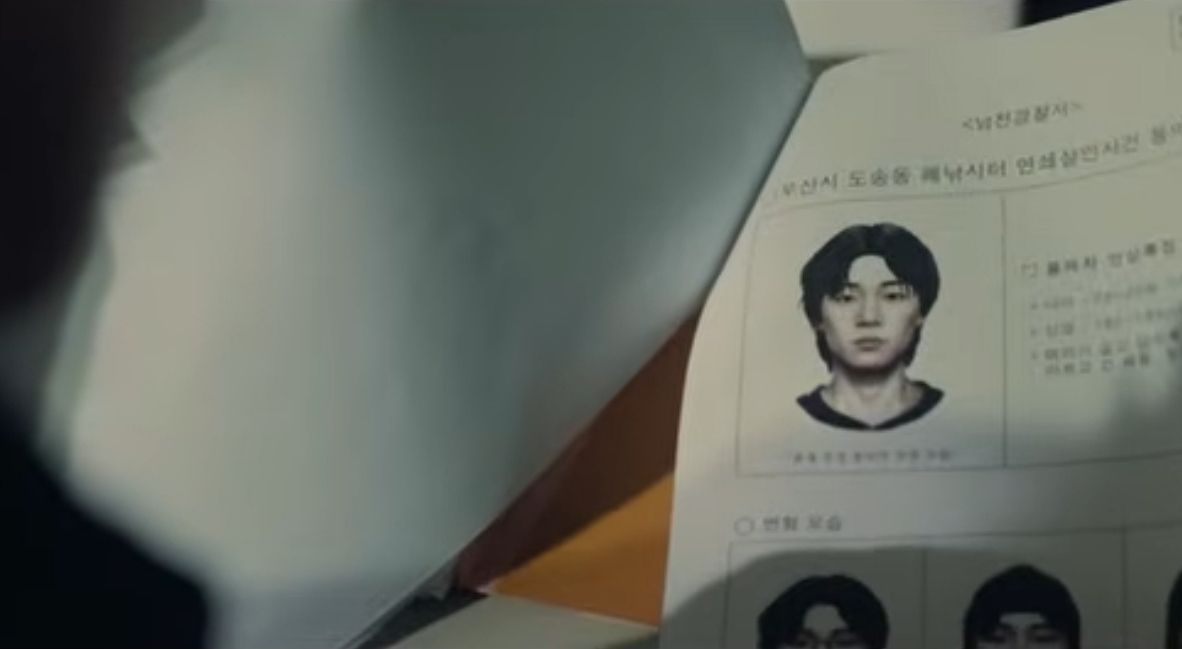
The details of the kidnapping are filled in with news pieces and footage compiled of the grieving parents. In an effort to help the parents grieve the loss of their children, a technology company creates the ‘Children of Paradise’ program, using details gathered by the parents to reconstruct the child to an eerie degree. It’s this specificity that allows Ryu So-young to live a life with an AI version of her ten-year-old son, and nine years later, that illusion of familial domesticity shatters when her son (Bae Hyun-sung) is found alive and not what she had ever envisioned.
Yeon Sang-ho is no stranger to exploring various aspects of the human psyche. By taking a fairly realistic scenario and using AI as a form of grief therapy, Paradise Lost shows how So-young’s interactions with her AI son and her real son illustrate how reality can blur with this technology in practice.
Her inability to let go is relatable, but unhealthy, and the people in her life go every which way to tell her so. But when her Paradise is literally available just by pressing a button, how could she possibly let go? It’s a temptation unlike any other.
Tonal twists cause some minor whiplash, but the heaven vs. hell dichotomy is clearer for it.
As So-young, Kim Hyun-joo is perfectly heartbreaking as the still-grieving mother. Her love for her son is palpable, and how she opens up around her AI son is telling. Even though so much time has passed, her So-young is happier clinging to a fiction, keeping her from moving on. The return of her son provokes confusion, and Kim Hyun-joo matches that energy in her physicality. Yeon Sang-ho and Kim Hyun-joo work together masterfully to convey the clash between her shock, horror, and motherly love.
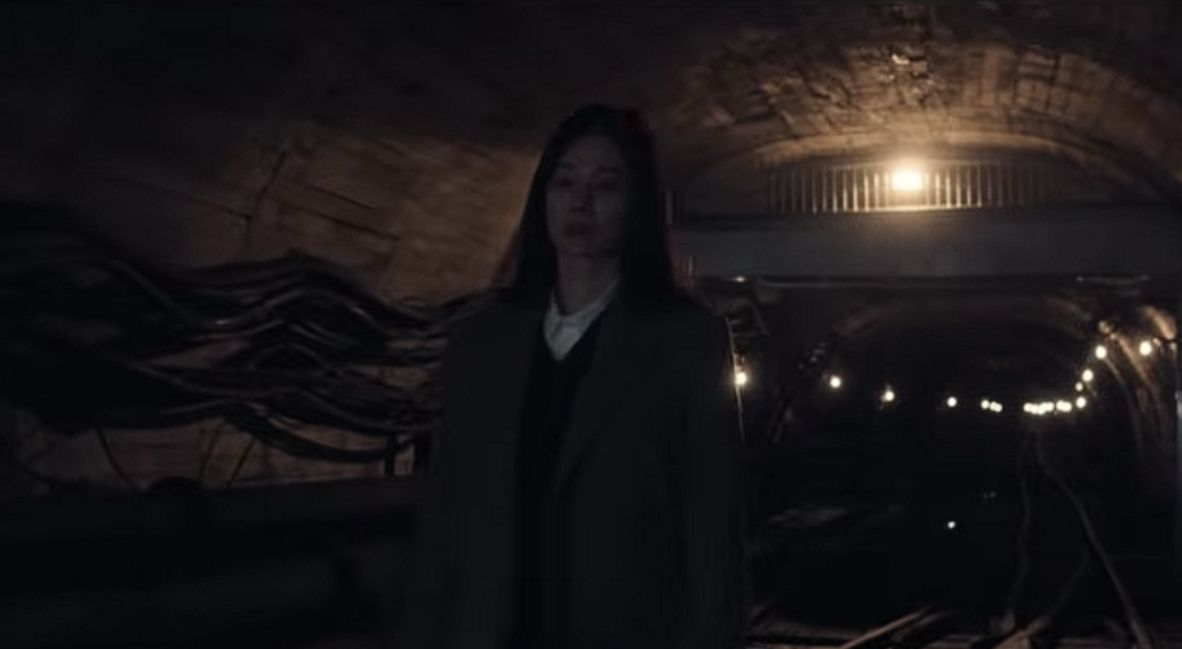
Religion is a familiar treasure trove of inspiration Yeon Sang-ho has drawn from, and he taps into the symbolic realm of heaven and hell once more. Arguably, none of it is subtle. From the mine shaft that leads deeper into the earth to the AI program being titled ‘Children in Paradise,’ the split between the two paths is clear. Whether intentional or not, though, it begs the question: if hell is the reality we cannot escape, then is AI the Paradise promised?
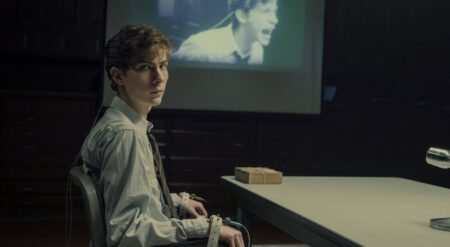
Of course, the argument is stronger when Sun-woo is shown alive. The extremity to which her son, Sun-woo, has changed is depicted through Bae Hyun-sung’s colder, closed-off approach in his performance and the use of darker, earthier colors in his attire. With mussed-up hair and a dirtier visage, it’s as if he had literally crawled out of hell itself. As the film shifts deeper into thriller territory, the dream of having her son back quickly turns into a nightmare of different proportions. And Bae Hyun-sung’s performance propels the character to darker realms.
Paradise Lost is undeniably bleak, but showcases the obscene strength of a mother’s love.
The shift from a more standard crime drama to the thriller genre is a bit sudden, creating tonal whiplash that eventually dissipates. Shocking twists both strengthen and undermine the story, with some characters meeting unexpected ends while others, set up for something bigger, end up inadvertently underwhelming. Still, once the tension and turmoil start rolling, Yeon Sang-ho finds himself in comfortable territory and does what he does best there.
While lacking subtlety, Paradise Lost bleakly depicts a mother’s love and the messiness of grief coupled with newer reality-blurring technologies. As a frequent experimenter with genre, Yeon Sang-ho never ceases to produce stories that will have audiences talking, and Paradise Lost will certainly have people debating which path, perhaps, they might have chosen in the end.
Paradise Lost had its world premiere at the 2026 Toronto International Film Festival.
Paradise Lost
-
Rating - 7.5/107.5/10
TL;DR
While lacking subtlety, Paradise Lost bleakly depicts a mother’s love and the messiness of grief coupled with newer reality-blurring technologies.