


A seemingly ordinary grocery run turns weird in Harrison Atkins’ Sour Minnows when two men come upon six individuals in the middle of the road licking the pavement. It’s a jarring image, one that sets the tone for a baffling ride that asks who really is in control when you’re feeling outside of yourself. This genre-bending flick is not an easy watch by any means, likely to confound audiences that aren’t its primary target. There’s no denying that there’s something fascinating here, and you really can’t and shouldn’t look away when you dive into this lo-fi, subtly cosmic venture.
Set in Los Angeles, Sour Minnows takes its time in revealing what exactly might be happening. Ricky (David Brown) and Tepper (Chase Williamson) are two roommates with a seemingly okay relationship. Their lives irrevocably start to change after witnessing men mindlessly licking the road, and yet neither is wholly aware of how they are evolving. There’s an undercurrent of anxiety and dread that is fostered through quick cuts and playing around the surreal underbelly of seemingly innocuous things, adding more questions the further we go.
Lost flashes in time, sudden slips into a beautifully tinged bluescape, a film within a film that speaks to something larger than life – these instances flesh out the deteriorating mind, with shifts in perspective punctuating that something larger is at play in these characters’ lives. From a newscaster’s first ominous monologue located square in the middle of an overgrown yard to Ricky’s friend, Aura (Suzanna Son), staring into the void in a mall dressing room, hints are everywhere that the reality we’ve been introduced to is nothing we can expect.
Sour Minnows perfectly embodies the chaos that comes with dissociation.
It’s understandable that Sour Minnows is in the Cheval Noir category out of Fantasia because it isn’t easy to pin down. Part of this is in how it plays with genre, flitting between romance, existentialism, comedy, horror and sci-fi. The emergence of The Yellow Thing as a factor in the story lends itself a cosmic sensibility, amplifying Ricky’s growing sense of smallness in relation to the loss of control and reality around him. With all of these varying factors, there’s no way to truly define what Sour Minnows is.
This reality narrows the scope of the intended audience, which isn’t necessarily a negative. Those who will really click with Sour Minnows will absolutely click with it. Some might require more time to be steadily converted, in part because the film demands patience with its pacing, taking a little too long to get to the meat of the matter. With the explanations that come, it offers clarity at the expense of undercutting some of the mystery. Yet, more is thrown into the mix that muddies the waters afterward, which is both a blessing and a detriment to an already busy tale.
Given the many hats Harrison Adler wears here as the director, writer, cinematographer, and editor for Sour Minnows, the experience and passion clearly show onscreen. Economically savvy writing and editing choices help stimulate the natural sense of psychological decline experienced by Ricky throughout the film. That said, some distracting uses of background color (don’t hate me, Yellow Thing) in the earlier parts of the film, while a clear and understandable artistic choice, don’t necessarily work in tandem with the entire visual picture.
David Brown gives us a rightfully confused protagonist, intensifying the existential dread that piles up.
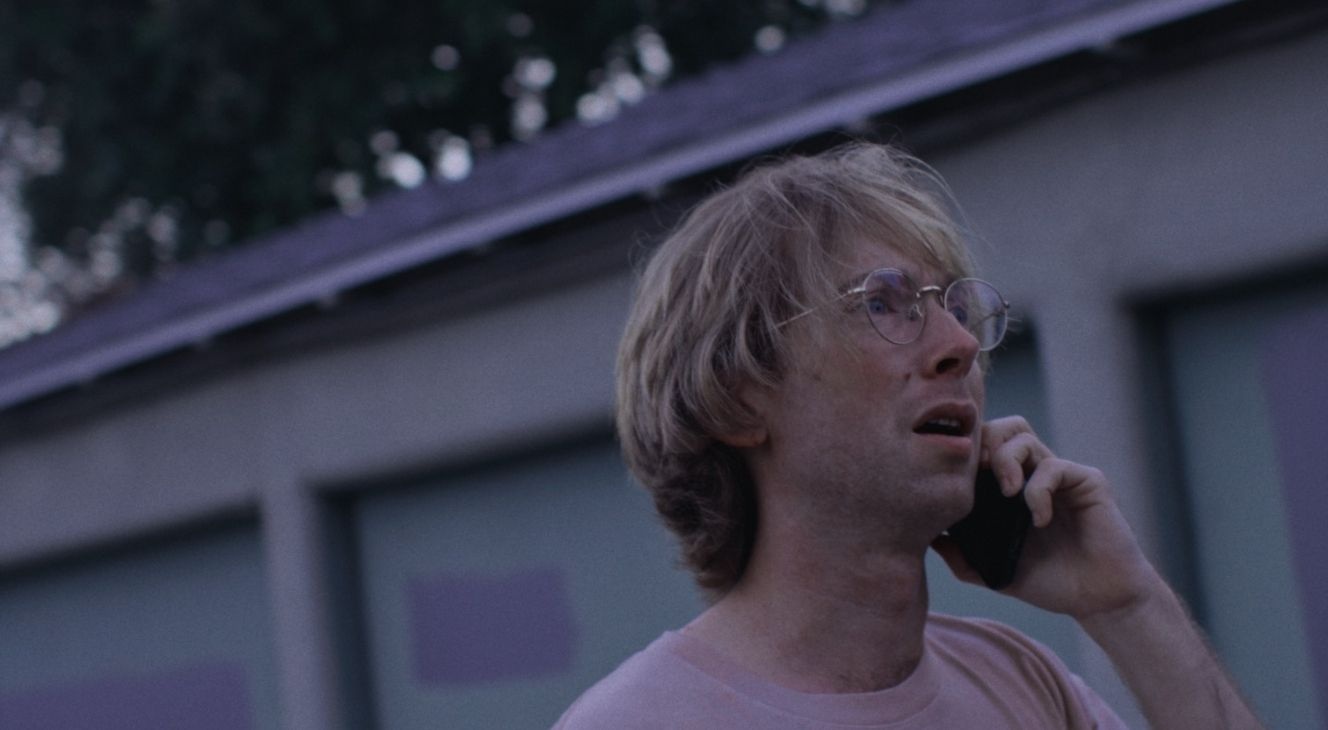
Bringing this all together is how each character moves throughout the film. While it’s debatable whether they are all being impacted by the same phenomenon, each one behaves differently, yet Adler connects the dots to create a proverbial mindfuck. As the protagonist, Ricky, David Brown imbues his character with the right level of confusion and fear, particularly as things get progressively more strange. As he slips further into the cinematic abyss, there’s a sense of hopelessness as he loses control.
Playing opposite him, Chase Williamson’s Tepper becomes progressively more zonked out, creating fascinating energy levels once Tepper and Ricky are in the same room. Similarly, Suzanna Son’s Aura acts like nothing is wrong, even when her behavior becomes less quirky and more concerning. The lack of reaction, although presented in entirely different ways, only serves to amplify Ricky’s own paranoia and tension, and it works well.
Sour Minnows is not going to be embraced by all, and that’s okay. It’s a niche film that ironically defies categorization, making it an intriguing watch when you get down to the nitty-gritty and brush aside some of its ills. In a world where it seems like we’re not fully in control and, in fact, are in the process of losing it, Sour Minnows feels like the natural development to arise. In that sense, the film sets out to do what needs to be done, and even peeling back the curtain can’t save us in the end.
Note: for those who require strobe or light sensitivity warnings, there’s a subtle flickering effect around the 43:39 to 44:15 mark.
Sour Minnows had its world premiere at the 2026 Fantasia International Film Festival.
Sour Minnows
-
Rating - 6.5/106.5/10
TL;DR
Sour Minnows is not going to be embraced by all, and that’s okay. It’s a niche film that ironically defies categorization, making it an intriguing watch when you get down to the nitty-gritty and brush aside some of its ills.