

Klara and the Sun is a total charmer. Director Taika Waititi and co-screenwriter Dahvi Waller’s adaptation of the book by Kazuo Ishiguro doesn’t always tie up its ends, but it’s persistently and pleasantly gleeful in the face of life’s great adversities.
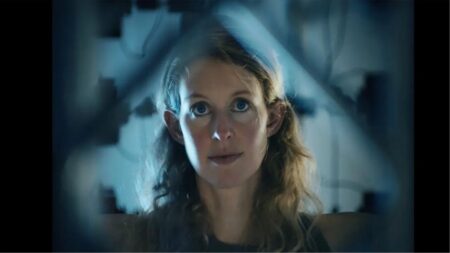
Klara (Jenna Ortega) is an outdated robotic friend model who probably has a chip loose somewhere. She prays to the sun every day to be bought by the right teenager whom she can cherish. Thankfully, that day comes when Josie (Mia Tharia) sees Klara in the shop window. They go home together, but Josie’s mom, Chrissy (Amy Adams), and Melania (Rachel House), the housekeeper, are skeptical about Klara. Chrissy worries whether Klara will be of any use, and Melania worries she’ll be replaced by the robot.
To be clear, Klara and the Sun has some major flaws. It is great at setting up interesting plots but not very good at concluding them. The film raises several themes that it never satisfies by the end. And yet, the power of Klara as a character and Jenna Ortega as a performer is so deeply endearing that the movie’s flaws can be forgiven and a lovely time can be had watching it.
Klara and the Sun questions whether being faulty means that you’re broken.

The crux of Klara and the Sun is whether things need a grand purpose to be valuable, and whether believing in something badly enough can make it real. These themes are well explored on several levels. Klara is a little broken as a robot, Chrissy is a flawed parent, and Josie is sick. Josie had a procedure as a child that was supposed to make her infinitely smarter in every way, but something went wrong that left her smart, but also terribly ill.
Josie’s condition leaves her too smart for her own good, but also highly irritable and quick to exhaustion. Yet, she remains a wonderful and dedicated friend to Klara and her closest neighbor, Rick (Aran Murphy), whom she is in love with. Rick, too, is flawed; he didn’t have the procedure, which makes him a social outcast in Josie’s supposed circles. He builds robot birds just for fun, is clearly quite intelligent, but still can’t compete with the lifted kids.
The movie explores these overlapping cases of fault manufacturing adequately, until it’s time to tie off the ends. Klara and the Sun simply does not. The tension between Klara and Melania is never resolved, Josie and her mother never figure out how to talk to each other, and Rick doesn’t get to share his love back to Josie. It’s quite confusing, honestly, how a movie can set up such a clear theme through each of its characters and choose to ignore it all in the end.
Klara and the Sun explores what it really means to have value in the world.
The same is true of the vaguely anti-capitalist notion of what is valuable in society. Klara is an artificial friend—an older and unserviceable model at that. What is her purpose when real friends are just around the corner? What value do Rick’s birds bring to the world when there are real ones flying by? Can Josie contribute her genius to the world even with her illness?
The movie seems keen on asking these wonderful questions with no desire to interrogate them. Instead, the movie opts for a wide-open ending from which any conclusion can be divined. It’s not as satisfying as it deserves to be, despite being sweet.
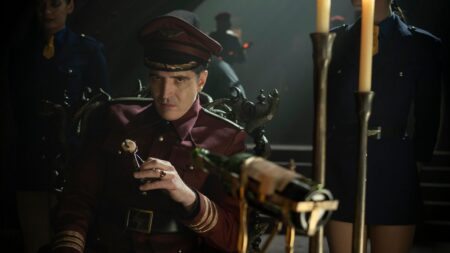
This is largely because the ending is treated like a joke. Natasha Lyonne plays the Store Manager who sells Klara and other similarly dysfunctional robots. She bookends either side of the movie. And while the humor is a great way to start the story, the emotional journey shouldn’t end on a couple of zingers. It cheapens the journey entirely.
The humor deployed undercuts the journey significantly.
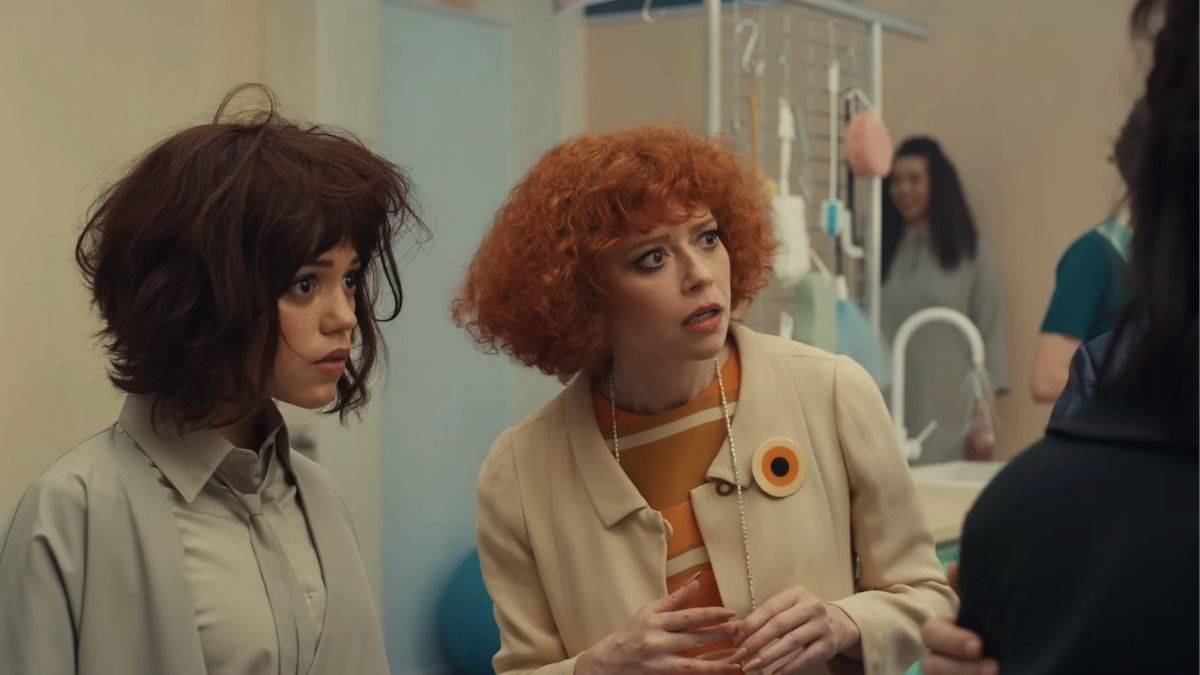
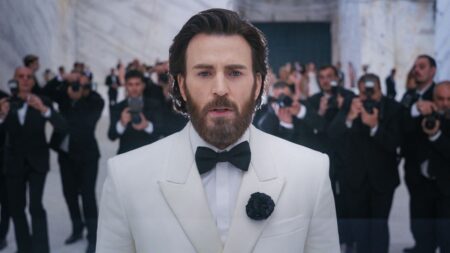
In general, many of the movie’s jokes are cheap and at the expense of people who cannot help it. It peddles some gross stereotypes about socially awkward people. Fortunately, the movie doesn’t lean too far into its dystopia while it’s making its cheap jokes. Klara and the Sun gives you just enough information about its world to keep you from asking too many questions and doesn’t spend the time answering much about why or how the world came to be the way it is. Too much more info or grandstanding about the state of the world would be distracting.
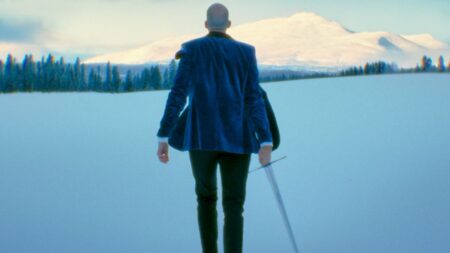
Instead, the movie is insulated to a beautifully decorated house, but exists in wide open and seemingly endless fields. This combination grounds the movie in a single family while also making it feel like Klara and Josie and their family still exist within a larger world around them, isolated as they may choose to be, physically and emotionally.
Klara and the Sun is certainly flawed, but where it charms, it charms hard.
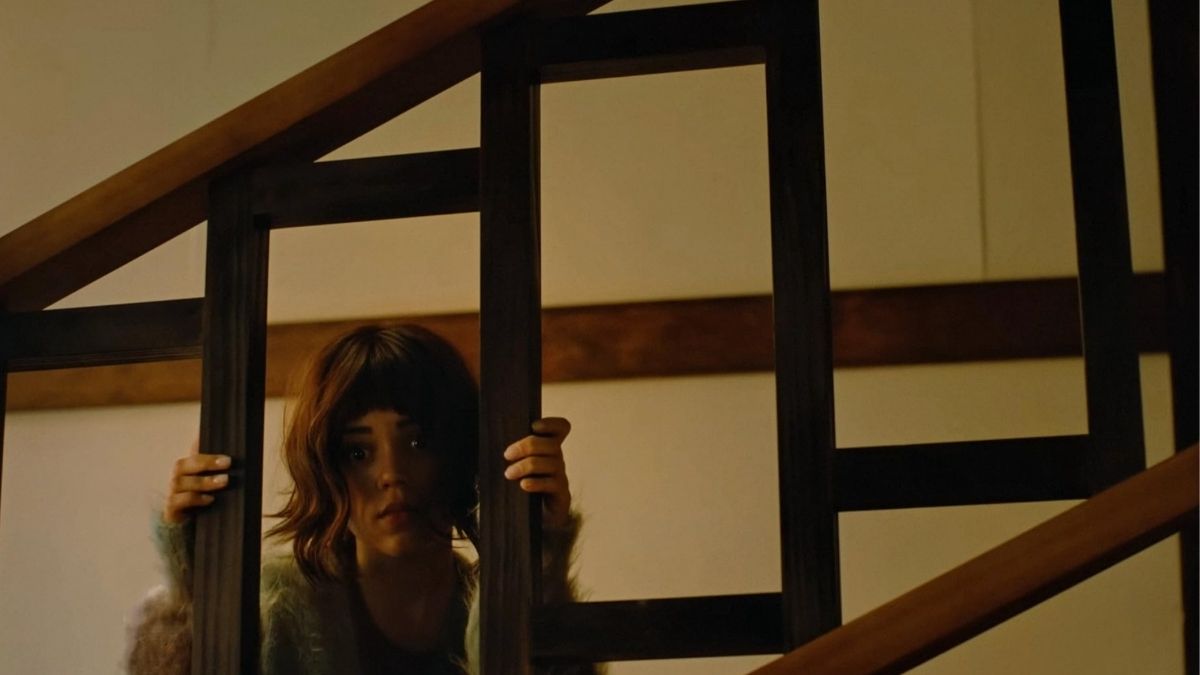
While Klara and the Sun is surely flawed, at least along the way is a standout performance from Jenna Ortega. She is simply excellent as the plucky robot who sometimes stands on one foot for no reason (a bit accompanied by the same lovely editing trick each time). Her constant enthusiastic demeanor is infectious, and her ability to contort her face in so many unique ways speaks volumes with or without dialogue.
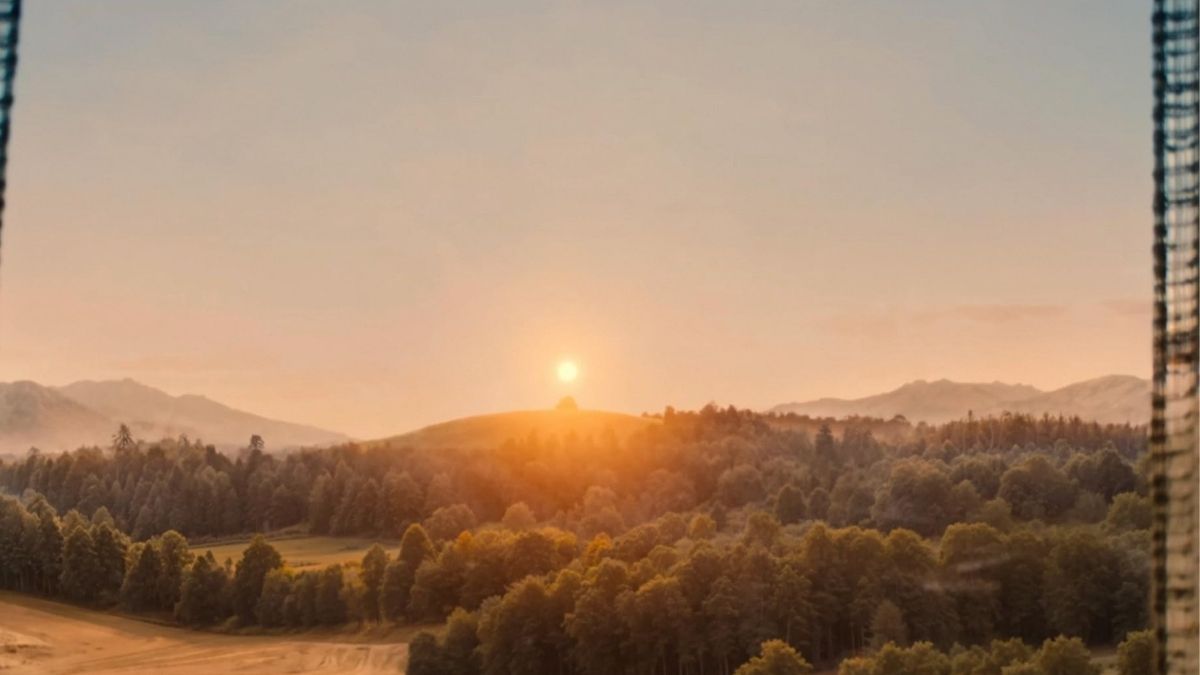
Klara’s ceaseless belief in the sun and its healing powers is beautiful. Every time she turns sunward to pray for her or Josie’s future, you can’t help but believe the sun is listening, no matter how many people tell her it’s not. Her constant belief in things is what makes Klara and the Sun work and feel good in the end, even when so much of the movie feels unresolved. Even the vague ending feels reasonable in this context, although it still doesn’t totally feel satisfying.
Klara and the Sun is certainly flawed, but where it charms, it charms hard, thanks to a standout performance from Jenna Ortega and some well-conceived, if not well-concluded themes.
Klara and the Sun is playing in theaters everywhere October 23, 2026.
Klara and the Sun
-
Rating - 6.5/106.5/10
TL;DR
Klara and the Sun is certainly flawed, but where it charms, it charms hard, thanks to a standout performance from Jenna Ortega and some well-conceived, if not well-concluded themes.