
The promotional material for Wicker, written and directed by Alex Huston Fischer and Eleanor Wilson, is a touch misleading. The trailers promise box-spring creaking, headboard-breaking humor, and a story about a woman finding herself through really good, passionate, and non-exhaustive sex. These things do happen, but they happen early. They are, frankly, a little chaste all things considered. Perhaps it is telling that in an era of sex negative stories and audiences who clutch pearls when people, god forbid, want their backs blown out a bit, even a film promoted for its sex-positive attitude dulls its sensual pleasures to a night or two of comedically shot montages.
Instead, the film pivots to tackle ideas of the boundaries of love, the way in which trust is both earned and forfeited and the fear that tags along with it, and, on top of everything else, slaps some good ol’ fashioned commentary on the patriarchy and a woman’s right to agency. Secretary, this is not.
It’s a lot and somehow remains paper-thin. Based on the short story “The Wicker Husband” by Ursula Wills, there’s a lot of stretching to do. In some cases, like any time Peter Dinklage monologues with such intense gusto that you assume he’s about to break into song, it works. Otherwise, however, there’s no doubt this two-hour film was meant to be a tight 90 minutes. By the time the film ends, the story has worn itself out.
Wicker needed to be stranger, but instead finds itself torn between narrative instincts.
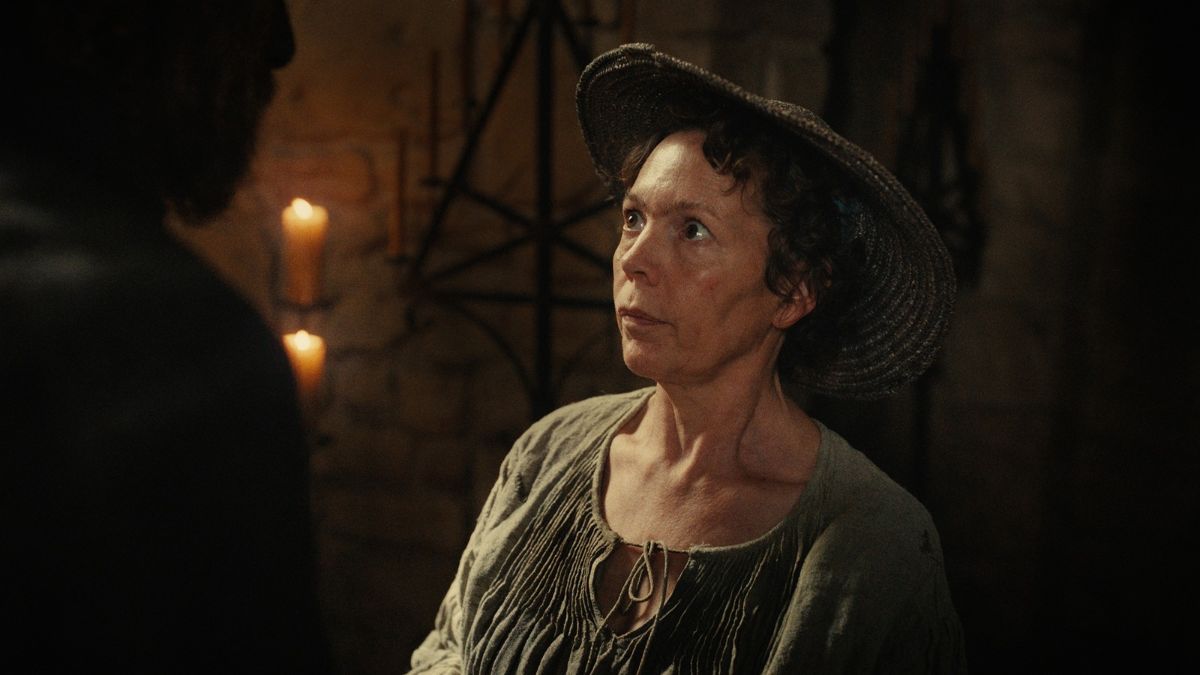
Not to say there’s no fun or joy in Wicker. There’s plenty, and it ends and begins with the always amazing Olivia Colman as the ostracized Fisherwoman who doesn’t adhere to her village’s uptight, gender-normative belief systems. This is played with overt nods, obviously (women are literally collared when they marry), but there are some funny if bleak bits too, especially when a woman who once was referred to as the ‘Doctor’s’ Daughter now goes by ‘The Tailor’s Wife.’
The Fisherwoman, unhappy with how the townspeople treat her and plagued by a looming sense of loneliness despite her best efforts in seeming unbothered, goes to the Basket Weaver (Dinklage) and asks him to make her a husband. He agrees, tells her to show up to the church in a month, and that’s that.
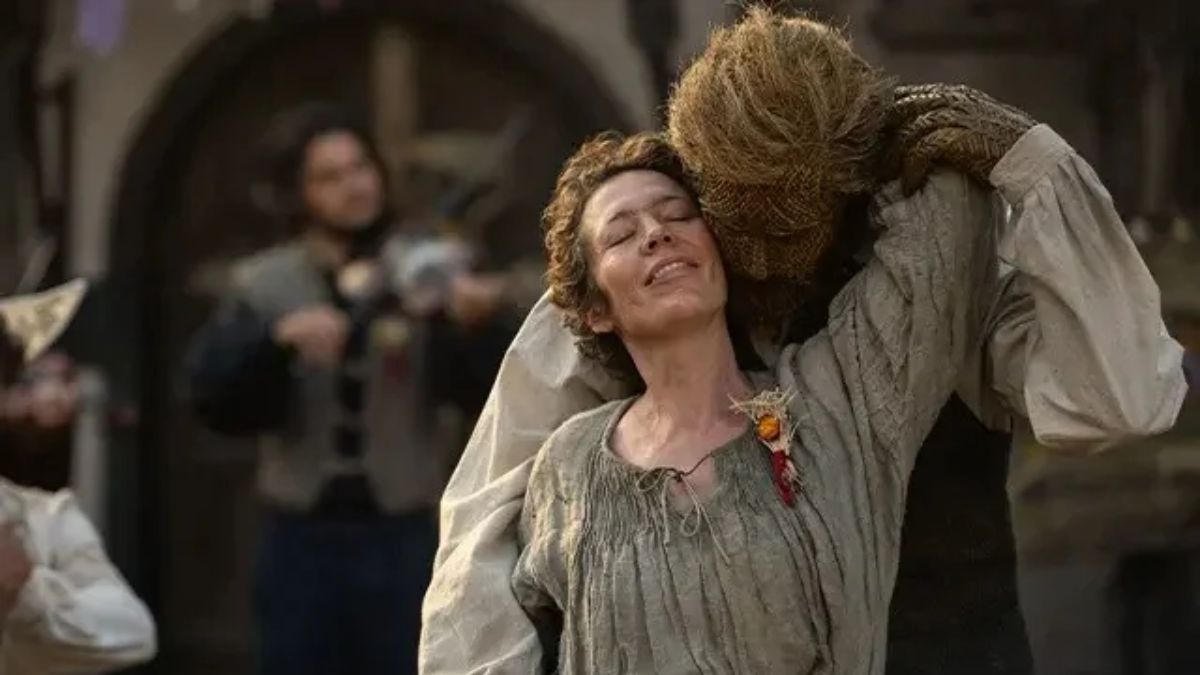
What arrives is an uncanny mix of special effects and Alexander Skarsgård‘s requisite off-kilter charm as the statuesque but soft-spoken Wicker Husband. He arrives at the church, ready to get a little freaky but also fall in love, and the Fisherwoman doesn’t need much persuading. The two take a tumble in the sheets (until daybreak). Then the Wicker Husband takes on household chores, accompanies her to town, and builds a life that’s more than the monotonous, apathetic stroll that the Fisherwoman once assumed was her lot in life. Now, the world has color, and her home has a roof that doesn’t leak.
Olivia Colman and Alexander Skarsgård sell the romance.
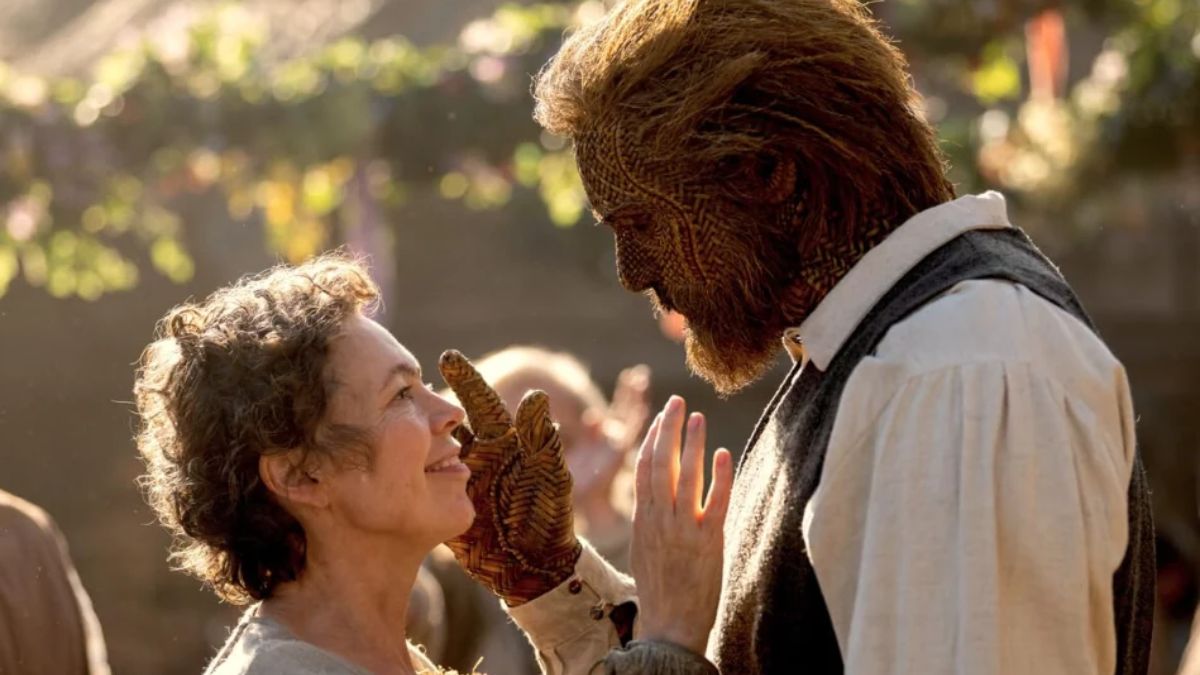
These tender moments shared between the two as they marvel at the life they’ve been suddenly gifted (in more ways than one) are some of the best in the film. Because even if it sells itself as something that it’s not, the first half of the film is a fantastic blend of playfulness and heart, a genuine warmth exuding from Coleman and Skarsgård’s unassuming chemistry.
They play off one another well, especially as Coleman gets to let her walls down a bit as the Fisherwoman’s real insecurities and desires to be held without reproach come to light. Despite the Wicker Husband’s fantastical appearance and the world in which men can be constructed as such, real human pain is buried in their story. Pain over having their trust broken, and the self-inflicted pain of doubt and envy. But when their love story drives the story, the world around them is lit ablaze, brought to vivid life by thoughtful direction and the gorgeous landscapes captured by cinematographer Lol Crawley.
The ensemble is rich with recognizable talent, from the chill of Elizabeth Debicki’s performance to the unrestrained charm of The Other Bennet Sister’s Ella Bruccoleri. Ben Ashenden makes a meal out of the emotionally and sexually repressed Baker, while Nabhaan Rizwan as the Tailor shows just how much this village is lost to the toxicity of gender roles. And Richard E. Grant arrives in a single scene to demonstrate his timeless ability to pull focus.
The ensemble is stacked, but the story spreads itself thin.
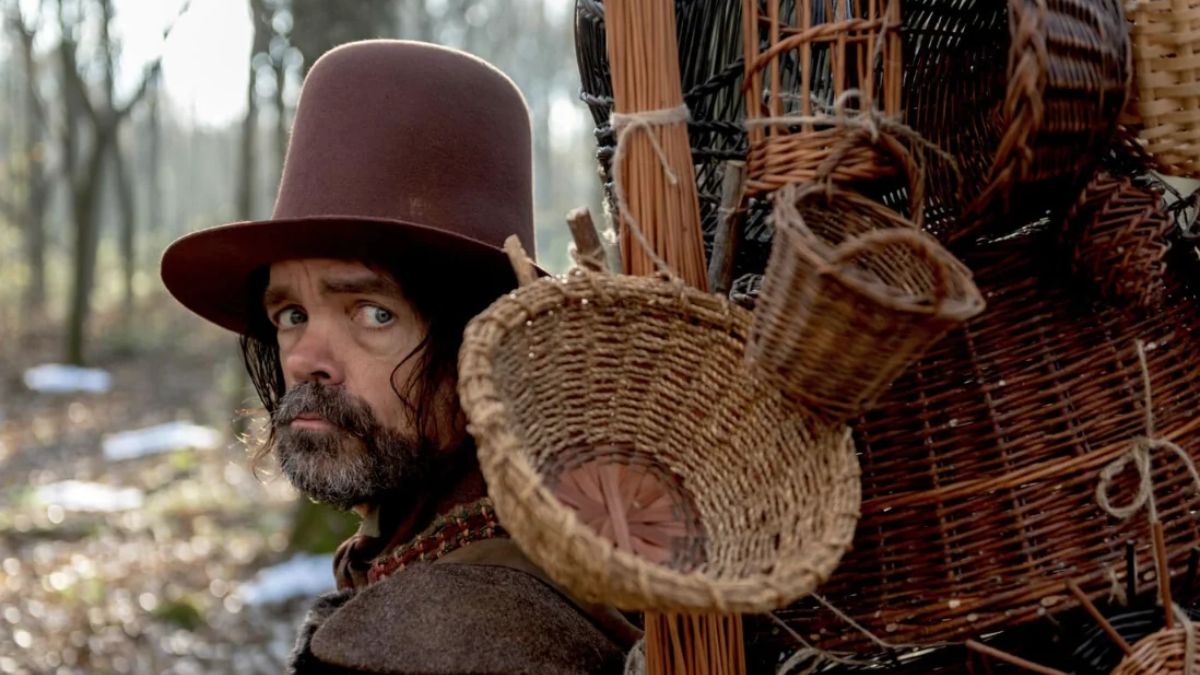
While the ensemble is full of strong actors, that’s where the story starts to thin out. What was already heavy-handed subtext becomes punch-to-the-throat level text. The women of this world are commodities. When a man describes consummating his marriage, he describes it as “spoiling her.” Women are meant to be partners in life but unequal ones, tending to housework and children rather than being allowed to pursue their own interests or aspirations. Their joy hinges on their husbands’ desires.
There’s room for this kind of exploration in a film that focuses on the nature of love and companionship between its leads with such a deft hand. But any delicacy is lost when it pivots to the townspeople, becoming a self-satisfied rumination on the pains of the patriarchy and a woman’s need for self-actualization as the meager population threatens to tear itself apart. By jumping between tones at such a frenetic frequency, the film struggles to find the right balance between being a romantic comedy with heart and a running commentary.
Wicker is fun when it leans into the love story. While it doesn’t push the limits in the way the promo might’ve suggested, there’s enough hearty laughs and subtle development to make the central story a worthwhile one. But it struggles when straying from the main couple, trying and failing to be everything all at once: a romance, a tragedy, a ridiculous romp, and a call to action, when all it needed was to linger a little longer in the afterglow of romance, sex, and all that falls in between.
Wicker is out now in theaters and will be available on digital and VOD on November 24, 2026.
Rating
Wicker is fun when it leans into the love story. While it doesn't push the limits in the way the promo might've suggested, there's enough hearty laughs and subtle development to make the central story a worthwhile one.