

Silent Friend, the latest from filmmaker Ildikó Enyedi, doesn’t look for easy answers. A contemplative meditation on time, our connections–both real and projected onto–with nature, and the need for curiosity for scientific and social gains, the film is a heady, peculiar drama.
Written and directed by Enyedi, the film splits into three eras: 2020, 1972, and 1908. The three stories are less interconnected so much as they layer on top of one another, all centralized by the setting, Marburg University in Germany. At the center is a botanical garden that continuously draws the attention of the towns inhabitants.
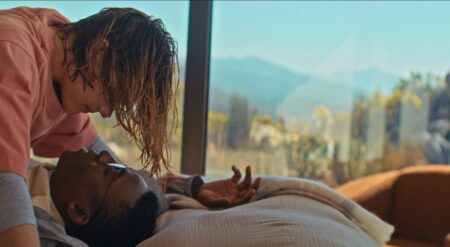
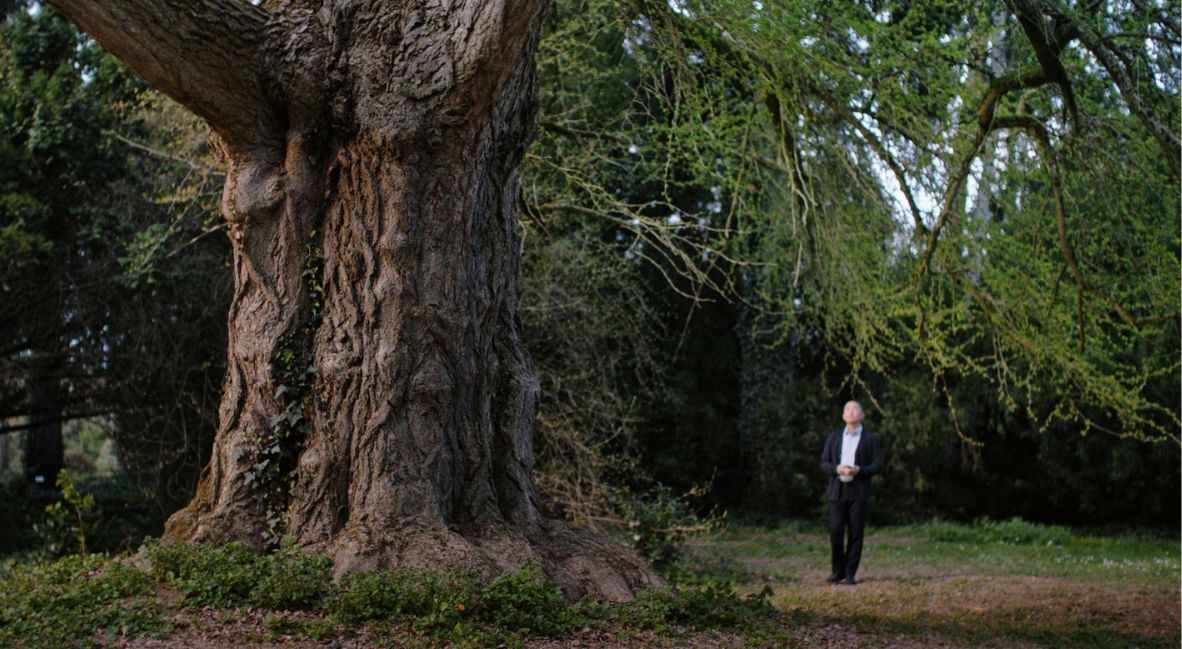
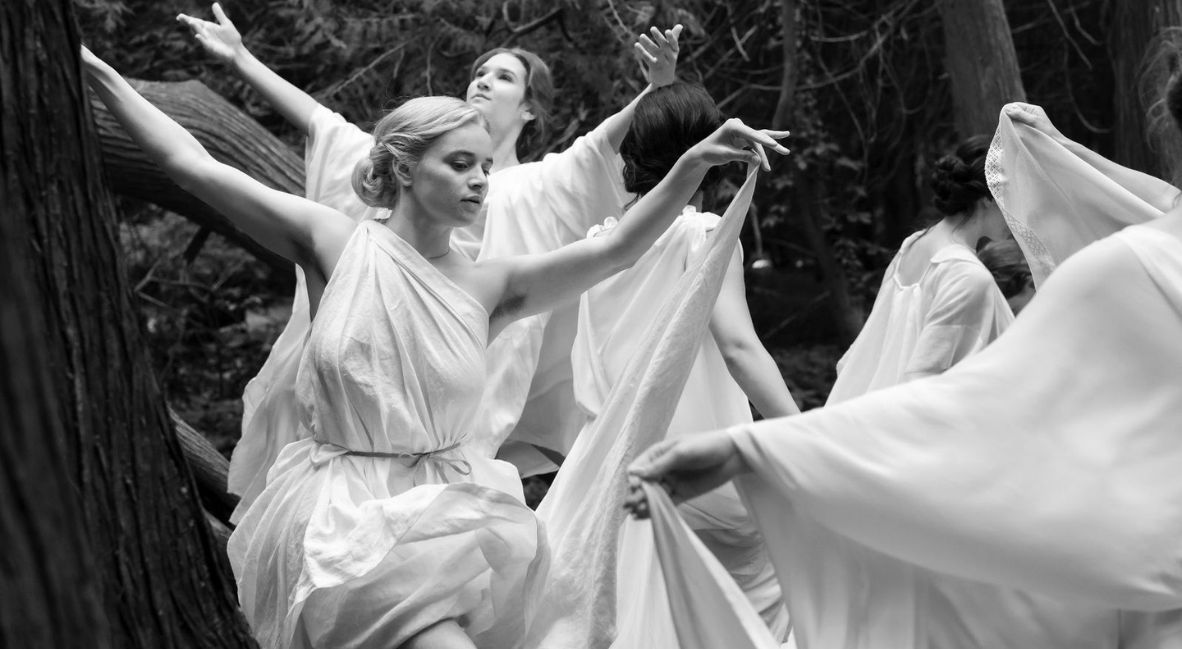
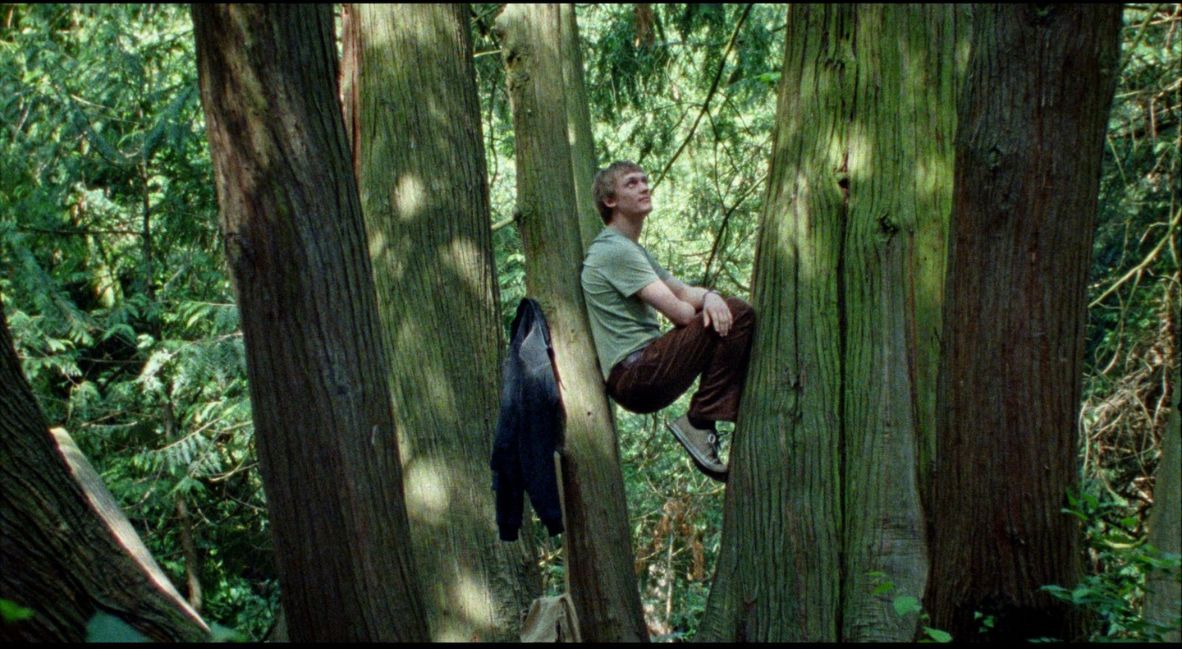
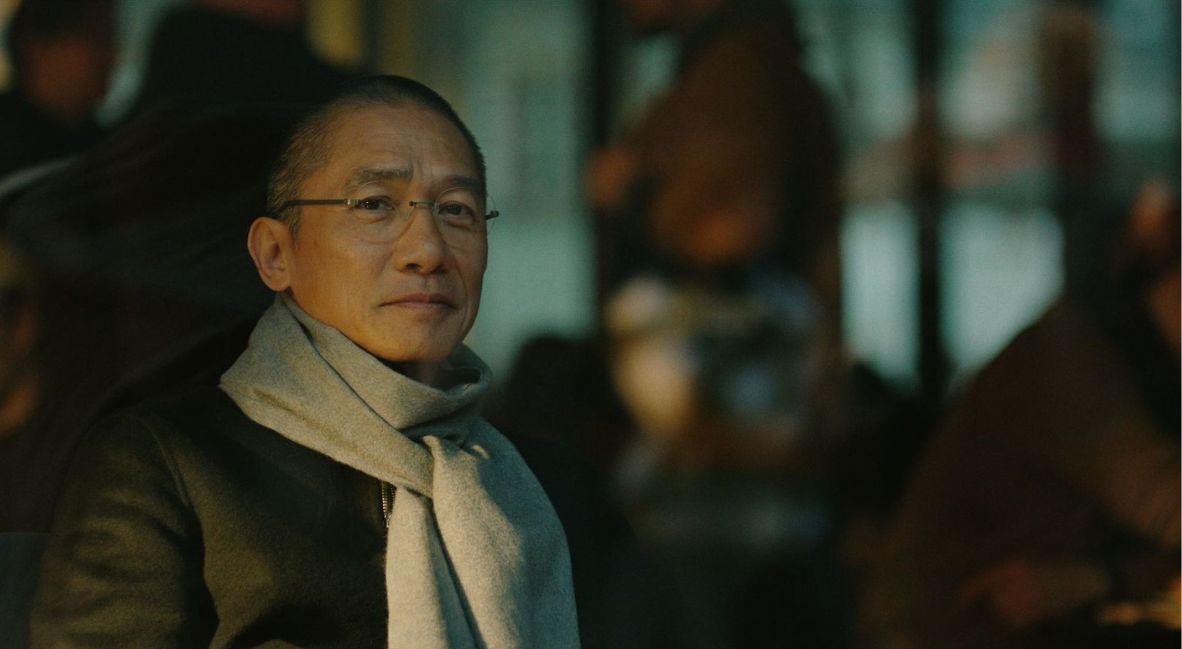
There’s the professor, Tony (Tony Leung Chiu-wai), just as COVID hits, forcing him into isolation. Hannes (Enzo Brumm) a wayward student in the early 1970s, who scrambles to find a way to connect with a crush. Meanwhile, Grete (Luna Wedler) is the first female student at the university at the turn of the century who finds peace amongst nature in contrast to the judgmental and misogynistic gazes she fields at school.
As the film settles into these three epochs and as the characters, however they’re able, try to find meaning in the grandeur of nature and the humanities’ place within it, Silent Friend transcends expectations. It’s not just a film about Tony Leung befriending a gingko tree. Instead, it asks us to question the meaning we assign to things bigger than us. We spoke to Enyedi about the impetus of the film, her reason for casting Tony Leung, and letting curiosity dictate her paths.
This interview has been edited for length and clarity.
But Why Tho: When did you first come up with the idea for the concept of the film, and was it one that was kind of like a long-gestating idea, or one that kind of came to you from something specific?
Ildikó Enyedi: There were animals and plants popping up here and there in my films. So, a wonderful German producer to whom the whole film is dedicated, Karl Baumgartner, once proposed to me, because we just wanted to work together, “Ildikó, why don’t we make a film about plants?” He had seen, for example, a film of mine, Simon, The Magician, which is now in restoration and will be visible soon again, where a potted plant resolves a murder mystery.
So, somehow, he knew about my long-lost interest in plants. And then I came up very quickly with the basic idea of the film, as well as the main location, this botanical garden, which I have known [about] for a long time. But then I had the possibility to make another film of mine, On Body and Soul. And then another one, The Story of My Wife, and then I jumped back to this concept. And after the COVID wave, I wrote the final script.
Finding the tone and style for each era in Silent Friend.
But WhyTho: Did it take a while to choose which three eras you wanted the three stories to take place in? Or was that another kind of idea that came to you quickly?
Ildikó Enyedi: Somehow it came rather quickly. Although in the very first version, there was also an episode in the future and tiny fragments from different moments. But then I just boiled [it] down to these three moments in time, because these were moments in the last 120 years when our perception, our gaze on the modern human, was very radically shifted. And I was interested in this and these moments of change.
But Why Tho: I love how each segment has its own very distinctive style. And I know that each were filmed in different formats to really highlight those distinctions of time. I was wondering if you could talk about that collaboration with your cinematographer and deciding how each would be shot, because I found the transitions to be gorgeous.
Ildikó Enyedi: Thank you. I wanted it to be a very sensual film. So in the original script, there are many descriptions of smells, or hormones, or touches. I knew that we have to find audio or visual ways to evoke it. We cannot have that in cinema. So, somehow, we very much wanted to create a very sensual texture with which I can later, with the editor, play freely during the editing process.
“We could feel in a shockingly short time how well everyone else is without us humans.”
Because all of the transitions are somehow essential transitions, and they are not connected to dramaturgical plot points, which would pull our attention to the human perspective, pull our attention away from plants, and pull our attention away from the essential exploration what the film tries to offer. So the original script is written in separate chapters. I didn’t make any sliding from one time to the other. But it was very much our intention to have a structure.
So, during the shooting, we use this space, this very limited space of the garden, very consciously. For example, how and when to cut the grass in a certain part, then let the grass grow very widely afterward, if we wanted to show the same angle, the same door of the same building in the ’70s, and this wild, flower power time. In the very strict turn of the century, we put little fences around the strictly cut grass. And, not to be explicit, but somehow to propose a sensory feeling of what it was to be a human at the turn of the century, or in the ’70s, or in 2020, on this university campus.
But Why Tho: The 2020 era was particularly interesting to me, just because it utilizes the pandemic, and COVID, and the lockdown. It was this period where we had to confront our connections to nature, because it’s really all we had. So I was curious, I guess, in how that informed the trajectory of the story for you as well. Because, I mean, it was obviously such a terrible time, but it also was this moment where nature kind of got the chance to heal.
Ildikó Enyedi: Yes, we could feel in a shockingly short time how well everyone else is without us humans. The oceans were healing. It was shocking. It was not such a long time. And you could feel it immediately. And we humans, we got a chance to step out from the daily routine. Because of the real danger, it became somehow for many of us, I think, so important to rearrange our priorities. And at least in Europe, the first lockdown happened during the spring, which is a big explosion of nature.
“Each film is a sort of expedition to to the North Pole.”
So we watched the trees exploding behind the windows. And I think we paid more attention to that. So this is, this is why this sort of, given empty time, and what you could fill with a lot of unexpected experiences, is the base of the film. And somehow, in this garden, where Tony, our scientist, remains alone. In this space built and used to many people, that time opens up and becomes fluid, and we can also move into other times of the same garden.
But Why Tho: Is your approach to storytelling, generally, inspired by subjects that you’re interested in exploring more? Because with topics like neuroscience and nature, I imagine that involves a lot of, you know, self-inflicted studying. I was looking up the study of lantern consciousness afterward, because I was so curious. I didn’t know if, when you’re choosing what stories you tell, if some of it’s inspired by your own curiosity.
Ildikó Enyedi: Very much, very much. I’ve followed plant experiments for decades, and I find the recent findings of neuroscience super interesting. There are many ways of being informed for us amateurs, total outsiders. And what was a beautiful coincidence was that when I was a teenager in the ’70s, Alan Watts, who was perhaps the first sort of bridge who tried to bring Eastern philosophy, and its way of thinking, closer to Western people in the ’50s, and ’60s, and ’70s.
Well, in this glorious ’70s, he was really important, and he used this expression, lentil line consciousness and spotlight consciousness. And then I’m reading the same thing at Allyson Gopnik, who is a very serious scientist of early cognitive development based in Berkeley, working with babies before and around the time they start to speak. So has to figure out experiments which are not based on verbal communication.
It was mind-blowing, and somehow it underlined certain gut feelings of mine, but actually, each film is a sort of expedition to the North Pole for me, many different North Poles, and it’s a good, good pretext to dig deep in a territory that is intriguing and interesting for me.
The expectations and reality of bringing Tony Leung on board.
But Why Tho: I have to imagine that through each film, you kind of become a mini expert on what you’re exploring.
Ildikó Enyedi: In a very amateur way. But yes.
But Why Tho: I know you had mentioned that when you wrote the role, you had Tony Leung in mind. Beyond the fact that he’s just an extremely gifted actor, I was wondering if there is a reason why you know you envisioned him for that role, or something about his performances in particular.
Ildikó Enyedi: In one aspect, this role is fitting for him because he has such a full presence on screen. He can express so much without words. But in another way, it is something he never showed of himself. And I guessed behind the actor, a sort of person. Of course, I didn’t know him, so it was just a guess. But somehow that sort of tender attention to the world was what I felt behind him, that sort of genuine curiosity—a humble curiosity towards the world. That was the reason why I really wrote this role for him, and it was a beautiful experience to see that my guess is right.
We didn’t speak much about the so-called character, the role. It was mostly [about] the thinking behind the film, the intentions of the film, and these words that the film explores a bit that we spoke about. That’s where I wanted him to be comfortable and at home. [And] also in neuroscience, and this branch of science, which is his field in the film, and also about plant experiments. And to just let his private personality show a bit in the film without the shields and the shining armor, [which] he generally has in his other films.
Silent Friend arrives in limited theaters on May 15, 2026.