
Black Lagoon, produced by Madhouse and based on the manga of the same name by Rei Hiroe, follows Japanese salaryman Rokurō “Rock” Okajima (Daisuke Namikawa, Jujutsu Kaisen) as his life takes an unexpected turn when pirates operating out of the titular Black Lagoon torpedo boat take him hostage. When his company gives up on him, Rock refuses to return to Japan and joins the pirate crew, stepping into the seedy world of the deadly city of Roanapur to experience things that will make him question everything he knew about life.
Anime is famous for blending tones within a single series. Largely fun series can break your heart at the drop of a hat, and seemingly mindless action shows can drop deep meaning from their bloody frames when you least expect it. But while many series have a “Jekyll and Hyde” split personality, few deliver both sides of their narratives as fully, or balance them as evenly and seamlessly as Black Lagoon.
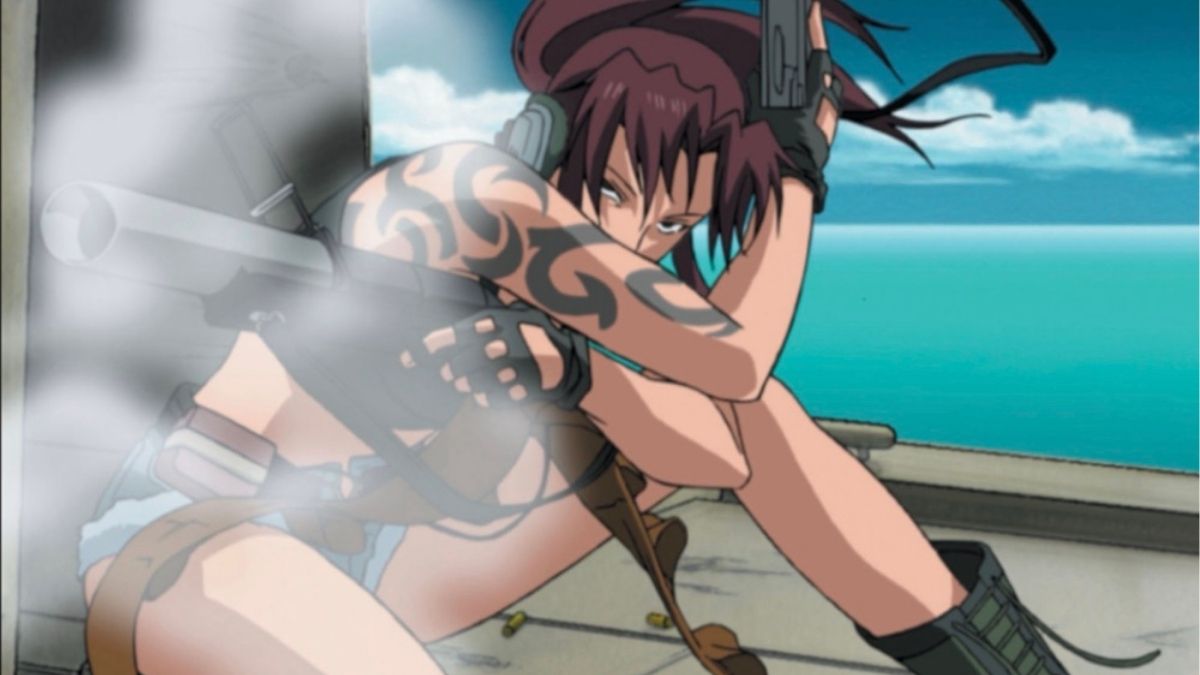
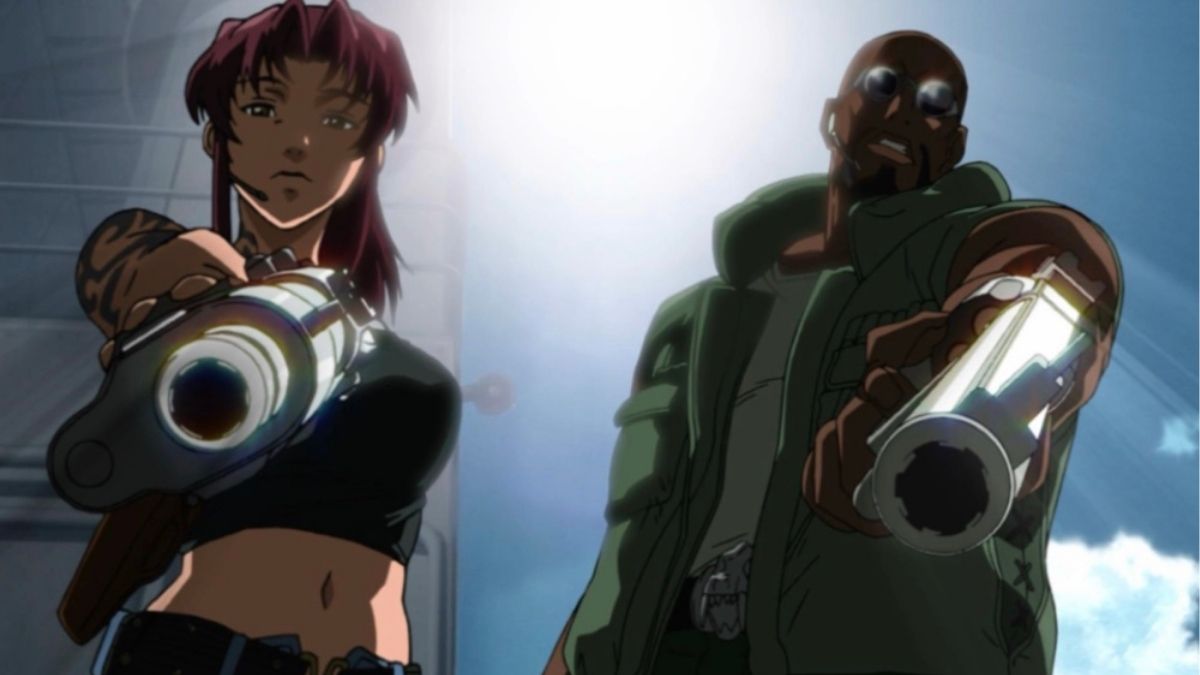
The action that shatters bones, walls, and, at times, entire city streets is over-the-top in the best way possible. Led by the Lagoon’s resident gunslinger, Revy “Two-Hands” (Megumi Toyoguchi, Smoking Behind the Supermarket with You), the action delivers all the blockbuster explosions and brutality one could ask for.
Black Lagoon is always mindful of the difference between its wild action scenes and serious violence.
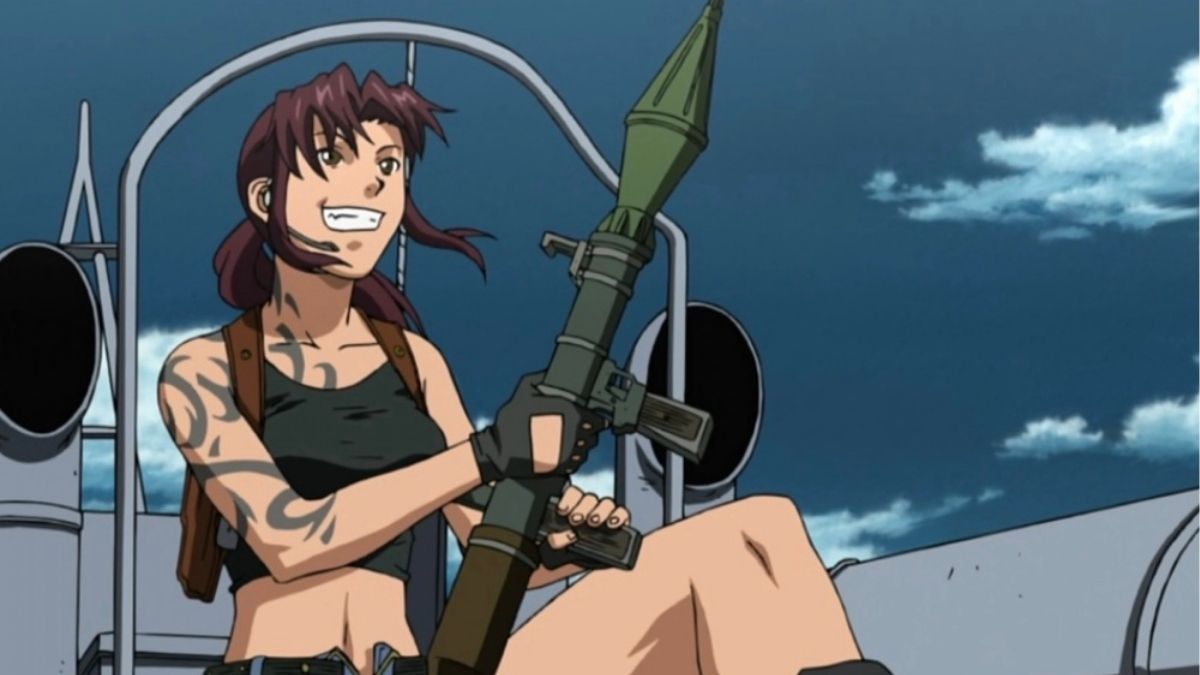
Seeing Revy dance, spin, and slide around a shootout at the Yellow Flag bar as glass shatters and bodies hit the floor never loses its excitement. From shooting down a helicopter with a torpedo to cutting a bullet in half with a katana, the series fully embraces its wild approach to action with glee.
The animation does a great job of bringing all the spectacle and terror of a free-wheeling firefight to life. The flashes of muzzles and the chaotic din as explosions echo through streets build the madness to extreme highs. The incredible acrobatics of key personalities like Revy, Roberta (Michie Tomizawa, Digimon Beatbreak), and Shenhua (Yûko Sasaki, Japan Sinks: 2020) add flair to the frantic melees, weaving style into its chaos.
But even as Black Lagoon embraces the thrill of a great shootout or the tension of a hand-to-hand brawl, it’s always mindful of the difference between its wild action scenes and its moments of serious violence. Scenes of cruelty and torture are always set apart, delivered with the disturbing energy such acts should hold.
In Black Lagoon’s harshest moments, the visuals seep into the viewer’s perspective.
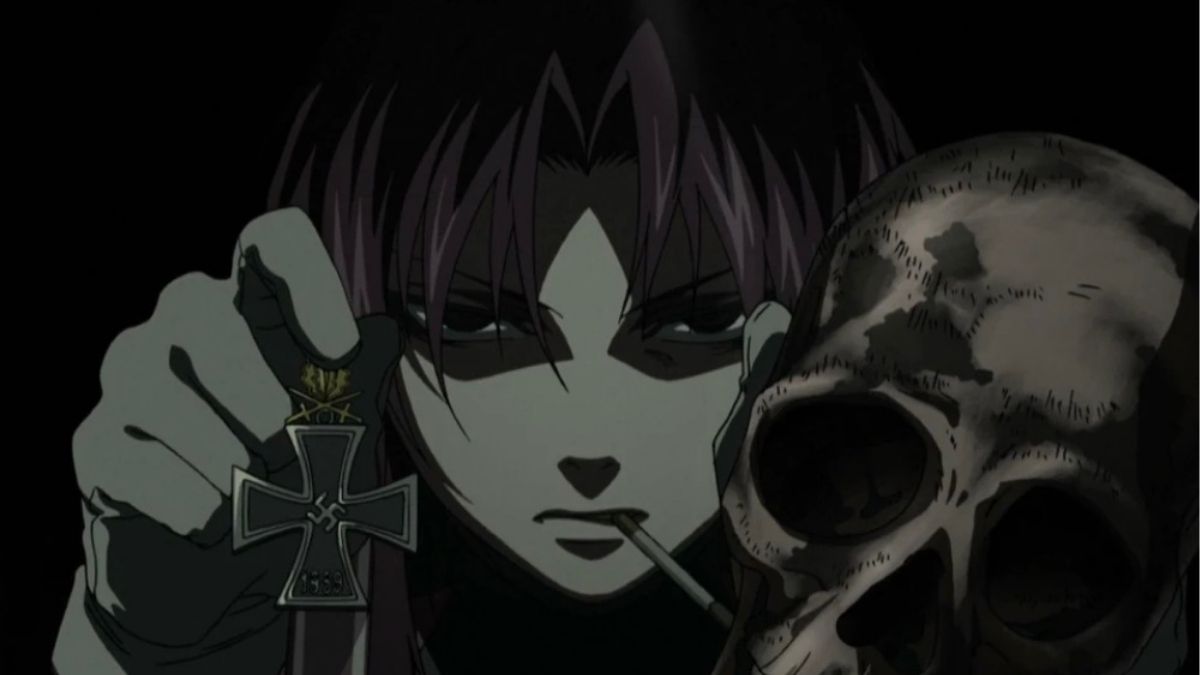
Even simply talking about dark pasts and haunted events is always handled with a fittingly chilling aura. Whether it’s the despicable treatment Hansel and Gretel were subjected to or the hard lessons taught to a young Revy on the cold streets of her childhood, the series knows when to tone down the shock and awe and let the true nature of violence shine through.
In Black Lagoon’s harshest moments, the visuals seep into the viewer’s perspective in harsh lighting and perfect camera angles. Deep shadows, pierced only by the cold light of dead eyes, drive home the horror carried by those who are breaking under the weight of past and present terrors.
Further drawing on the narrative’s violence, Black Lagoon builds the relationship between Revy and Rock. With the former’s life filled with darkness and the latter’s marked by a normal upbringing, the series uses their interactions to highlight how differently one’s life experience can color how you value things and treat others.
This theme forms the crux of perhaps the single best scene in the series. While on a sunken Nazi submarine, Revy decides to not only retrieve the lost painting they were assigned to fetch, but also loot anything else of worth. When Rock disparages Revy’s choice, saying it is better to leave the loot with its owners, Revy launches into a chilling monologue about her past, the nature of objects, and the powers that run the world.
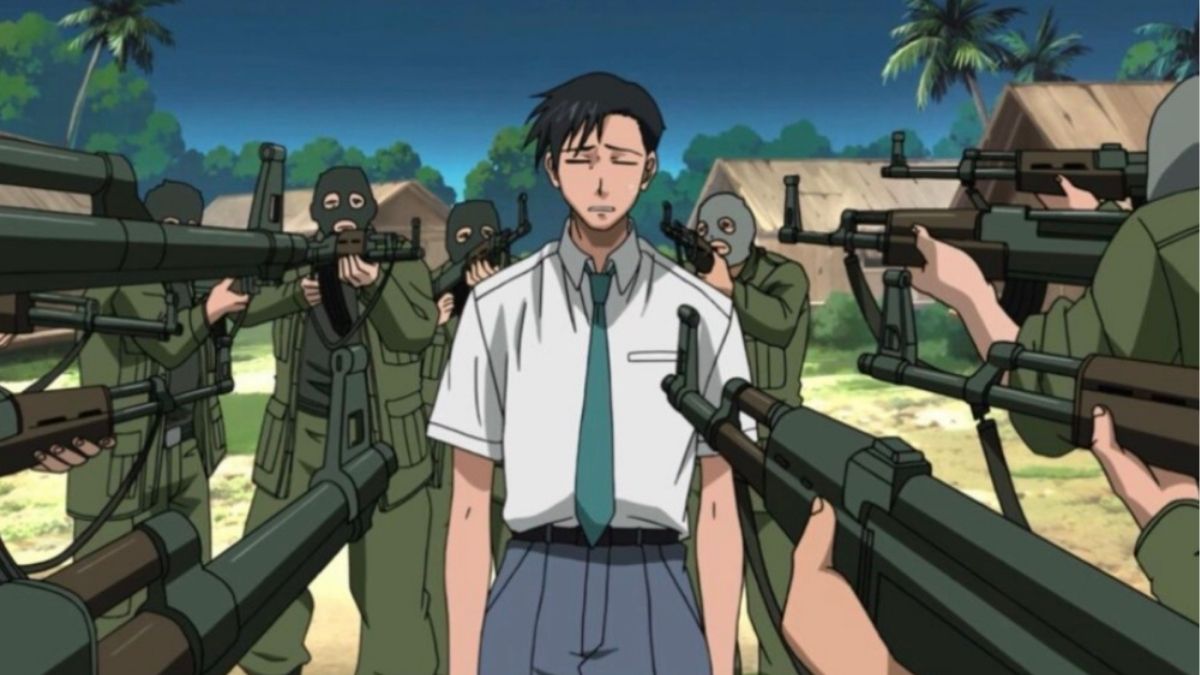
How Revy challenges Rock’s notions of right and wrong drives home how different the world can be depending on where you look at it from. What’s more, you cannot help but appreciate her words. Revy has lived a life where cries for help to gods or authorities yield nothing, so now she only believes in the power of guns and wealth. An understandable, if heartbreaking, conclusion for her to reach.
From this clash of experiences, Black Lagoon crafts one of the most fascinating friendships ever depicted in anime. As Rock and Revy continue to function as partners under their boss, Dutch (Tsutomu Isobe, Scarlet Nexus), they form a unique bond. As they struggle to find an equilibrium that works for both of them, they always seem to gravitate closer together, whether either of them is comfortable with it or not.
For her part, Revy endlessly oscillates between chastising Rock for his naivete and innocence and going out of her way to protect those very qualities. This comes most sharply into focus when she tries to keep Rock from witnessing Yukio Washimine’s (Houko Kuwashima, Noir) suicide. As she serves as his shield while the duo is back in Japan, she clearly struggles with Rock’s unwillingness to return home, now that he is so close to it. She remains convinced that he doesn’t belong in the darkness with her, no matter what he says.
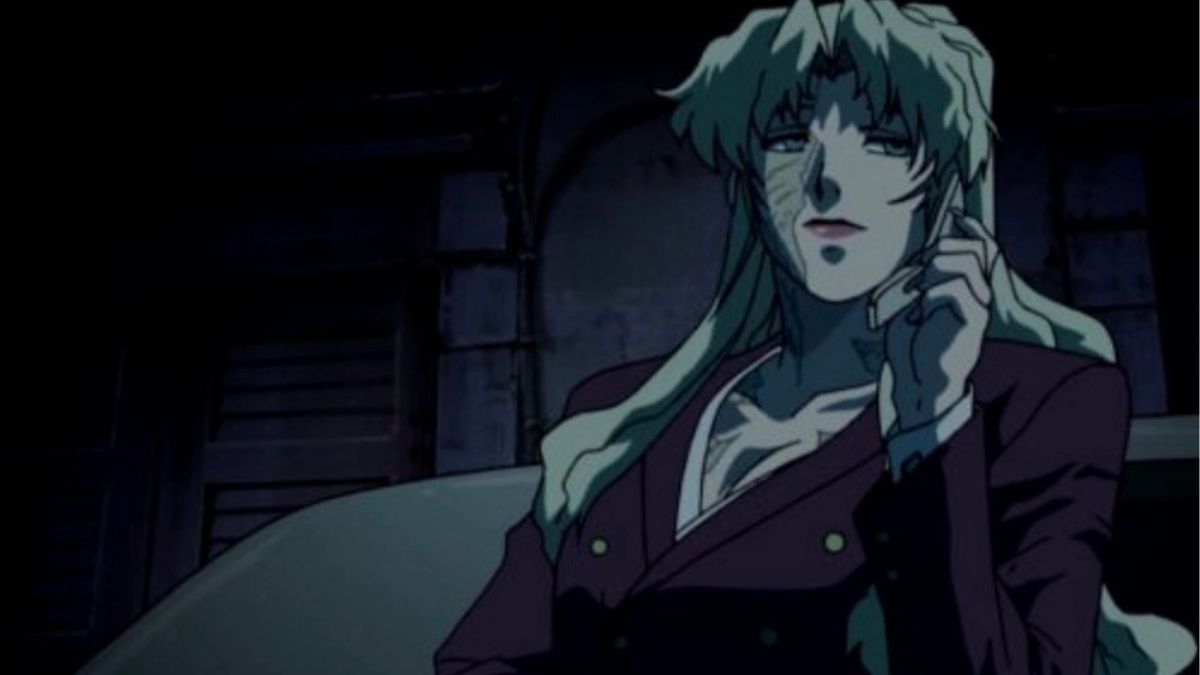
Balalaika is just as compelling as the leads.
Meanwhile, Rock tries to manage to find a way to “live in the twilight” of the world. Walking within sight of the darkness, he endlessly tries to do good, even as his methods grow rapidly manipulative and twisted. Despite his best intentions early on, he fails in his first attempts to bring slivers of light to the dark corners of their world.
Only when he manages to help extricate the Lovalace family from the grasp of the madness and death that seeps through Roanapur’s streets does he see the first glimmer of light on the horizon. Even though plenty of blood is spilled in the endeavor.
Holding just as compelling a place as Black Lagoon‘s dual leads is the sometimes ally, sometimes antagonist, Balalaika (Mami Koyama, One Piece: Red). The leader of the Roanapur branch of Hotel Moscow (the Russian Mob), Balalaika brings a disturbing element to the power balance in the series.
Black Lagoon delivers a story that stands out in any group.
A former officer in the Russian Paratroopers, Balalaika leads her people as if they are still on the battlefields of Afghanistan, where one quickly comes to suspect that a portion of her still lingers in spirit. She can be cold and calculating, demanding clockwork-like precision from her people when they take to the streets to snuff out a rival. But just beneath her surface is a mad dog that just wants to fight and burn. As if she longs for a foe that could finally take her down so she might know peace.
Her interactions with the crew of the Black Lagoon create some of the most interesting tests the show brings them. Even when she is nominally on their side, there is the ever-present understanding that she is only there until she isn’t. Behind her eyes lies nothing for anyone save her troops. She even praises Rock at one point, even as she presses a gun to his skull. She is like a train wreck. Terrifying, yet you cannot look away. And this train wreck picks where it’s going to crash.
With its pulse-pounding action, unwavering willingness to stare into humanity’s darkest elements, and nuanced, complex characters, Black Lagoon delivers a story that stands out in any group. Nothing out there is quite like it. And thanks to incredible voice acting and stellar animation and visual design choices, what it does still hits like a ton of bricks, even two decades after its release.