


Elize: Shadows of a Woman (Elize: Sombras de uma Mulher) continues the trend of the film industry adapting existing stories. The Portuguese-language film by director Felipe Vellasco is based on the real-life story of Elize Matsunaga, who was convicted in 2012 of killing her husband, Brazilian entrepreneur Marcos Matsunaga. This is a well Netflix has drawn from before, having also looked at the Matsunagas in their limited docuseries, Elize Matsunaga: Once Upon a Crime. This dramatic retelling of the Matsunaga murder leans less into the what and more into the why.
The movie opens with Elize (Lorena Comparato) watching her wedding video in the wake of killing her husband. After a brief scene in which she avoids being caught by the nanny and reaches her car with his body, the film takes the audience back seven years. From there, Elize: Shadows of a Woman takes viewers on a disjointed journey through her tumultuous relationship with one of Brazil’s wealthiest individuals.
Elize is an escort working for the company VIPClass. She meets clients, but her heart is set on one in particular, the Popcorn Prince, Marcos Matsunaga (Henrique Kimura). The heir to a multi-billion-dollar popcorn empire is married but spends much of his time in hotel rooms with Elize.
Elize: Shadows of a Woman is the latest true crime retelling from Netflix.

When Elize realizes that as long as he’s married, she’ll only ever be second, she cuts Marcos off. Marcos, to win her back, buys Elize a car and promises to go exclusive. Over time, the two grow closer. Marcos eventually divorces his wife and marries Elize.
Over the years, they struggle to have a child, which widens the rift between them. Meanwhile, Elize’s aunt (Denise Weinberg) encourages her to stick to the status quo lest she blow up the glamorous life Marcos has afforded her.
It’s during that time that the audience learns that after her mother (Erica Montanheiro) escaped an abusive relationship and developed a relationship with Elize’s stepfather (Marat Descartes). Her stepfather would go on to abuse Elize for many years, and it’s heavily implied that Elize isn’t his only victim.
We watch as Elize finds herself backed into a corner.

Over the course of the film, Elize learns that her husband is still very interested in paying for sex and has even started grooming a new woman in much the same manner as he once groomed her. On top of that, Marcos spends the entire film gaslighting Elize. He accuses her of being crazy, imagining evidence, and even plans to have her committed.
All of this even though Elize eventually gives birth to their daughter, which, on the surface, appears to be the biggest point of tension in their relationship. It becomes clear that nothing will placate Marcos, and he’ll stop at nothing to ruin her.
When the murder happens, there’s no doubt that Elize feels backed into a corner with no paths to make things right. When the moment happens, the writing is on the wall. The audience has seen this scene before because the movie opens with it. Still, it happens so fast that it still comes off as a surprise.
The film needed to dig deeper into the aftermath of the murder.
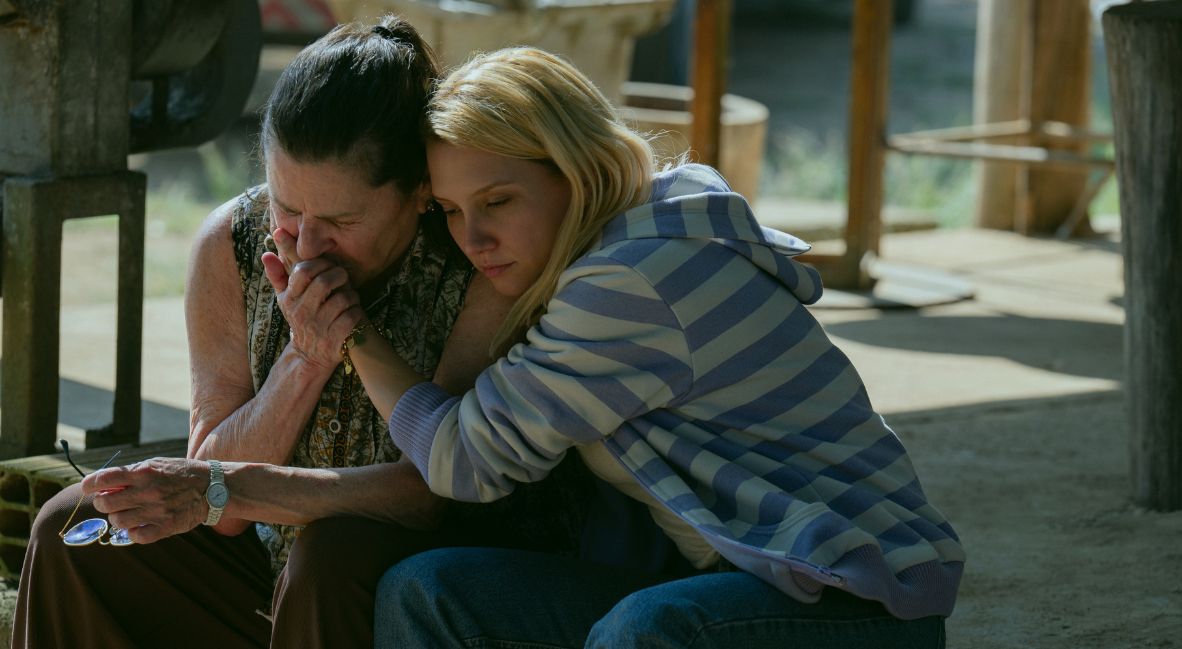
Anyone familiar with the Matsunaga murder case is not going to be terribly surprised by the details in Elize: Shadows of a Woman. Unfortunately, while sticking fairly true to the facts of the case, it commits the sin of being boring. The murder scene aside, there is simply nothing super compelling about Elize: Shadows of a Woman.
At only 93 minutes, much of the story is left out in favor of focusing solely on Elize and the reasons for her decision. The film decides to use a version of the story that the crime was a crime of passion done in the heat of the moment — a version that the jury ultimately accepted despite a lot of evidence to suggest premeditation.
The movie also leaves out some of the more gruesome aspects of the case, such as forensic evidence suggesting that Elize slit Marcos’ throat while he was still alive and that many of his body parts were never recovered. Leaving out those details inherently biases the audience toward greater sympathy for Elize. People less familiar with the case will judge Elize’s actions only by the details the filmmakers choose to include.
Elize: Shadows of a Woman isn’t bad but it could’ve been so much better.

The only reason a film like this can exist is that, just like in a high-profile case in the U.S., the Matsunaga murder created a media frenzy in Brazil. The heyday of following the case in Brazil is why the docuseries and ultimately Elize: Shadows of a Woman can even exist. The murder of Marcos Matsunaga created a lot of public interest. That led to the media spending substantial time looking into and reporting on her work as an escort and the abuse she suffered in her childhood.
While the film uses in-scene exposition to make those points, the far more compelling angle of a media-fueled circus at trial is never explored. In fact, after her arrest in the film, the credits roll with just a few lines updating the audience on her current status.
Elize: Shadows of a Woman isn’t a bad movie. The problem is that it’s not a good movie either. By squandering its obvious potential for more interesting narrative work, the film settled for telling a story meant to endear audiences to Elize Matsunaga. Ultimately, Elize: Shadows of a Woman re-tells the story of the murder of Marcos Matsunaga but manages to be less interesting than the docuseries about it. So much of the story was left on the cutting room floor that it fails to give a complete account of what really happened.
Elize: Shadows of a Woman is available now, exclusively on Netflix.
Elize: Shadows of a Woman
-
Rating - 6/106/10
TL;DR
Elize: Shadows of a Woman re-tells the story of the murder of Marcos Matsunaga but manages to be less interesting than the docuseries about it. So much of the story was left on the cutting room floor that it fails to give a complete account of what really happened.