
Fatherland, directed by Paweł Pawlikowski and co-written by Henk Handloegten, is an austere dialectic on the post-war division of Germany between West and East. While its points are generally easy to follow and clearly made, it may require a degree or two in German history, philosophy, and art to understand fully.
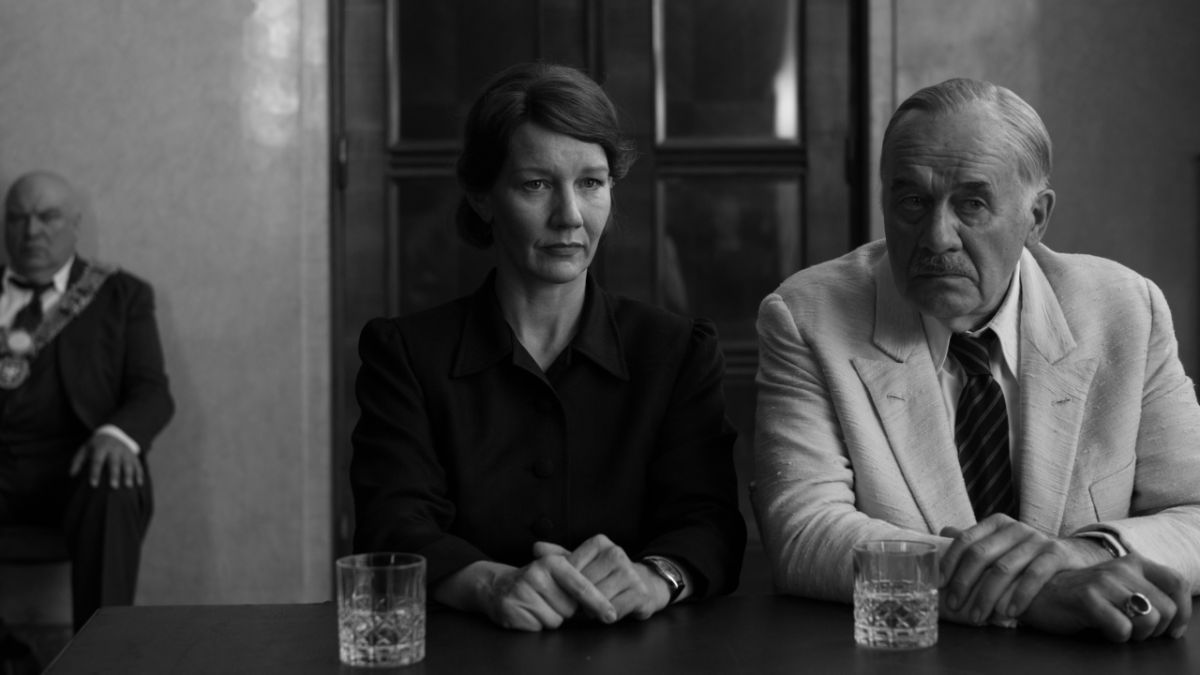
Nobel Laureate Thomas Mann (Hanns Zischler) is invited to Soviet-controlled Weimar to be celebrated and convinced to represent the New German order. He travels with his daughter, Erika (Sandra Hüller), who has no love for Communism, Americans, or Nazis.
As far as World War II movies go, Fatherland is certainly unique, at least from an American perspective. Its consideration of Germany’s unsolicited division by the United States and the U.S.S.R. creates fertile ground for juxtaposition. The American influence is lavish and boisterous. The Soviet influence is sanitized and militant. The former sees art as a commercial opportunity, while the latter looks at it as something to influence the masses. The comparison between the two sides is obvious, and sometimes hits it on the nose a little too hard.
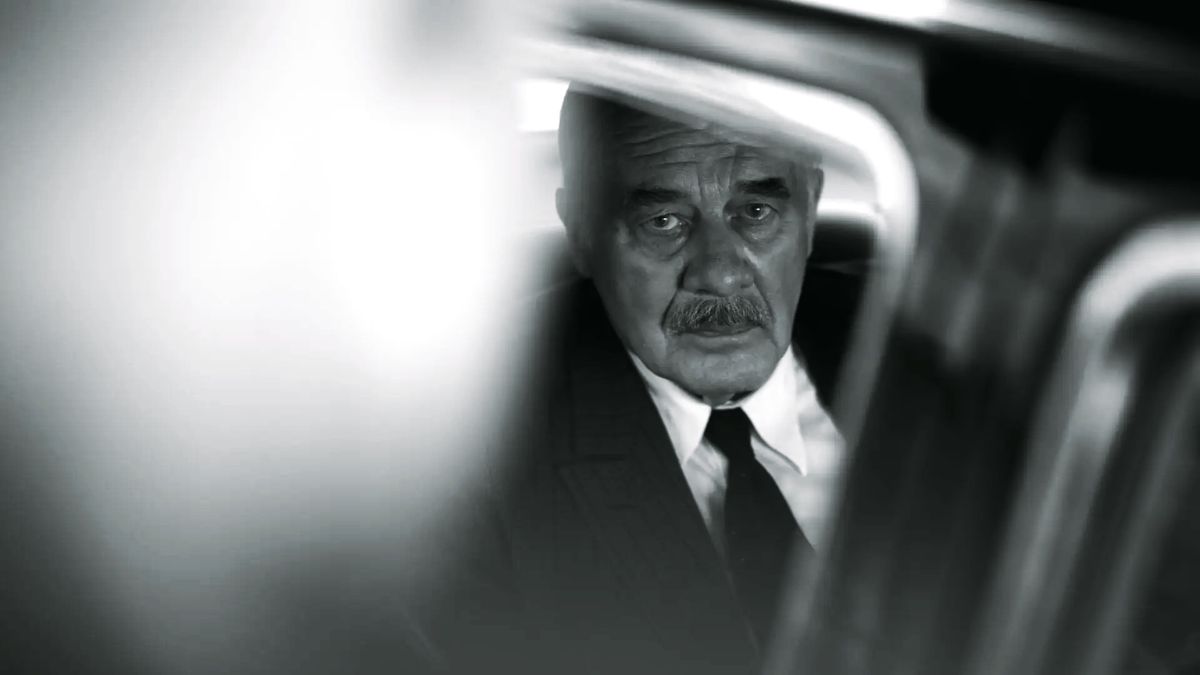
Fatherland isn’t so much about whether one side is superior to the other, though. Rather, it’s about how the two influences are stripping Germany of its German-ness.
It’s not a subtle point either, but it’s much more salient if you catch the passing use of the German word ‘Heimat,’ a romanticized notion of home and homeland. Its use makes it clear that Thomas Mann mourns a Germany that never was, even before the Nazis tainted it, and even if he doesn’t recognize this himself.
Perhaps Polish director Pawlikowski is trying to say something, as an outsider, about the inherent foolishness of national narratives and nostalgia. Mann is depicted as a sad old man who can’t keep up with the times just as heavily as he is seen as someone who understands the truth of the world better than any of his successors. He just never breaks beyond his severe, yet lost gaze to show the audience what he feels.
An understanding of German history and art makes Fatherland much easier to follow.
The looming specter of Fatherland is Goethe, the 18th-century German writer and philosopher on whose work much of modern German art is founded. If you are not relatively familiar with Goethe, Fatherland may be somewhat befuddling at times.
The complicated spiral between Mann, Goethe, and Germany’s occupiers assumes you already understand each well and doesn’t walk the audience through any of them. While you can surmise the gist of the battling philosophies through the characters, the details of what may be a well-constructed premise are lost without that background.
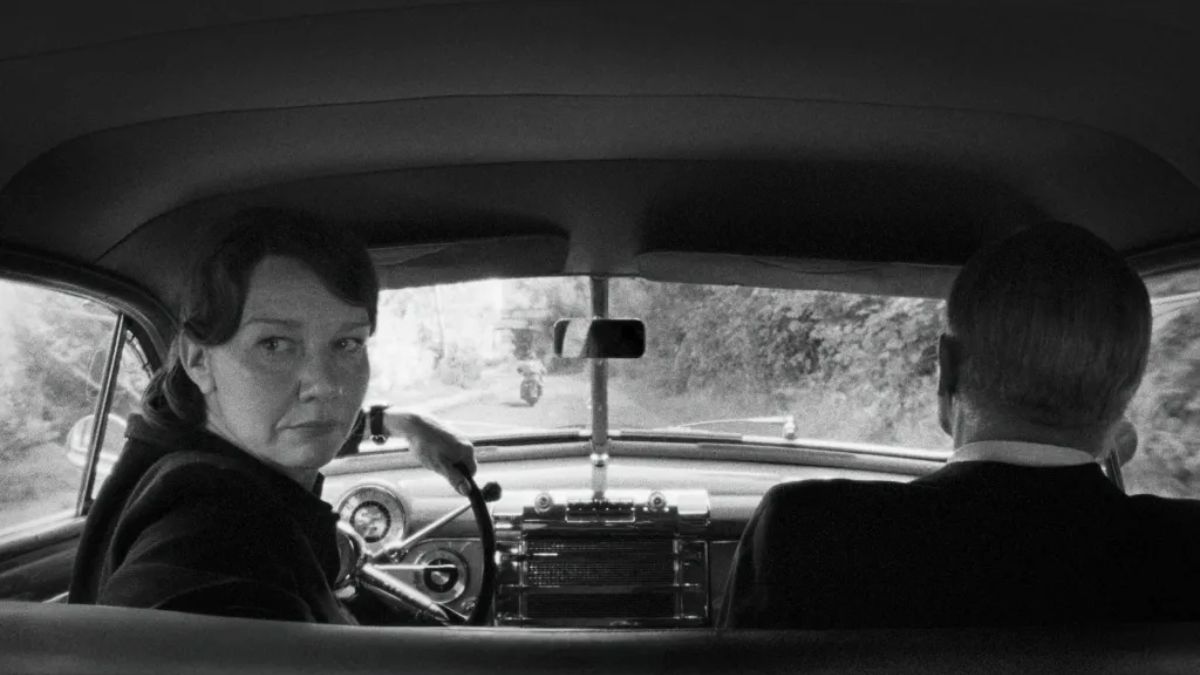
Were it not for Sandra Hüller’s innate expressiveness, Fatherland might be lost on American audiences altogether. Her occasional glance in a different direction from the crowd or emotional outburst steers the whole show. With no emotion besides fear and loneliness out of Henk Handloegten, sturdy as his performance may be, you take your emotional cues entirely from an able and ready Hüller.
There is no Heimat, only progress.
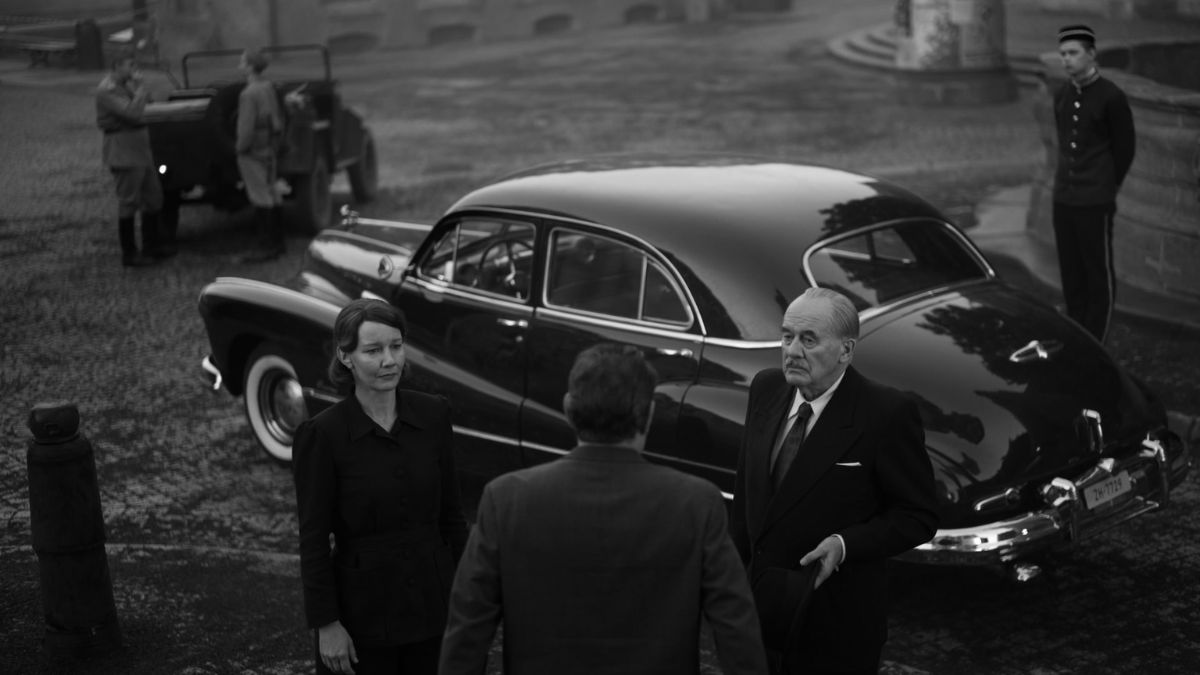
It would be nice if she had somebody to play off of more often, but alas. Instead, the bleak black-and-white photography, narrow 4:3 ratio, and achingly empty world the movie lives in are the only accompaniment she receives.
Fatherland may well be a stronger movie for students of German history and culture, but for the rest of us, it’s a neat treatise on contradicting philosophies and how easy it is to feel philosophically homeless when the world presents itself as binary. Because the opposing sides are equally detestable, the movie can feel empty without a solid middle ground to latch onto. But that is the point; there is no Heimat to return to post-war. Only progress.
Fatherland is playing now in select theaters.
Fatherland
-
Rating - 6.5/106.5/10
TL;DR
Fatherland may well be a stronger movie for students of German history and culture, but for the rest of us, it’s a neat treatise on contradicting philosophies and how easy it is to feel philosophically homeless when the world presents itself as so binary.