
The truth is stranger than fiction, so the adage goes, so maybe that’s why Hollywood has seen such an influx of stories about the most famous movies ever churned out by Hollywood itself. The Offer, The Disaster Artist, and Mank, to name a few, are prime examples of the ouroboros of Hollywood storytelling, TV shows and movies chronicling the making of notable films, either beloved or infamous. (Those projects followed the making of The Godfather, The Room, and Citizen Kane, respectively.)
Peter Farrelly‘s I Play Rocky takes Hollywood’s love affair with itself and dresses it in the trappings of a crowd-pleasing inspirational tale. This one, as the title so succinctly tells you, is about a young Sylvester Stallone’s incessant quest to make, and star in, his own script: Rocky.
Sylvester Stallone (Anthony Ippolito) goes by “Mike Stallone” professionally and personally and scrapes away at an acting career in New York. He sleeps on the streets, gets odd jobs working as a fishmonger and in softcore adult material, and auditions for not-so-career-making characters with names like “Thug #2.”
The story of I Play Rocky is inspirational before a script is even written for the famous film.
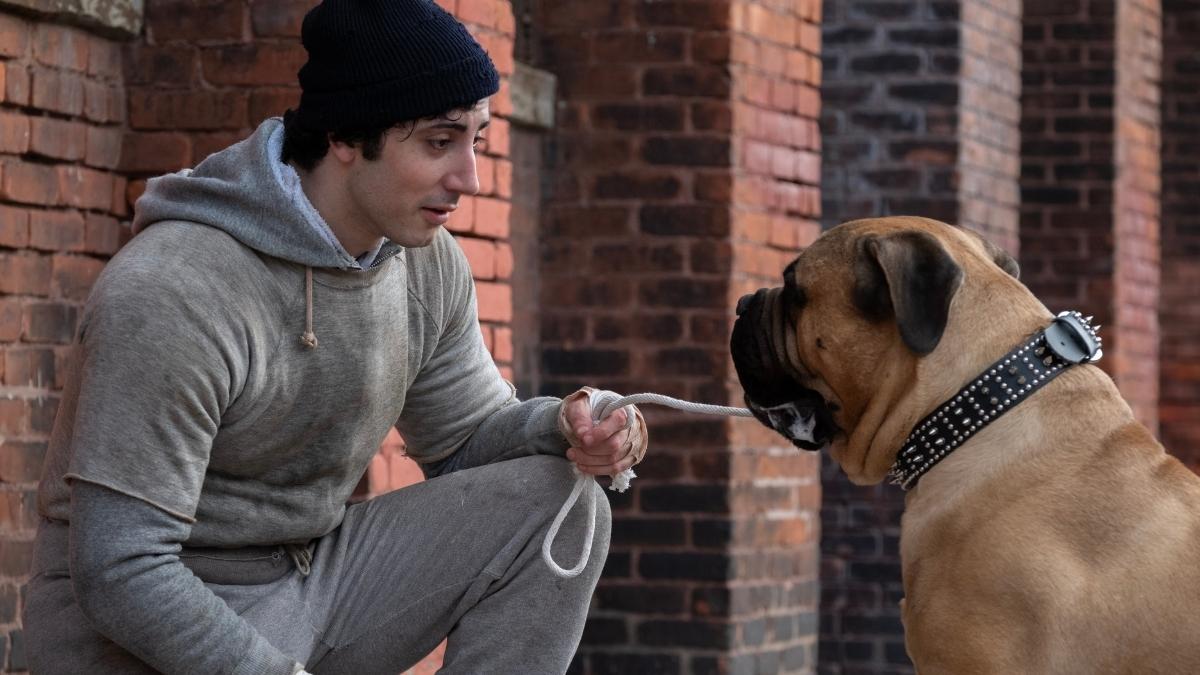
But his love for his art never ends, and after getting a job as a movie theater usher, he tells coworker Sasha (AnnaSophia Robb) how he’d improve the movies if he made them. Sasha suggests he write something for himself to star in, “like that Citizen Kane guy,” and encourages him to go by Sylvester again, believing it’s a name that stands out to others as much as he stands out to her.
I Play Rocky sets itself up as a typical inspirational film before Sylvester (with Sasha, his eventual wife) gets to Los Angeles to pursue screenwriting. Boy meets girl, boy marries girl, boy pursues dream even though no one will hire him.
He’s got people who believe in him; producers Irwin Winkler (P.J. Byrne) and Robert Chartoff (Toby Kebbell) see his potential but don’t think his scripts are sellable. It’s only when Sylvester catches the now-legendary 1975 Muhammad Ali vs. Chuck Wepner heavyweight championship match on TV that he gets an idea for a script that could really pack a punch.
Anthony Ippolito elevates his Sylvester Stallone beyond imitation.
Peter Gamble‘s screenplay swiftly loops you into the back-and-forth of Rocky‘s production, setting up the stakes in a way you almost forget that you know how this story ends. Sylvester and Sasha barely make money in their day-to-day jobs, but Sylvester is so committed to starring in Rocky that he’ll throw away perfectly solid offers to not star in it. Tracy Letts, essentially playing a 1970s version of his Little Women editor character, tosses disdain around as much as he tries to throw money at Sylvester to step aside and let, say, Ryan O’Neal play the Italian Stallion instead.
But if Ryan O’Neal played Rocky, we wouldn’t have Rocky, or I Play Rocky (the movie), or “I play Rocky,” the phrase Sylvester repeats so often it practically becomes his catchphrase. It helps that Ippolito’s performance quickly evolves from a solid Sylvester Stallone impression to a genuinely vivid imagining of a man we now uphold as a Hollywood legend. Ippolito captures Stallone’s distinctive voice and mannerisms enough to pass as an excellent deepfake.
The supporting cast, from Robb’s Sasha to Kebbell and Byrne’s producers, elevate roles that could be stock characters (supportive spouse, comic relief, gatekeepers) into real people whose support, and occasional exasperation, for Sylvester’s dream are vivid.
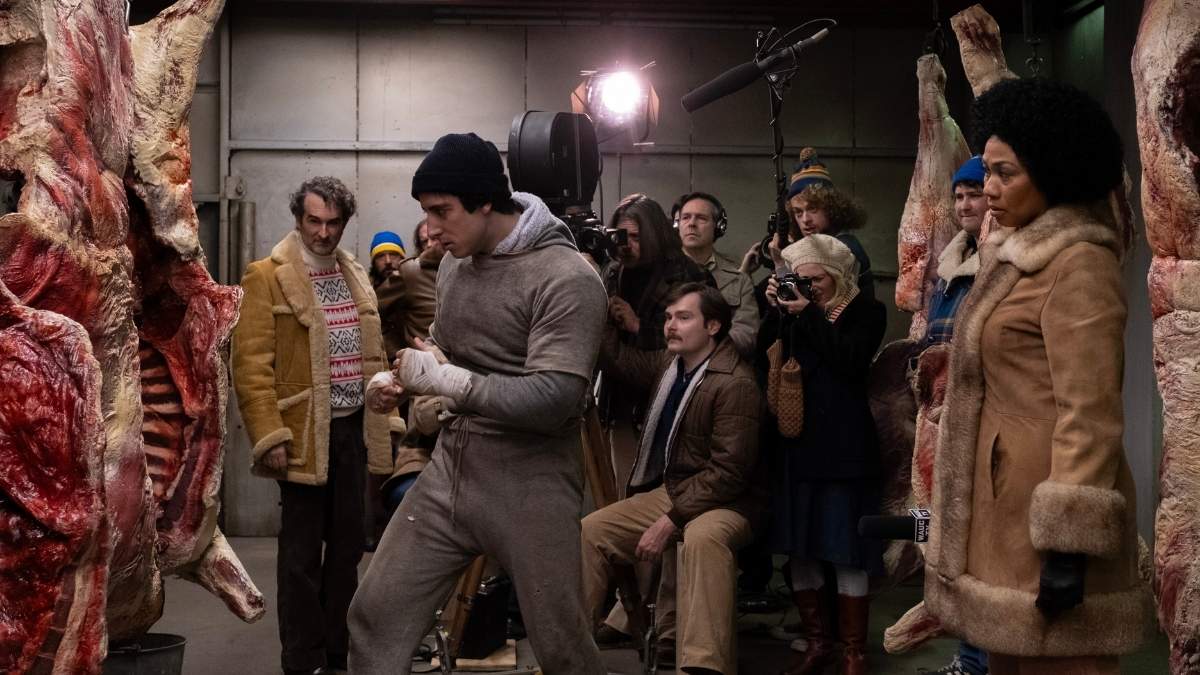
Where I Play Rocky doesn’t quite capture the same magic as its shoestring-budget source material, it does bring slickness. Some of that can’t be helped, as shooting on digital is a given for pretty much everyone save for Christopher Nolan. But I Play Rocky‘s reimagining of 1970s Hollywood, Philadelphia, and New York looks like a slick, shiny reimagining of a grittier time, only slightly tarnishing the immersive capabilities of the setting.
The screenplay, too, introduces certain characters and plot points with the factual upfrontness of a Wikipedia. These characters are smart, but some hand-hold the audience through beats the audience can figure out for themselves. (Kebbell and Byrne, at one point, have a back-and-forth moment about the risks of hiring an actor who can’t box that feels tailor-made for filling in an audience watching at home while scrolling on their phones.)
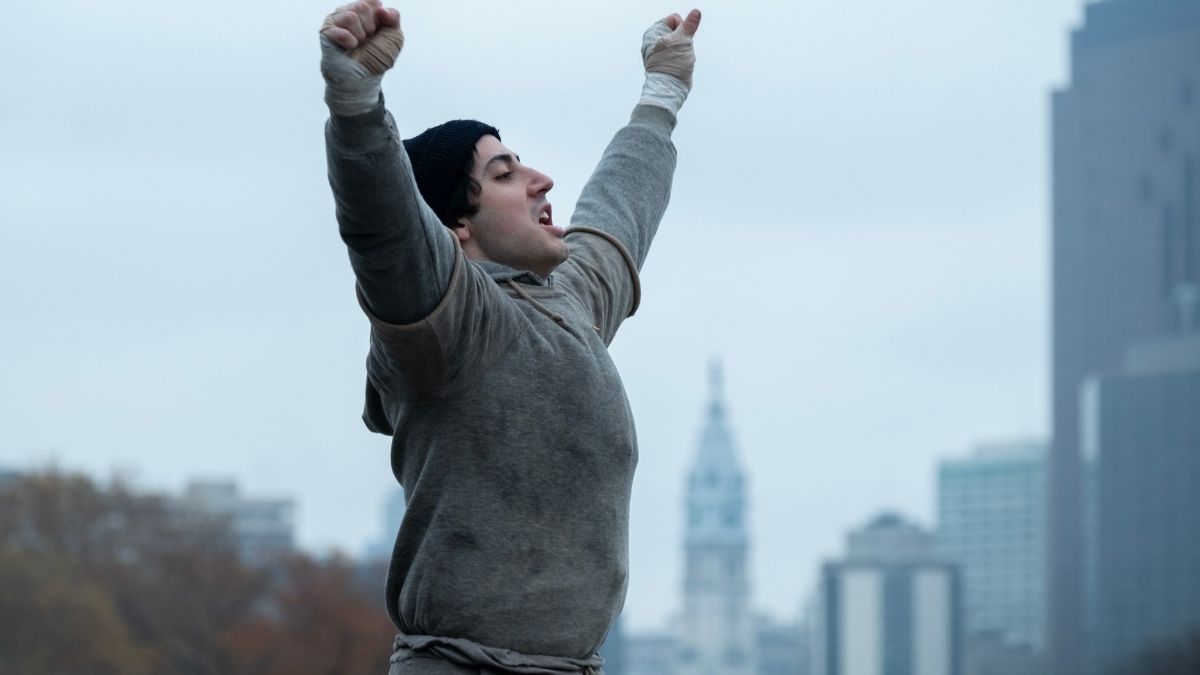
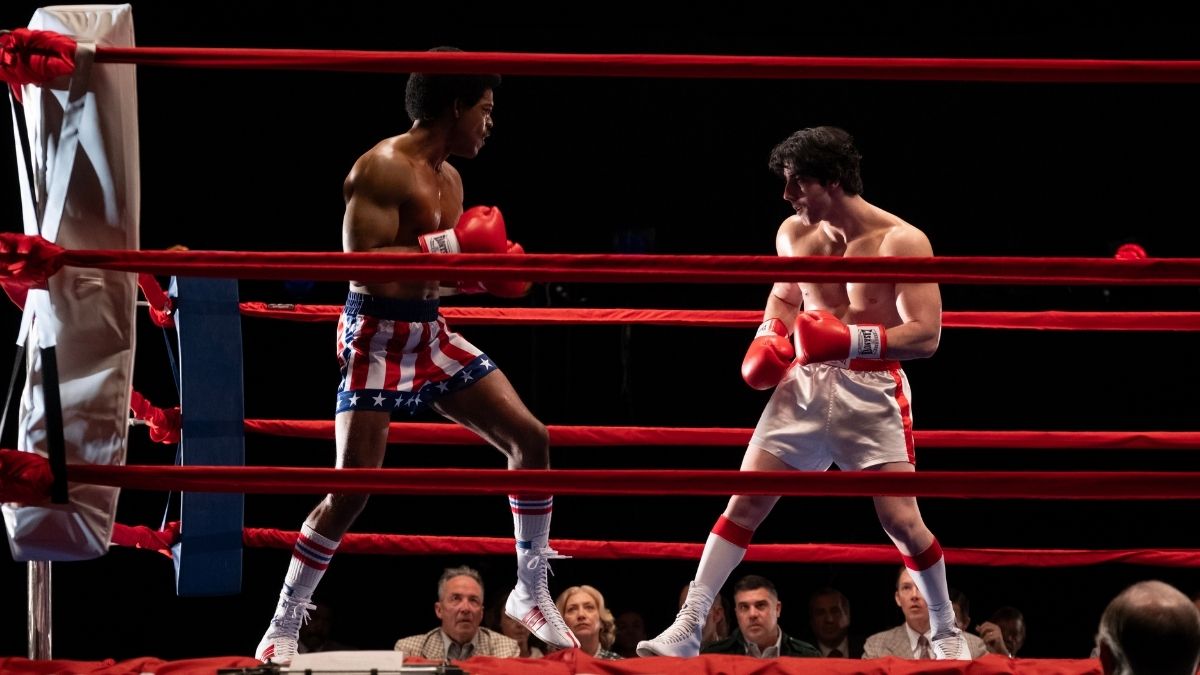
There’s some faithful recreation of Rocky‘s most iconic scenes, from the final fight against Apollo Creed (Stephan James plays Carl Weathers) to Rocky’s triumphant run through the streets of Philadelphia. But those are presented with a careful commitment to the story behind how those scenes got made, rather than saying, “Hey, here’s a scene you loved from the original movie! Now watch us do it again!”
Scenes from Rocky are faithfully recreated, but the focus stays on the behind-the-scenes.
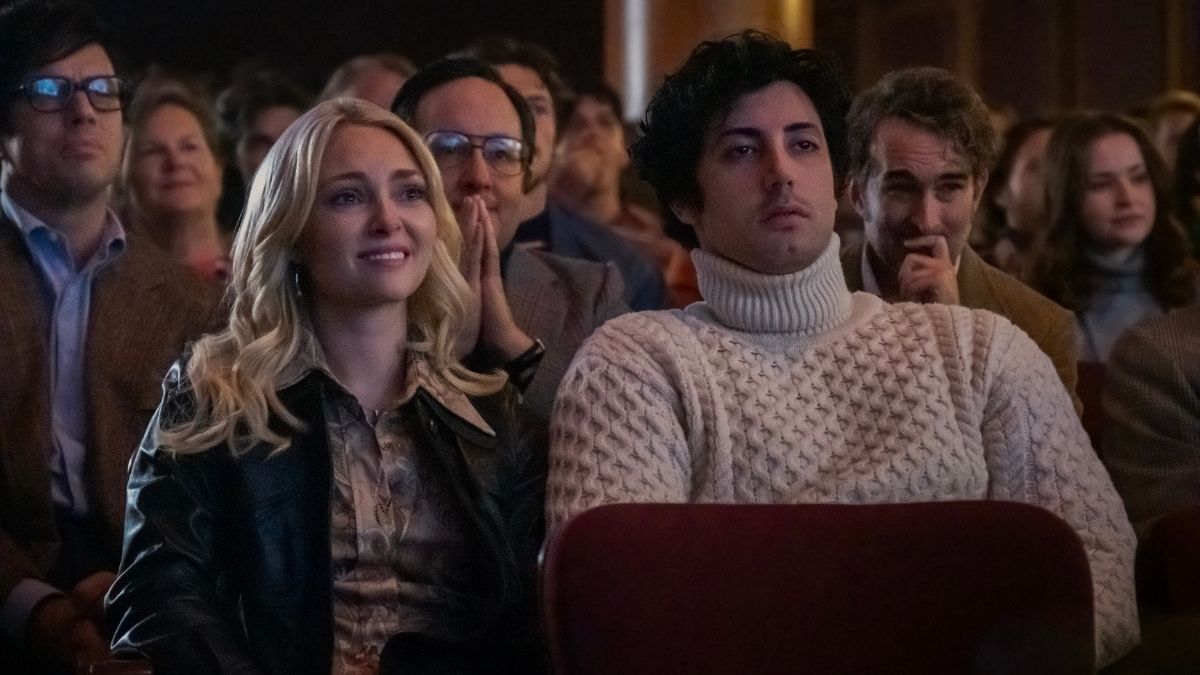
Gamble’s script only winks and nudges when necessary, like insisting Scorsese’s soon-to-be-made New York, New York is a guaranteed hit (it flopped). Or, perhaps most hilariously, Letts’ exasperated Maddox repeatedly states his frustration with Paramount.
But I Play Rocky never loses sight of how much of an underdog story it is, even while faithfully recreating Rocky itself. That’s where its heart really lies. Getting Maddox to agree to Sylvester playing Rocky is only the beginning of a risky production. The production team battles union interference, actors who can’t perform tasks they’ve been hired to do, and a leading man whose physical commitment to his role is destroying his body.
If anything, beyond being a testament to one man’s tenacity, it’s a love letter to the miracle that is moviemaking. That Sylvester Stallone wrote Rocky in three and a half days is just the beginning of that film’s remarkable story. Now, if there’s a story as inspirational behind I Play Rocky as there is behind Rocky itself, making a movie about that might be a step too far. I Play Rocky is inspirational enough as it is.
I Play Rocky is now playing in select theaters, before releasing nationwide on November 20, 2026.
I Play Rocky
-
Rating - 8/108/10
TL;DR
I Play Rocky never loses sight of how much of an underdog story it is, even while faithfully recreating Rocky itself.