


Written and directed by Jordan Firstman, Club Kid is a bedazzled spectacle of people in limbo. Launching into frame armed with Rihanna’s “Sex With Me” and an indiscreet sense of style, the film is an amalgamation of what’s come before while keeping the story fresh, progressing with more unexpected beats than one might expect from what, on paper, seems like a fairly typical coming-of-age story. Firstman may resort to bouts of self-indulgence and spend more time than necessary in the clubs that are the backbone of his character’s greatest self-destructive impulses, but the heart, when at the forefront, smooths over the weaker elements.
When we first meet Peter (Firstman), he’s in the throes of ecstatic triumph. He’s running a successful club, The Party, with his friend, Sophie (Cara Delevingne), and it’s unapologetically queer and consumed by nightlife antics, a community-first effort that’s inclusive and a beacon for all walks of life. Surrounded by a family of choice, the future seems bright, even if his hard partying ways lead him into less than desirable decision-making—namely, a one-night tryst with a woman in a shadowy corner of The Party.
Cut to ten years (ish) later: Peter is still a club promoter, but Sophie is tired of him, and he’s stuck in a blasé version of burnout. He’s selling drugs while taking too many, using uppers to wrestle himself out of catatonic states, which wheels him away from near overdose. He wakes up at 4 PM, chugs water with a vice grip around the bottle, a man parched. Dehydrated and disillusioned, he wonders where the last ten years have gone, blinking in and out of consciousness only long enough to gather the will to return to the dance floor again, catalog of cocktail drugs in tow.
A surprise arrival gives Peter an unexpected chance to change.
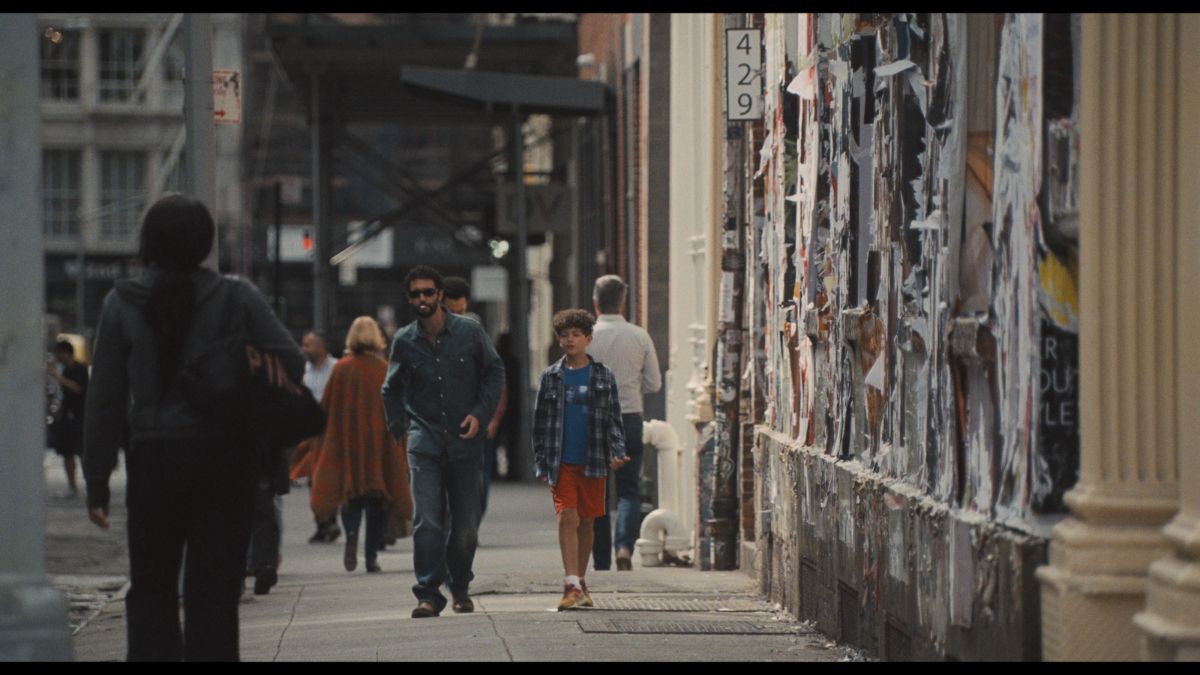
Then, he learns he has a 10-year-old son, Arlo (Reggie Absolom), from the woman he mistakenly had sex with. Dropped unceremoniously at his rent-controlled, inherited, gorgeous apartment complex, Peter reluctantly lets his son stay after he realizes he has no other option.
Club Kid begins in earnest as Peter must deal with the hang-ups of fatherhood, the delights of being a parent, and the growth that comes when forced to take care of someone else who makes you want not just to feel better but to be deserving of their trust and care. Sobering in more ways than one, Peter’s journey is tumultuous but heartfelt in his genuine efforts to do right by a kid who was never in the books.
Club Kid’s greatest hurdle is Firstman himself and an entire population of current storytellers who default to irony over sincerity. God forbid not everything ends with a joke to make sure we know these characters are cool and above it all. At first, it seems like Firstman can’t escape these sardonic clutches. Everything he says is accompanied by a smirk or wry remark, and it’s too reminiscent of his work on Rachel Sennott’s similarly insincere I Love LA.
But Club Kid challenges itself and us as it progresses, transforming from something wily and shallow into an unexpectedly moving portrait of found families, the power of community, and what it means to catch yourself off guard with the profundity of love. When Club Kid lets itself wear its heart on its sleeve, the film—and Firstman—is at its best.
Jordan Firstman’s film brings new life to all things familiar.
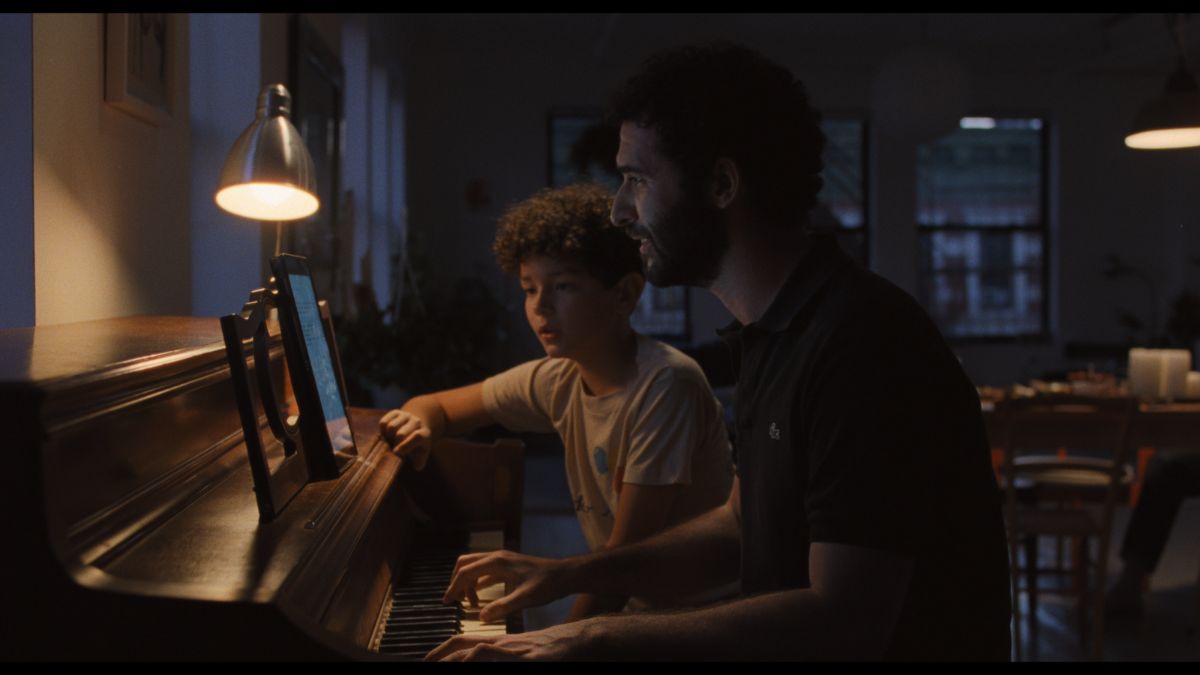
The themes that weave themselves throughout the film aren’t new, exactly. From the “it takes a village” mentality of raising a kid to the found family of queer spaces, and even the understated, lovely romance struck between Peter and Arlo’s social worker, Oscar (Diego Calva), we’ve seen films play these notes before. But Club Kid imbues its story with a necessary authenticity that lends itself to the tender and lovely story at its center.
And it refuses to give easy answers or outcomes. If anything, Peter doesn’t quite progress enough. Or, at least, not enough on screen. He hits the benchmarks of embracing the throes of mid-30s adulthood, but more time might’ve been spent on those efforts. The story itself is patient, letting us sit and understand the developing relationship between father and son so that, by the time the real headway is made, it’s earned rather than overwrought. But it comes close to feeling like checking off boxes on what needs to be addressed and in what order.
The characters themselves, however, are superb and lived in. We never question Peter wanting to stop his hard-partying lifestyle because, aside from the first scene, we never get the sense he really likes it enough to keep the wear and tear. But Peter’s friends don’t deride him; they go to bat for him and champion his relationship with his son, even if they don’t quite know what to make of it. The longer Peter has Arlo, the more he can see the bounty of value his life has.
The cast brings vibrancy and life to Club Kid.
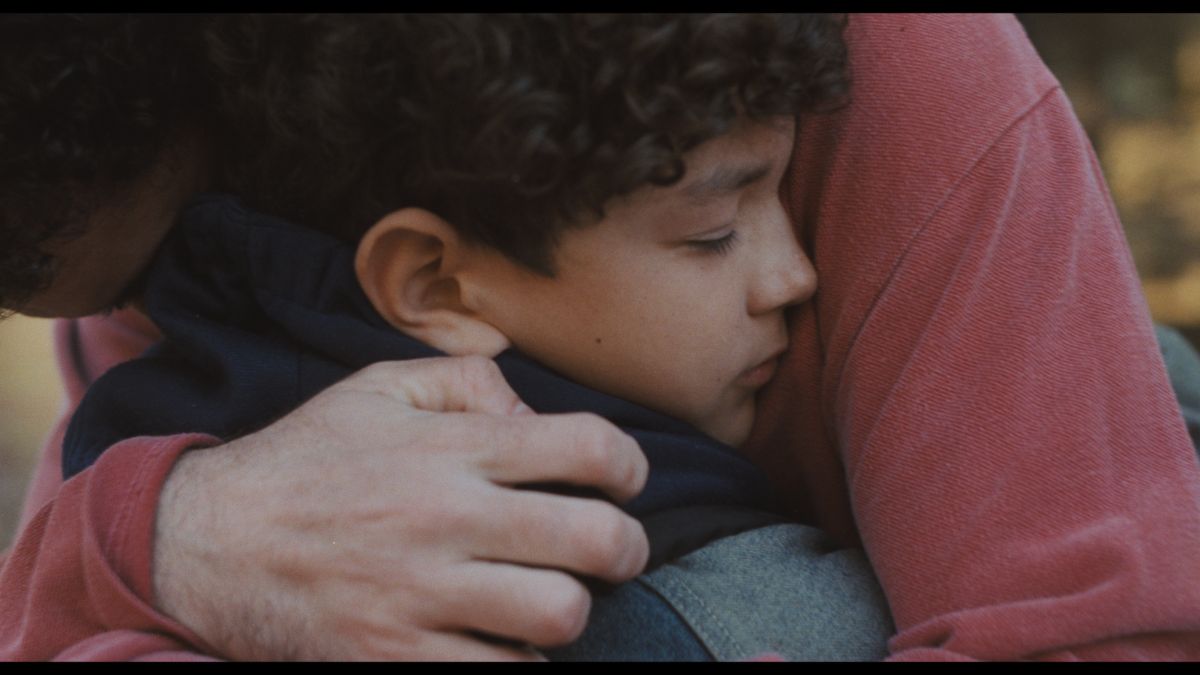
And not in a generalized, heteronormative manner of believing your life has no meaning until a kid comes along. Club Kid instead shines a light on the meaning we self-assign based on what we do and don’t have. Peter’s adoration of Arlo is clear, but it’s not that Arlo brought meaning to his life. Rather, Arlo unlocked his ability to see the potential. The bond is the heart of the film. But Firstman’s efforts work so well because it’s also about how we self-destruct, reassemble, and see to find new ways to matter to ourselves.
It’s less a reinvention than a refocus. A new perspective on the same page. An observed truth of familiar comforts. Touches of humanity shine through most notably in a shared playlist between father and son, a way to bond and understand one another through a shared love of music, touching on everything from Elliot Smith to Cocteau Twins, and house music.
Firstman directs the film with a stylized, dizzying edge, evident in the first scene, which catches the spins, wheeling around the central character. The setting adds life and color, with ever-shifting lighting and shades of sunset pumping through the windows of Peter’s apartment, illuminating a life in flux. It’s abrasive and a little obvious, but it sells the textures of the world.
With its array of pop-culture references, character-driven drama, and bright bursts of comedy brought to life by a stellar cast (Kirby Howell-Baptiste nearly runs away with the film in a single scene), Club Kid is a welcome debut from Firstman. Imperfect but heartfelt, with scenes of such gut-wrenching tenderness that they’re hard to shake, it’s a beautiful depiction of the acts of love we undertake for those who make us want to change not just for others but for ourselves.
Club Kid is in limited theaters November 6 before expanding November 13th.
Club Kid
-
Rating - 8/108/10
TL;DR
With its array of pop-culture references, it’s character-driven drama, and the bright bursts of comedy brought to life by a stellar cast (Kirby Howell-Baptiste near runs away with the film in a single scene), Club Kid is a welcome debut from Firstman.