


Creative angst is at the center of Bitter Christmas, Pedro Almodóvar‘s autofictional tragicomedy that bursts with plenty to say, but spends too much time on its most underdeveloped ideas. It follows a writer-director (Leonardo Sbaraglia) who channels his frustration into a screenplay about a writer-director (Bárbara Lennie) with creative struggles of her own. The lines blur between creator and creation, and Almodóvar’s own voice shines through, however unevenly.
In 2025, Raúl (Leonardo Sbaraglia) is a successful writer-director whose disdain for the increasing commercialization and depersonalization of cinema is evident. He doesn’t want to make movies for streaming even though the market rewards it; he just wants to keep making artful movies for the big screen.
He’s one of the most successful people in the film industry after a multi-decade career, but worries that legends are only considered such after they’re dead. When you’re alive, he reasons, you’re competing with your own artistic past while trying to forge an impressive future that tops what you’ve already made. His relationship with his boyfriend (Quim Gutiérrez) initially becomes the basis for Raúl’s new script, titled Bitter Christmas, until inspiration strikes elsewhere.
Bitter Christmas is uneven, even with Pedro Almodóvar’s voice coming through.

Raúl’s script, set in 2004, follows writer-director Elsa (Bárbara Lennie), who’s pivoted to advertising after making two unsuccessful films. Elsa tries to justify her films’ failures to herself and others by stating that they’re “cult films,” but not everyone understands what that means. (One person mistakes this for a religious term, asking if Elsa’s films are “evangelical” in nature.)
Elsa’s dating Bonifacio (Patrick Criado), an actor she met at a strip club during a bachelor party, and they’re happy enough. But Elsa’s creative rut ends when she starts to write a script that draws from the lives of her friends: Patricia (Victoria Luengo), who’s married to an unfaithful husband, and Natalia (Milena Smit), who’s grappling with the loss of her young son.
Almodóvar’s autofictional film spends far more of its time focused on Elsa’s story than Raúl’s, even though Elsa is Raúl’s creation. If Almodóvar is more interested in Elsa, it only comes through in how often she’s onscreen, even though Raúl’s the more dynamic of the two. “Writer-director Almodóvar writes a screenplay about a writer-director who’s writing a screenplay about a writer-director” is more than meta enough.
Elsa’s story steals focus, despite Raúl being the obvious director insert.

It’s when Raúl brings himself to Elsa’s story that Bitter Christmas hints at something deeper to say. Raúl borrows from the lives of his assistant, Mónica (Aitana Sanchéz-Gijón), and her offscreen girlfriend, Elena, to shape Elsa’s story. This cycle of borrowing someone else’s tragedies and trials is enough to make you wonder how much Almodóvar might be admitting to borrowing someone else’s stories in his own filmography, as if Bitter Christmas is a confessional.
Bitter Christmas has the potential to become an incisive commentary on the ethics of borrowing someone else’s life story without permission. Shades of that debate come through. But so much of the film is spent on Elsa’s creative meanderings and her friends that it loses sight of its framing device. When the action returns to Raúl, it interrupts the flow of Elsa’s story. And just as Raúl’s story gets interesting, the plot returns to Elsa in 2004.
There are elements of artistic brilliance that demonstrate the confusion of borrowing from someone else’s life and covering your tracks; Raúl borrows from Elena’s life to create Natalia’s arc, but accidentally refers to her as “Elena” multiple times while writing. He’s shown actively deleting Elena’s name and replacing it with Natalia’s name. When Bitter Christmas hints at vivid moments of art imitating, or actively stealing from, life, it captures elements of its otherwise unfulfilled potential.
Elements of brilliance do push through, but it’s not enough to rehabilitate the film.
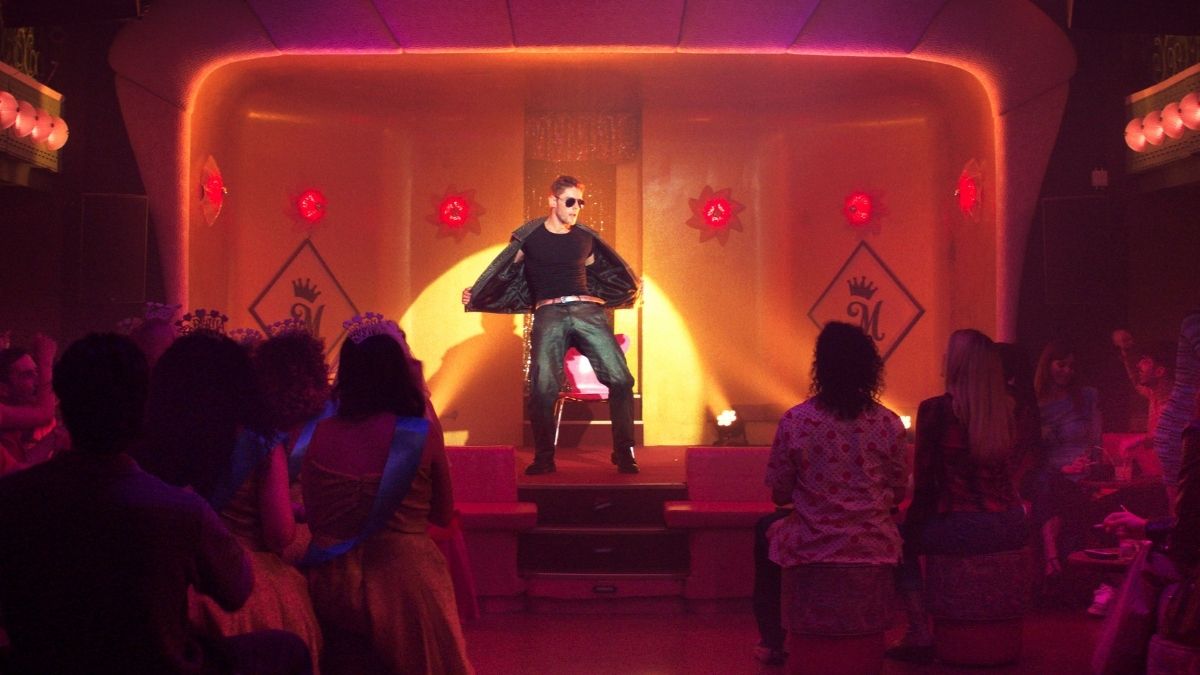
For one thing, Elsa’s story seems set in 2004 for no particular reason, and it isn’t marked by noticeably different visual flourishes. Only the lack of iPhones and the presence of flip phones makes Elsa’s story seem separate from Raúl’s timeline. At least the production design, colorfully imagined by Antxon Gómez, is striking, and Alberto Iglesias‘s score carries Bitter Christmas when the screenplay–the real one, not Raúl’s–cannot.
Raúl’s screenplay flows like a first draft, spending so much time on Elsa’s friends and less on her creative angst. So too does Bitter Christmas itself feel like a first draft. Sbaraglia and Lennie are strong performers, but the screenplay doesn’t give them much to work with by way of character depth. If anything, their roles are extensions of Almodóvar himself, serving as an outlet for voicing creative frustration.
Like Almodóvar, Raúl is an acclaimed director with a longtime career, eager to contribute meaningful art as a defense against corporate slop. Almodóvar’s concerns for his own career and the future of cinema are evident, as though Bitter Christmas is Almodóvar’s journal in visual form.
Bitter Christmas ultimately feels underdeveloped, despite pockets of potential.
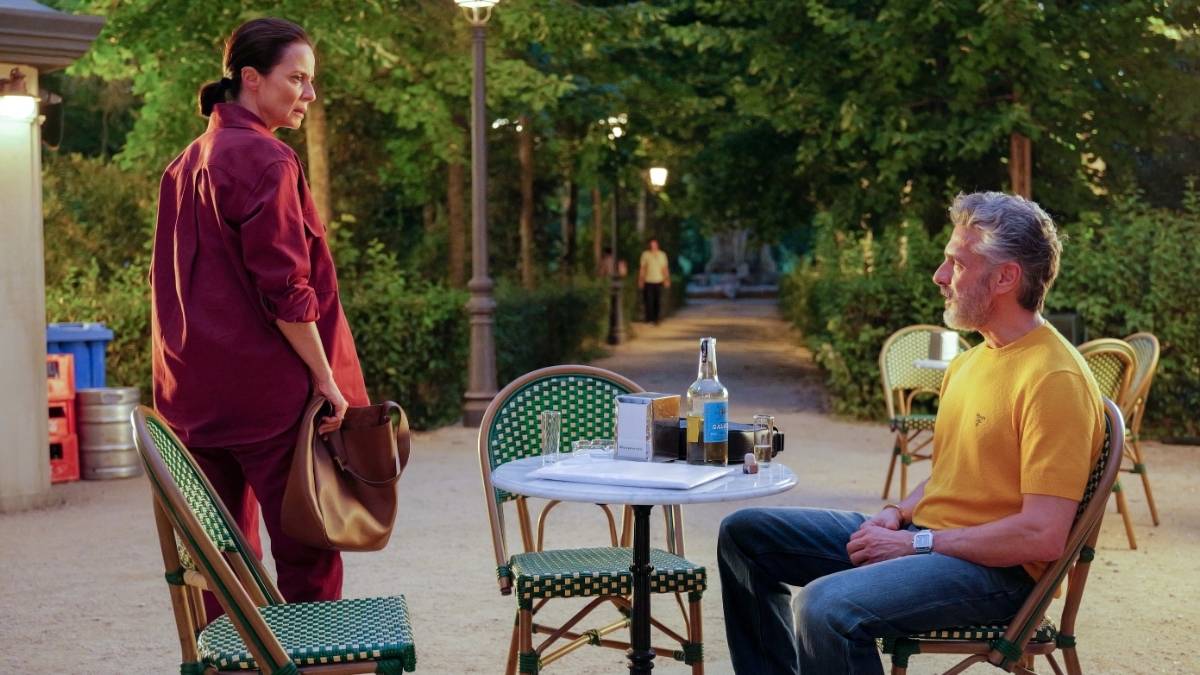
It’s those brief insights of existential worry that save Bitter Christmas from feeling entirely underdone. Those moments, however brief, make a stronger argument for the strength of Raúl’s story, as opposed to Elsa’s. One of Elsa’s friends plays a recording of the ballad “La Llorona,” hoping that it moves Elsa. If Elsa is moved, the scene itself is not as moving. That’s the tricky thing about intensely personal art, whether you’re making it or enjoying it. No matter how much you want it to resonate with others, it ultimately means the most to its creator.
Bitter Christmas surely means a great deal to Almodóvar, much as Raúl’s work means a lot to Raúl and Elsa’s work means a lot to Elsa. Other than being a relatable depiction of creative frustration, there’s not much else to hold on to in Bitter Christmas. But at least it looks and sounds wholly beautiful, and that’s artful in itself.
Bitter Christmas releases in select theaters on November 13, 2026, and will then be released nationwide on November 25, 2026.