

What would you do to get your long-lost daughter back home? Would you forgo all common sense if she’s clearly not on the same plane as you and your other kids while putting the latter in danger? These are the questions at the forefront of Lee Cronin’s The Mummy, written and directed by (you guessed it!) Lee Cronin, produced by James Wan, Jason Blum, John Keville, and New Line, and distributed by Warner Bros. Pictures.
Lee Cronin’s The Mummy, while delivering on the scares and gore for which this Evil Dead director is well known, suffers from subpar character development, a weak and unsubtle script, and baffling story and character decisions that will stretch the suspension of disbelief for even the most devoted horror movie goer.
Of course, sometimes audiences just want to go to the theater for a fun horror romp, and if you entirely shut down your disbelief, you may have a good time with the shocking horror scenes. But ultimately, they’re not that shocking, given that this movie is derivative of so many other horror movies, as it attempts to reinvent what audiences know The Mummy films for. If anything, Lee Cronin’s The Mummy should just be renamed Egyptian Exorcist, reflecting its pale imitation of a classic.
Lee Cronin’s The Mummy introduces one baffling decision after another.
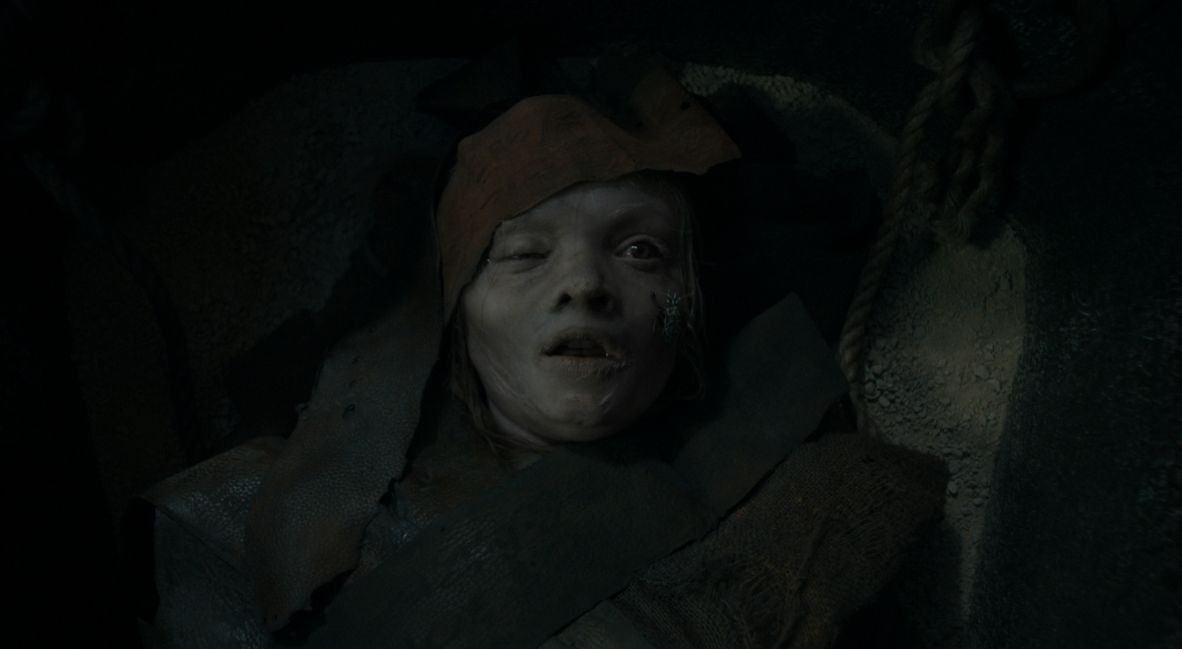
Certainly, the main characters acting foolishly is a horror trope, lest we have easy solutions to their threats, but the degree of foolishness in these parents is galling from scene one and only grows more so throughout the runtime. The fact that Larissa (Laia Costa), a trained nurse, wouldn’t recognize that her daughter is in this catatonic and denigrated state and would need highly specialized facility care, boggles the mind, even as the denial of a child with a disability’s health needs is unfortunately a real thing we observe in the real world.
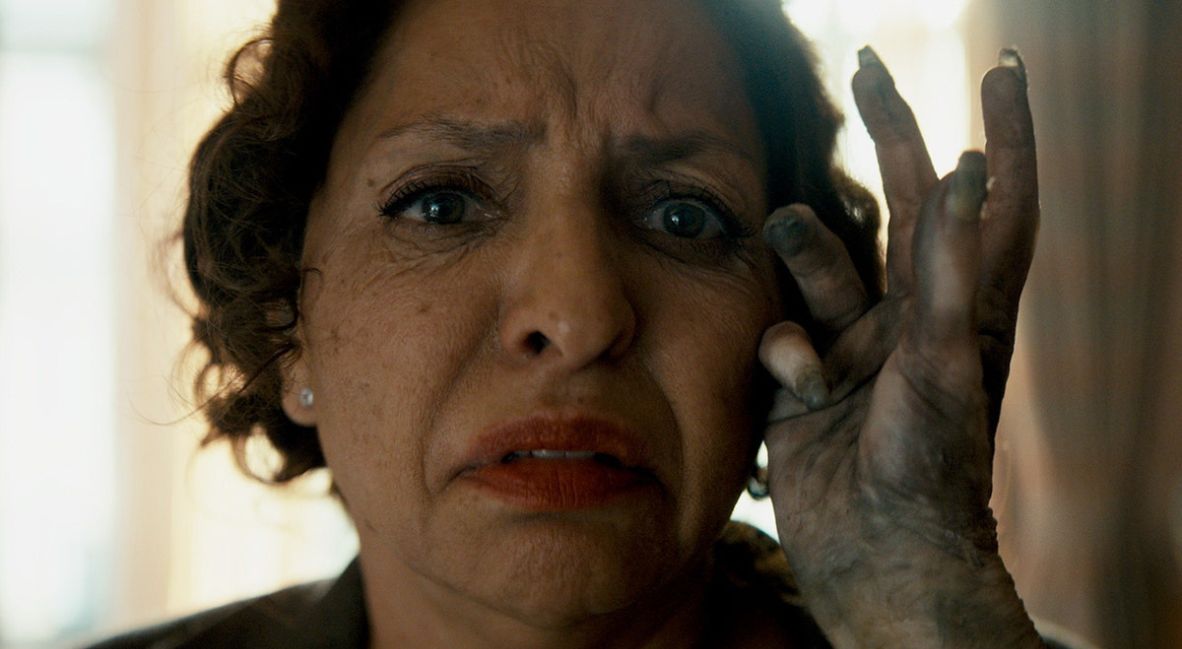
Is Cronin trying to say that a mother’s desperate love for her missing child would obscure their common sense so much that she doesn’t seem to care that Katie (Natalie Grace) is endangering her other kids? While Costa gives the best performance she can, the script gives her so little to work with, making it more down to the audience to rationalize her baffling decision-making. It is truly enraging to watch for anyone with a lick of common sense during the runtime of Lee Cronin’s The Mummy.
The dad, Charlie (Jack Reynor), fares no better, going along with his wife’s position until he increasingly realizes Katie is a danger. But even then, he is incredibly slow to find an immediate solution to their problems, pushing such responsibilities onto the Egyptian characters to find the belated answers that often come too late. Reynor is a great actor, conveying the various stages of grief and heartbreak as he must deal with the supernatural trauma imposed on his family, but alas, even he can’t save the film from the utter weakness of its script.
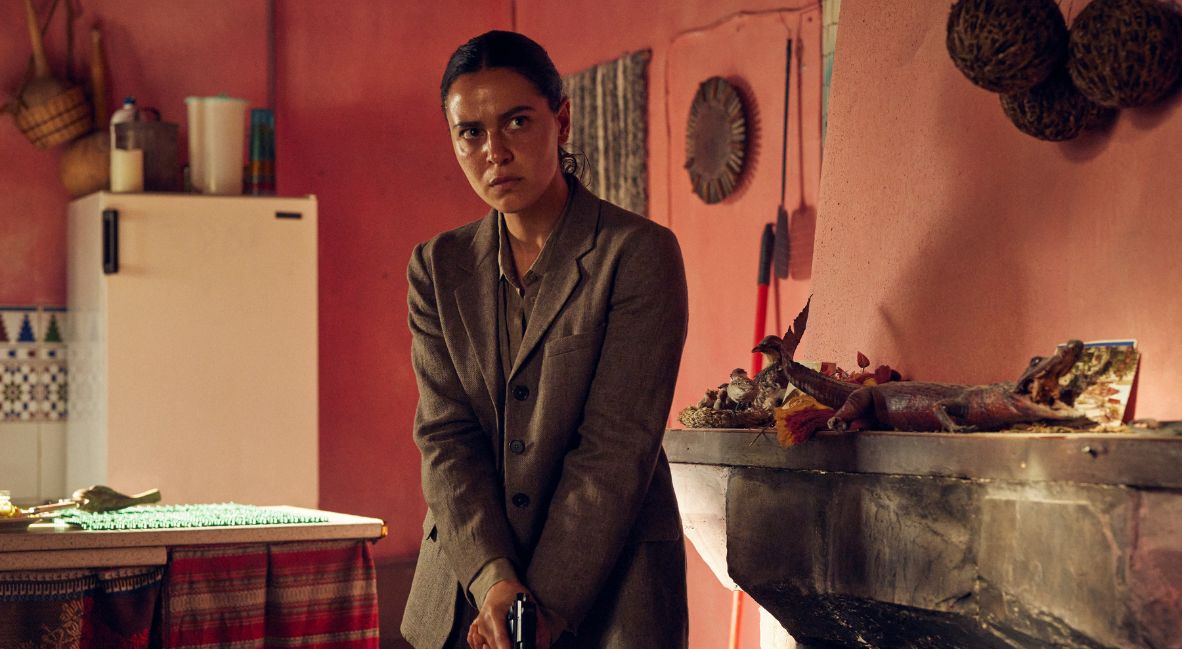
May Calamawy as Detective Dalia Zaki is a rare bright spot in the film.
The other kids, Sebastián (Shylo Molina) and Maud (Billie Roy), have significant parts to play, especially towards the end of the movie when they, especially Roy, really shine as horror actors. Veronica Falcón as Larissa’s mother, Carmen, is also solid, although the script makes her far more passive than she warrants. She is mainly there to provide some comic relief. While it’s of course great to see a Latine family centered, in terms of cultural display, it’s only their Catholicism that’s presented, which doesn’t even play a part in combating the supernatural.
May Calamawy, so often in whichever project she’s in, is the best part of Lee Cronin’s The Mummy. As detective Dalia Zaki, she is active, focused, and overall determined in such a refreshing way every time she appears on screen. This is mainly because she’s actually doing something in the midst of this American family’s tomfoolery of trying to keep this very clearly possessed child under wraps (pun kind of intended).
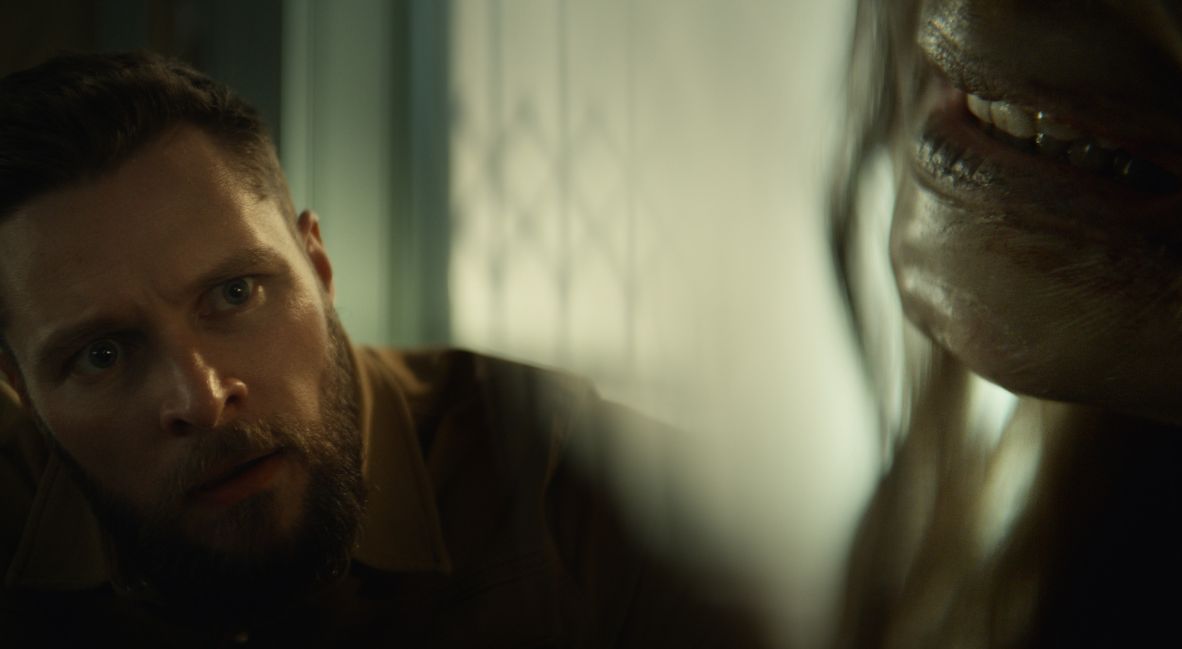
The scare sequences are also mostly engaging and intense, with Cronin utilizing hard body horror and gore that make an effective balance at making you wince and feel unable to turn away. Virtually every sequence with Katie is a horror aficionado’s delight, with Natalie Grace chewing up (literally and figuratively) the scenery.
Lee Cronin’s The Mummy takes a harsh pivot from the ’90s cult-classic.
This is certainly not your parents’ The Mummy of the late ’90s, with its lite horror set against a romantic fantasy adventure romp. This is something far more gnarly in its magical realism, and certainly not something kids could enjoy in Lee Cronin’s The Mummy, as they might in those other Mummy films, despite their deeply baked Orientalism.
Which brings us to the question of whether Lee Cronin’s The Mummy is Orientalist in its depiction of Egypt and its people. Having Egyptian and Iraqi cast like Calamawy, Hayat Kamille, and May Elghety in key roles, as well as other Egyptian and Arab actors, is certainly refreshing to see, especially when they’re speaking Egyptian Arabic for most of their screen time.
Yet only Calamawy receives non-stereotypical treatment, as Kamille and Elghety are shallow characters in their antagonism. Still, the overall representation is a highlight in and of itself and pushes organic SWANA representation significantly forward in major blockbusters, for which Cronin is to be commended.
Despite representation in the cast, Cronin’s story struggles with stereotypical treatment.

However, Orientalism hinges on the perspective and depiction of the country or region, and on what they say about it. While we see some beautiful natural scenery of Egypt that isn’t just desert, we otherwise see Cairo as dodgy and underdeveloped, in stark contrast to the New Mexico setting.
The story that unfolds with the titular Mummy is also steeped in Orientalism, as is typical of these films as a whole. And it ultimately casts Egypt as a dangerous, wild force that must “stay buried.”
There is a way to tell this story that offers Egyptian people more forward agency in dealing with these threats, such as in Netflix’s excellent 2020 series Paranormal. Outside of Detective Dalia combating the threat at the behest of this American family and their white father, it’s that same family that remains at the forefront of the narrative, and not often to good effect.
This latest reinterpretation is a massive disappointment.
This, along with the shoddy depictions of Egypt, makes Lee Cronin’s The Mummy an Orientalist narrative that seemingly can’t, or perhaps refuses to, move on from the legacy of the previous films. This, of course, is not the case with Calamawy’s Dalia, who is the biggest breath of fresh air, but otherwise still defaults to that Orientalist lens in its depiction of Egypt, Egyptian mythology, and Kamille’s “Magician” character.
Lee Cronin’s The Mummy is a deep disappointment as a story and character piece, but Cronin’s cast and his penchant for gnarly horror somewhat salvage it from being a complete disaster. Still, the lost story and character potential are painfully obvious while watching, especially as these parents make the most baffling decisions and watching Egypt still defaulted to an overall Orientalist lens.
The latter proves once again that for us SWANA peoples, we have far more of a narrative problem than a visible representation problem, and Lee Cronin’s The Mummy unfortunately doesn’t cut it, at least not now. We all deserve so much better.
Lee Cronin’s The Mummy is now playing in theaters.
Lee Cronin's The Mummy
-
Rating - 5.5/105.5/10
TL;DR
Lee Cronin’s The Mummy is a deep disappointment as a story and character piece, but Cronin’s cast and his penchant for gnarly horror somewhat salvage it from being a complete disaster.