

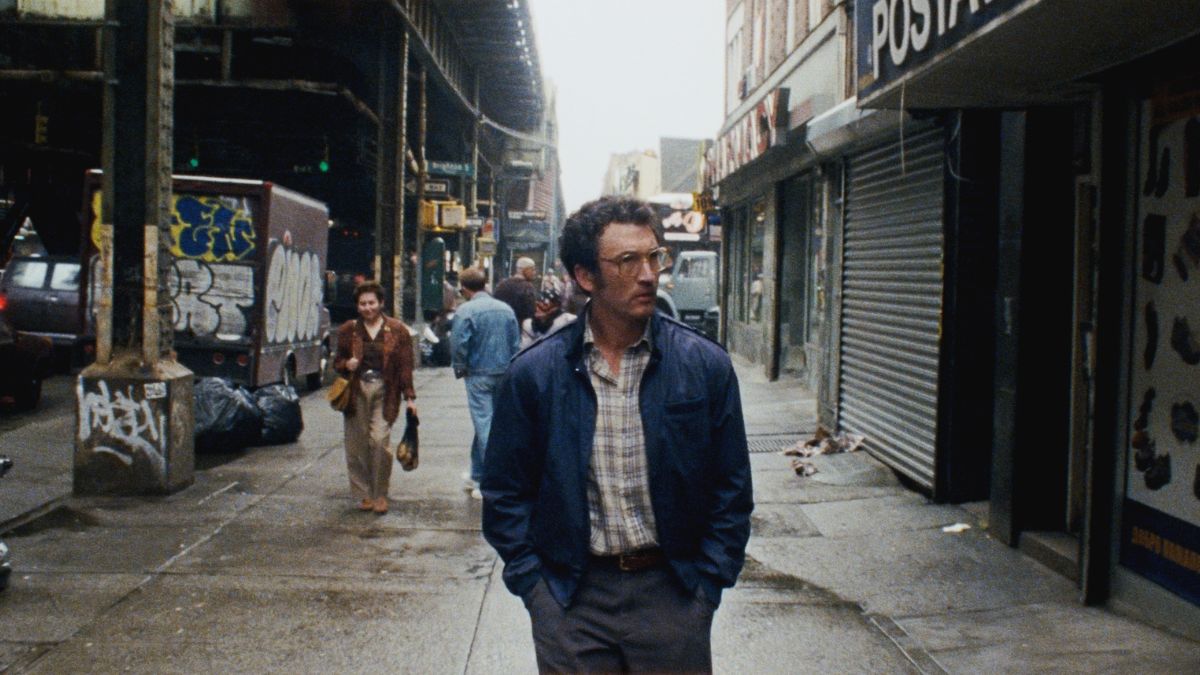
Paper Tiger is a very well-directed, semi-autobiographical crime thriller, of sorts. Writer and director James Gray taps into his own childhood once again to put to screen a family affair between siblings, parents, and spouses who dream of a better life for each other but become entangled with the Russian mob.
Irwin Pearl (Miles Teller) is a father of two in 1986 Queens. He does fine for himself as an engineer, but when his brother, Gary (Adam Driver), shows up for the first time in a while with expensive catering and a proposition, Irwin can’t help but wonder what life could be like with a little more financial comfort.
Gary proposes to get into business with the Russians who have recently been immigrating to New York City and are looking to redevelop a toxic canal district. Even though he knows there may be something dangerous about working with the Russians, Irwin trusts his ex-cop brother enough to say yes.
Adam Driver is the star of Paper Tiger, alongside a strong Miles Teller and Scarlett Johansson.

Irwin will, of course, quickly regret the decision. Way in over his head, the Russians threaten Irwin and his entire family while Gary tries to put a stop to the chaos on his brother’s behalf. Structurally, Paper Tiger isn’t doing much of anything unique, but its themes are poignant, its performances are strong, and the direction in key scenes is excellent.
In his quest to raise his status and make a better life for his family, Irwin accidentally incurs the wrath of the Russians. All three Pearls do an excellent job performing in their parts. Teller finds a strong balance between terrified and defiant, while Johansson plays a range of experiences, including befuddled and mortified. A few moments where she reaches the peak of emotion are among the movie’s strongest.
Adam Driver, though, is the acting star of Paper Tiger. He walks the finest line between a deeply caring family man and a total schemer. You can never really tell how much Gary knows about the danger he’s putting himself and Irwin in when they talk with the Russians. He speaks with an air of confidence, but it’s always indiscernible whether that confidence is genuine or a show.
Above all, Paper Tiger is concerned with social class and social capital.
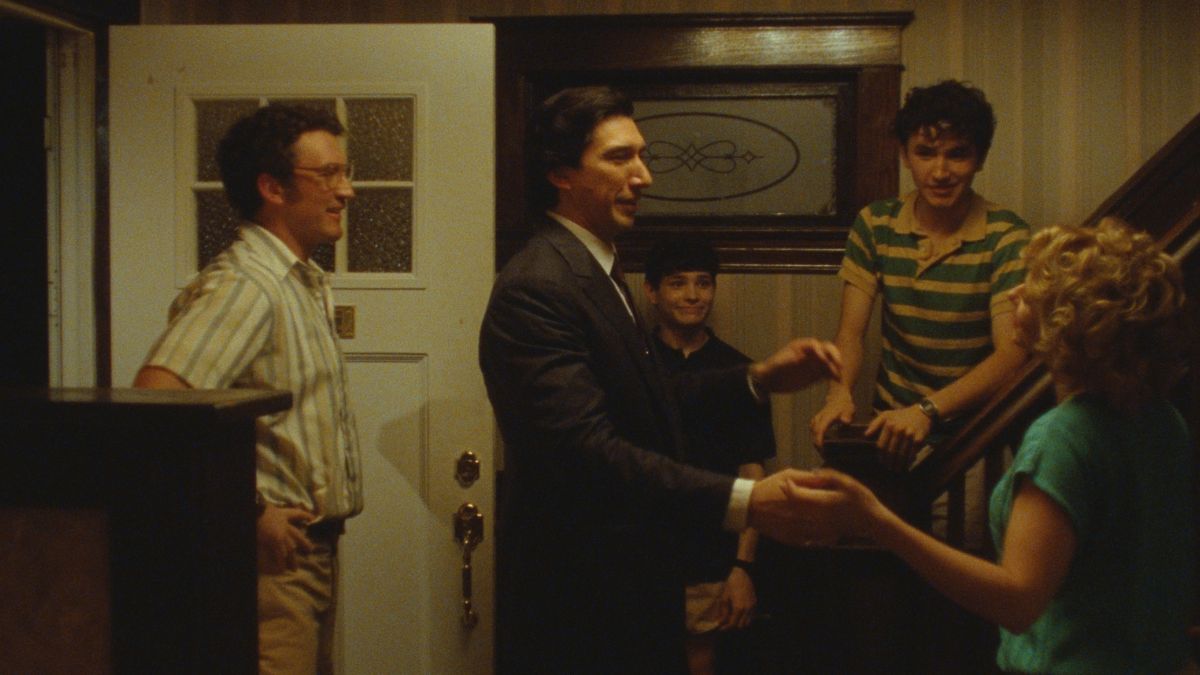
While the movie takes a little while to pick up, the wind-up is necessary to develop the characters. But once it gets going, it excellently builds tension through strong direction. Scenes shot in the Pearl household, in particular, are designed to ratchet up tension and emotion as much as possible.
The use of color, shadows, and reflections does serious wonders. Meanwhile, the very era-specific set design and slight claustrophobia build a house where nobody is being honest with each other. The only sense of inauthenticity in this mid-80s Jewish household is the bizarre accents coming out of everyone’s mouths.
Paper Tiger does well with the crime-thriller aspects, but it is nothing special. Above all else, it is concerned with social class and social capital. Gary is wealthy and childless, but going through an expensive divorce. Irwin is squarely middle class, with a wife, Linda (Scarlett Johansson), and two kids (Gavin Goudey and Roman Engel) to put through college soon.
The first key to understanding the broader dynamics at play is when the family visits Linda’s mother, Iris (Cindy Katz). Iris has made it out of Queens and lives in a visibly wealthier enclave in Great Neck. She pesters the family about considering moving out to the Island and joining her in the suburbs and in her newly elevated social class.
Sound performances and strong direction elevate the run-of-the-mill plot.

The truly striking thing in Paper Tiger isn’t just the internal family dynamics; it’s the comparison between the Pearl family and the Russians they’re up against. The Russians are deeply and globally connected. They aren’t just one small family in New York; they have an entire country backing them, as the movie points out. The Russians are infinitely and unconditionally supportive of one another, whereas the Pearls are practically loners.
We don’t know the first thing about the Pearls’ neighbors, or the Jewish community they may or may not be part of. They can barely tell each other the truth, with everyone in the house hiding something from one another. Support is mostly unconditional, but it never comes without serious kvetching first.
There’s no communal coming together to support the Pearls in their time of need. It feels like they’re meant to follow all the rules and bootstrap themselves to success while everyone else in town gets to be part of a big, open cheating scheme together to do whatever it takes to live a good life.
Paper Tiger plays these themes somewhat subtly. It’s a personal movie that doesn’t ask you to extrapolate any grand theories. But the sound performances and strong direction elevate the run-of-the-mill plot into an interesting time capsule and solid crime thriller.
Paper Tiger is playing now in select theaters.
Rating
Sound performances and strong direction elevate Paper Tiger's run-of-the-mill plot into an interesting time capsule and solid crime thriller.