
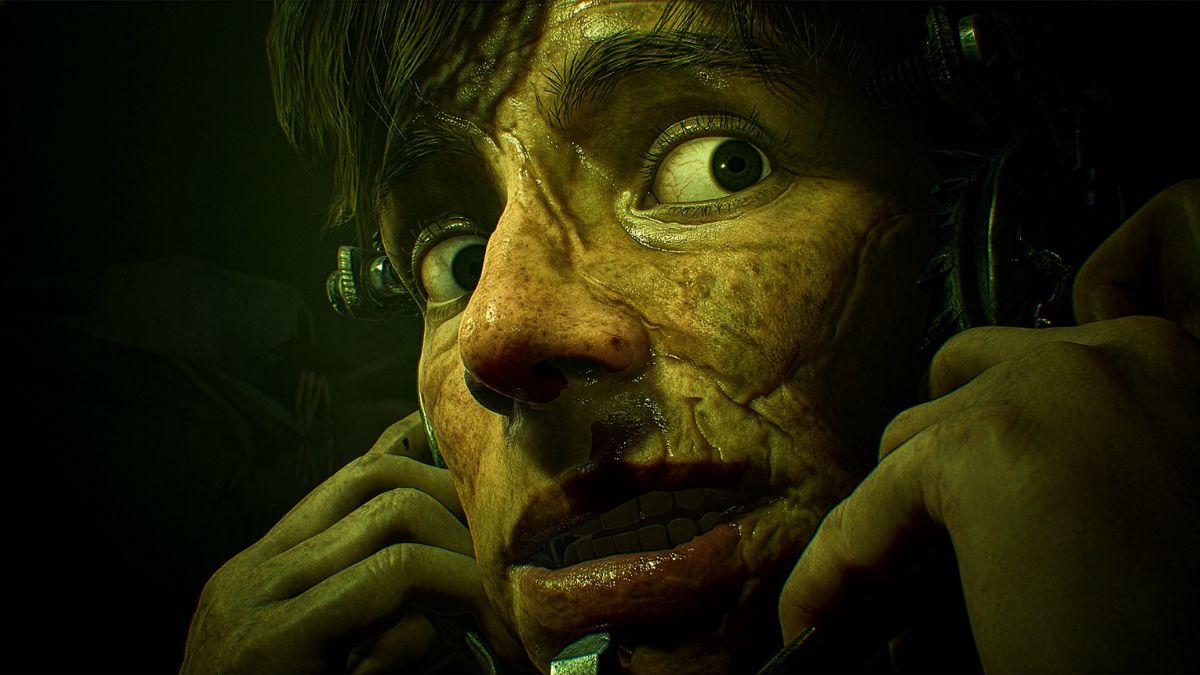
Utter the term asymmetrical multiplayer horror, and there’s a good chance that one of Dead by Daylight’s cadre of killers will manifest in your mind like a demon responding to a summoning circle. But while DBD may be the domineering force in its field, Bloober Team’s upcoming 3v1 multiplayer game Saw: Genesis is far from terrified at the idea of taking it on. The trick, according to the team behind it, is leaning into the rich and often repulsive source material on offer.
Multiplayer is a markedly different beast to developer Bloober Team’s typical projects, however, and Saw: Genesis also has its work cut out for it in winning over players from established online scarers like DBD and The Outlast Trials. Even with the weight of an established franchise behind it, that’s a challenge. Do you stick close to what’s popular, or break away at the risk of alienating your audience? Fortunately, handling uncomfortable decisions is Saw: Genesis’ bread and blood-spattered butter.
“There are many things like cutting off limbs that, for us gamers, work less, because you play many games where cutting off limbs is like, you know, it’s Tuesday. “
A 40-minute hands-on in which I and two others attempted to escape the clutches of a sinister Judge revealed a far less directly confrontational contest. Instead of cowering in fear or clambering into closets any time our captor came close, our crew of would-be survivors was often on the aggressive, scrabbling through chests and drawers for weapons of any kind we could use to chase the Judge away. And it’s exactly that kind of fight-over-fright hubris that makes Saw: Genesis’ trap-centric gameplay work.
Chase too hastily, or separate yourself from the rest, and suddenly you may find yourself isolated, alone, and locked in a Judge all too ready to punish your faults. Pair that with grim choices that cut away at your health bar, vision, and even limbs, and you’ve got the ingredients for a potentially fiendish multiplayer concoction.
One ready to contest the established genre sovereigns if – and it’s a big if – Saw: Genesis can deliver the authenticity and replayability that fans of the franchise and genre will demand. After playing, I had the turn the tables on creative director Damian Kocurek and found out how his team has handled differentiating Saw: Genesis from its peers, the reason for the game’s older setting, and how impactful violence differs between the silver screen and video games.
This interview with Damian Kocurek for Saw: Genesis was conducted on-site at a media event and was edited for clarity and length.
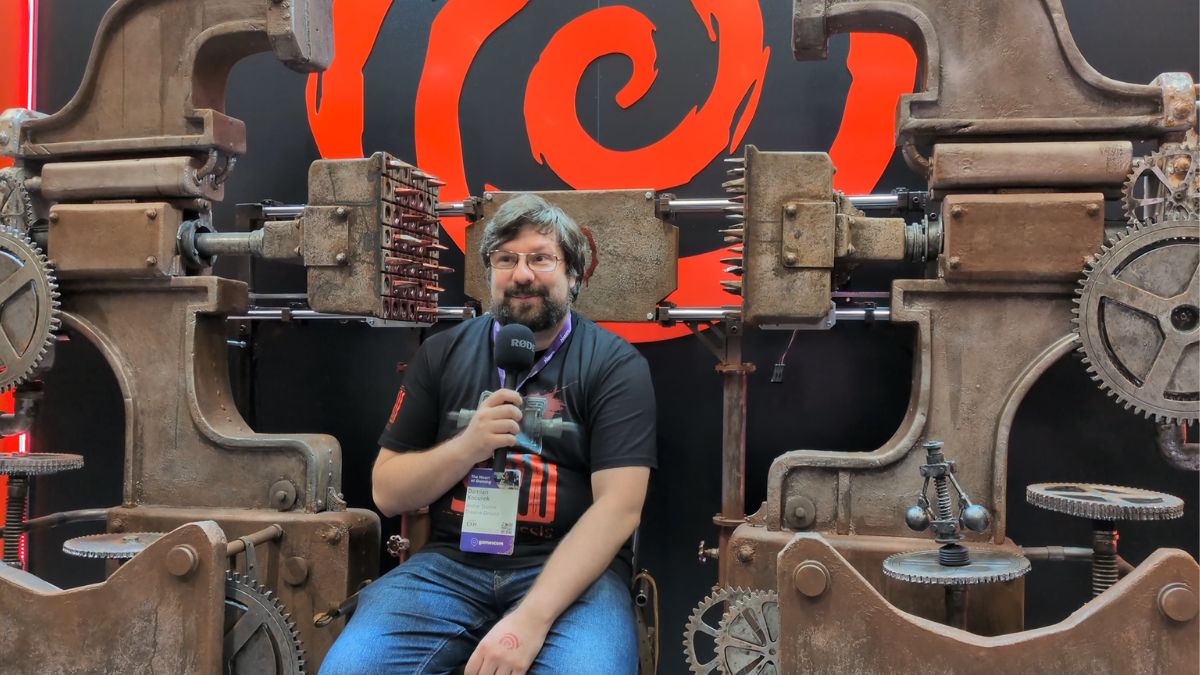
BUT WHY THO: Out of all of the horror series, what do you think makes Saw distinct?
DAMIAN KOCUREK: That’s a tough question. When Saw came out, Jigsaw and the way that they made that antagonist was totally unique. Of course, many movies then followed that. But I think the fact that the antagonist isn’t a demon, isn’t super strong and is actually a fragile person, but is still, in their own way, totally scary, is one of the most unique things about Saw. The fact that he has his own kind of motivation and that motivation is very strong.
It’s twisted, don’t get me wrong. He’s not the good guy of the story, but the motivation is very strong. And at some point people need a will to live, to actually survive. The way that he goes about it with the traps is very different. The combination of those things make a very unique IP. I think that’s why it [has worked] for so many years and still [does] to this day.
BUT WHY THO: How difficult was it for Bloober Team to get the license for this game?
DAMIAN KOCUREK: It’s always hard work. There was a connection before with Blair Witch, so it’s not a completely new partnership – there was a bit of a trust because [of that]. But it was also very exciting that we got it and are working with the massive IP that Saw is. We’ve been recently at Summer Game Fest and we also saw that in the States, the IP is even bigger than in Europe. That is also something really cool to experience.
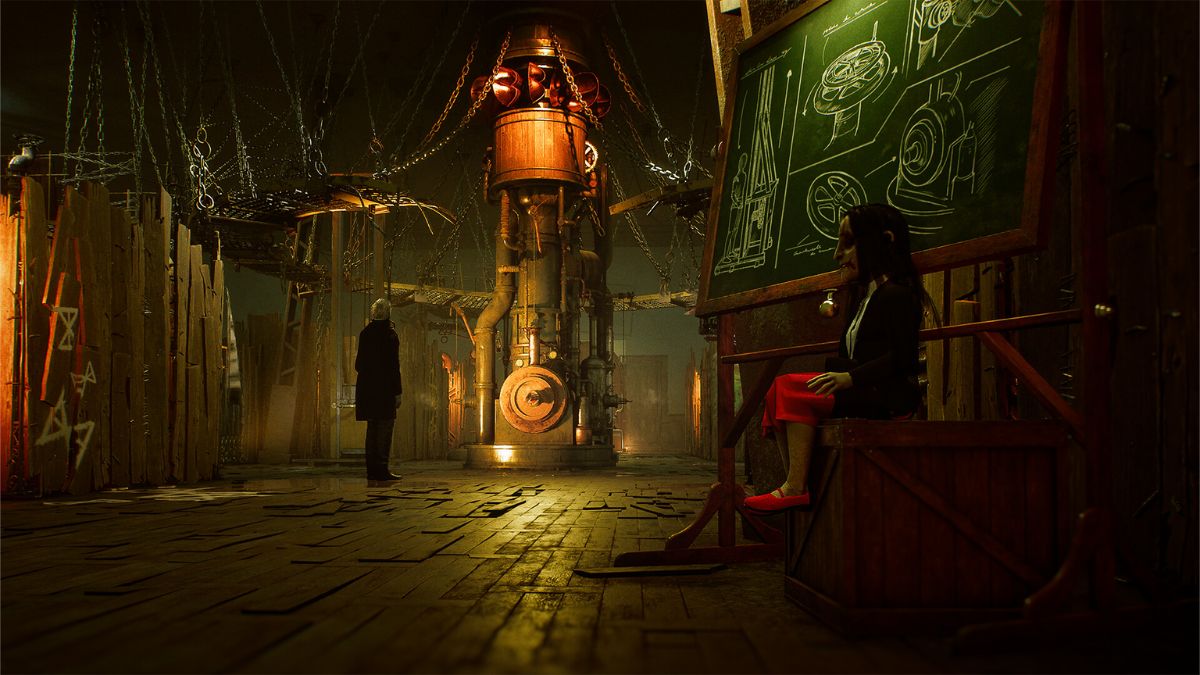
BUT WHY THO: Saw: Genesis is set one hundred years before the events of the Saw movies as we know them. What particularly drew you to that time period? The machinery, the people, what was it that appealed?
DAMIAN KOCUREK: You’ve hit the nail on the head. The first question that we wanted to answer was: What is the period where a group of Judges like we have in the game could operate and not be found out and actually have a lot of people that they would help in their twisted way. And it’s Europe after the First World War. There’s a lot of people that died during the war, a lot of people are in troubled times. Countries are rebuilding, so there aren’t a lot of police, for example, that are actually able to help in those situations.
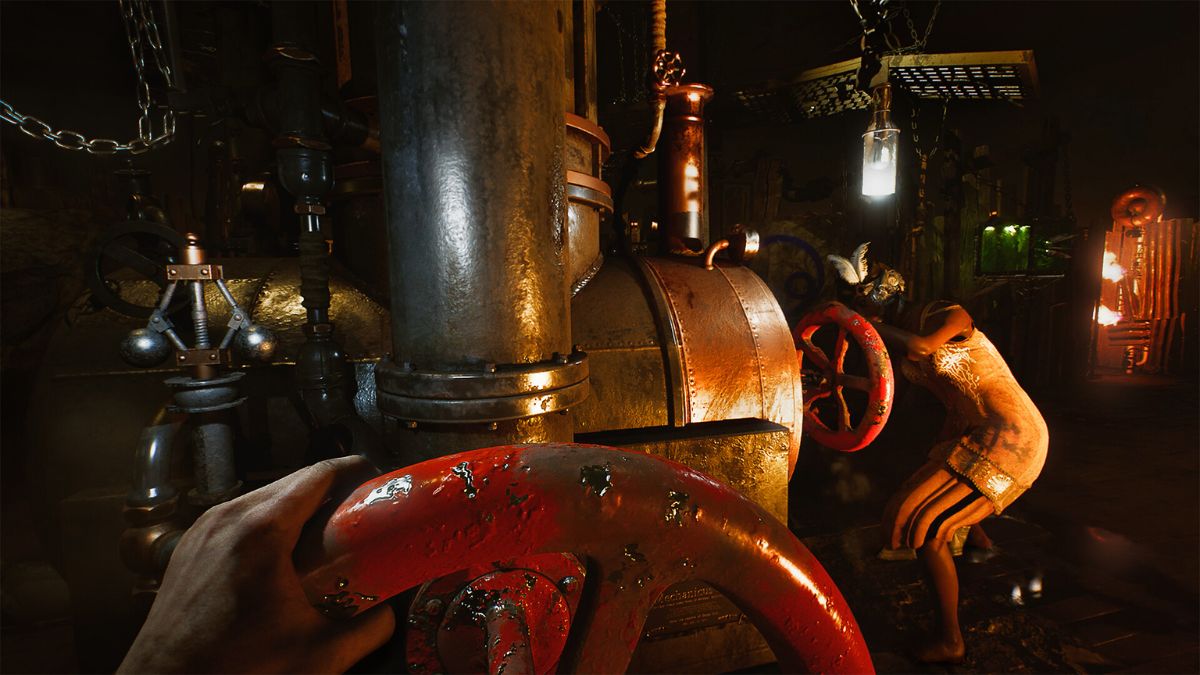
At the same time you have the contrast of massive technological advancement. So all of that in combination creates a very unique aspect that we wanted to lean into. And when we started to explore it a bit more, then you see the technology, especially [older bits like] the steam machines – they are big, they are kind of rugged, they are very raw. They create something visually very exciting for us. That combination really works.
BUT WHY THO: Violence, often shocking violence, is a core component of Saw. Was that a challenge to convey in a video game? How far did you feel you could go with what you were asking players to do?
DAMIAN KOCUREK: It was definitely a challenge to find out how to do it. One of the reasons we went first-person for the game is that we can offer something that isn’t really available in the movies: We can put you in the shoes of those people and actually give you that choice. Would you sacrifice your own hand to get out of the trap or risk death? That’s the fantasy that we wanted to give you. Being in first person also makes this more visceral in many ways because you’re doing it to yourself.
So we had to look [and think:] ‘How far can we go?’ And many things that we didn’t think were that bad and would probably be okay in movies were much worse for us. For example, in one of the traps you have to pull out your own eye. There isn’t that much graphic violence in it because you don’t see that much, but it is very visceral because of the action that you’re doing. On the other hand, there are many things like cutting off limbs that, for us gamers, work less, because you play many games where cutting off limbs is like, you know, it’s Tuesday.
Movies can go farther with some [elements of] gore than we can in games, so it’s a different barrier. So a lot of research, a lot of tryouts, a lot of looking for concepts that really work and don’t go too far. We’ve arrived at some really cool traps that I think are both original and still convey what Saw is.
BUT WHY THO: One of the themes of Saw is that people have something they need to atone for. With Saw: Genesis being a multiplayer game, are there going to be backstories to the various characters, and how will players discover that?
DAMIAN KOCUREK: There are a few things that we have in the game for people who really want to get into that. We call it guilt [in Saw: Genesis]. There is something that those characters have done to get taken to the test that they have to redeem [themselves] for. [Characters] have their own backstory, and when you level the character, you reveal parts of their backstory, and part of it is connected to their gameplay. So we have guilt as one of the options for building a character.
For example, you can have made a character such that they did a certain thing [such as] they deserted from the army. That gives you different stat bonuses and has its own backstory. You can have a different guilt that they did something else, that gives you a different [result]. So it’s connected to a gameplay choice.
BUT WHY THO: Dead by Daylight is the domineering force in asymmetrical multiplayer horror. How does Saw: Genesis stand out and carve its own space in the genre?
DAMIAN KOCUREK: Dead By Daylight is definitely the king of the genre, there’s no point in avoiding that. The original idea was: ‘What if the killer isn’t unkillable? What if the killer has to play in a way such that you can’t be sure that you always win?’ You can be killed – that changes the dynamic. That’s something that is uniquely different. The Judge has a lot of power, but it’s more of a mental power, a lot of knowledge. Knowledge of the location, knowledge of where the objectives are. So they have to use that.
They have to play a lot more mind games, preparing traps, preparing situations. But they can overplay it. They can go into danger and actually get killed and lose that way. And where the survivor side is usually the weak one, for us they are desperate. They are going through it and they can use tools that they find to use as weapons. So they are the more brutal side. That dynamic is a different thing to what you see in Dead by Daylight.
BUT WHY THO: How many different Judges are there in Saw: Genesis?
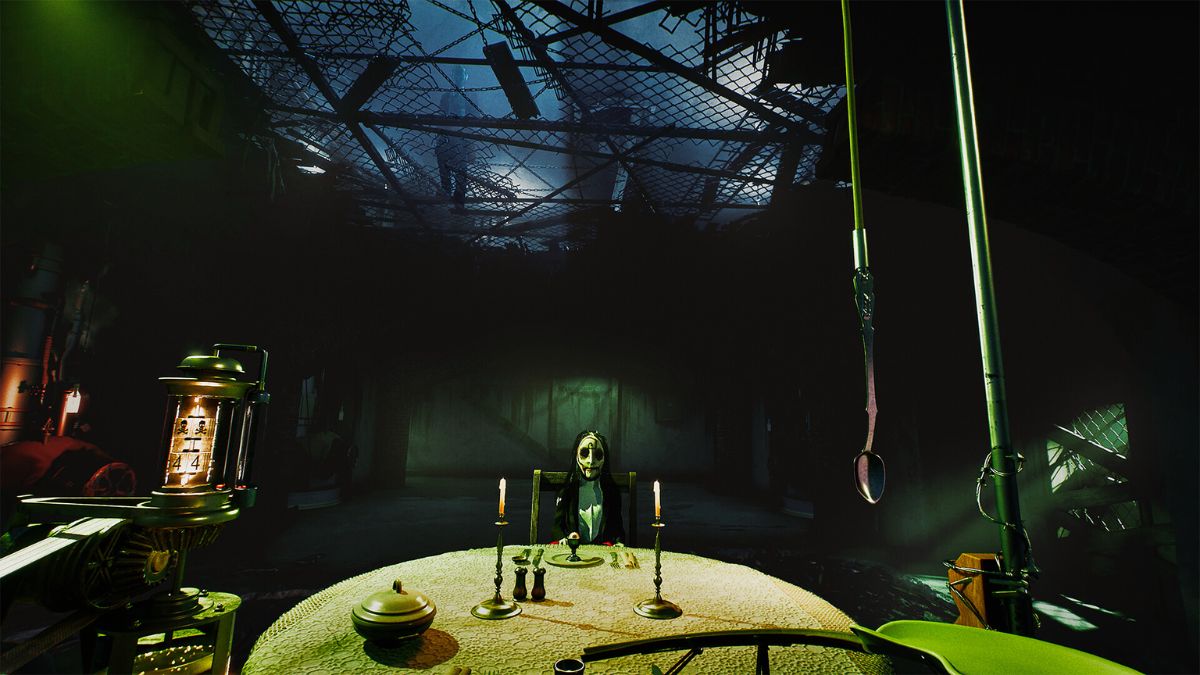
DAMIAN KOCUREK: Right now we have shown one Judge. That’s the Doctor. On early access, we will have two Judges. So we have one more that we haven’t talked that much about. And after early access, we plan to drop content with both more Accused, more Judges, and more locations to have something for everyone.
BUT WHY THO: What changes between each game of Saw: Genesis to keep it replayable?
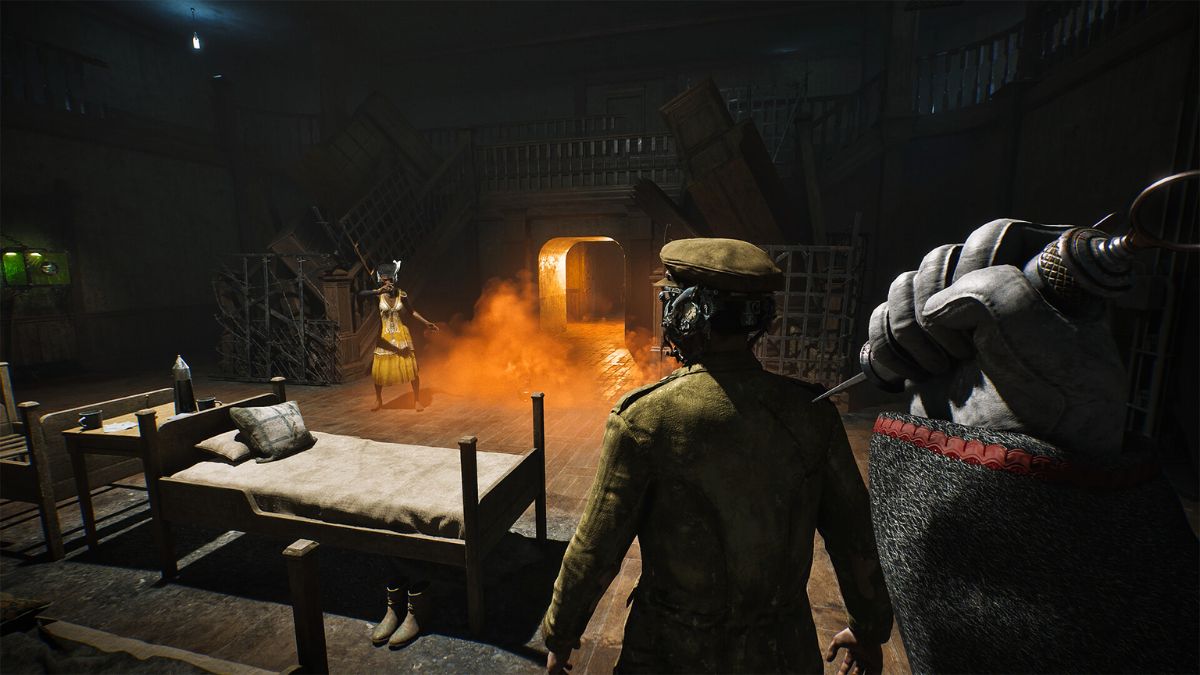
DAMIAN KOCUREK: There are a lot of things that we’re thinking about, a lot of different levels. On the location, for example, each location is generated, but each location has its own style. What we [played] is the orphanage. Another location that we’re working on is a mine. They will have different styles, but within each location there will be different paths, different options. Some will be shorter, some will be longer, some will be more populated. So each time [the Accused] will have to explore the location.
And there are two challenges on each playthrough. There are big puzzles where the Accused have to cooperate to be the best at it, and those puzzles are rolled from a larger pool of challenges. So each time you have a combination of a different location that has a different generation and different puzzles on top of that. And when you combine that with Judges that work differently…
For example, the Doctor is a very close one. He wants to stick you with the syringe, so he wants to stalk you. The other judge is more of a trap player, further away and the playstyle is different. That combination gives us a lot of replayability. It’s definitely not comparable to the current
Dead by Daylight, but when we add more and more, then we will see more replayability. Because if we add a new challenge, it doesn’t just add it to one place on a new location, it populates over the entire game that we have, which gives us a lot more dynamism and control.
BUT WHY THO: What do you see as an ideal balanced result to a game in Saw: Genesis? Is it like a couple of people getting away, a couple being killed?
DAMIAN KOCUREK: That’s something that we’re trying to also find out and we’re still tweaking. The current idea is that one person escapes, one person stays in, is branded, and one person died, but it’s very different between the games. We definitely don’t see that if the Accused didn’t escape, then they lost, because that’s not the test. We want players to see that the escape is an achievement in and of itself. You should aim for that and try to do that, but it will not happen that often.
BUT WHY THO: What’s your favorite way to play the Judge in Saw: Genesis?
DAMIAN KOCUREK: That’s a tough question. I really like to play with people, so I want to be close and want to scare them into movement. My favorite way is if I can bait the players into a trap that I’ve prepared beforehand. I will bait you [from] just around the corner, I have set up traps that will catch you and then I get you and separate you from the others perfectly.
BUT WHY THO: That sounds suitably horrible.
DAMIAN KOCUREK: Yeah, exactly! [Damian laughs]
Saw: Genesis is set to release in the first quarter of 2027 on PC.