
Dragon’s Dogma 2: Dark Arisen is out in the wild, and who would have guessed, it’s pretty good. Capcom’s on a generational heater. But how do you go about making a DLC like Dark Arisen? How do you incorporate two very different sets of feedback into a single release, or design a completely new area that has to live within the confines of the original game and its systems?
At Tokyo Game Show 2026, we sat down with director Kento Kinoshita and producer Naoto Oyama to chat about all that and more. This interview has been edited for brevity and content.
This Dragon’s Dogma 2: Dark Arisen interview has been edited for clarity and length, due to transcription issues, we have atributed all quotes to both Kento Kinoshita and Naoto Oyama.
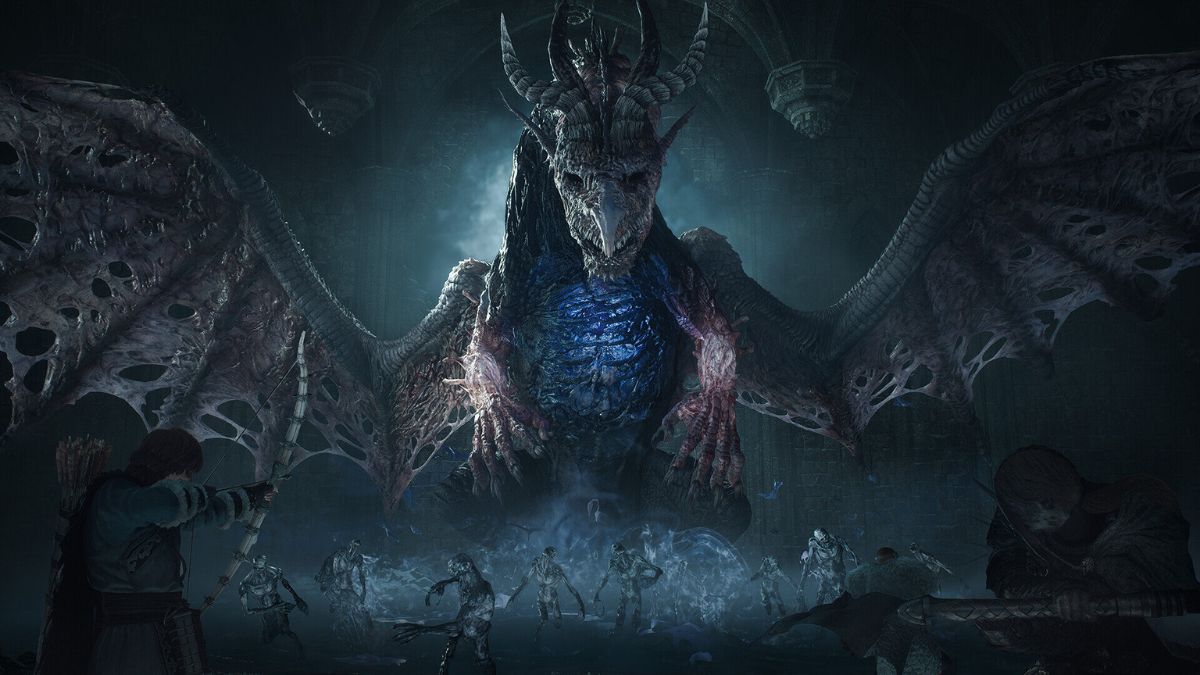
BUT WHY THO: The original Dragon’s Dogma received very different feedback from players in different parts of the world. Broadly speaking, in the West, we were like, “Yes, friction, good! We love that.” But in Asia, it was a little less enthusiastic. When you were making the DLC, how did you incorporate those two very different sets of feedback?
KINOSHITA & OYAMA: We feel the same about how the reception was done broadly, as you said, split between East versus West. When it came to the DLC approach, we didn’t want to take anything away from the experience for those who enjoy the unique sort of realism and friction that Dragon’s Dogma brings to the genre.
But we felt that we could add in more options for those players who maybe for whom friction became a frustrating aspect. So by giving them options to maybe make it a smoother experience for them, it means that those who don’t want to take those options can just ignore them and continue to have the Dragon’s Dogma-style gameplay experience that they love.
So for example, the Dragonsplague, the feature in the original game, is still in there, but while some players found it interesting and exciting to have this kind of virus shared among the Pawns, some obviously saw it just as purely a negative. So we haven’t taken it away. It still happens because it’s kind of part of the game design that we had in mind, but we’ve made it easier to tell what’s happening. So the visual indicators of which Pawns are infected are easier to see.
And also there are better buffs on the Pawns that do have it. So the balance of positive and negative of the plague is actually now made clearer where you might want to keep it for a while because they’ll actually become stronger while they’re infected. And we’ve added new ways to handle it if you want to clear it off your Pawns more easily.
That’s our approach to saying that we don’t want to just cut a feature to make a game smoother, but we give you ways to balance your own experience of friction.
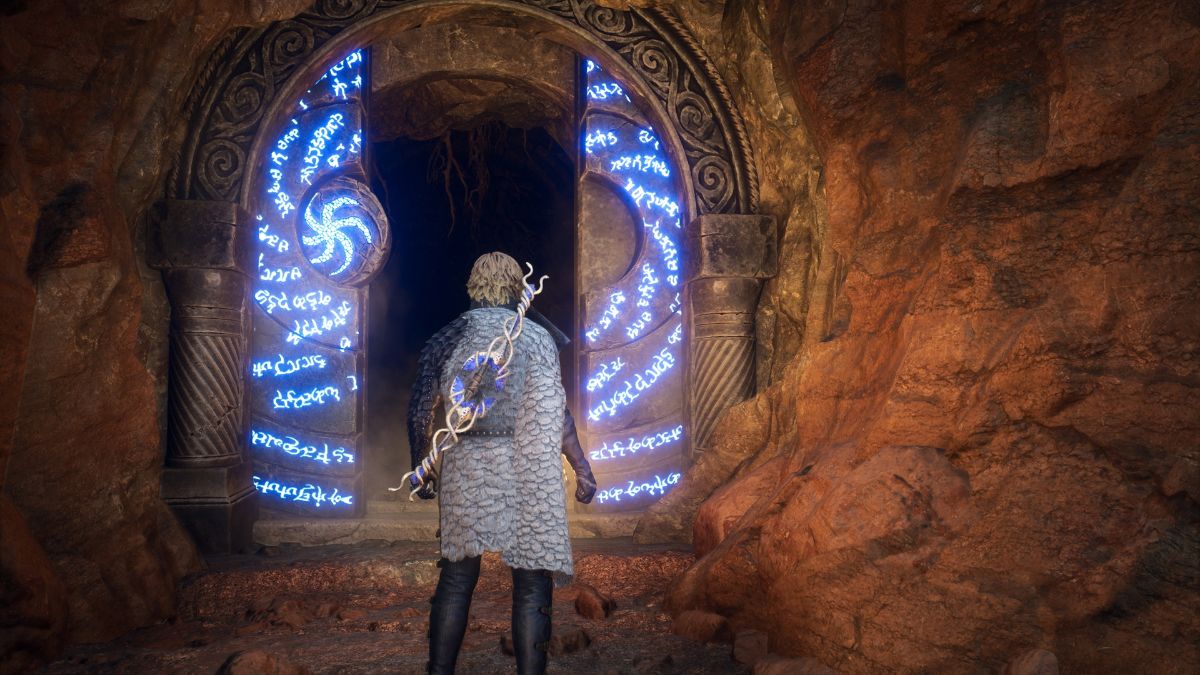
BUT WHY THO: One of the things that stands out about Dark Arisen is how much has been added. This is a very large expansion. You’ve got new storylines, challenges, new cosmetics. It’s a lot. Can you talk about how you determined what you wanted to do with Dark Arisen, and how you went about approaching development?
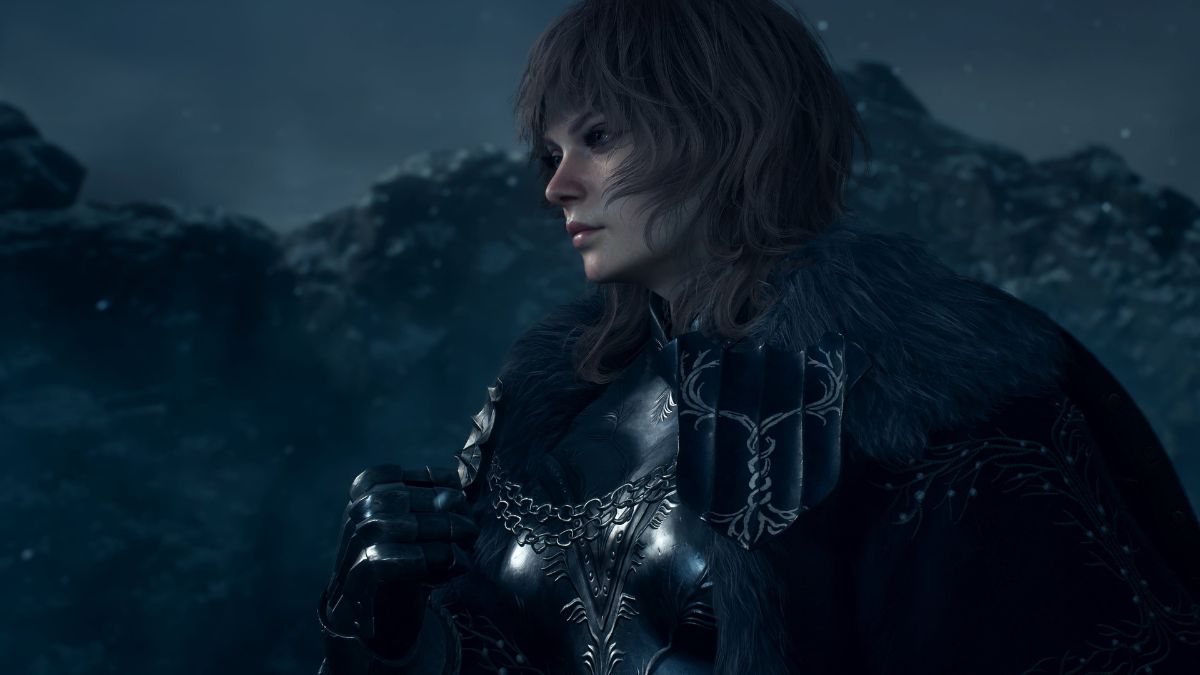
KINOSHITA & OYAMA: As you mentioned, those are the three major pillars of the expansion. And we really just felt that first and foremost: it was obvious, let’s make a new map area because our core fans whose feedback we take very seriously have told us they love the experience of the game and they played it to death, but they want more. They want to keep adventuring in this unique take on the RPG open-world experience. So naturally we added the new frozen region of Norgan and a new story to explore there.
But at the same time, we think that those fans don’t want to forget Vernworth and the areas that they loved exploring and got familiar with. It kind of feels like home to them in Dragons Dogma 2. So as you mentioned, by adding in 12 new Lost Rites dungeons, it helps you sort of go back to the original experience in a fun new way.
And then finally, the character creator parts, Pawns are really quite a unique part of the experience for Dragons Dogma. And we know from looking online at all the different social posts and things people are sharing that they love to create not only their Arisen character like in most other games, but also creating this main Pawn who adventures with you and who can go out and be shared. And you can borrow other people’s [Pawns]. So they’re really enjoying creating unique pairings of characters and unique looks. So adding in a suite of new options for the character creators just made sense to us as a way to make that experience even more fun.
We just spoke to the existing players experience, but of course we know there will be new players getting on board with the DLC, in particular perhaps on Nintendo Switch 2 because the original game didn’t release [there]. So if they have purchased the Nintendo Switch 2 version, they’ll be starting from the start. They’ll be in the Dragons Dogma 2 areas. And the difficulty curve on the new content is designed with both kinds of players in mind.
So if you are a new player to Dragons Dogma 2 and you pick up, well, any version, but let’s say for example, the Switch 2 version and you start in the Vernworth area, you can of course still access the new Lost Rites dungeons and they are difficulty-tuned so that you don’t have to have completed the original game to enjoy them.
You’ll be able to start picking up the first few dungeons as you progress through the story and they work well as a kind of parallel experience. They’ll give you a chance to gain more XP and if anything, they can maybe help you progress the main game story more smoothly. So yeah, even if you’re a new player, don’t think that this is just an existing fan service DLC. I think that it really runs out the package for new players.
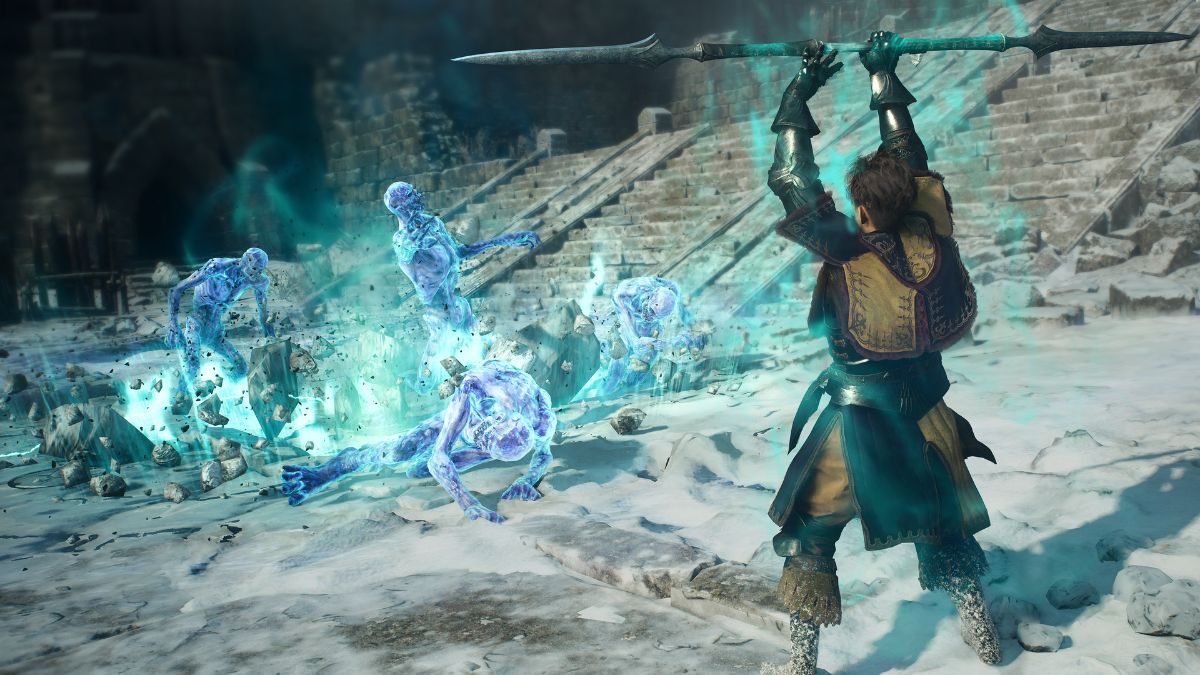
BUT WHY THO: I’m glad that you all mentioned the new area that people will have to be traveling to separately because I wanted to ask about it. How did you go about designing it? Was there anything you wanted to do in the original release that you couldn’t accomplish that you got another chance at in Dark Arisen?
KINOSHITA & OYAMA: The main idea was “Let’s create a totally different feeling area of the map.” And the original game has got a large, open, green fields type map and also a hot desert. So it naturally felt that if we made the frozen northern waste, that it would immediately feel very different and fresh. Even if you’ve played 100 hours in the original gang, it’s going to feel like almost a brand new game.
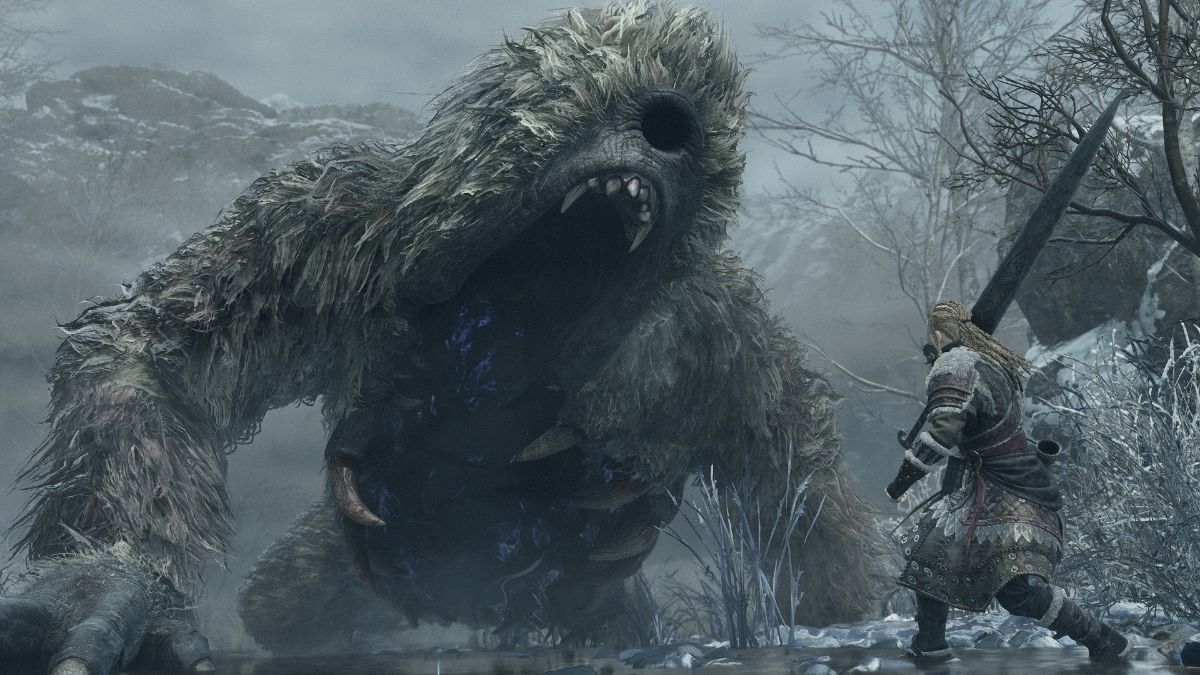
And at the same time, we want to bring that Dragons Dogma experience to it. So as you mentioned in your first question, the classic friction that people find is one of the things that makes Dragons Dogma what it is, is very much present. That cold weather brings challenges such as not only snowstorms and cold to deal with through putting on anti-cold armor… but also environmental and weather gimmicks and icicles and rolling snowballs and things like that.
Not only can the enemies use [those elements] against you, but if you’re clever, you can use them to your own advantage as well. So I think that the setting is not just a sort of pretty visual effect, you’ll find that it’s really an interactive experience in the new region of Norgan.
In terms of the story concept as well, I wanted to give the sense that this is completely uncharted territory. You’re playing the original game in kind of the settled lands with settlements and castle towns and whatnot, but this just feels like it’s so far away from the main area of the map that you’re almost on the frontier discovering why there is no substantial settlement there and what makes this place so dangerous. So that gives it a certain edge as well.
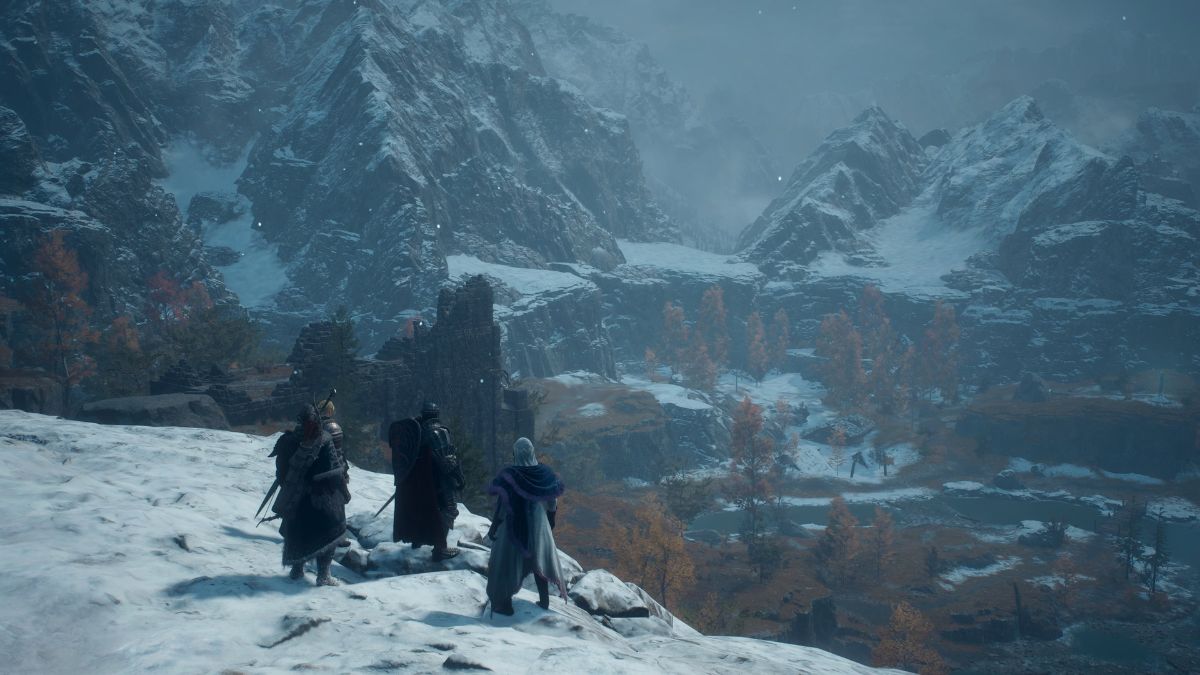
BUT WHY THO: Fast travel was interesting in the original game because the ferrystones that you used were limited use items. But Dark Arisen introduces the Eternal Ferrystone, which can be used as much as you like. Can you talk about the process of designing that and making sure that it fit within the world?
KINOSHITA & OYAMA: There were two major reasons for us to introduce the Eternal Ferrystone at this time. One is specific to the DLC game design, which is that there’s a gameplay cycle based on acquiring relics, loot essentially, and you go out and explore Norgan and as you get relics, you can’t use them as they are. You have to return to the settlement and have them appraised in order to discover what weapons or gear you’ve acquired. And that naturally adds more of a travel cycle to the gameplay than was there before.
So if players had to consume and acquire new fairystones every single time they wanted to go through a single gameplay cycle of fight, loot, appraise, repeat, then we felt that that would rapidly become more frustrating even so than in the base game because that travel is basically an essential part of that system. So it made sense on that basis to make it easier to have that gameplay cycle happen.
The other aspect was that, as you mentioned in the first question about friction and how broadly speaking, there was a bit of an East-West divide. We know that limitation and fast travel is something that people can enjoy working creatively with, but that… there were plenty of [other] players who said that they would rather just, even if it was just personal lifestyle reasons, “I don’t have time today. I need a quick session. I want to travel back. I’m going to break the immersion and just fast travel.”
That is something that we saw the opinion and we respected that. So adding in the Eternal Ferrystone, again, it’s an item that’s in your inventory that you can or can’t use as you wish. So players who want to ignore it and stick to the classic system and maybe take the ox cars and take those risks, you can do that. Players who want to just get where they’re going, the option is there.”
BUT WHY THO: You control the buttons you press, as the saying goes, right?
KINOSHITA & OYAMA: Yeah, you have free will.
I’m glad you mentioned relics, because they were something I wanted to ask about. Can you tell us about the relics and the process of designing them? Is there anything you’re excited for players to discover about using the relics in the old and new content?
KINOSHITA & OYAMA: My approach for the relic system was based on the idea that if you’re traveling to the Norgan region and you’ve already played the base game – you don’t have to clear the base game to go there, but let’s say you’ve played a certain amount of time – you’ve probably already leveled up your character quite a bit and acquired skills that way.
I thought something different would be good for Norgren because the enemy difficulty level is upgraded compared to the base game and it’s more challenging from the beginning and the difficulty also increases throughout the content.
Rather than just sort of increase the level cap and have the same experience happen again, rather than leveling up, I felt like gear up would be kind of an interesting approach. So as you go out and fight enemies and also you can discover relics through things like finding a cave with a chest in it and that kind of thing.”
And you appraise them, [and]… the weapons that you find might have a special skill attached to them,for example, that’s only on that weapon or that it’s sort of randomized… And that brought a new kind of excitement and you never quite know what you’re going to get out of your gearing up experience. That’s only happening in Norgan. So the actual relic gameplay cycle only occurs in Norgan.
But of course, if you go there and gear up, you can then go back to the main areas and play the Last Rites dungeons using the gear you’ve acquired. Or if you didn’t finish the original story, you could sort of do them in parallel and come back to and continue using that gear. So it just felt like a good way to bring a new approach to progression that didn’t feel like just the main game but plus more.
BUT WHY THO: DLC is always kind of a tricky prospect, especially with something that you can go back and forth. Dark Arisen doesn’t take place after the main game; you can play it concurrently.
How did you approach kind of giving players the freedom to bounce back and forth? What was that process like of deciding what the DLC would look like and how it would work with the original game?
KINOSHITA & OYAMA: It’s definitely different when you’re making DLC that isn’t endgame content because if it’s happening after the story, then you pretty much know where every player’s going to be at and you can design it based on that starting point. But we could have… different levels of players playing this. Some people could be at the 999 level cap of the original game to take an extreme example, but you could also have people in the hundreds of levels.
You could have players who’ve finished the main game story, you’ve got players who are halfway through it. You can actually access the Norgan area fairly early in the game. Once you get to the first settlement and go to the castle, the inn, at nighttime and speak to Brent, you can accept the quest that brings you to Norgan. We do recommend you get to around level 40 before you take it on, but there’s nothing stopping you from going and taking it on pretty early.
So all that being in my mind whenever designing the game, I knew that we had to really consider the difficulty tuning… In general, we expect people to maybe finish the story or get a decent chunk of the way through. Like I said, level 40, those kind of players, the normal difficulty level for the Norgan content should be tuned about right for them.
But if you’re like a maxed out, over-leveled core player, then we didn’t want you to feel like the new content was too easy at the same time. So in addition to difficulty tuning, we’ve also got the hard mode, which is being added to the game… It’s being added to the main game for free as well alongside… the DLC. So it’s always an option for the more hardcore players to ramp up the difficulty before they approach Norgan.
So hopefully the different styles of players will all find that the new areas are accessible to them regardless of their journey. If you start a new game as well from the hard mode, it’s pretty intense [laughter].
One thing I’d note is that although you can change existing safe files to hard mode at any time, in addition to starting a new safe file, once you go to hard mode, you can return to normal mode. So even if you think you’ve got what it takes, I encourage you to take this decision seriously.
BUT WHY THO: In every game, there’s always something that players don’t initially notice or don’t initially realize is very important to the design of the game, but usually is crucial to it. Is there anything like that in Dark Arisen that players may not initially notice, but is very important to it and that you are particularly proud of?
KINOSHITA & OYAMA: I would say that the environmental gameplay is something that might not be obvious at first how deep it is, but when you explore the region, you’ll see that the interactions of different weather and other effects is something that are quite deep for players to explore. So as I said earlier, it might just look like it’s just a sort of visual effect to have the snowstorms and the snow piling up, but definitely explore that gameplay to discover what you can do.