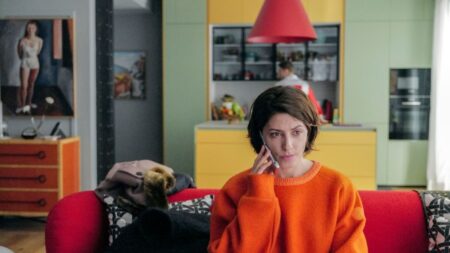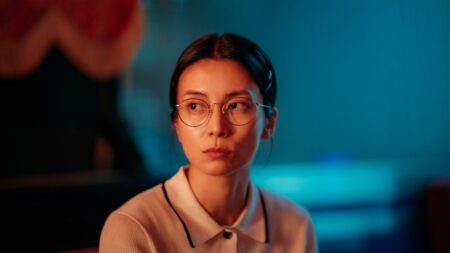

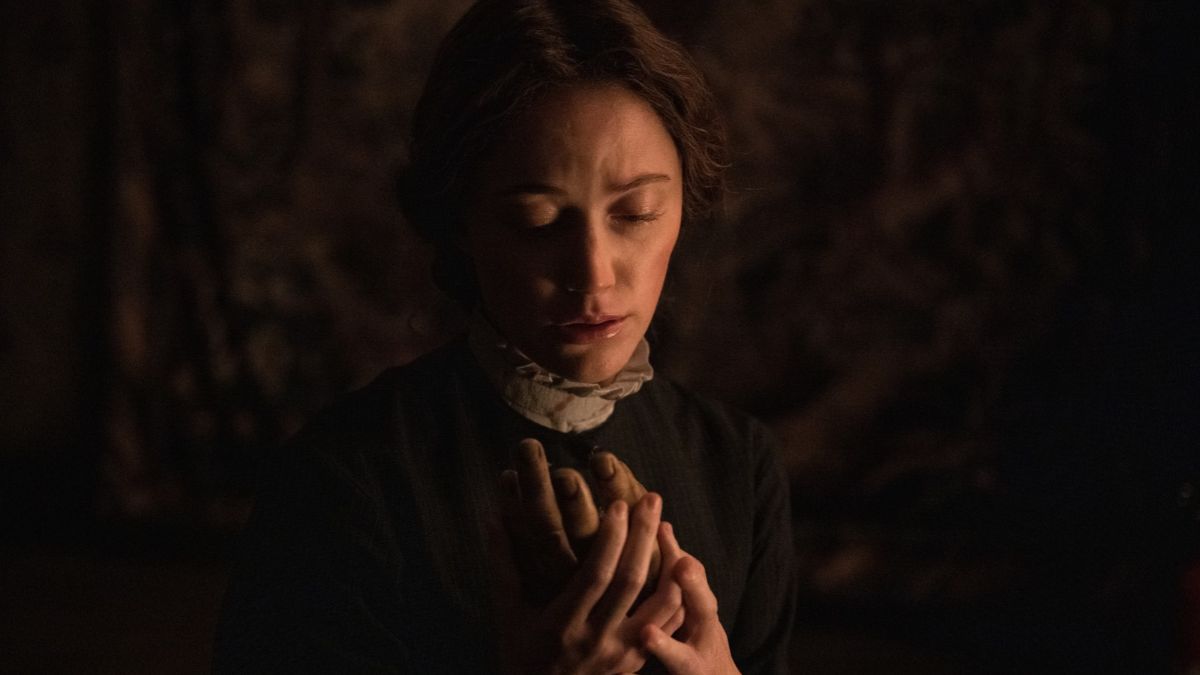
“My name is Winifred Notty, and I’m the sanest person I’ve ever met.” Thus begins the plight of Victorian Psycho, the Zachary Wigon-directed adaptation of Virginia Feito‘s 2025 novel of the same name. Winifred (Maika Monroe) is the new governess to the Pounds family, tasked with overseeing the education and care of Andrew (Jacobi Jupe) and Drusilla (Evie Templeton). And, despite her claims, Winifred is very clearly unwell. She frequently alludes to past missteps she vows never to repeat; several of her past charges have gone missing or met unfortunate ends, and she always tilts her head in unsettling anticipation of whatever Dutch angle cinematographer Nico Aguilar will be using for the scene.
But the Pounds family faces obvious challenges of their own. Andrew is the 1858 equivalent of a middle-school Andrew Tate fan, while Drusilla possesses an interest in sex and violence that is troubling for her age. Matriarch Mrs. Pounds (Ruth Wilson) is obsessed with decorum and polite society.
She terrorizes her staff because they are beneath her. Still, she only acknowledges her daughter’s struggles when they dare step beyond the confines of Victorian propriety, and she ignores her son’s issues outright because, as the male heir, he will soon outrank her. Mr. Pounds (Jason Isaacs) is burdened by a complicated family legacy, and he clearly aspires to relieve some of that stress by bedding Winifred should she ever let her guard down.
The narration sets up the central mystery in Victorian Psycho.
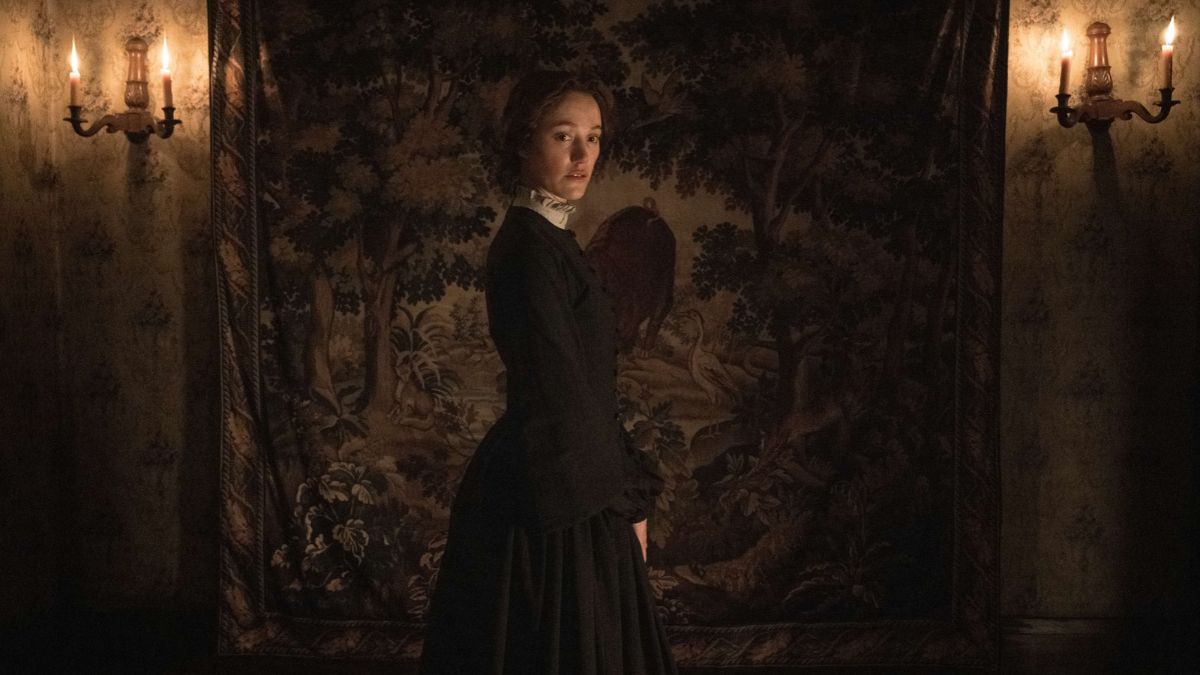
Virginia Feito’s novel focused extensively on Winifred’s narration, with the story acting as a stream-of-consciousness glimpse into a diseased mind. And since Feito adapted Victorian Psycho herself, it makes sense that this device would survive the transition to the screen. But the narration often falters here, at least in comparison to the source material.
A visual medium doesn’t allow for nearly as effective of non sequiturs as prose, where a quick aside needn’t necessitate a complete departure from the scene. The most illuminating elements of the novel’s narration are those that offer the clearest glimpses into Winifred’s depravity, many of which would never be allowed to be included in a film production.
Instead, the narration here exists largely to hype up the film’s mystery. Winifred reminisces on a mysterious past, repents of mysterious sins, and insinuates a mysterious connection to the Pounds legacy. A little bit of this would be fine. Good, even, because it lets the audience revel in how brilliant Maika Monroe is in the part.
Maika Monroe is so good that it’s easy to ignore the weaker elements.
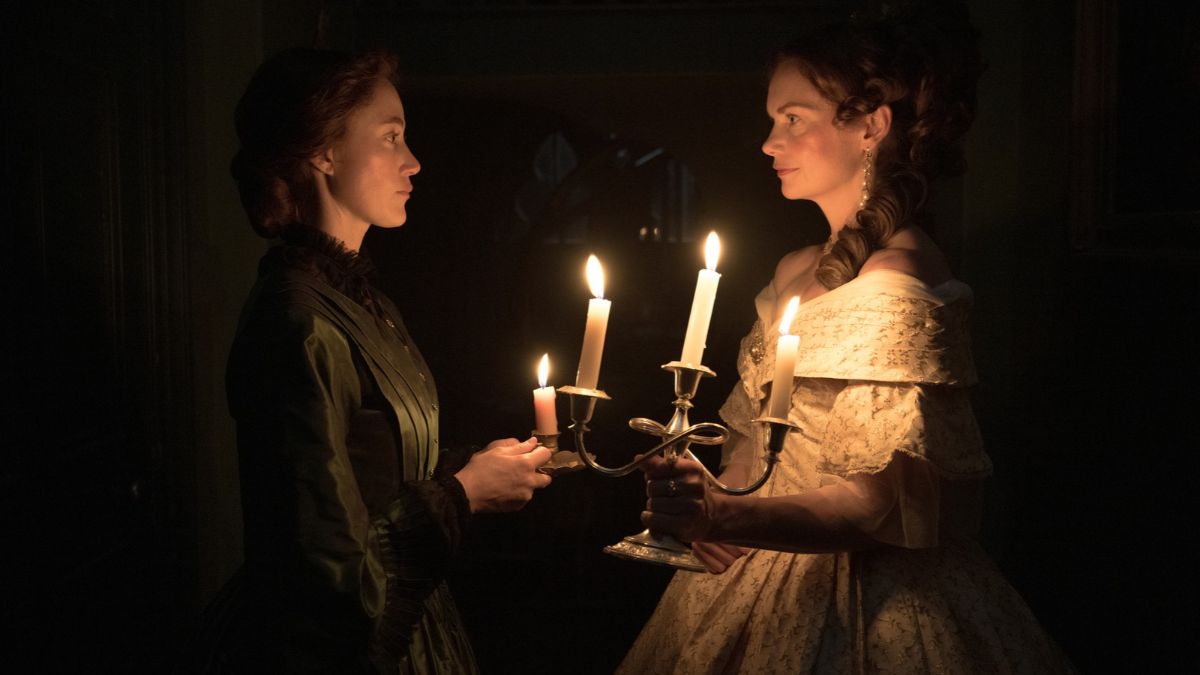
But spending so much time narrating around the mystery makes it all the more likely viewers will have pieced together the clues well before it is dramatically meaningful for them to do so. A little discretion could have gone a long way, both in allowing more development for the characters and in mitigating the film’s admittedly overstuffed 100-minute runtime.
Did I mention Monroe is brilliant? She is! Victorian Psycho has obvious weaknesses, but they tend to slip into the background whenever the film has the good sense to let Monroe take center stage. The excessive narration is tolerable when Monroe is the one delivering it. The maladroit approach to navigating time gaps is easy enough to ignore when it means we get to watch Monroe reminisce about something that happened just a scene or two ago.
And the film not being nearly as much of a slasher as the marketing would imply is a relative non-issue when Monroe is the one doing the slashing. The film initially faced some public setbacks regarding this role, with A24 exiting as distributor after the departure of original lead Margaret Qualley. Still, it is extremely difficult to imagine anyone else bringing Winifred to life as successfully as we see here.
A silly and bizarre adaptation.
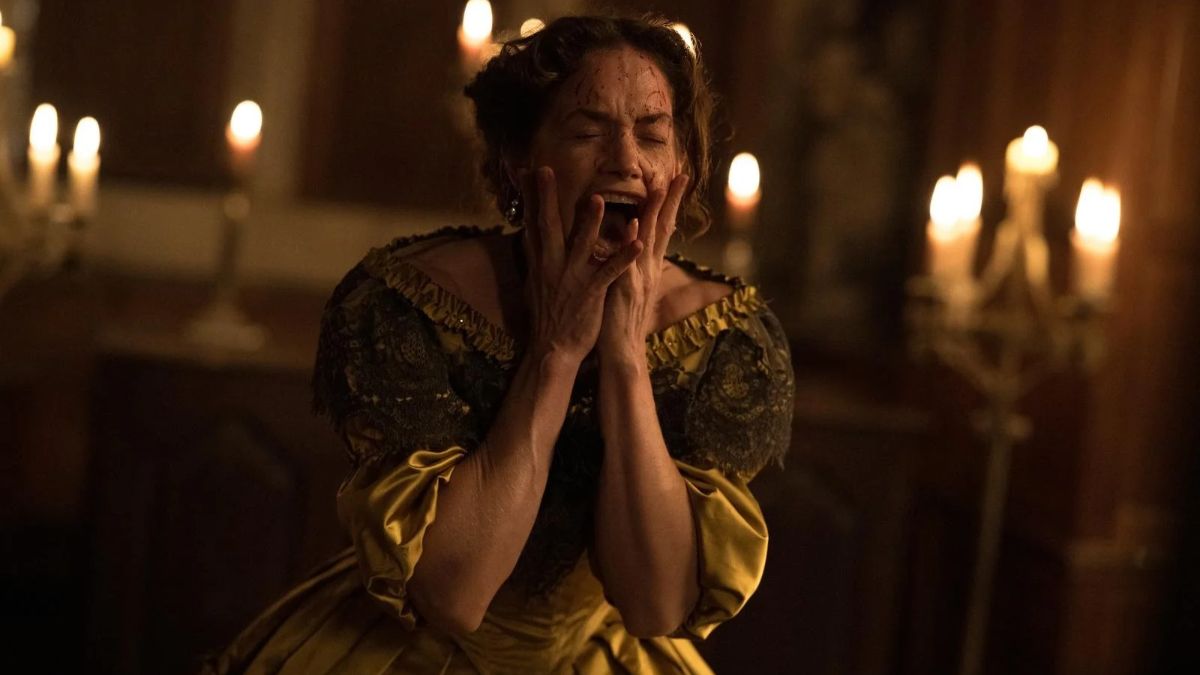
Evie Templeton is likewise outstanding, though she’s unfortunately also the member of the cast most underserved by the departures from the original novel. There’s no real weak link among the ensemble. Ruth Wilson takes to the material with a zeal that will particularly delight those who know her from “proper” literary adaptations like Jane Eyre and Anna Karenina. Jacobi Jupe will terrify everyone who cried over him in Hamnet. And Jason Isaacs is as good as we have all come to expect Jason Isaacs to be.
It’s more the strength of the film’s cast than the script’s weaknesses that stop the film from being an instant classic. Yes, Monroe is fully capable of carrying this film entirely by herself. But is it fair to her that she be expected to do so when she’s surrounded by such talented co-stars? Is it fair to the novel that such interesting supporting characters are brought to life by such a strong cast, yet never allowed the opportunity to be properly developed? Victorian Psycho is still exciting, silly, and bizarre enough to satisfy those who seek it, but it’s hard to ignore how great it could have been with a slightly more balanced approach.
Despite the R rating, Victorian Psycho does feel a bit like the PG-13 adaptation of the original novel. This is probably a good thing. Plenty who don’t have a stomach for the source text will do just fine here, while those who expected more mayhem will likely enjoy the chance to then breeze through Feito’s novel. As far as adaptations go, getting to be a good companion piece to the original work is plenty of success.
Victorian Psycho releases in theaters on November 13th.
Rating
Victorian Psycho is still exciting, silly, and bizarre enough to satisfy those who seek it, but it's hard to ignore how great it could have been with a slightly more balanced approach.