
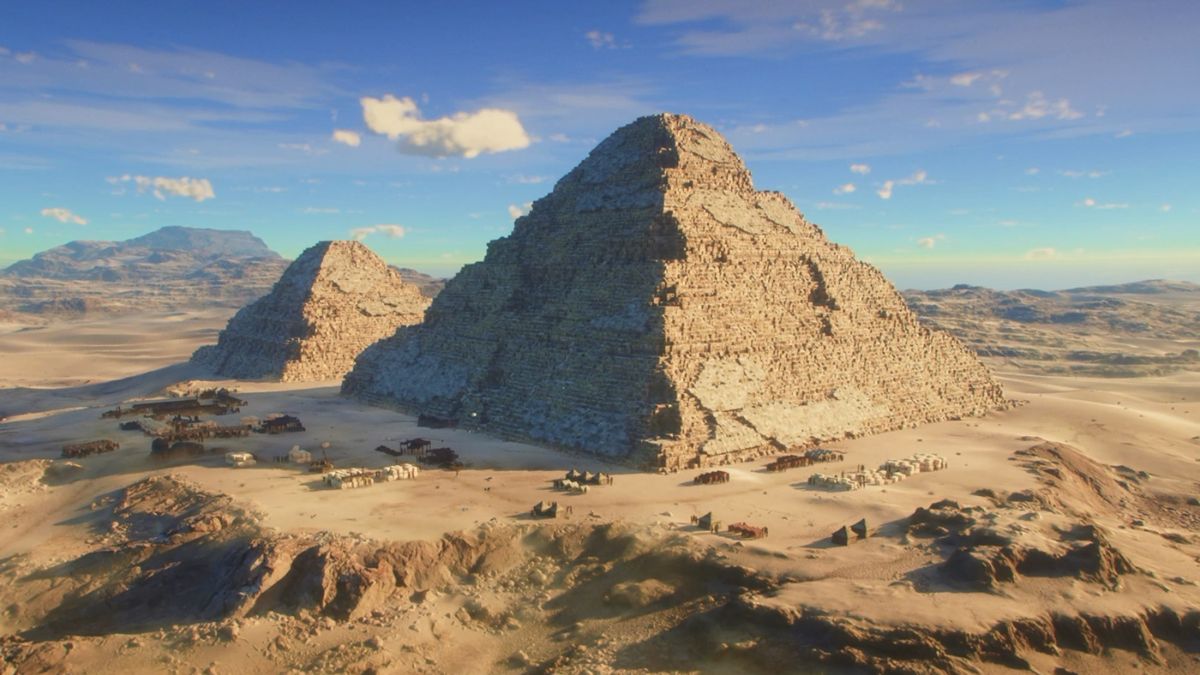
Anno 117: Pax Romana — Dawn of the Delta closes out the first year of the game’s post-launch content. The most expansive Year One DLC, Dawn of the Delta, takes players to Aegyptus, where the Nile is the primary waterway instead of the wide-open ocean in the game’s other two regions: Latium and Albion.
With a new province, Ubisoft Mainz has expanded on irrigation, added seasons, and more. For the launch, we spoke with Game Director Jan Dungel from Ubisoft Mainz about the game’s development, updates since launch, and what makes Dawn of the Delta the biggest DLC.
Having been the Game Director on Anno 1800 as well, Jan Dungel spoke to how Anno 117 is both iterating and following the post-launch DLC cadence of its predecessor. During our conversation, Dungel explained the nuances of balance and how Ubisoft Mainz kept its design vision while working on a region that is fundamentally different than what we’ve seen before.
This Anno 117: Pax Romana — Dawn of the Delta interview with Jan Dungel has been edited for length and clarity.
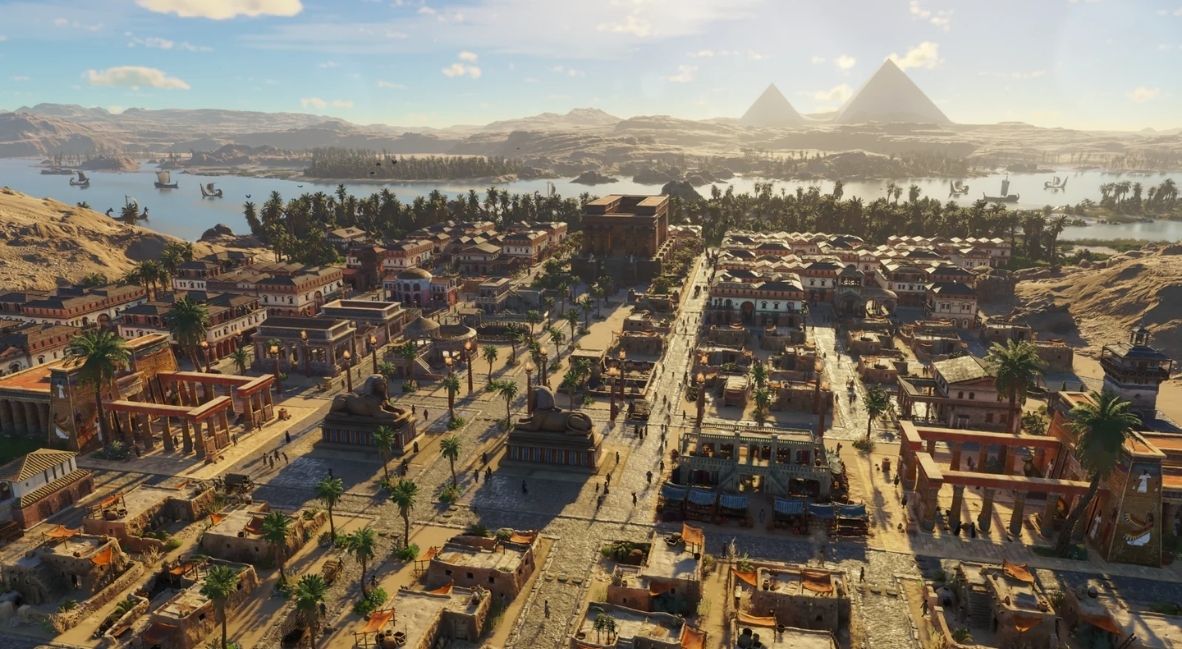
BUT WHY THO: One of the things that I noticed about [Dawn of the Delta] is that the experience is a little bit different [depending on] if you play it through an existing game and then go over to Aegyptus versus if you just start in Aegyptus to begin with in a new game.
I wanted to ask: based on the interconnectivity we saw in Anno 1800 [with each DLC], which I know some people found a little too difficult, are there any plans to move toward more interconnectivity between the regions to give [players] a more equitable experience regardless of how they play? What is the game design approach to balancing those gameplay experiences?
JAN DUNGEL: I think that for us, [it was] quite important that we actually allow players to start in [Aegyptus] right away. Maybe you remember that in Anno 1800 you always had to reach a certain point—it was specifically a tier three population—before you were allowed to go to the other provinces. And some of these DLCs were also unlocked later [on in the game]. For example, The Passage was even unlocked later, and this was also a bit of a barrier for the players.
Players bought the DLC, but then they had to wait to actually reach that point [to play it]. For us, it was really important to offer both experiences… I think that all the provinces are roughly balanced at the same level of difficulty, so that there is always this moment when it’s a little bit more difficult to get the positive income at the beginning, and we want to keep that challenge because this also ensures that [players] are actually ready to go.
If you play Anno 177 and you choose to play in [Aegyptus], we [make sure that the] specific moment has at least some kind of challenge to make sure that you understand the principle of the game, and that you understand the basic economy, so that you can progress. It’s not like we [want] to necessarily make it super easy in order for everyone to succeed, because it’s really important that you understand the basics and [that] it’s a test of whether you can go forward.
For us, we always set up the challenge in every province the same way. Of course, for the players who already played in Latium, [Aegyptus] might be much easier for them because they are already quite established. It might be much easier to send the ship with material, soldiers, and so on, to just settle the area. I think that, for us, it’s more important at this starting moment to understand the game in whatever province you play, and to have all these tools and know how to continue the game.
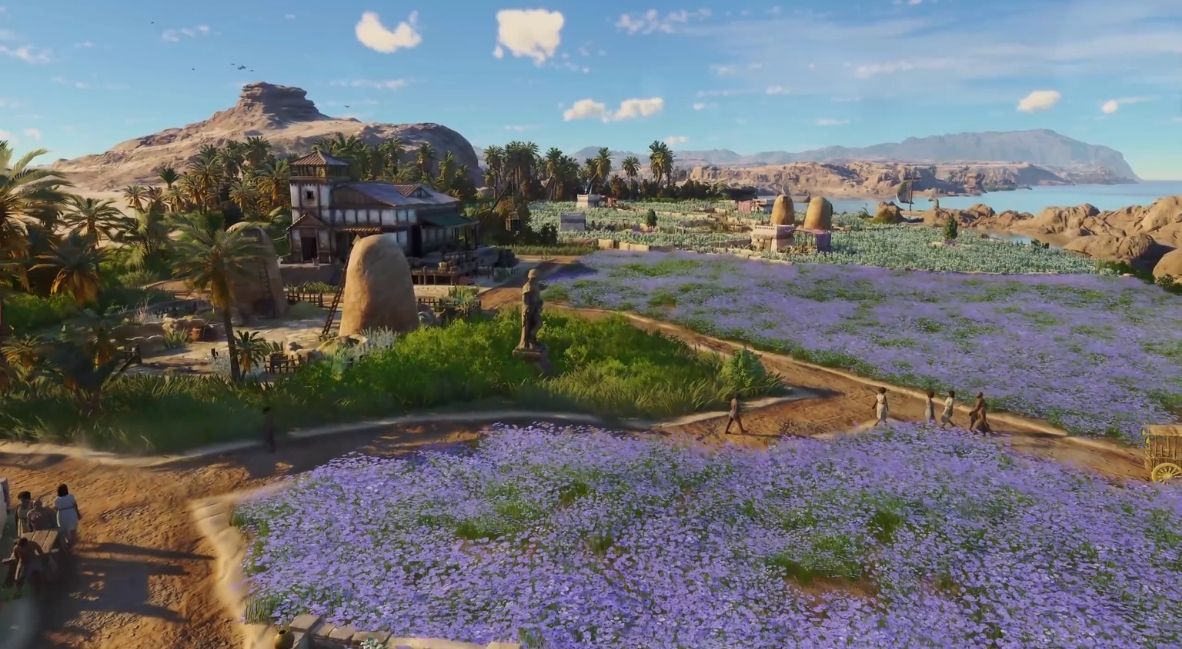
BUT WHY THO: That makes sense. And I think what was interesting with Aegyptus for me was when I started my second playthrough. I started in Egyptus, and I realized how different navigation was that way because I found myself thinking, “Okay, I’m starting here; I actually need to explore everything.” I wanted to ask you: did the studio’s approach to map design and layout change significantly with Dawn of the Delta to adapt to the idea of being landlocked?
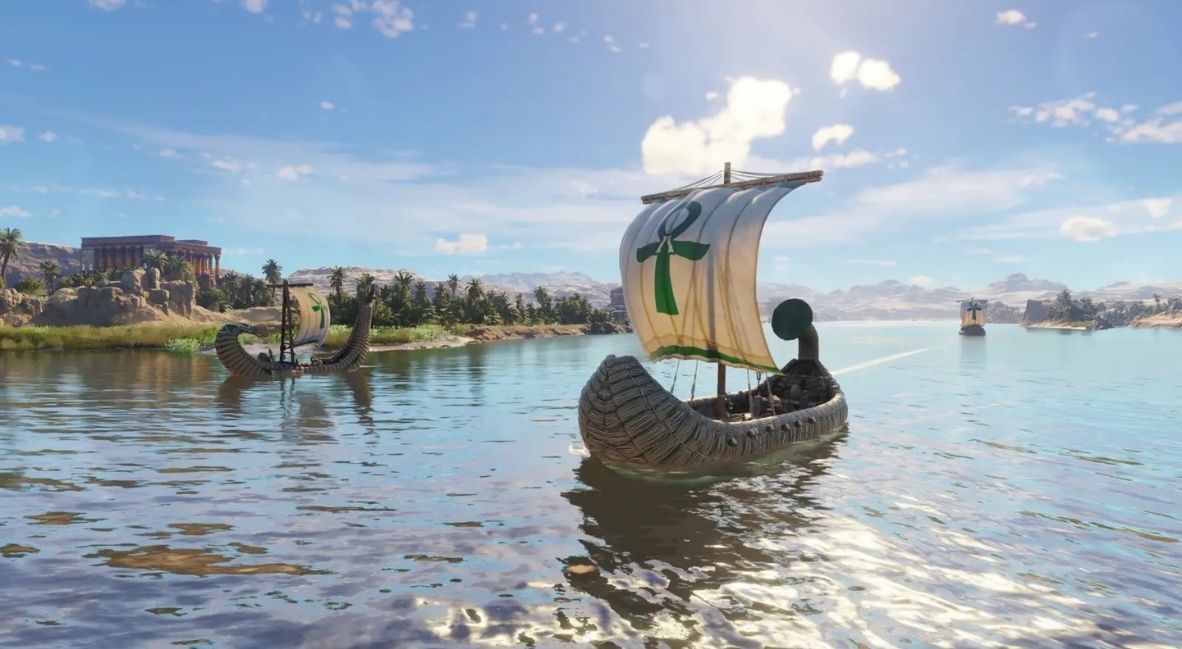
JAN DUNGEL: We knew from the beginning that we wanted, at some point, to do Egypt. Actually, I can even give you [something] that not many people know. At the beginning, we were even discussing whether we should do Albion first or [Aegyptus] first. But when we talked about Aegyptus, we always looked at what was very essential for this region, and we felt like, of course, it would be the River Nile.
There were other games in the past which featured similar gameplay, and for us it was more important to really picture the River Nile [correctly]. We were asking if actually doing the classical island structure and the sea was something that the players would expect, and that was actually the moment where we decided to take a different approach, and that took shape as the river and more the islands in this delta within the river. That was basically the impulse for us to take a different approach to how we build this province.
BUT WHY THO: One of the other things that really stands out with Aegyptus is that the gods that we see come in with Sobek, Thoth, and Isis-Bastet have a lot of [buffs] that really help in Aegyptus, but are also really good across every [province], and especially in Albion.
They almost feel interchangeable across provinces. Like, in the case of Isis-Bastet, she lowers consumption needs, and we know the Ubisoft Mainz team is continuously adjusting consumption needs for consumable goods as the game goes on. What shaped the choices behind these gods that we see enter Anno 117 in Dawn of the Delta?
JAN DUNGEL: I think it’s a really good question. First, we try to make any religion as applicable as possible across provinces if we can. Sometimes we have to, of course, find good compromises because the gods really existed in history in these cultures. We need to look at whether this would be something that [people believed] they would really do and so on. So sometimes we are, let’s say, more or a bit less successful, and sometimes we have to make a bit of a compromise. For example, some Albion gods are more suitable only in Albion.
But our general approach is to show this diversity, and that actually all these gods and these ideas were traveling through Rome at the time. And the gods actually were also used in other regions of Rome. And that was also the approach in Egypt. But with Egypt, we also had one advantage compared to the base game, and you already mentioned it a little bit. It’s actually about the experience [a player has].
We have a lot of feedback from players, so we know what they really need. For example, one of these pieces of feedback is like, “Please do something with lavender fields. We need to produce so many lavender fields.” We said, okay, that makes sense, so let’s make one of these religions actually boost this production chain.
So the big advantage is that before release it was a little bit of a guessing game… and after a release, you have all these thousands and thousands of people actually channeling different sources, and we know better. I think that we were better equipped with this feedback from the players after release, and we really thought about what would be more important for the players [with new religion buffs], and we tried to implement it.
BUT WHY THO: On the same kind of thought process, the Egyptian gods also show a combined god in Isis-Bastat. Those were two different gods in Egyptian mythology [initially]. I want to ask: What was the approach to having hybrid gods, and is this something we can expect to see more of as we expand to more religions or deities in the future?
JAN DUNGEL: We wanted to show that because we have this Romanization and we have these, like, two branches, so one is, let’s say, the local culture, which is also going on more in the history. In Egypt, this, of course, is a more traditional Egyptian culture. But we also always show the other society in the region that actually followed Romanization, and how it looked and how this population lived together. The idea is also that [these gods] come from a bit different sources, or they are even culturally a bit changed.
For example, in Albion, we have this god, which is Mercury-Lugus, and it’s like something that is also a hybrid between the Celtic religions and also a bit more like these Roman or Greco-Roman ideas. We wanted to show this kind of face of a god, basically adapting to different cultures and different times in Egypt, to show the difference.
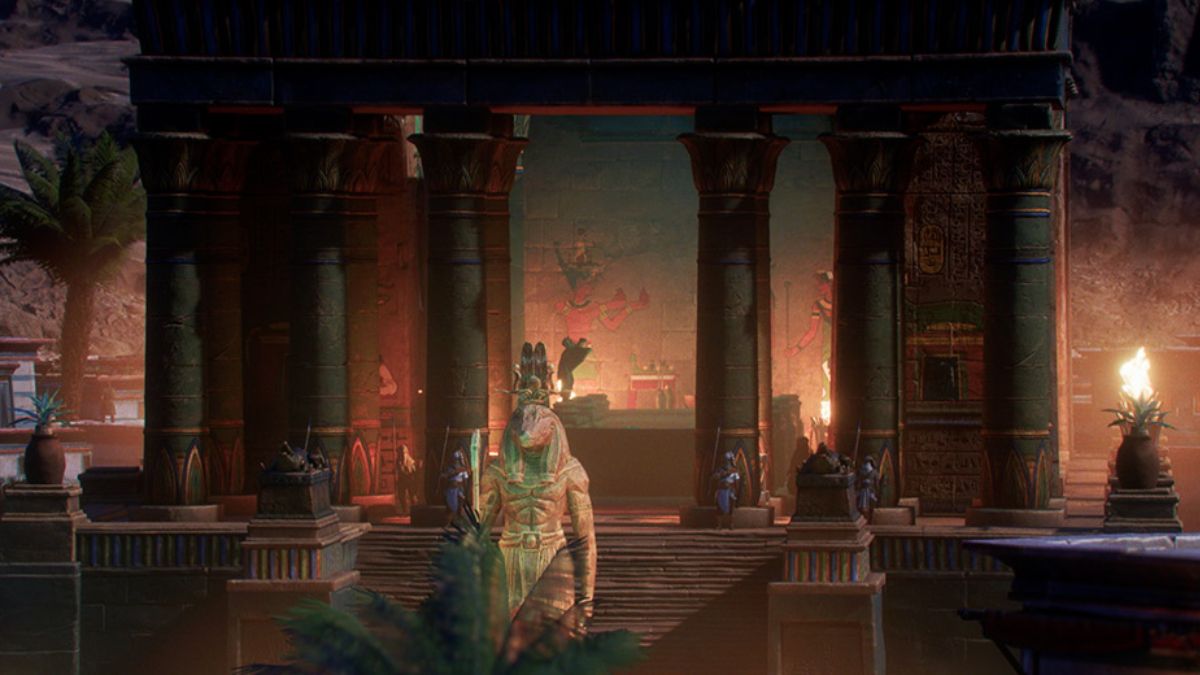
BUT WHY THO: When I first loaded into Aegyptus, I kind of expected it to be one for one with Albion’s marshlands. I didn’t necessarily give the respect that the floodplains needed, and I suffered for it, and had to fix my production chains, especially when the rats came.
What was the approach to irrigation in in this in in this new area? It seems to build on some of the foundations that we see done in Albion with marshland and Romanization, but it’s such a different approach that asks you to kind of look at your production chains differently because not only are you having to adjust for the flood seasons, harvest seasons, keeping the rats away, and also feeding your people while donating to restore the pyramids. How did you approach making this challenge?
JAN DUNGEL: We chose Albion and Aegyptus because we wanted to show the contrast between those provinces because we felt that this would actually describe what Rome was about and that it was not only, for example, about the Mediterranean. As I told you, we had—even at the beginning of the project—a lot of discussions [about whether] we should do Egypt first or Albion first. But what we knew from the beginning was that we wanted to show two very different provinces.
One is very warm and Mediterranean with very ancient culture, full of sun and deserts. And one is actually something like this misty, wet, and a little bit of a superstitious place… We wanted to show what it was like to have such a vast province under your control, and how many different cultures were in [Rome at the time].
When it comes to specifically the regional gameplay, for us, it is really important to make it somehow believable. We knew that there would be dried marshes in Albion because Britannia, which is the inspiration for Albion, was full of marshes, and that [Britons] really built even some cities and towns on the marshes by drying them. So we felt, okay, that might be very interesting and very true gameplay for Albion.
When we approached Egypt, once again, we thought: What is the most significant feature there? And a lot of players were already writing. I hope that they do Egypt in the future, and if they do, I hope that they have flooding. And we felt like, yes, we need to answer this call. We need to do something with the Nile, with the breadbasket and flooding, and we wanted to do the region, which is also [more challenging] like that.
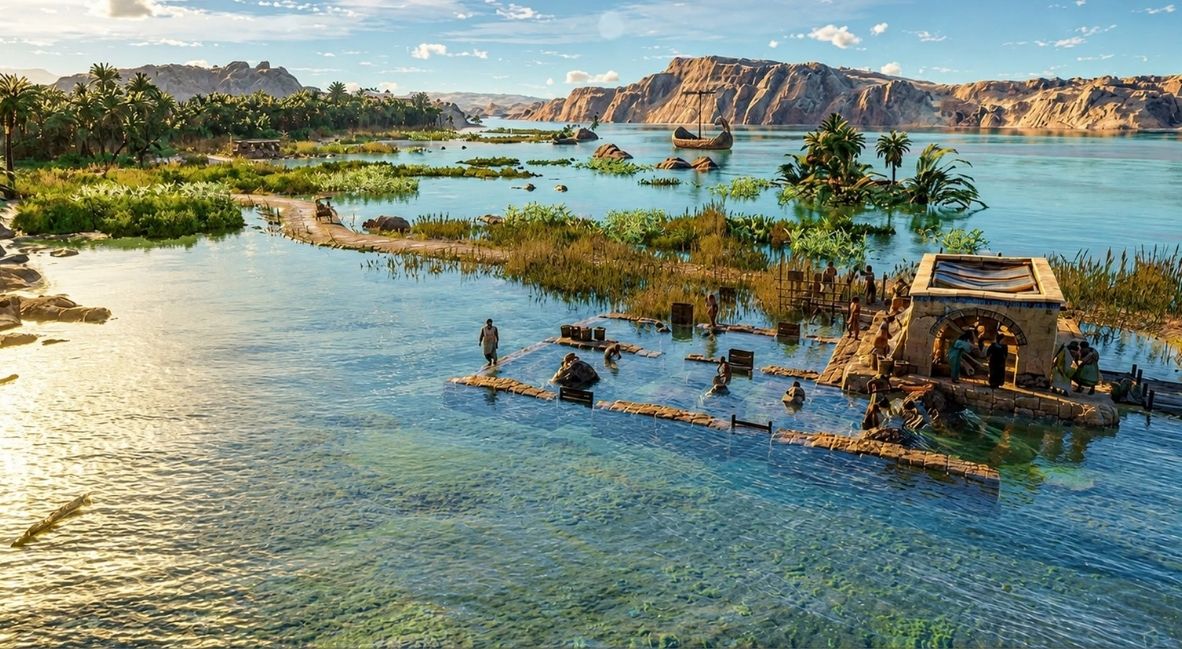
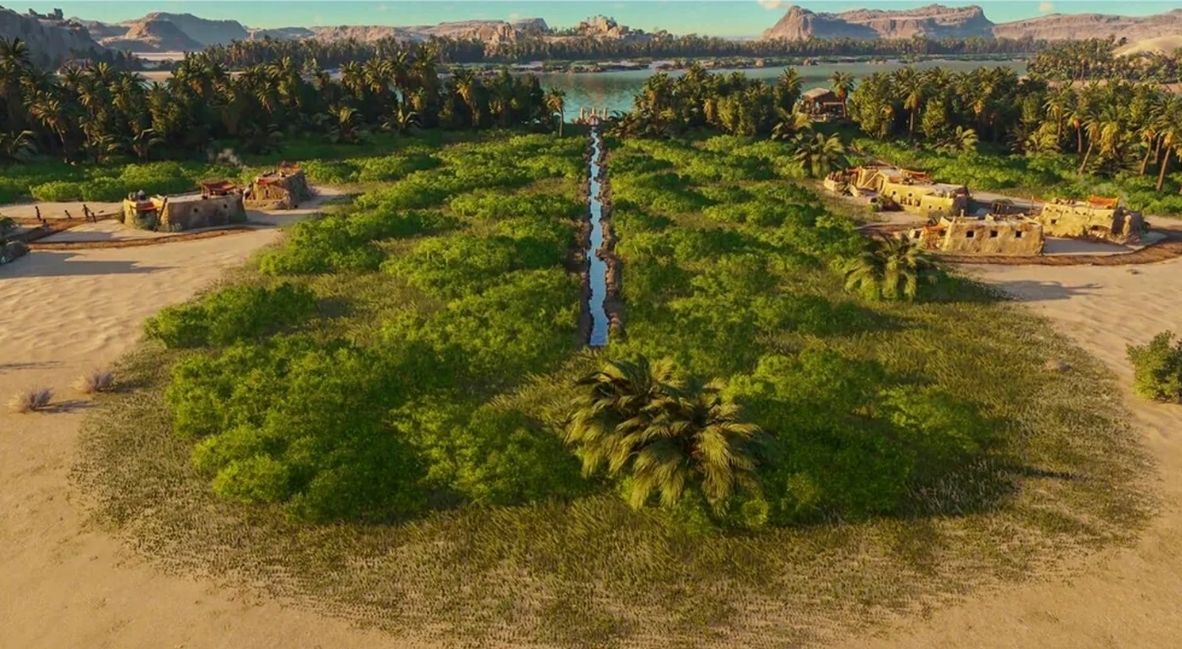
All the land would be easily fertile, so maybe you need to help with the canalization and with these canals to fertilize the barren land of the desert. We also did a little bit in Lands of Lions in Anno 1800, but this time we wanted to take a different approach and show that they also had different ways to irrigate these lands. So that’s why we went with the classical canal system, which was there for 1000s of years in Egypt, but also then we, with a bit of fantasy, but not completely untrue, also created this kind of noria (water-powered wheel), which is fueled by the aqueducts as their own way, as a very different way to irrigate the land.
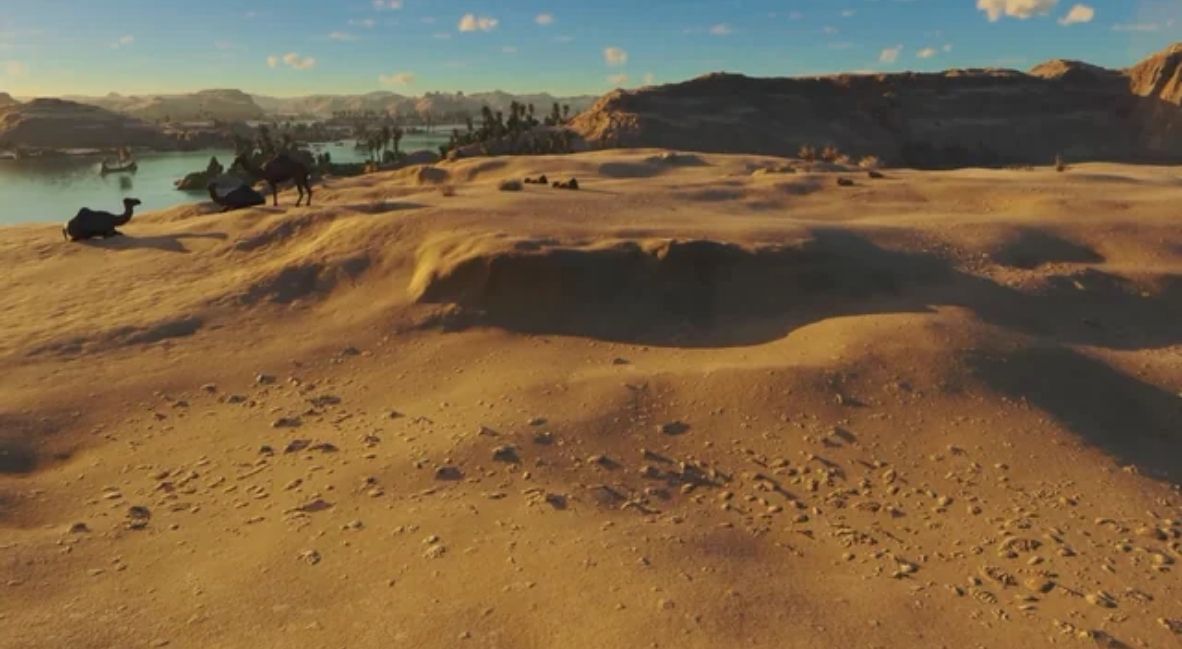
BUT WHY THO: Now, asking a more selfish question, since I have 1,000 hours in Anno 1800 and we can see that game’s post-launch structure influencing 117, it still feels like something is missing along the lines of zoos, museums, or the botanical gardens. So, I have to ask: Are there currently plans to introduce some of those collectible elements?
Because with Dawn of the Delta, the approach to navigating open space and exploring feels like dipping your toe into something that lets you engage with it much more. And I kind of miss expeditions and getting some fun animals for my islands.
JAN DUNGEL: That’s a good question, but I cannot answer it, actually, because it may or may not be part of our plans. But it’s a fair question because we hear, “What about the expeditions, museum, and zoo?” And I think that this part is currently not represented in the game, and currently we don’t have these collectibles. It’s not only one thing that people are talking about. We’re also talking about several wishes [from the community].
But for us, it’s important that whatever we do, we do it properly. Say, maybe do a specific DLC in the future, it’s not our goal to put everything in one DLC because then we feel it might be DLC about everything, but also a little bit about nothing if it’s not well done.
Even though I specifically cannot tell you if we address this one or not, whatever we do, we will try to address it. There are a lot of things we will try to address in the future, and there will be future DLCs. And one of the things people are talking about is that they are missing the collectibles. We are looking into that. We are collecting all feedback, and we are valuing it and basically also shaping our [future strategy] based on this feedback.
Again, I cannot say yes, and I cannot say no to that question.
BUT WHY THO: Thank you! Moving on, I’ve actually really appreciated that at the end of Anno 1800, for the most part, we got a World’s Fair, which was our introduction to kind of stage-style building. At the start of the base game in Anno 117, we had the Colosseum.
Right before Dawn of the Delta, we had the Hippodrome, and now with Dawn of the Delta, we have another stage-based building project. But it’s also a group project with the other governors in the region.
What was the approach to both making sure you all are introducing these stage-based projects for people to invest resources in, and what was the thought behind making a project where the entire polities are involved as well?
JAN DUNGEL: I think it was maybe more that what we found as a logical answer about the pyramids. So we knew that if we go into that region, that we should somehow tackle the topic of pyramids for sure. And the first question was, okay, can you build the pyramids? And we said no. That would be maybe too unbelievable because actually the pyramids were much older than 117 is to us, so they existed already for thousands of years. It also felt wrong to just build them again as a wrong governor. That was just not. It was quite off the table immediately. But we still wanted to have them.
Also, if you know, in older Anno and in Anno 1800, we call it a sector project. So it’s not exactly what we would call a monument, which is this kind of gameplay mechanism, like that you can do the races or that you can exhibit. For example, some items in this glass palace of the World’s Fair. It’s more like the sector project, and we felt the pyramids should be there. But if they are there, and they have a specific location because you cannot build them on your island, what, for example, if you play the multiplayer, is it how this should be approached, and so on?
I think this was more coming from this fairness: if you have just one object, or, for example, one big island like Cinis, what do you do if you have four players? And we felt okay; they should be part of the competition because it shouldn’t be locked to the first player. That’s why no one can interact with the object itself. We wanted to create some kind of fairness, and we decided it would be better to make it a mutual project for all the governors in the province.
BUT WHY THO: And that really comes through! Then I guess, like my last question, and this is something I try to ask every developer, filmmaker, anybody I interview. I really believe that when we make things, we put a lot of ourselves into them. And one of the really cool things about Anno is it feels like you all are making almost whole new games every time there’s a massive expansion. I also believe that what we make gives back to us too. We learn from it. It changes us.
So, I wanted to ask: what did you learn about yourself or your team leading up to the launch of Dawn of the Delta and during its development?
JAN DUNGEL: What I learned, and it’s all true for the team, but also for the players, is that we are a group of a lot of people, a lot of ideas, a lot of different wishes, and sometimes it’s difficult to also answer all of those. But I think it shows that we are also very diverse and that we have, let’s say, different expectations and experiences. So, it’s good to listen to those people, because a lot of ideas might come from unexpected sources.
For example, many people here in the studio have [deep] knowledge of ancient Rome, and even Egypt. We also have people from the university and so on in archaeology and so on. So it’s super interesting for me also to listen to those people. They are very inspiring, and we learn a lot about the Romans, how they lived, and some of the stereotypes. I feel like it’s good to shape a product that is a bit modern and, in a way, not shy away from showing things through different lenses.
From my point of view, there were a lot of games with a Roman theme, but quite often it’s just you building one Roman city with no colors, terracotta roofs, and it’s very militaristic and all about this conquest. Maybe we should also try to do something different and show Rome from a different perspective.
I think it was a great lesson because it also taught me personally that Rome is not only about violence, conquest, and oppression, [even though those things exist], but also about a lot of other things [that] are maybe not as obvious in our pop culture, and it’s good to show that it was also about tolerance, communication, exchange of ideas, different cultures living next to each other, and so on. And I think that this is also something that is worth showing.