
Anno 117: Pax Romana‘s Year One concludes with Ubisoft Mainz taking us to the Nile in Dawn of the Delta. In the latest expansion, and the last of this first year’s DLC, irrigation is the focus as we head into Aegyptus, but the beauty of the region, its changes to navigating water, and the Pyramid Restoration project all mark Dawn of the Delta as the most robust release for Anno 117 this year.
One of the first things that stands out about Aegyptus is the beauty of the new region. The unique Egyptian cultural flavor is distinct from what we’ve seen in Anno and continues to show how different each region will hopefully be as Ubisoft Mainz continues to expand the title.
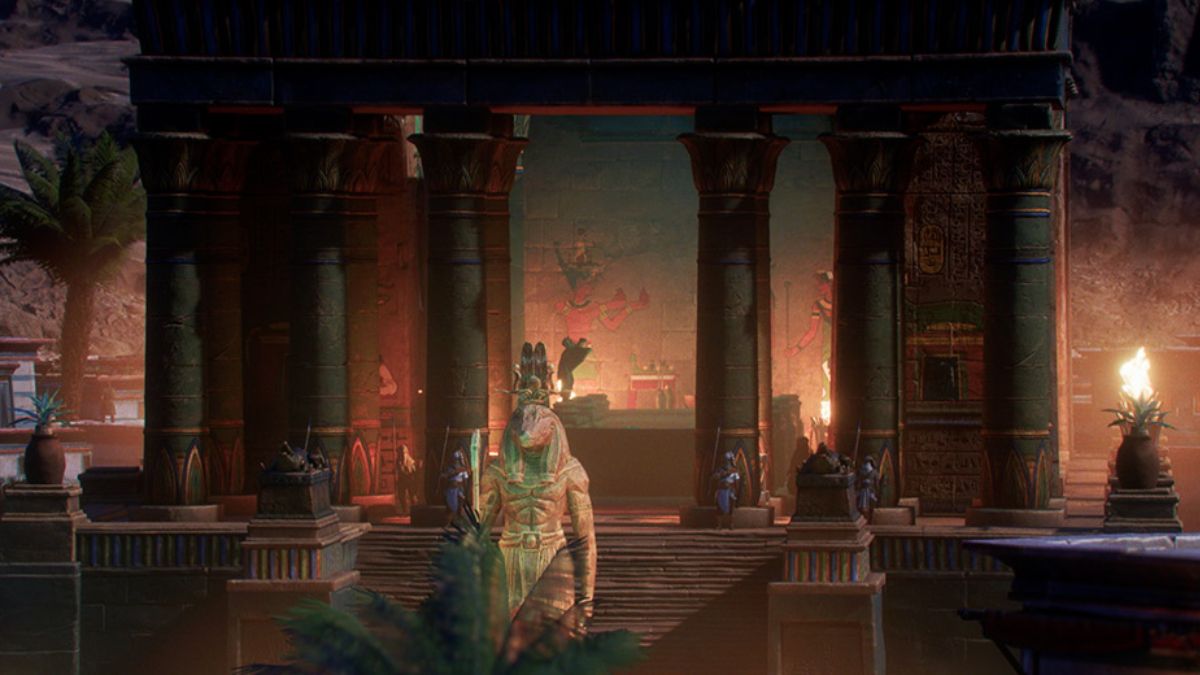
While Aegyptus is beautiful during the day, it’s when the sunset that it really comes to life. As the sun sets over the Delta, it casts long shadows over the land. A cinematic element that calls to mind some of pop culture’s most gorgeous views of ancient Egypt. The day-night cycle also transforms Aegyptus with the glow of the shrines, particularly Sobek’s green light, which makes everything feel gorgeous.
Anno 117’s Dawn of the Delta introduces new elements and builds on Albion’s irrigation foundation.
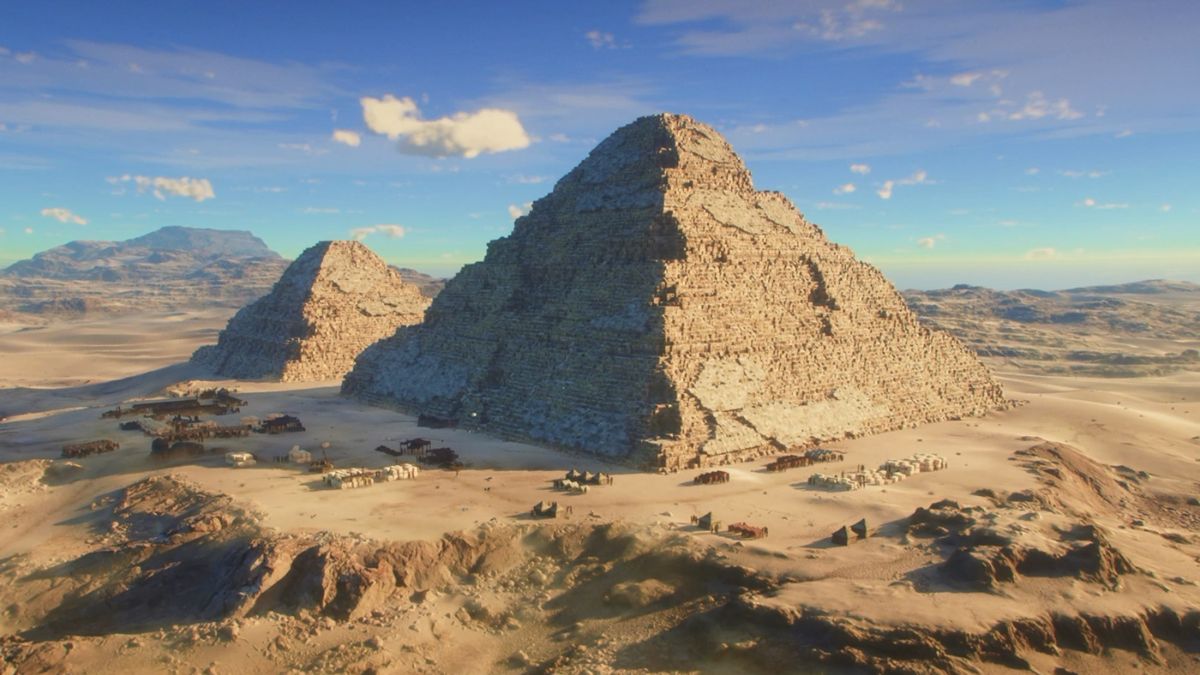
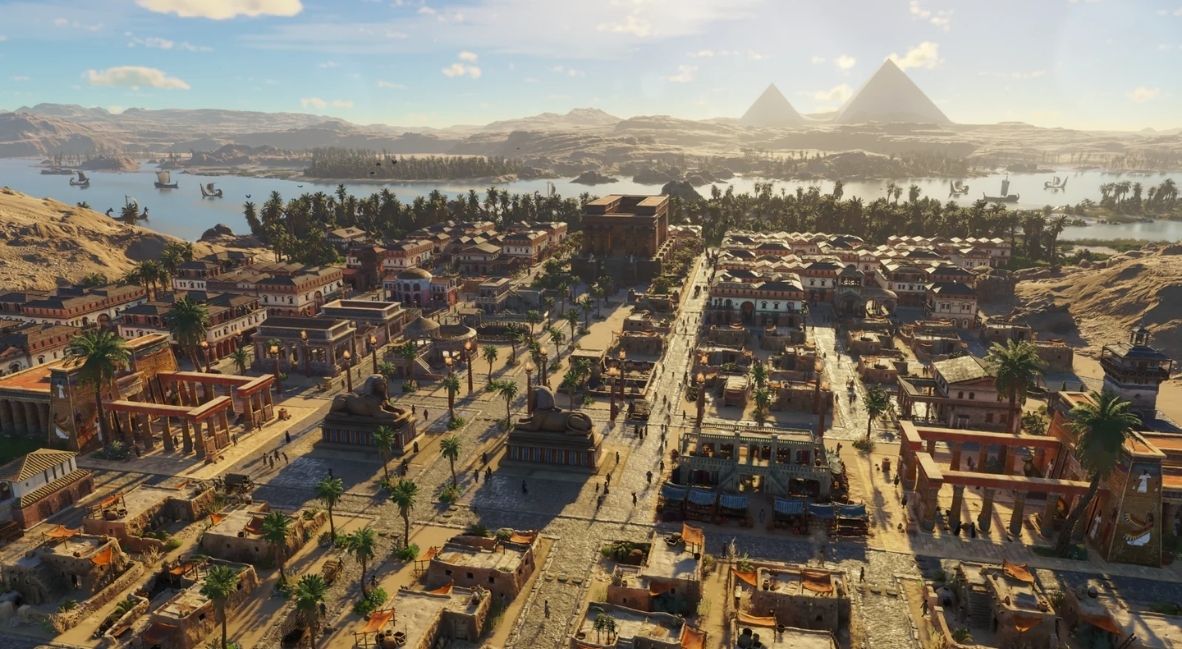
The visuals in Aegyptus aren’t only there to look at. Dawn of the Delta tasks players with restoring the Great Pyramids by contributing to their offerings. Completed in stages, any Governor can contribute to the project either directly or indirectly through trade routes they set up. If players contribute the fastest to Pyramid Restorations and complete their share of the offerings, they receive buffs. Once the Pyramids are completed, it fulfills a Public Service need for Chanters and Gymnasiarchs (tier three residents on both Aegyptian and Romanized paths).
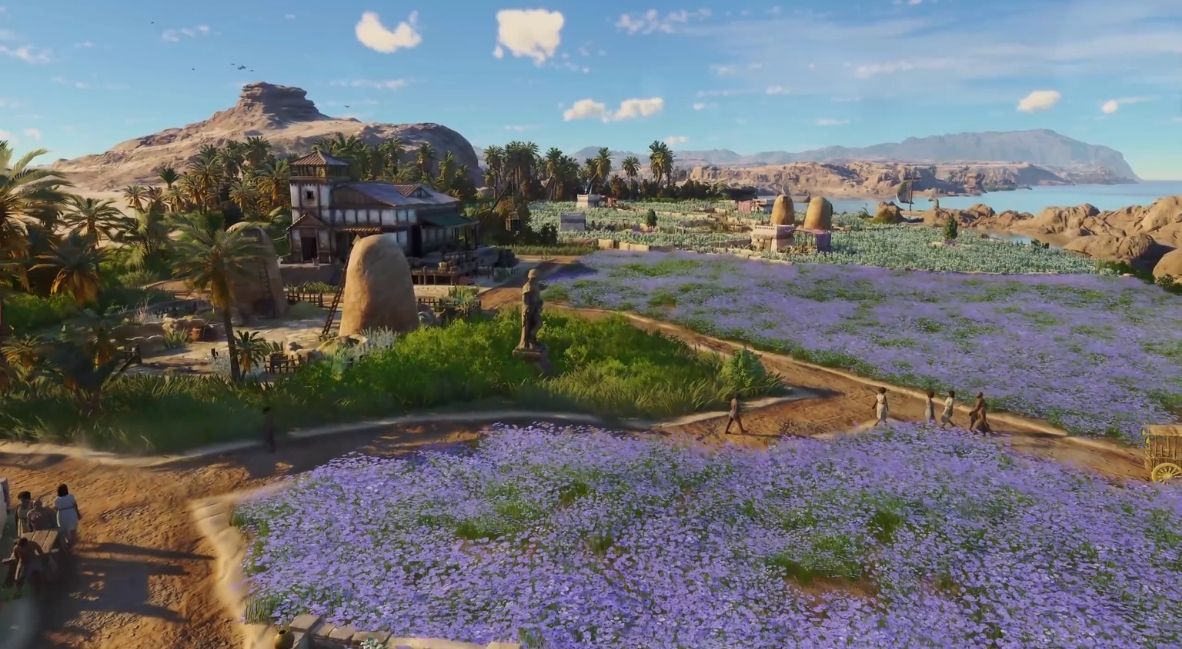
That said, contributing to the Pyramid Restorations also puts players into a three-way balancing act when it comes to production chains. To start, building in Aegyptus puts players on a landmass split by the Nile, leaving far less irrigated land for farming than in other regions in Anno 117. As such, the bulk of each habitable area is dry desert that requires building a water basin with irrigation channels. The alternative to the largest swath of land is to build in the Flood Lands.
A new type of land Ubisoft Mainz has built on top of the challenges that they brought with Albion’s marshlands. In the floodplains, players can build crops without having to irrigate land. However, the floodplains come with seasons, a new concept for Anno 117. During Flooding, the floodplains reduce production of what is planted there. Inversely, during the Harvest Season, production ramps up, increasing the yield by one.
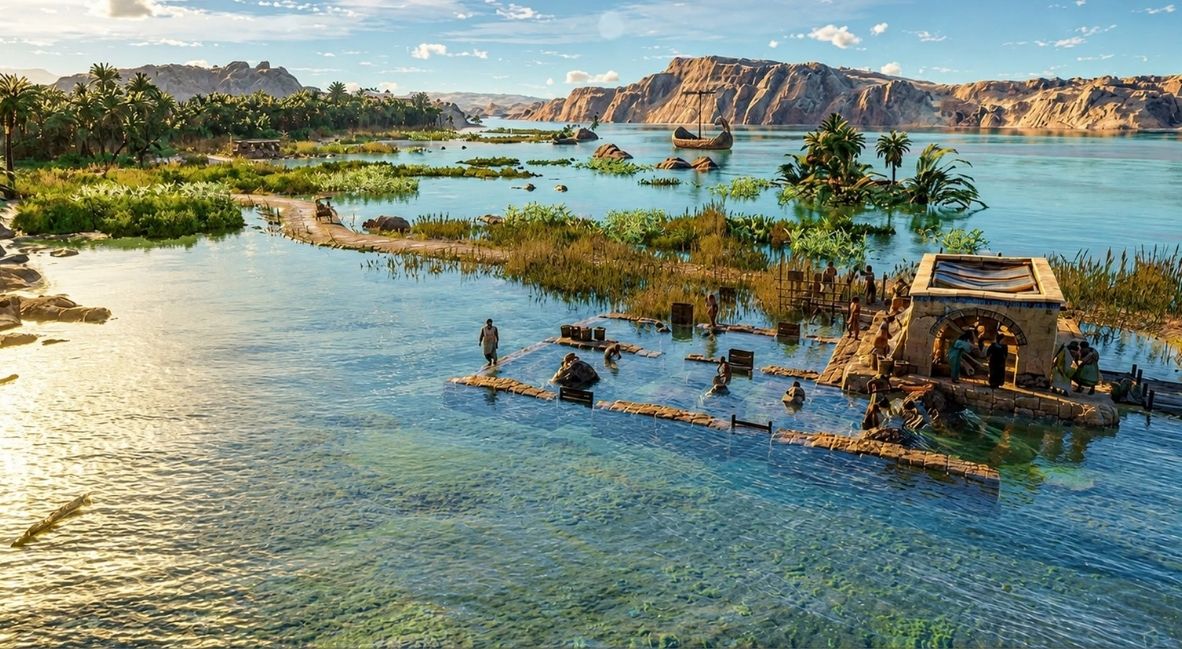
The balancing act between leveraging the floodplains as a quick way to start production and managing the needs of your residents is one that means you need to pay attention to it. These aren’t production chains you can set and forget, even for items that need to constantly be supplied. While you need to keep up with resident needs, you also need to produce enough to donate to Pyramid Restorations. And that’s not the only piece in the production puzzle for players to solve.
If players overproduce, maybe as a way to get ahead and take the Pyramid Restoration buffs for yourself, you also run the risk of causing your granaries to overflow. Granaries are new storage areas for Aegyptus where you house your crops. While they buff your farms, it can come at a cost. And the cost is rat infestations.
As you fill your granaries, each bit that contributes to overflow increases your chances of a rat infestation. Thus, you have to make enough consumable goods to feed your residents and fulfill their needs and contribute to the Pyramids at the same time, but not produce too much that you invite rats to your polity and reduce your storage overall. You need to overproduce, but you also can’t run at max capacity unless you throw your production chains into disarray and make your people starve.
Balancing resident needs, crop seasons, and pyramid restoration creates a real challenge for Aegyptus.
Beyond how the Pyramid Restoration impacts supply chains, it also functions as an extension of the multi-stage building projects that have become hallmarks since the World’s Fair in Anno 1800. At launch, Anno 117 had players build the Colosseum, which is completed in stages. With the Hippodrome DLC, the titular building also becomes a multi-stage project that requires planning.
Now we have the Pyramids, and this time the multi-stage building project lets players be directly involved instead of just waiting for the timer to expire and for carts to take your goods from your warehouses to the building site. Sure, you can set up trade routes, but being able to contribute your own offerings manually feels fresh.
That said, while multi-stage building projects offer a piece of progression for players to tap into and engage with, I hope that we’ll see more collectible-focused building in the future, as we saw with 1800’s zoos, museums, and botanical gardens that incentivized exploration. This is especially poignant because Dawn of the Delta changes the way that players explore the water in Anno 117.
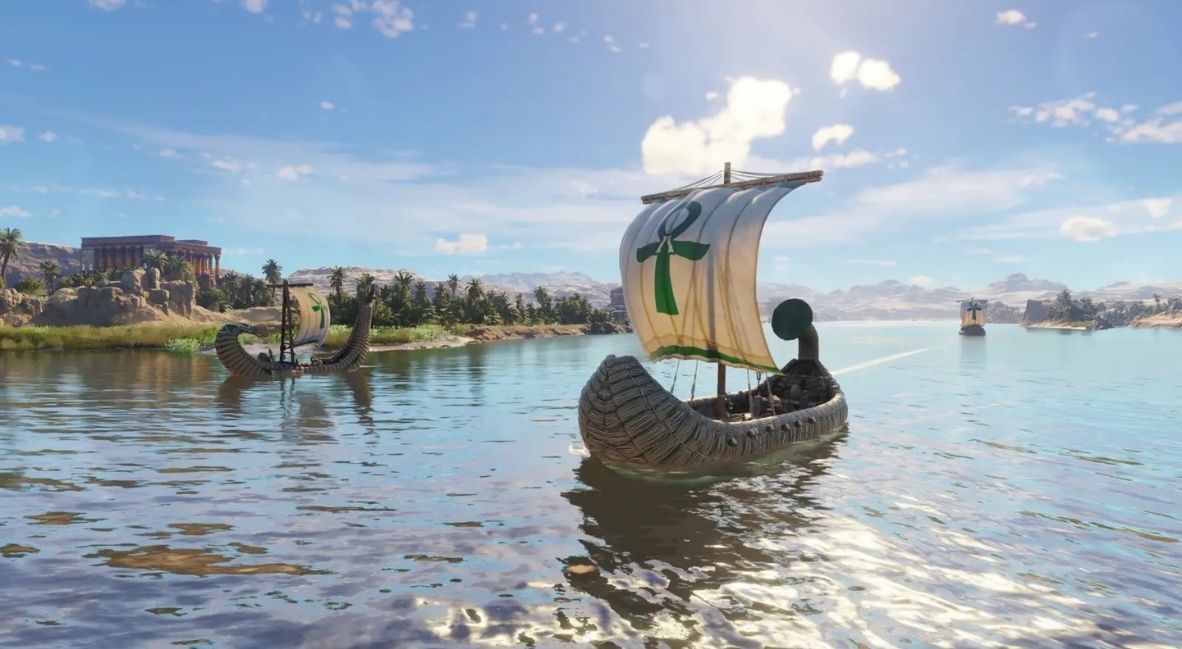
Dawn of the Delta’s map design takes direct inspiration from the Nile Delta, meaning that the river passages are far different than the wide-open water of the other regions we see in Anno 117. That said, distance on the minimap can be deceptive, and the reflected images are much closer than they appear. The Delta is filled with choke points that restrict movement and can be nasty during naval combat. The closeness of each settled city also increases the necessity of harbor defenses.
On top of that, the Nile’s depth also changes how players manage their fleets in Dawn of the Delta. On the Nile, reed boats from Aegyptus move nearly twice as fast as the Roman galleys you bring from Latium. This pushes you to maintain different fleets to handle different situations, especially as players encounter enemies on the water.
Much like Albion, the developers push players to optimize how they use small land spaces and how they change the land through irrigation. While Albion has you draining marshes to make more land to do everything on, Aegyptus asks you to irrigate the desert so you can bolster production for farms you can’t build in the floodplains, livestock, and more. Optimization of limited space is where the challenge comes into play in Dawn of the Delta.
An area’s mix of irrigated farmland, fertile date trees, and floodplains is your limiting factor. Players have to evaluate the terrain itself and take stock of how much space can be opened up for farming once you begin irrigation, where you can build houses, how much of the land is floodplains, and, of course, the mountain ranges that build your constraints.
To help with the limited space, Dawn of the Delta also introduces three new gods: Sobek, Isis-Bastet, and Thoth. The first of these, Sobek, is unlocked immediately. And as a deity that you don’t have to research, it’s surprising how much he does.
For Sobek, production chains for sausages, beer, rare meat plates, and other livestock-focused byproducts (like cheese), and the livestock themselves, get a production boost. In addition to the production buff Sobek brings, players also get a bonus from the god of the Nile that increases sump and cistern sizes and boosts population across those lands.
Dawn of the Delta’s Aegyptus is a great end to Anno 117 Year One.
What stands out with Sobek, compared to other gods, is that he has everything that you can use in Aegyptus, Albion, and Latium. More importantly, Sobek’s buffed production chains cover much of what you produce in Albion, especially beer, cheese, and roast beef (including the sanga livestock farms). As a mechanic, having shrines to multiple deities pays off well, and Sobek is a perfect fit for your existing playthroughs and the other regions.
If an island is dedicated to Thoth, then the knowledge created also becomes income and prestige, while affecting items like wine, fine glass, writing tablets, and other instruments associated with knowledge. Finally, Isis-Bastet’s production buffs aren’t nearly as interesting as her other impact, which reduces residents’ need for consumable goods.
Throughout the Anno 117 updates, resident needs have been adjusted and increased to balance production-chain development and optimization with the focus on letting players enter new regions at their own pace. Isis-Bastet reduces those needs, making her a good addition to any island where you’re struggling to meet resident demand.
As we look to Year Two, expanding interaction between regions is something that I’d like to see for players who heavily invest in Anno as a franchise and in each game’s systems. But Dawn of the Delta highlights that there is more than enough incentive to keep going, keep expanding, and keep building.
Dawn of the Delta is a great end to Year One, and Aegyptus stands out against the other regions. With new mechanics like seasons, new gods that do more than serve one area, and the introduction of a provincial project that has you working with other Governors, Anno 117‘s Dawn of the Delta is enjoyable, to say the least.
Anno 117: Pax Romana - Dawn of the Delta
-
Rating - 8.5/108.5/10
TL;DR
With new mechanics like seasons, new gods that do more than serve one area, and the introduction of a provincial project that has you working with other Governors, Anno 117‘s Dawn of the Delta is enjoyable, to say the least.