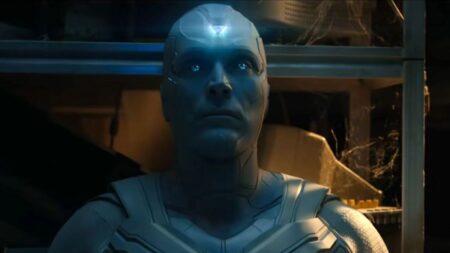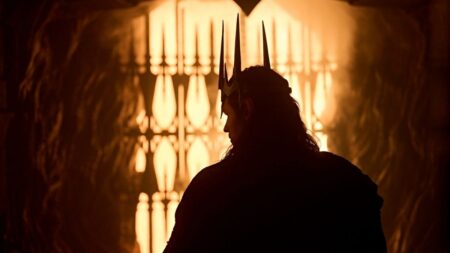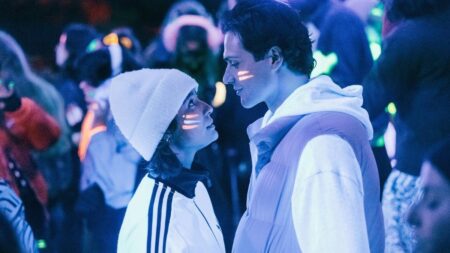

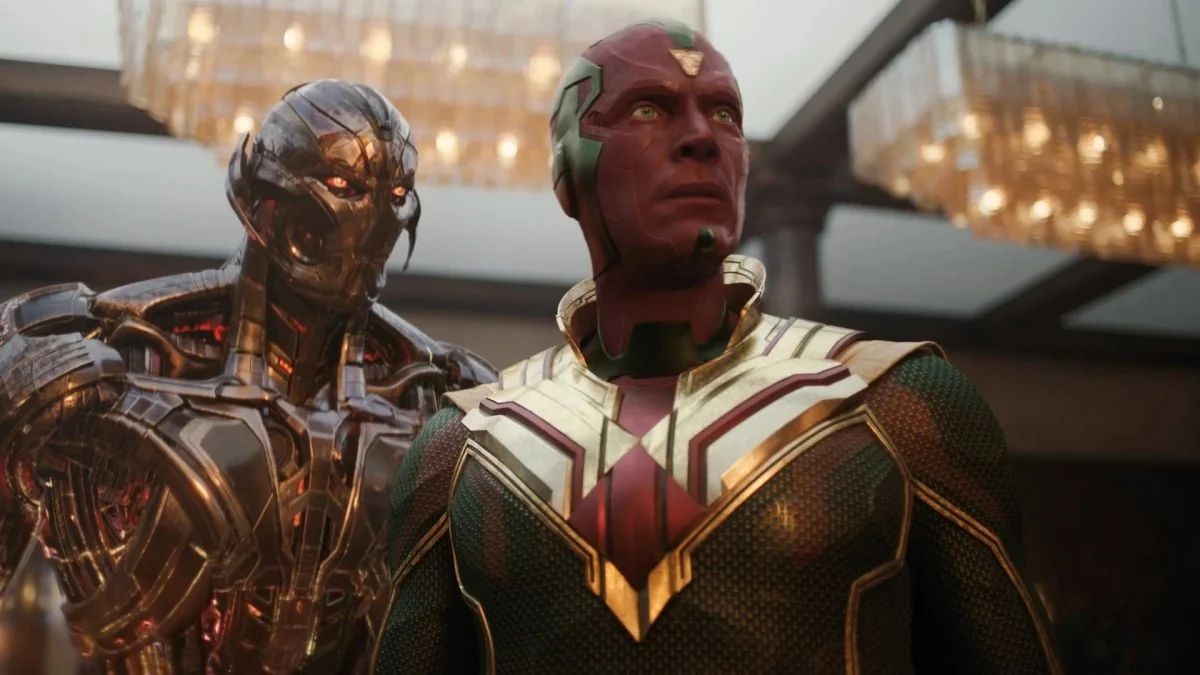
There are 30 minutes in the overstuffed season finale of VisionQuest that work so well it makes the rest even more frustrating. The series has always worked best when it plays with stylish flourishes, leaning into the blueprint that WandaVision set for it. VisionQuest Episode 8 busts it out for one last spin as a reminder of what the show might’ve been under greater leadership before pushing it all aside for more setup and a teaser that will surely excite some but had me letting out an audible groan.
It’s repetitive to say this again, but VisionQuest Episode 8 plays into all its worst instincts, and it bears repeating: the best Marvel shows are either self-contained or have a distinct narrative mission anchored by a lovable ensemble. VisionQuest attempts self-containment but sequesters goodwill to set up the much hyped but visually unappealing Avengers: Doomsday. And its ensemble is so severely lacking that it makes you wonder why they bothered in the first place when Vision (Paul Bettany), Ultron (James Spader), and, to a degree, Tommy (Ruaridh Mollica), were the only characters the writing cared about.
Jocasta (T’Nia Miller) is an interesting antagonist at first and later a wonderful foil for Ultron. But she’s soon made into a love interest, and any momentum with her character stalls out before, in “Forever,” she’s (for now) killed, inducing man AI pain. Aren’t we sick of this particular narrative plight by now? Comic fans will recognize Lisa (Lauren Morais) as the Coat of Arms, but the series doesn’t care enough to explore this. Instead, she’s Tommy’s girlfriend, vaguely badass but only in the way that male writers can imagine (cool quips, weapons mastery, vacant personality)
Why have an eclectic ensemble if you do nothing of interest with them?
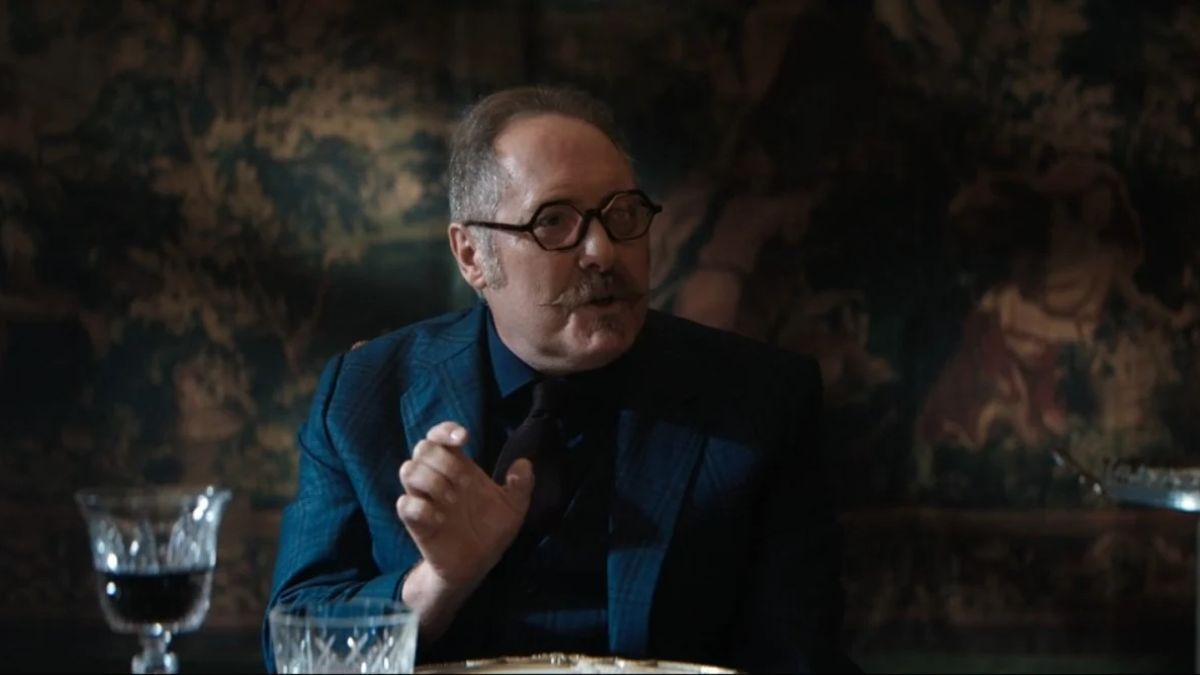
E.D.I.T.H. and F.R.I.D.A.Y (Orla Brady) have interesting moments, though Emily Hampshire’s broad performances diminish the effect, and Paladin (Todd Stashwick) is similarly set up for a major arc, but it fizzles out all for…what? The reveal that the Client is Virgil Horton? He’s the main antagonist and is only brought out in the finale, subsequently killed (albeit in a fun, grotesque fashion), and used as fodder to inspire Ultron to believe, rightfully, that humans poison the world. Go figure.
All of these ensemble cast members prove another major issue: the series has no real stakes. Nothing is threatened enough to be lost, and therefore, nothing matters. Following the Client’s death, Vision has to face off against Ultron to stop him from wiping out humanity after Jocasta’s death. A death her processes with such grief that it can only be described as human. He understands their suffering now, and therefore believes them even more suited to death. Because why have everything if we’re only doomed to squander it?
But everyone gets their somewhat happy ending even after trying to play up the stakes. It’s set up like Vision is going to kill Ultron and himself in a last act of defiance and, in a way, love, sharing their final moments together. But Ultron, ultimately, lives on and retains Jocasta’s data drive. Vision is brought back to life by his sons, with Billy Maximoff (Joe Locke) appearing at just the right moment.
VisionQuest Episode 8 is devoid of real stakes.
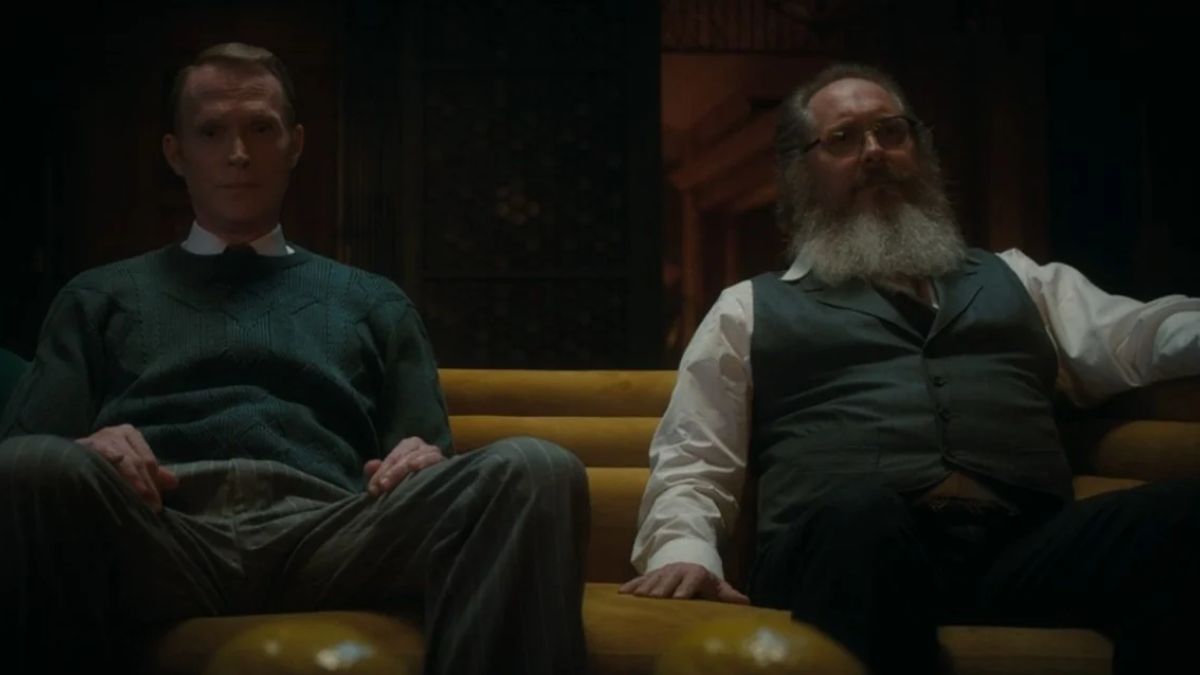
Shows aren’t more credible by killing people off. But VisionQuest Episode 8 suffers because there’s so little payoff to supposed momentum. Nothing really happens. We meet a villain we don’t care for and get a rushed conclusion for the one we do. Visions’ greatest insights are simply what we’ve already heard from Wanda in WandaVision about the chance of seeing loved ones again.
It’s so frustrating, so tirelessly annoying, because the pieces are there. The blueprint exists! And “Forever” shows these sneaky signs of life that are so full of personality that it’s shocking the series as a whole refused to lean into it.
There’s the return to the sitcom format as Vision tries to appeal to Ultron’s developing humanity, creating a fake series called ‘UltraVision.’ It’s vibrant and silly and lets Bettany actually have fun with the character again. And it makes thematic sense that Vision would believe Ultron could process his grief through such an understood, familiar format like the family sitcom. It’s in character, stylized, and sets up his last betrayal in a way that succeeds because, at this point, Spader has done such a phenomenal job that we want to believe he can change.
Tommy’s characterization also shows what might’ve been as he embraces his speedster powers for real to save his dad. The scene where we see him running, the world around him slowed as Mollica settles into a comfortable, almost lagging jog around the table Vision is kept at, is genuinely hilarious. He’s such a fun addition to the world and, if nothing else, the promised combined powers of Billy and Tommy are enough for non-comic readers to pivot and seek them out.
Ruaridh Mollica and Joe Locke bring charm to the scenes between Tommy and Billy.
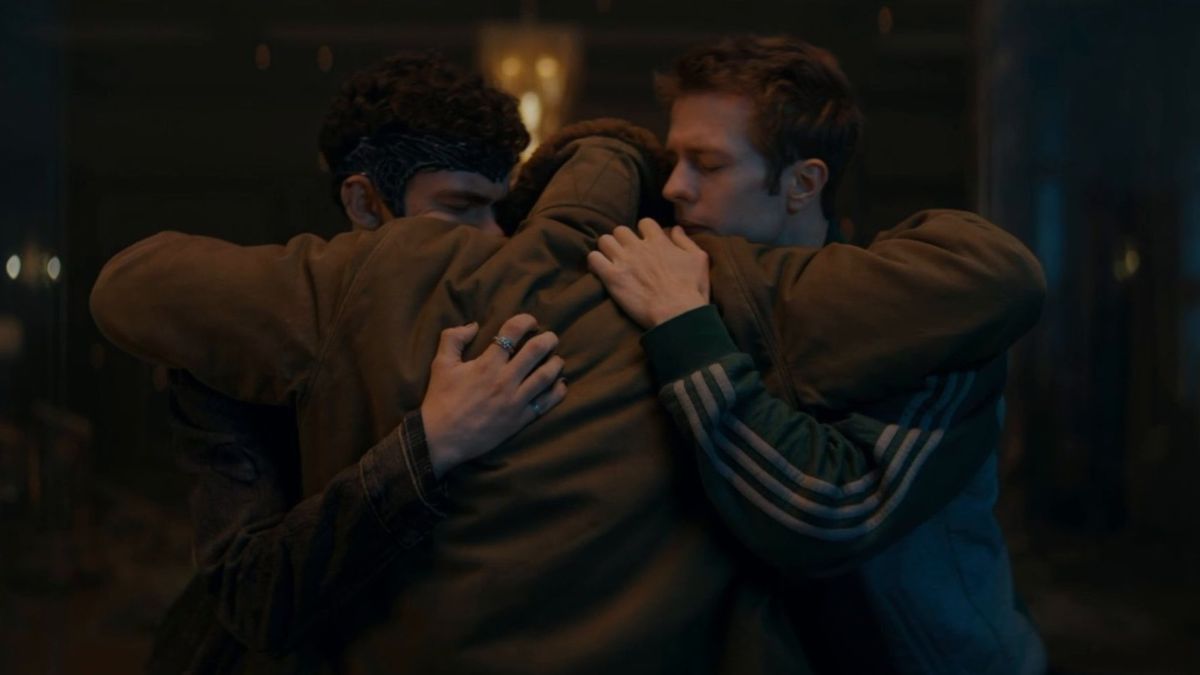
Mollica and Locke also have great chemistry even if their reunion is, shocker, rushed. Why did this have to wait until the finale? Surely the story might’ve worked out even better if these major reunions had been paced. Instead, we have the twins reuniting and Vision realizing Billy is alive in the same episode. VisionQuest Episode 8 proves Bettany is best when acting out Vision’s paternal instincts, because his dynamic with Mollica and Locke has an understated sweetness, but it doesn’t get the time it deserves to develop.
Their story ends here. Yes, the tag with Wanda (which, fine, sure) suggests the family will reunite on the big Doomsday stage, but how much time will they really get in a film with, at my latest count, 200 characters? Is everyone heading out to see the film sitting through all of WandaVision, Agatha All Along, VisionQuest, and Doctor Strange in the Multiverse of Madness? Or, hell, Fantastic Four?
If the most staunch fans are skipping the obvious misses, are the most casual fans going to be up to date, or will the film play things fast and loose enough that it doesn’t matter what has or hasn’t been missed? And isn’t that indicative that the studio cares about product first, art and story second?
Yes, there’s a teaser, but it’s hard to care when it comes at the cost of closure.
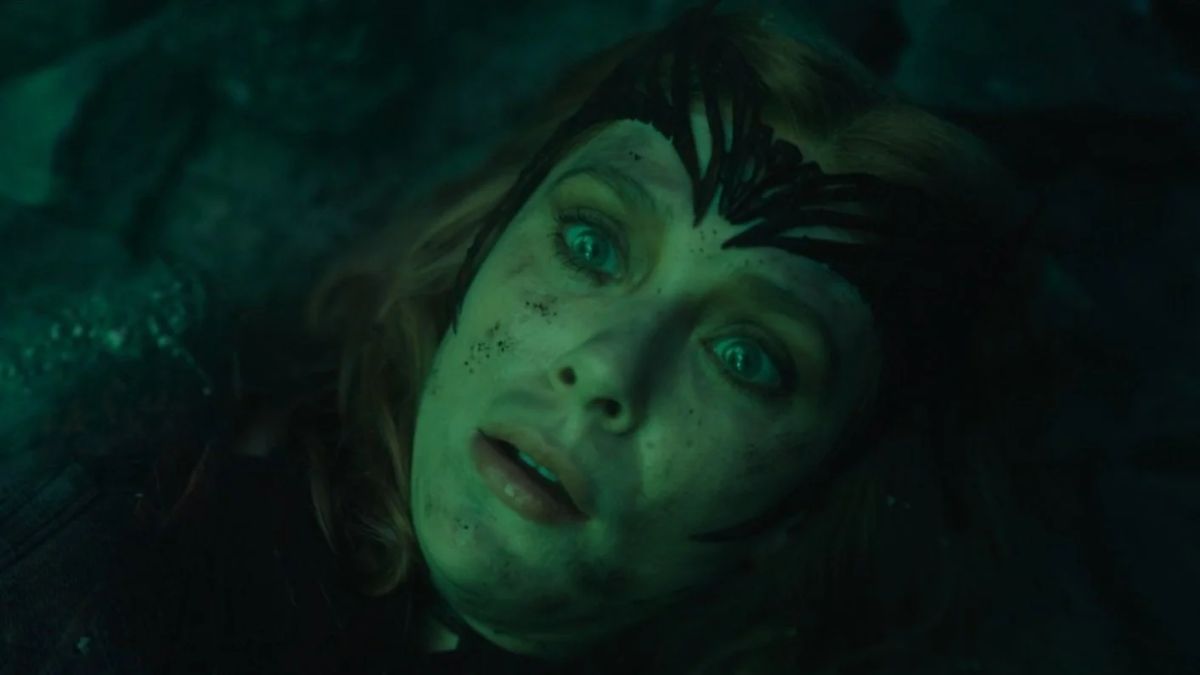
In the wake of VisionQuest Episode 8, there’s been a minor portion of the internet talking again about the unexpected brilliance of Agatha All Along, a series that, in hindsight, might be the MCU’s best show yet.
Because yes, it tied to other stories, but each supporting character had their own storyline to go through. It’s Patti LuPone’s sacrifice, her memories locking into place, her impassioned yet resigned “I’ve always loved being a witch.” Despite my grumpiness, these shows can and have worked. VisionQuest doesn’t because it gets too lost in a plot that no one cares about when the one we are invested in is left behind.
With a harsh edit, there’s a good show here. One about a man trying to reconcile with himself, his past and future, and what it means to live on in a world that’s forgotten him, indebted to memories he’s willing himself to forget. There’s a story about the different ways fatherhood manifests, how found family comes in all different variations and styles, and how healing is a process of layered, exhaustive repetition. It’s a show where James Spader gets to let loose, and we get to see the Maximoff twins all grown up.
VisionQuest Episode 8 ends the way it started: as a messy assortment of ideas and storylines with little to no interest in digging deep. Whatever warmth comes through is due to the performances. The 30 minutes of greatness isn’t enough to smooth over the damage. But it is enough to antagonize further viewers who were hoping for that level of quality the entire time.
VisionQuest Episode 8 is streaming now on Disney+.
Previous Episode
Rating
VisionQuest Episode 8 ends the way it started as a messy assortment of ideas and storylines with little to no interest in digging deep. Whatever warmth comes through is due to the performances.