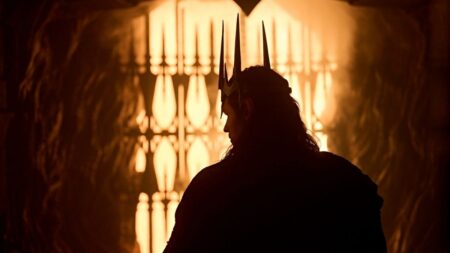

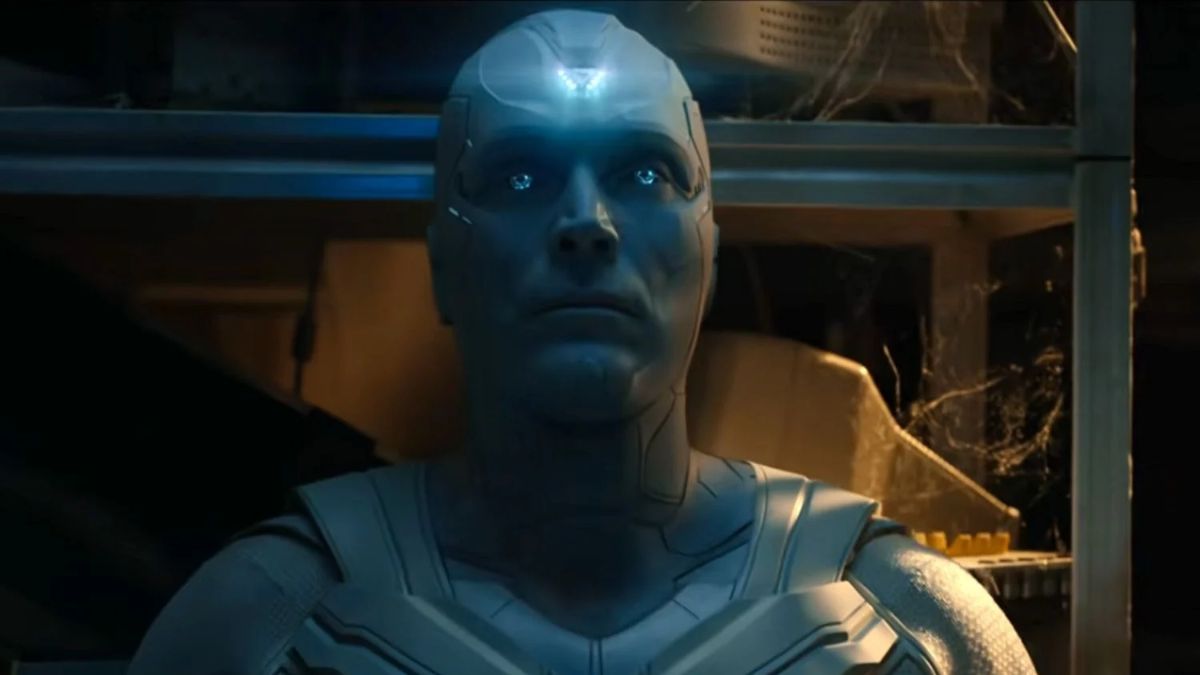
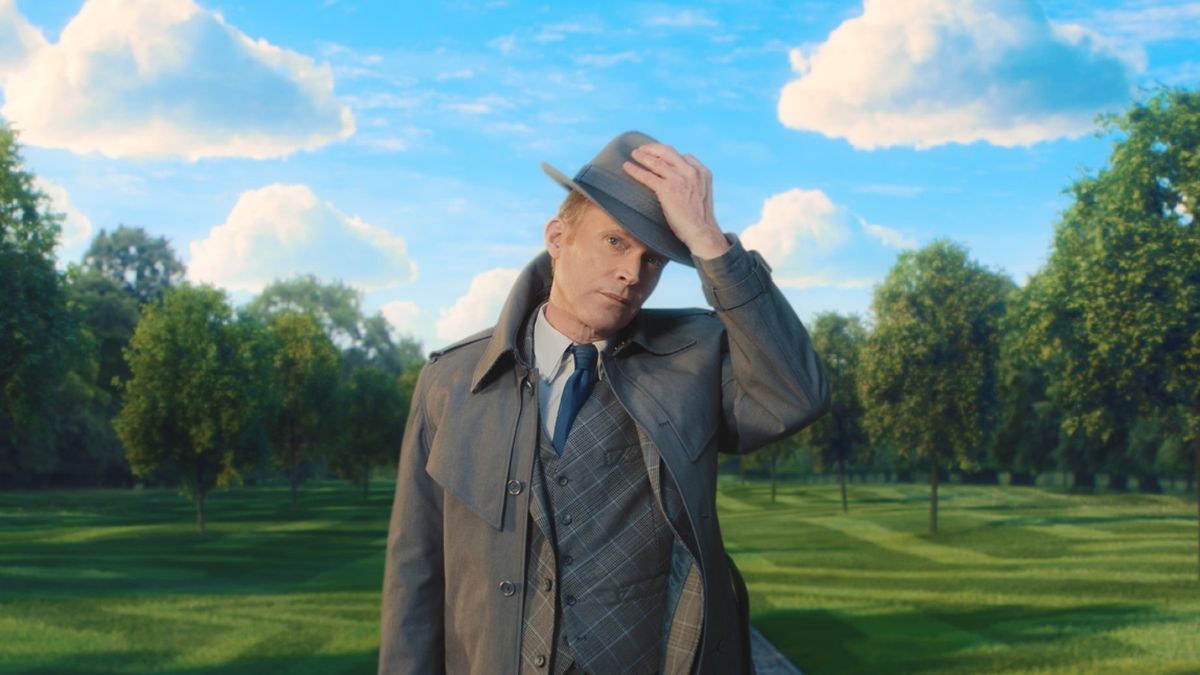
There’s no doubt that VisionQuest has an abundance of style. It’s just a shame there isn’t more than that. Or, more to the point, that the series only decided to play within a stylized concept in the first and last episodes.
Despite arriving as a closer to two of Marvel’s strongest television series, WandaVision and Agatha All Along, in an effort to close out a trilogy, the series, created by Terry Matalas, doesn’t have the right spark to bring it all together. An amalgamation of interesting ideas that never coalesce into something uniformly engaging, VisionQuest begins with a hint of life before faltering, losing itself in big concepts rather than focusing on what matters: the characters.
It’s that frank disinterest in the characters that is the most alarming aspect of VisionQuest. Sure, the writers gave Paul Bettany ample time to show off as a way to deconstruct Vision grappling with the scale of human emotions. And yes, there’s the developing bond between him and his son, Tommy (Ruaridh Mollica). But—not to default to easy complaints—it’s a lot of telling.
James Spader is having more fun than the series deserves.
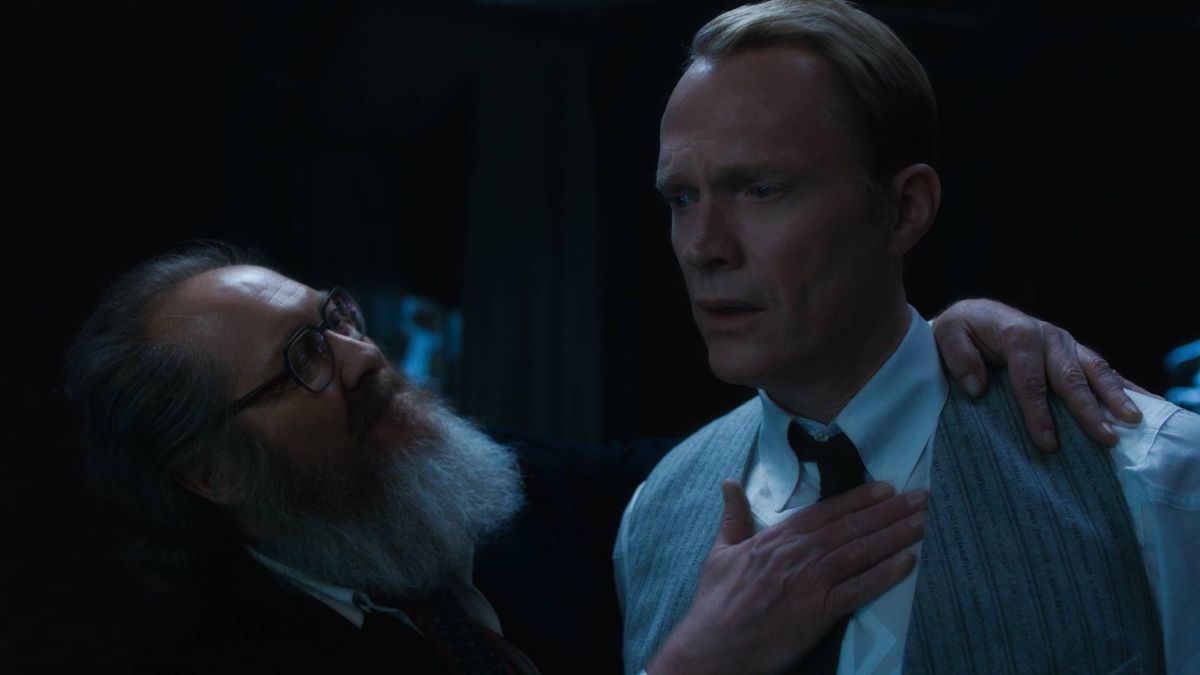
We’re told how Vision is struggling to understand his humanity, visualized by his mind being occupied by other AI trying to guide him. We’re told about how Vision and Tommy were emotionally tormented by the realities of Wanda’s creations. But it never feels earned or felt. The closest it gets to achieving it is in the last 30 minutes of the finale. Imagine if the entire series had that level of spirited playfulness and if the emotional catharsis wasn’t withheld for the sake of nonsensical plotting.
We’re supposed to care without the series putting in the effort to make us. And Bettany isn’t a strong enough performer to carry the weaker, by-the-numbers moments the way Elizabeth Olsen, Kathryn Hahn, or Tom Hiddleston could. This isn’t a one-off like Wonder Man either, meaning that the series is indebted to all that’s come before in Marvel regarding his character. And still, nothing. It’s an emotionally vacant attempt to re-bottle lightning, but without the source of energy that made it all possible, or the story to guide it to its place.
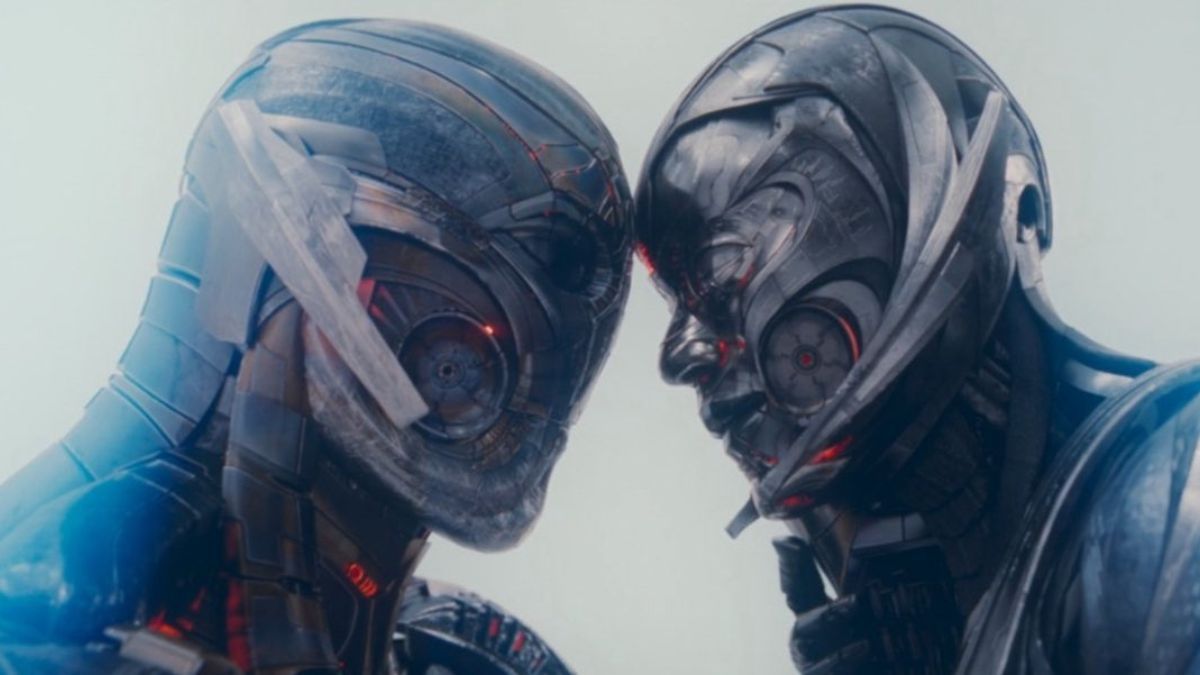
Elements work. With the budget and cast on hand, it would be tough not to achieve some momentary success. James Spader is having an absolute ball as a reinvigorated Ultron. And while it’s still hard to stomach the series bringing back one of the franchise’s most interesting villains for a microwaved version, it doesn’t make Spader any less intriguing.
Marvel is best when it is self-contained.
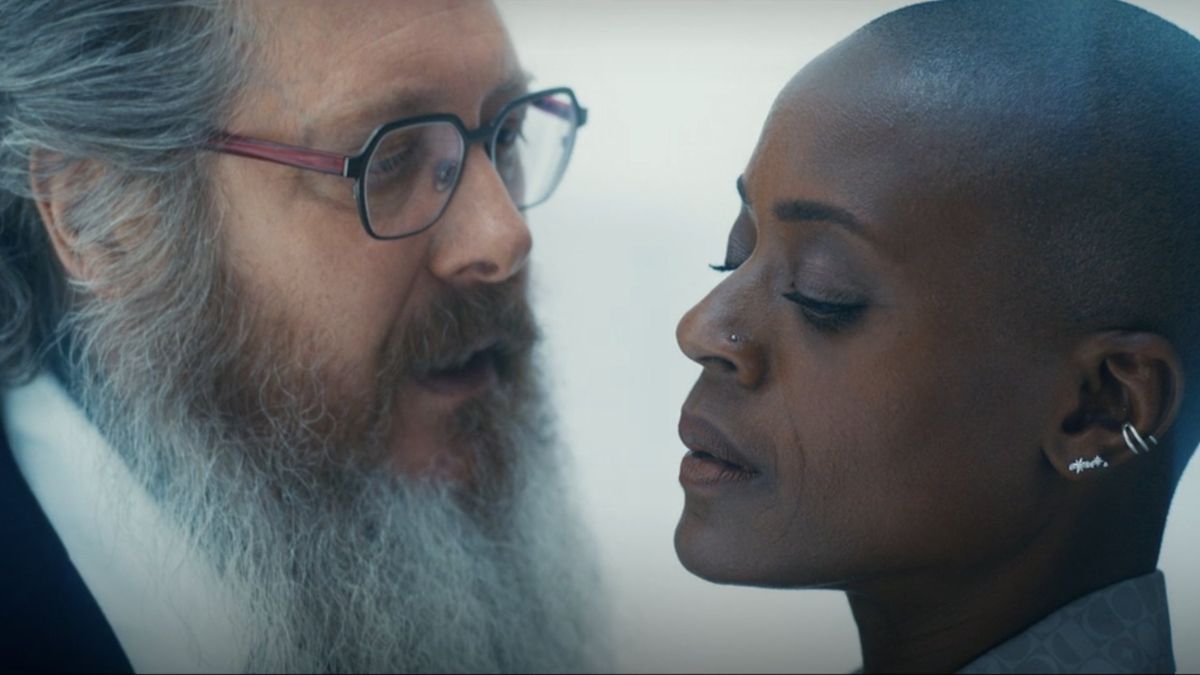
The writing for Ultron is also the series’ best because it encompasses the bizarre dichotomy he faces. He embraces art while hating its creators. He still believes most humans should be eradicated but also knows how to speak to Tommy with the compassion Vision at first lacks.
It makes sense why VisionQuest would then invest not one but three storylines in his character. He goes from being not so much a conscience for Vision but a voice of sardonic, nihilistic reason to having a romance with Jocasta. Then the Client appears in person, resembling Ultron’s avatar despite initially being told he wasn’t based on a human like the rest of Tony Stark’s AI. And while Spader is tremendous as both the human and AI version of Ultron, it gets to a point where there’s too much of a good thing, especially as it once again spreads the story too thin.
The fact is this: The best Marvel TV shows (and, to an extent, films) are the ones that can be self-contained. WandaVision and Agatha All Along take larger-than-life ideas and powerful characters but funnel their stories through the relatable, human notion of grief.
VisionQuest struggles to make us care because of an apathetic approach to characterization.
Loki is about a demigod, but it’s also about healing and getting a second chance to be better than the villain the narrative willed him to be. Ms. Marvel is a coming-of-age story that just so happens to exist in the superhero genre. It’s possible, and it’s frustrating, how often the MCU misses these days, considering the vast wealth and possibilities at their fingertips.
VisionQuest, in its most basic, fundamental readings, is a story about learning to be human again following deep, personal unrest. About how to live again following the death of someone you loved and what it means to reconcile the part of you before the loss and the part after. This is a forgiving read on a series that doesn’t seem very interested in peeling back the layers of its most interesting elements. But you can see where the first draft or pitch promised something emotionally worthwhile.
Instead, it splits itself, introduces characters only to do nothing of interest with them (sorry Paladin, you were cool at times), and forces itself to contort to Marvel universe lore and forgettable backstories without ever meaningfully driving the plot forward.
Moments work. But the series drags its feet for too long.
Even Tommy gets sidelined after a while. Ruaridh Mollica is charismatic and will be fine, especially if they continue to explore his relationship with his brother, Billy (Joe Locke). But like Jocasta and Paladin, they’re introduced, given just enough to chew on and suggest more interesting character beats before being shoved aside for more of Vision’s personality crisis.
The sets are fun, and the costumes hold more personality than most of the show, but ultimately can’t live up to the promise of the other entries in the would-be trilogy. VisionQuest has Easter Eggs fans will delight in, and it’s hardly the worst thing the studio has put out.
But it’s so shockingly middle-of-the-road, so flatlined and lacking in energy or fun, that it’s almost more damning. For all my griping about Spider-Man: Brand New Day, it at the very least felt like Destin Daniel Cretton liked Peter Parker. I’m not sure anyone on the VisionQuest writing team cares that much about Vision and, as a result, neither do we. Because why should we care about a character treated, ultimately, like an afterthought?
VisionQuest is streaming now on Disney+.
Rating
An amalgamation of interesting ideas that never coalesce into something uniformly engaging, VisionQuest begins with a hint of life before faltering, losing itself in big concepts rather than focusing on what matters: the characters.