
“[Hellraiser] resonates with people not because it’s scary, but because it’s saying something true about the way that human beings behave when they’ve got a void in them that they must sate.”
Horror games are rife with sexy characters – just look at the reaction to Resident Evil Requiem’s Leon Kennedy. But sexuality? That’s something explored far, far less often outside of indie experiences. Where the horror genre is concerned, Hellraiser: Revival certainly ticks all the bloody boxes for trepidation, tension, and graphic violence. And where the latter is concerned, it goes well beyond most of its contemporaries. But as I learned in talking with the team behind it, Hellraiser: Revival is also a game about intimacy.
My hands-on time with Hellraiser: Revival at Gamescom 2026 revealed a melding of many horror game ideals: The item-driven, navigational first person exploration of new Resident Evil; the resource scarcity of survival horror games past; and puzzles that demand reconfiguration of both your environment and mind. It’s an intriguing, exciting mix – especially for a licensed release. But what hooked me more than any of them was the manner in which the game presented itself.
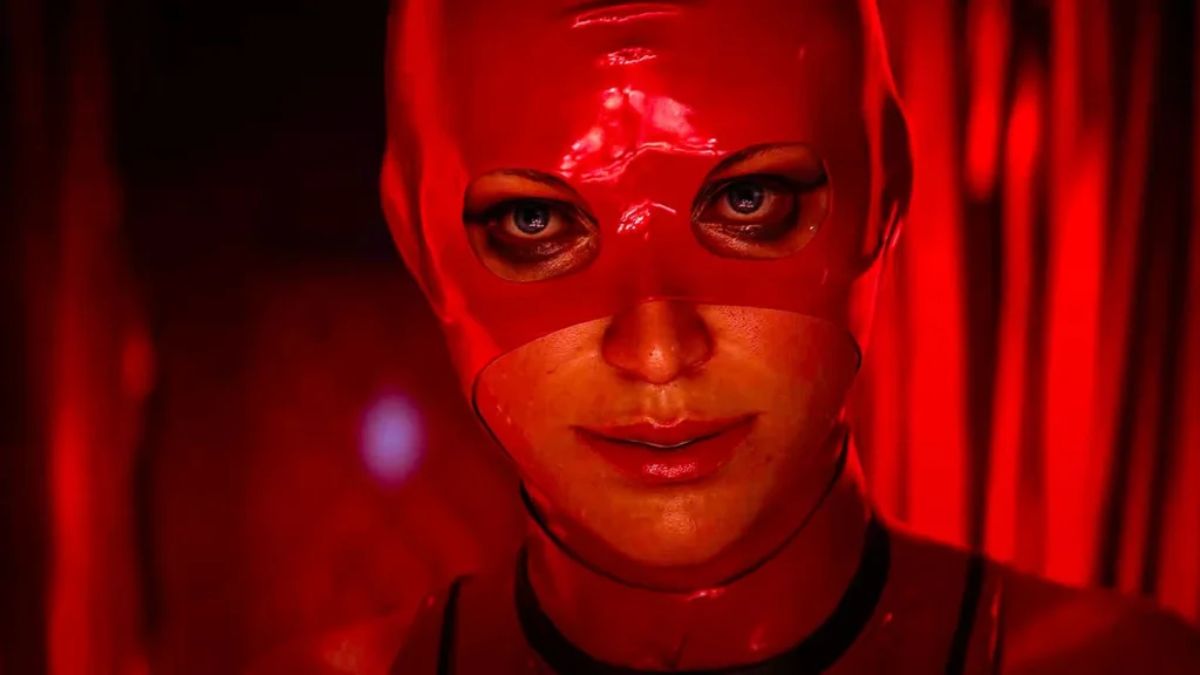
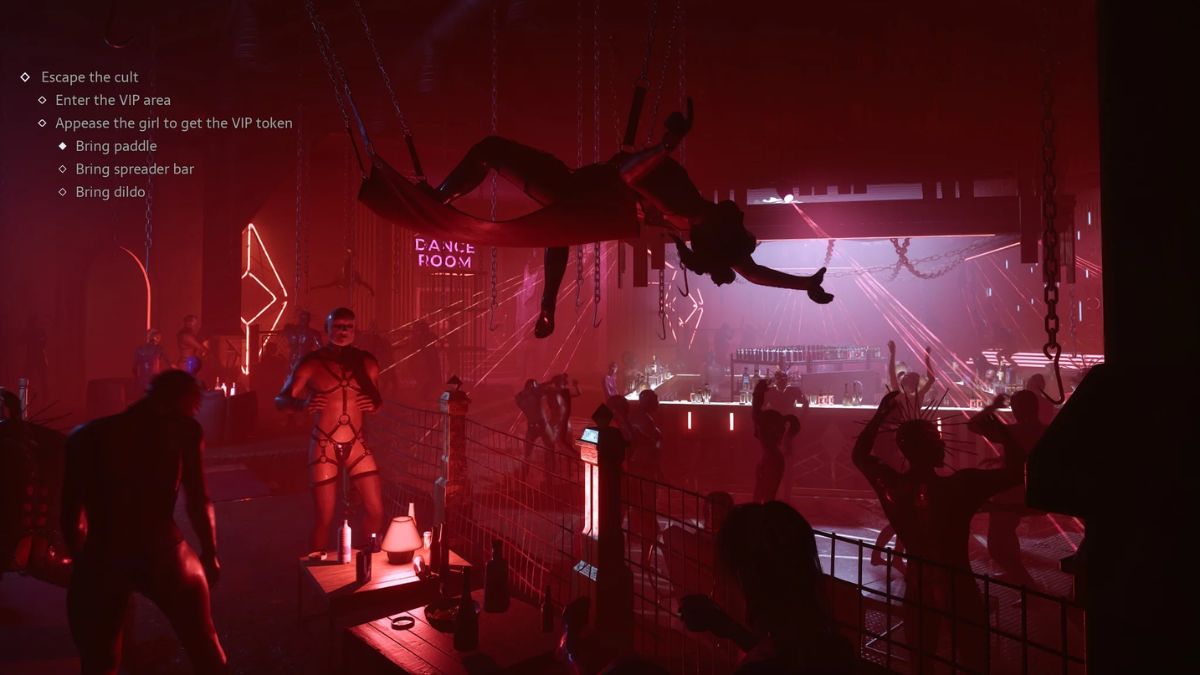
Sex and the pursuit of pleasure is at the forefront of so much of Hellraiser: Revival. Most of my demo took place within a BDSM club, its architecture a mix of sleek golden lines and walls plastered with blurred and twisted shots or posters of sensual bodies. The enemies I encountered were garbed in latex and straps, spikes and chains. Yet these elements never felt indulgent.
They weren’t there to titillate or amuse. After playing, I had the chance to speak with Hellraiser: Revival’s game director Emil Esov and narrative director Antony de Fault about the game’s approach to both sex and violence. To learn how, after its chains peel back that initial shock factor, Hellraiser: Revival hopes to hide real meaning underneath its mature content.
This interview with Emil Esov and Antony de Fault for Hellraiser: Revival was conducted on-site at a media event and was edited for clarity and length.
BUT WHY THO: This is a very eighteen rated game. You’ve got a lot of sexual related content and [violence]. Is that still a difficult thing to get made in this day and age, or is it more possible now?
EMIL ESOV: I wanted to make a joke that it’s so 18-rated that it’s almost like 19-rated. It wasn’t really that hard because early on we decided not to compromise. And when you tell a creative person: “Do not compromise on anything,” he just goes at it. We just went at it and we left all of the ratings conversation to a later date, basically. And we were ready to pivot a bit if we had to in order to ship the game, but luckily we didn’t have to. So for us, it was basically a walk in the park in a way.
ANTONY DE FAULT: Yeah, we were cautious with the rating stuff. We did a lot of research ahead of time to figure out what we were going to be able to get away with and what we weren’t. But we didn’t have to compromise in the end.
To your original point about getting a game like this made, I think the fact that Hellraiser is a pre-existing IP helped massively. If we were trying to make a new IP here, then there’s a lot of questions, a lot of conversations to have about, oh, can we reach a broader market if we decrease the age rating?
But Hellraiser’s, Hellraiser. You can’t make something that appeals to Hellraiser fans and is Hellraiser without going for the jugular on the ratings. So it kind of negated that whole discussion from day one. As soon as it was decided we’re going to do Hellraiser, then we have to do it properly.
BUT WHY THO: So there were no parts where you thought, “We’ve pushed this a bit too far here, we’re going to need to scale it back”?
ANTONY DE FAULT: Well, not for anyone else. It was really important to us that everything that was going to be controversial in the game had a purpose. [That] there was a reason it was there that was very defensible, and that it was doing something worthwhile.
There were a few points where we included something earlier on in development or we ideated something where it was very shocking. And maybe we reevaluated and decided, actually we’ve gone too far here because this doesn’t really have a purpose.
There was one specific incident where we failed to communicate that a certain scene was consensual. And so on subsequent passes through the game, we made sure that it was much more clear to the player that this was a consensual, uh, mutilation scene and not a non-consensual one.
EMIL ESOV: We didn’t cut down. We didn’t hold back for creative reasons. Sometimes you develop something not really knowing what it’s going to play like, and then when you try it and test it, it turns out it’s not what we wanted. But it wasn’t like, “Oh no, this is too shocking! Let’s tone it down.” It was “This is wrong for some creative reason and we want to go another way.” So that’s the only thing that we changed, we didn’t compromise by toning it down.
BUT WHY THO: What makes Hellraiser special as a franchise and shows that it’s more than just shock and violence? That it’s worth engaging with even if you’re a little scared to?
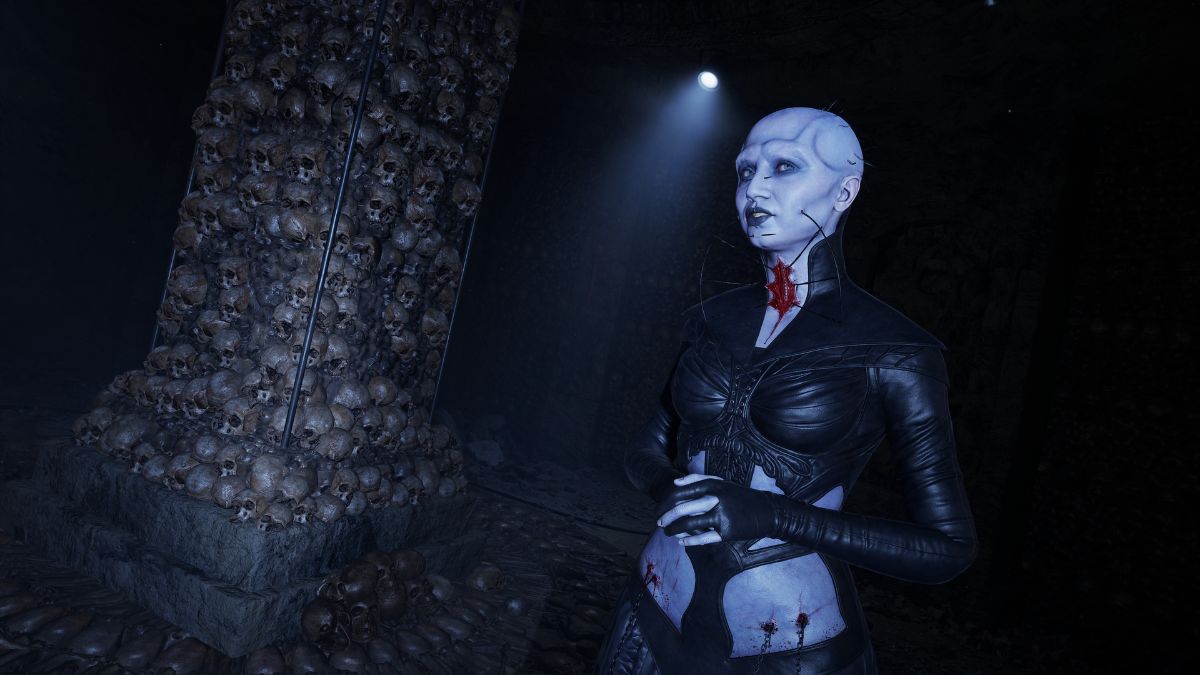
EMIL ESOV: Hellraiser has a psychology to it. It has a theme, has a method. It’s not violence for the sake of violence. Pinhead, as opposed to other slasher villains from that time, is a highly intelligent being – almost like a monk. And he presents himself as an intelligent being.
It’s not like he’s just killing stuff for no reason, he’s punishing people for no reason. It has a method to it. And it’s the basis for everything in Hellraiser. And then the whole philosophy unravels. Clive Barker did a perfect job [with] the novellas. He directed the first movie and the ideas behind it. It’s not like just violence for the sake of violence. It’s much more deep than that.
ANTONY DE FAULT: It’s philosophical and conceptual horror that deals specifically with sensuality and themes of desire and how that, at an extreme, can become depravity. It’s this little place that other horror doesn’t really go. So that gives it a very unique flavor. Think of it like a slasher movie but with higher-minded ideas.
Like Emil was saying, the Hell Priest, he is a priest. He is a monastic searcher of enlightenment. He’s trying to better understand the universe and understand existence through this kind of ascetic pursuit of sensation. He’s not just trying to kill people for the sake of killing people. He does not even really try to kill people. People just cross his path, and he’s so far beyond human that that ends up tearing them to shreds.
BUT WHY THO: Is it a scary or freeing prospect to work with the narrative level of this game?
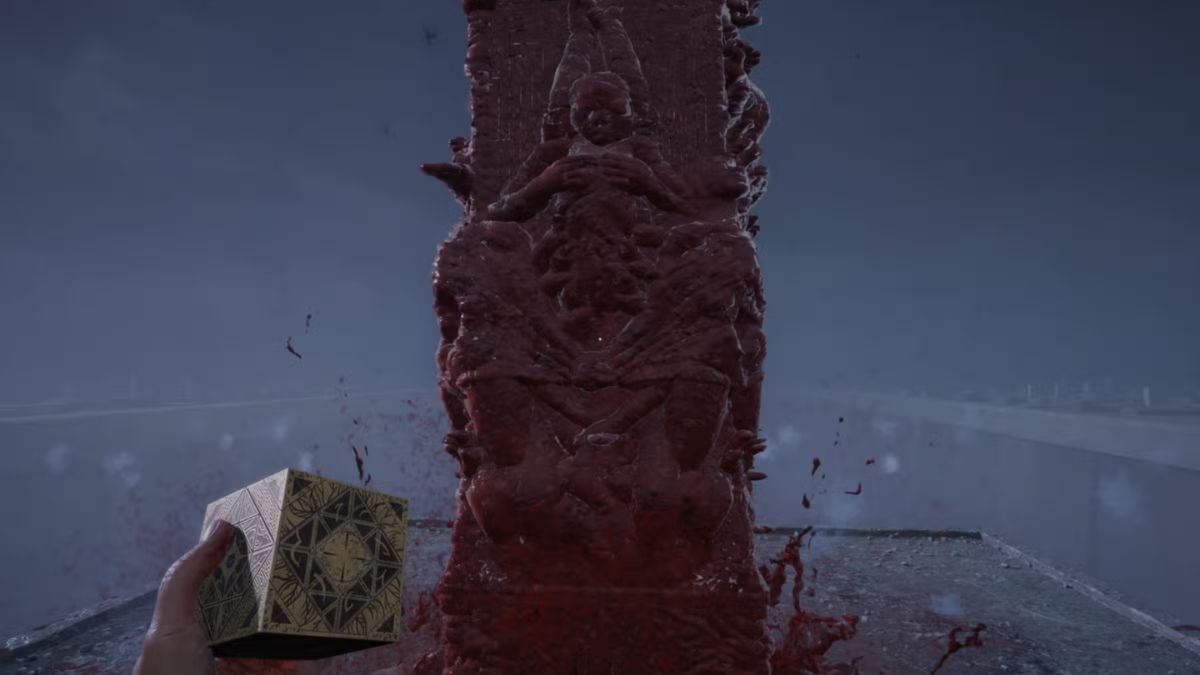
ANTONY DE FAULT: It’s super exciting. The fact that [this is] Hellraiser means that you can very easily win the conversation about having an 18 rating. You can also very easily win the conversation about making something that’s very deep, very meaningful, very personal to you and the team. Because that’s also what Hellraiser is. Hellraiser was originally informed by Clive [Barker]’s own personal experiences in BDSM clubs in New York in the ‘80s and during the Aids epidemic.
It resonates with people not because it’s scary, but because it’s saying something true about the way that human beings behave when they’ve got a void in them that they must sate. A desire that they have to endlessly try and fill. I think a lot of us, anyone who’s been through dark times in their life, can relate to that feeling of neediness.
Where you seek to satisfy that in other people in extreme experiences, such as extreme horror movies. I’ve gone too philosophical, but it was a delight. It’s an absolute delight to get that play space to be able to try and depict and say meaningful things.
BUT WHY THO: In terms of gameplay, this is more than just a hyper-violent shooter. There are echoes of new Resident Evil and other series. What were your inspirations for the key gameplay elements you wanted to put into a Hellraiser game.
EMIL ESOV: First of all, when we started designing it and directing it, we actually wanted to nail the Hellraiser part. That was the main focus, and the gameplay aspects that we came up with were inspired mostly by other horror games, you know, Resident Evil, Condemned: Criminal Origins, then also BioShock, Silent Hill.
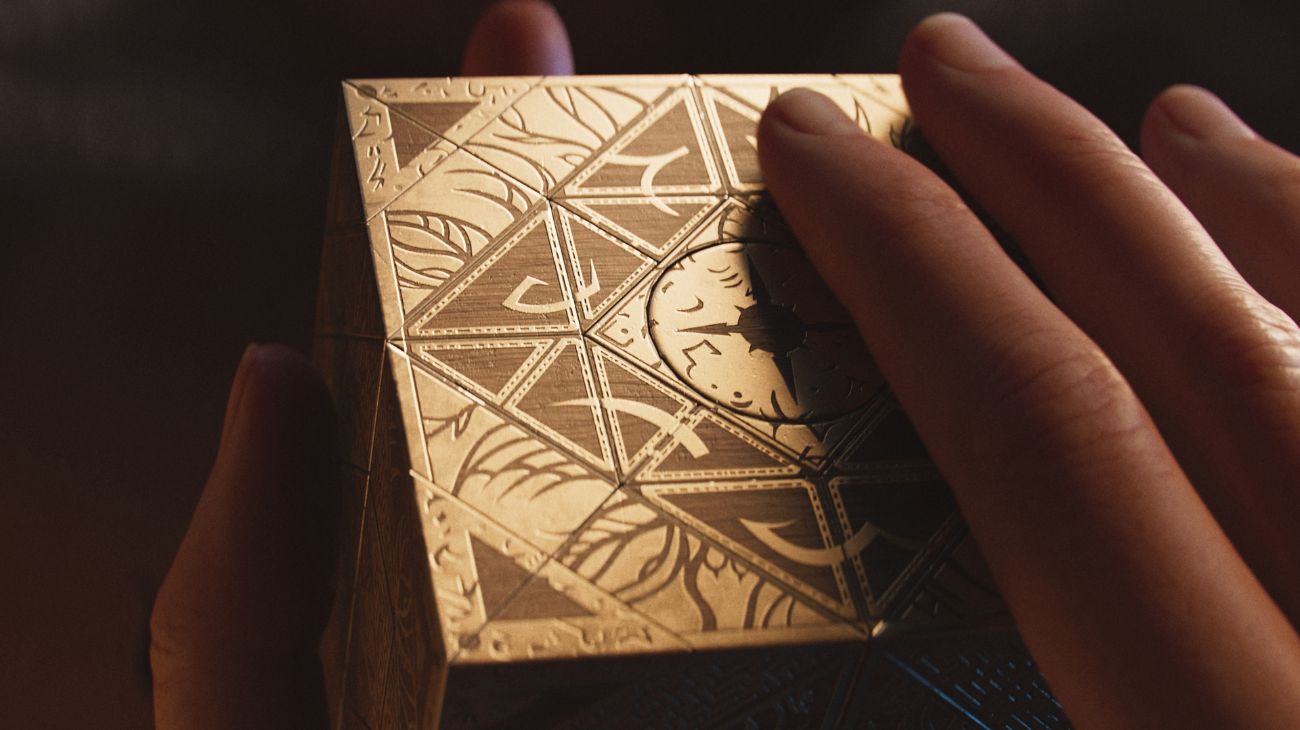
We looked at all of that and we picked the parts that would help us serve the fantasy the best. When it comes to combat, it feels familiar. But you also get to use the Genesis Configuration that is a plot device, but also a game mechanic.
ANTONY DE FAULT: Particularly the violence in the game was designed to be discomforting as much as possible rather than gratuitous, because that’s what Hellraiser is. It’s not really trying to scare you. It’s trying to make you uncomfortable.
So when, for example, the enemies grab you, the things they say to you while they’re attacking you or when you stealth take down an enemy, those are all meant to be quite in-your-face, almost intimate moments of violence.
EMIL ESOV: Even almost like a sexual thing. But apart from the demo that you tried, there are stealth sections, there are these chasing sections with Cenobites in them. We are kind of trying to basically incorporate Hellraiser into every aspect, even regular interactions like picking up items.
When you start the game, we intentionally made these deliberate, slow, and discomforting animations of picking an item from a body like that is being turned into a sculpture or something. It’s deliberately gruesome to watch, but it’s also a bit sensual, so you cannot look away.

BUT WHY THO: Hellraiser: Revival splits itself between more traditional and understandable environments and the Labyrinth. What’s the divide between the two across the game and how broad do environments get?
EMIL ESOV: Those are the main two aspects of the game and roughly around 25 percent of the game, or even more, happens in the Labyrinth. The Labyrinth is reserved for these puzzle places [and] chases with Cenobites. Some key narrative moments happen there, also. They’re these weird, like trippy situations where the Labyrinth plays mind tricks.
It basically preys on your mind a bit. In the real world, you have more actiony gameplay, exploration, finding items to progress. Combat is there as well – all of the boss fights are there. As for the scale of the environments, we are looking at a 10-12 hour gameplay time.
ANTONY DE FAULT: The Labyrinth areas are mostly linear spaces that have a series of challenges, not just puzzle challenges, but challenges that the Labyrinth is presenting to your character. And you experience those in linear fashion, although they may, as you’ve played, be nonlinear themselves, where you’re looping around or you’re branching off, or it seems like there’s no single path forwards.
In the real world, most areas of the game are very intersectional. You’ll often recover the same area at different points, but in different contexts where things will have changed. So in the demo that you played today, after you’ve been through the Labyrinth, you would go back to the same area and everything would have changed in that area in subtle ways so that you can go through those other doors that were locked on your playthrough.

BUT WHY THO: So often in games and horror games, sexuality and sexual violence is very feminine focused. It feels like in this game you’re trying to have more emphasis on showing the masculine side as well, both in the pleasure and the other side of it. Is that something that you thought about a lot?
ANTONY DE FAULT: Yeah, we thought extensively about that. We wanted to avoid those kinds of male-gaze issues. Even though you are playing as Aiden. He’s a masculine point of view, but we didn’t want to just serve female bodies up in front of him as meat. We wanted to explore female sexuality.
There’s certain parts of the game where you interact with female characters or where there’ll be depictions of female sexuality that are focusing on what they want and their pleasure and the kind of roles that they might take. There’s also parts where it focuses on male sexuality that is not explicitly just aggressive
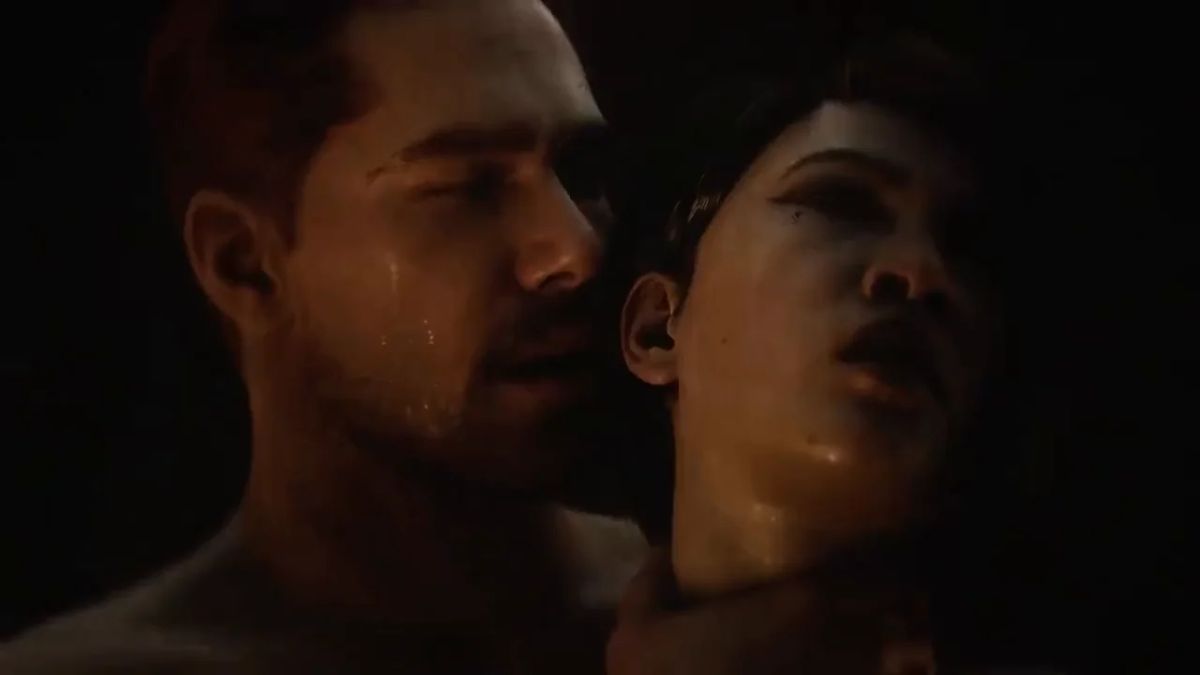
From a cinematic point of view, we tried as much as possible to give equal screen time to male and female characters’ sexualities. So, for example, the game opens with a sex scene between Aiden and his girlfriend Sunny, and it was important to us that the camera lingers as much on Aiden’s body and elements of his physique, and also showing his reaction to his pleasure, as it does on Sunny and her body and her reaction to her pleasure.
We’ll be judged for it when it comes out, but we tried to be as even handed as we could with that. [To be] authentic about what sensation really is, because I don’t think you can make a Hellraiser game that’s authentic without being pretty sophisticated about the nature of sensation. It can’t just be as simple as rub two things together and it feels good, right?

BUT WHY THO: If someone’s new to Hellraiser, can they dive into this game without having seen the films or would you recommend at least watching the first one before playing?
ANTONY DE FAULT: No, you can absolutely enjoy this on its own. It’s a separate story. Everything that is interesting and that’s relevant about the Hellraiser lore and mythos is explained within the game itself. There’s no prior knowledge required. Hellraiser is not a particularly recent IP, so this was something we thought about a lot. We didn’t want to make a game that was only for Hellraiser fans.
We wanted to make something that took what was great and what resonated with people about the original Hellraiser [franchise] and bring it to a brand new audience in a brand new medium. I really would strongly encourage any horror fans out there in gaming who want a headier, more philosophical horror game to check out Hellraiser: Revival.
Clive Barker’s Hellraiser Revival releases on PlayStation 5, Xbox Series X|S, and PC (via Steam).