


Clive Barker’s original novella and the horror franchise that spun off from it explore pleasure, pain, passion, and sin, and it isn’t something you can adapt into a video game. Or so I thought. After playing Clive Barker’s Hellraiser: Revival at Summer Game Fest, it was clear that developers Boss Team Games and Saber Interactive were swinging for the fences with ambition, and the game still feels just as interesting and reverent to Barker’s work.
Boss Team Games and Saber Interactive’s Hellraiser: Revival work hand-in-hand to bring the world of Hellraiser to life, embracing the IP that coaxes its heroes and heroines with temptation to save what is theirs, and it does so with intimacy and sex, drugs, and copious amounts of BDSM. This game embraces the vulgarity, absurdity, and violence the franchise is known for, and it holds nothing back.
Originally beginning with Clive Barker’s 1986 novella Hellbound Heart, the film franchise began with a Barker-written and directed film, Hellraiser, where he adapted his story. Here, audiences were gifted the Hellpriest Pinhead, and the Cenobites have only gotten more brutal since. With ten films made between 1987 and 2018, the Hellraiser franchise has drifted a bit from its roots. Hellraiser: Revival aims to bring everything back to the world of the Hellbound Heart, taking place 20 years after Barker’s first adaptation in the original film.
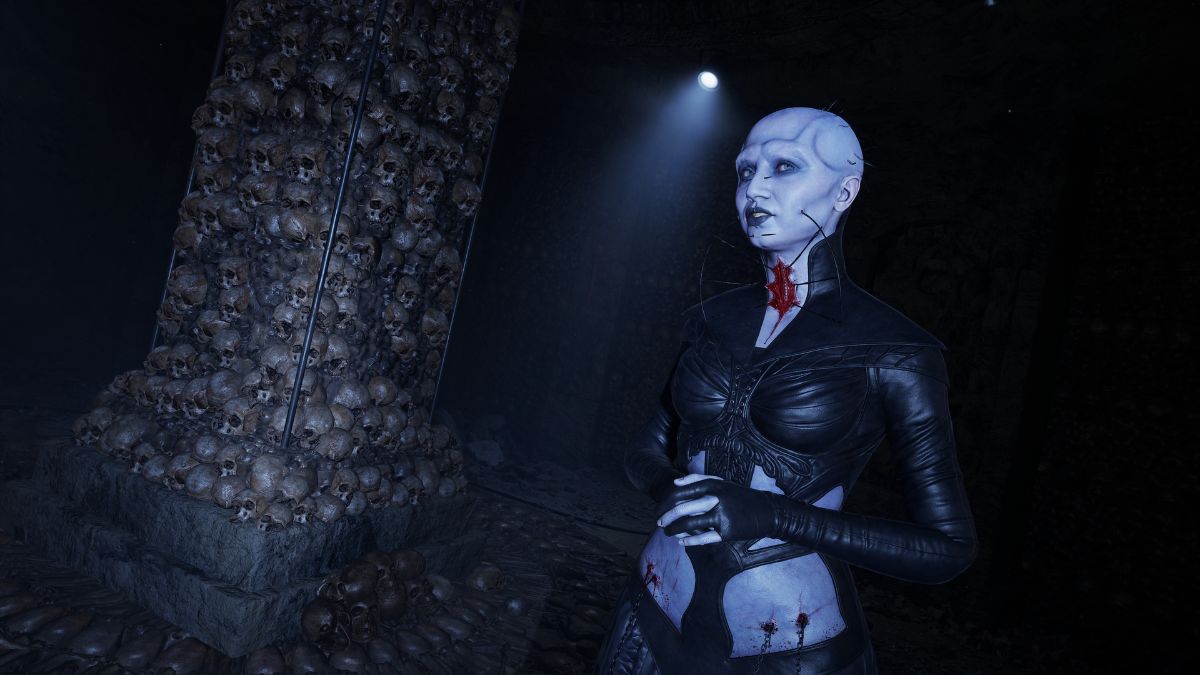
The Hellbound Heart is a guiding light for Hellraiser: Revival, and you can see it in the Labyrinth and the sights that the game has laid before us. But the game doesn’t just honor the franchise; it also works with Clive Barker and Doug Bradley, the original Pinhead, to bring this hellish delight to life, and you feel it right from the beginning
Clive Barker’s Hellraiser: Revival embraces the franchise and all of its violence and seduction.
From the outset, Hellraiser: Revival shows the player exactly what they’re in for. Leaning on sex and romance, as Barker did. This is evident in the opening scene, which leans on sex and romance as it introduces our main character: Aidan and his girlfriend, Yoon Sun-hee (nicknamed Sunny). As the two share a physical moment, the Genesis Configuration, the infamous puzzle box, comes out to play.
Aidan rubs the box over Sunny’s body, causing an electric reaction that, in typical Hellraiser fashion, blends pleasure and pain. The sequence is unlike anything I’ve seen in a video game; there is no restraint on what is and isn’t shown. And then, it happens. Flayed before his eyes, the Cenobites arrive with Pinhead himself asking Sunny if she wants to embrace them. The answer, of course, is yes.
With Sunny dragged to hell, Aidan wakes up naked, with his right arm stitched to his chest, a hook in his left forearm, while a thick nail is put straight through his palm and into the wooden armrest of the chair. The hell cult that worships the Cenobites has captured him as part of their worship and is using Sunny as part of their devotion. The violence is immediate in Hellraiser: Revival, and it doesn’t let up.
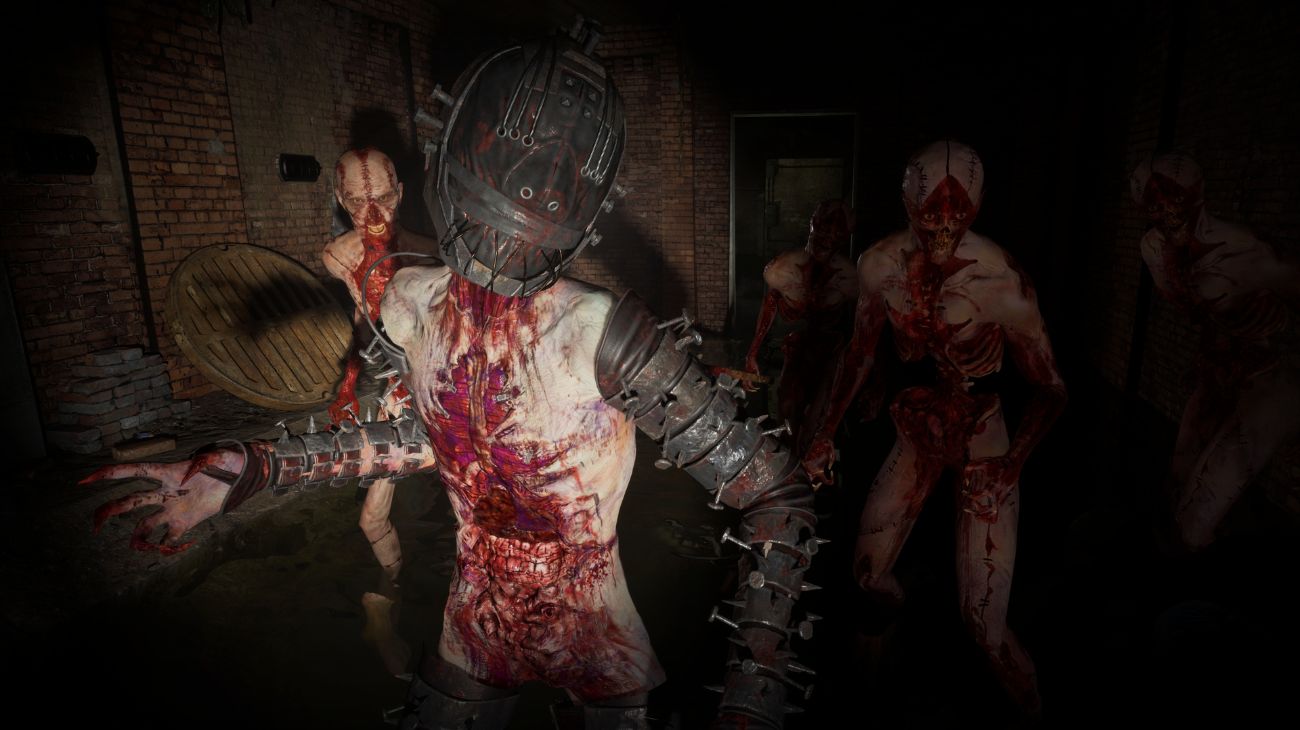
Hellraiser: Revival never looks away from darkness; it finds creative ways to revel in it. it. You play as Aidan as he embarks on a quest to rescue Sunny from the abyss. Using the Genesis Construction as a weapon to harness power from, Aidan must fight his way through cultists and run away from the hell priest Cenobites that stalk him through the labyrinth. Aidan must survive his pact with Pinhead to save Sunny, but first he has to escape the cult’s hideout, The Scarlet Church.
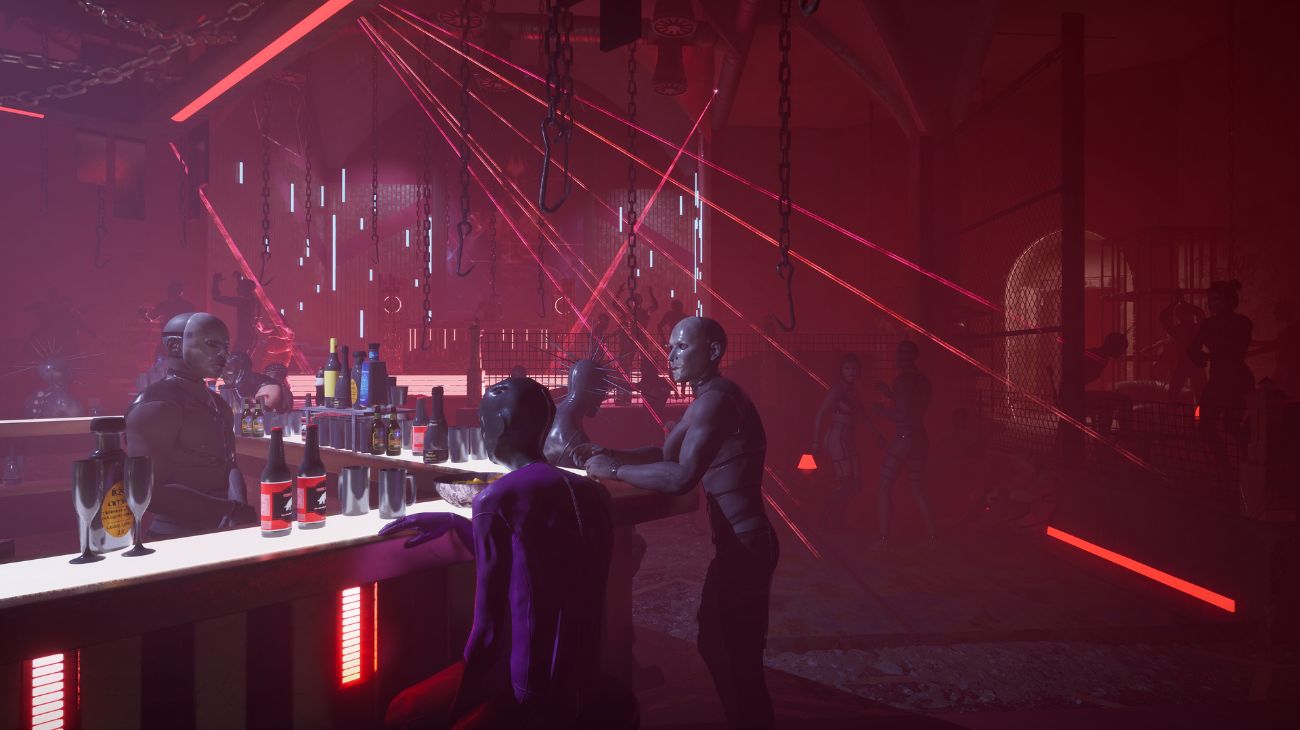
Part BDSM club and all hellish worship, the halls are decked with bodies; drug paraphernalia decorates the floor, with roaches moving atop them too. Bodies sit in meatgrinders, torture devices are everywhere, and preserved corpses are arranged like art installations in a way that makes the Mads Mikkelsen-led Hannibal blush.
The hideout’s design is terrifying, if only because it blends the cult’s leader Marlowe’s love of murder and mayhem with more harmless BDSM elements that are often more misconstrued than not. The kicker is every attendee worships the Cenobites, themselves a deadly threat as they bask in pain. Or at least that’s what is rotting below in the basements of the building, as a fairly harmless pleasure club with dancing (and good ol’ fashioned kink) is thriving without the buckets of blood that Marlowe is filling below.
While the survival-horror action is rudimentary, the worldbuilding is layered.
As the game continues, you learn about his past, his regret, and how he’s at fault for Sunny’s fall. But Aidan’s regret propels the story and the choices that you have to make along the way. While the narrative isn’t nearly as strong as the game’s approach to the survival-horror genre, how the developers blend story and mechanics is what makes Hellraiser: Revival feel so good to play.
Aidan’s use of the iconic puzzle box harnesses his pain, but also lets him absorb health from specific enemies you encounter and fight through. Called “Suffering,” the box charges using the damage you deal and the damage dealt to you, and you can use it effectively in both combat and to solve puzzles in the Labyrinth.
From a narrative perspective, Boss Team Games and Saber Interactive have done the work to bring the concept of pleasure and pain not just into the game’s overall narrative, but also into its mechanics. Every piece of the game is rooted in the lore of Hellraiser, and it works.
Still, the defining characteristic of Hellraiser: Revival is the nightmare it throws at players as a horror-survival game. Taking cues from genre-defining titles like Capcom’s Resident Evil, the game features the hallmarks players have come to expect. From space-based inventory management to puzzles that unlock rare items, and Cenobites that turn into stalking menaces you can only run from. What sets the game apart is how well it wears its franchise’s skin.
Pain is a key factor.

Hellraiser isn’t just set dressing; it’s central to nearly every mechanic. The genre also works perfectly to support a grounded experience. Aidan is ultimately just some guy. He’s an addict in love, a man from a wealthy family with a penchant for self-destruction; Aidan isn’t some agent with training.
It all matters more because Aidan is simply human. We hear his pain, see his blood, and ask him questions, and the tension of survival locks you in. The game’s approach to combat begins with tutorials that prioritize Aidan in pain, and that is its grounding factor.
Weapons break, even when they look like they can’t, and managing repair kits for something you really like and want to keep around is essential. Much of your survival as Aidan, even when tapping into the Genesis configuration, feels like luck. Lockpicking is essential for getting more resources faster, and some areas are worth a double-back once you nail down how to open things up.
As you progress, you explore areas, solve environmental puzzles, and find cultists who have dedicated their lives to the Cenobites. While the game is linear, exploring the environments you’re in is essential to getting the most out of your playthrough. Every room you enter is layered with storytelling.
The Hellraiser flavor seeps into every crevice of the game.
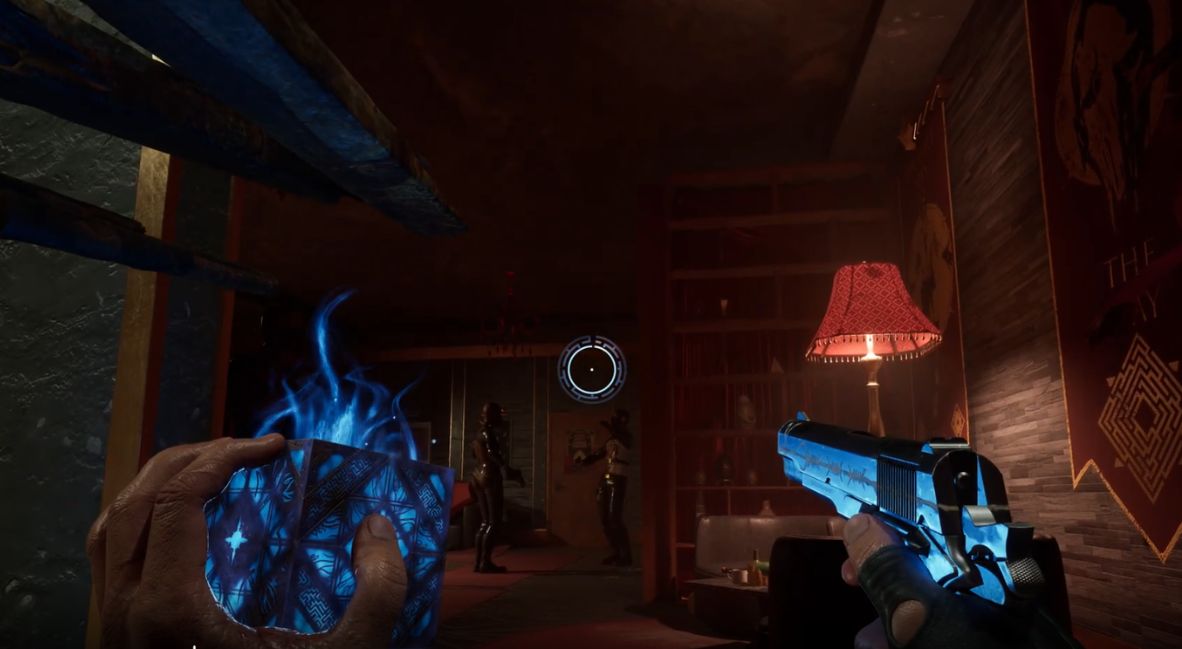
The game’s environmental design is decadent in its approach to grime and the nastiness of excess. Blood and other bodily fluids act as decor; pills and needles are strewn everywhere. It’s excess as extravagance.
Players pick up lore by reading books and notes left across the world, eat food (most of which is definitely rancid), and replenish ammunition as they explore. The layered environment rewards you, and the gore that meets you across different rooms and hallways always reminds you how depraved the people you’re fighting are.
Outside of Hellraiser: Revival’s cultist torture show, Aidan has to make his way through graveyards and alleyways to try and save his girlfriend. Outside the cultist hideout, much of the design is more restrained and feels more common to the genre, rather than inventive and steeped in the IP’s signature brand of sadomasochism. Still, the puzzles and exploration remain a highlight.
But it’s not just the human world that shows the developers’ attention to detail in puzzle design and immersion. It’s all standard genre mechanics, but the Hellraiser flavor seeps into everything. Beyond our world, Aidan routinely finds himself in Hell’s Labyrinth.
The claustrophobic Labyrinth is Hellraiser: Revival’s biggest accomplishment.
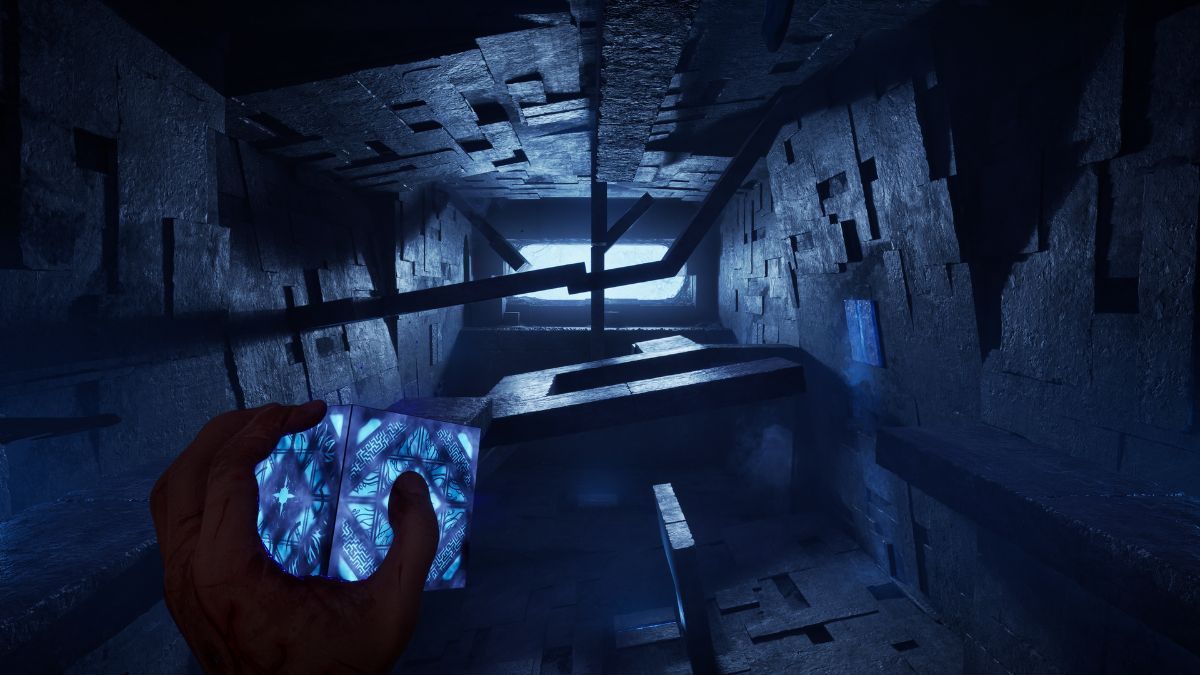
Having made a pact and wielding the power of the puzzle box, Aidan’s life belongs to the Cenobites, and they want to collect. The game treats the Cenobites as holy, both in how the different cultists worship them and in their overwatching presence over Aidan’s journey.
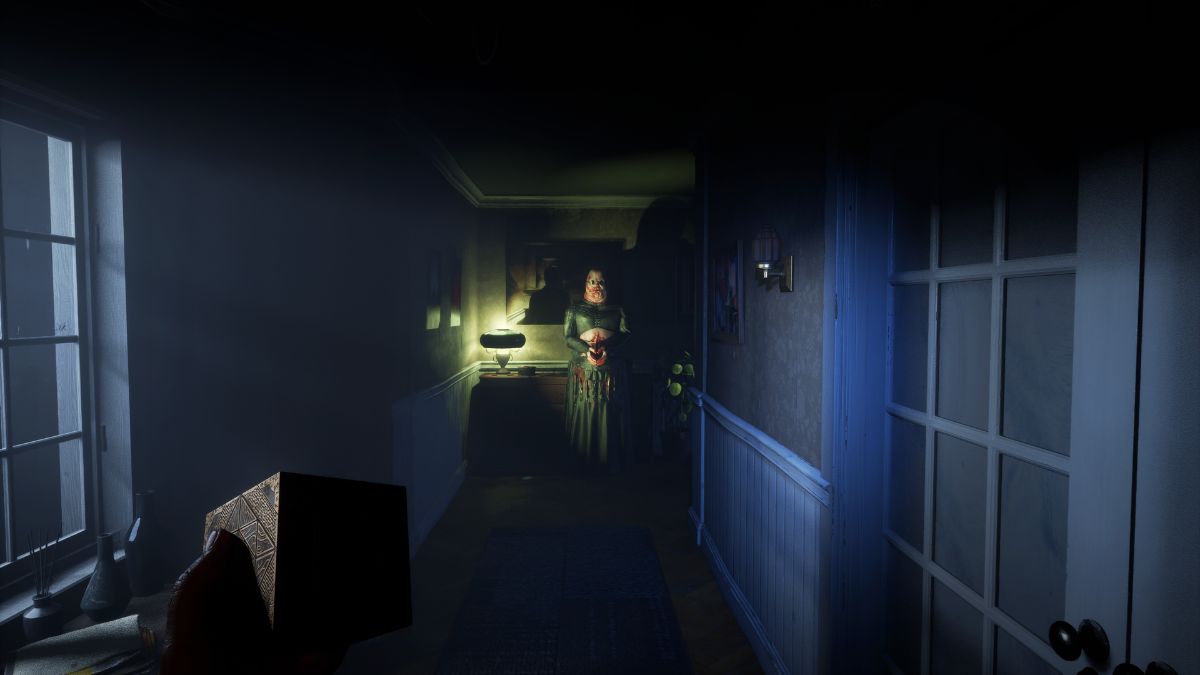
When the games come to Pinhead’s domain, the Cenobites often arrive without warning. You’ll turn down a hallway that is ultimately a dead end, then turn back and find yourself facing the blue-hued brutalist concrete walls of the Labyrinth.
Any path you take can change on a whim, and with a Cenobite right behind you, you’re always escaping something, always running. That tension increases from having to figure out concrete corridors on a dime, turning back the moment a Cenobite closes off your path, sprinting and sliding only for traps to spawn ahead.
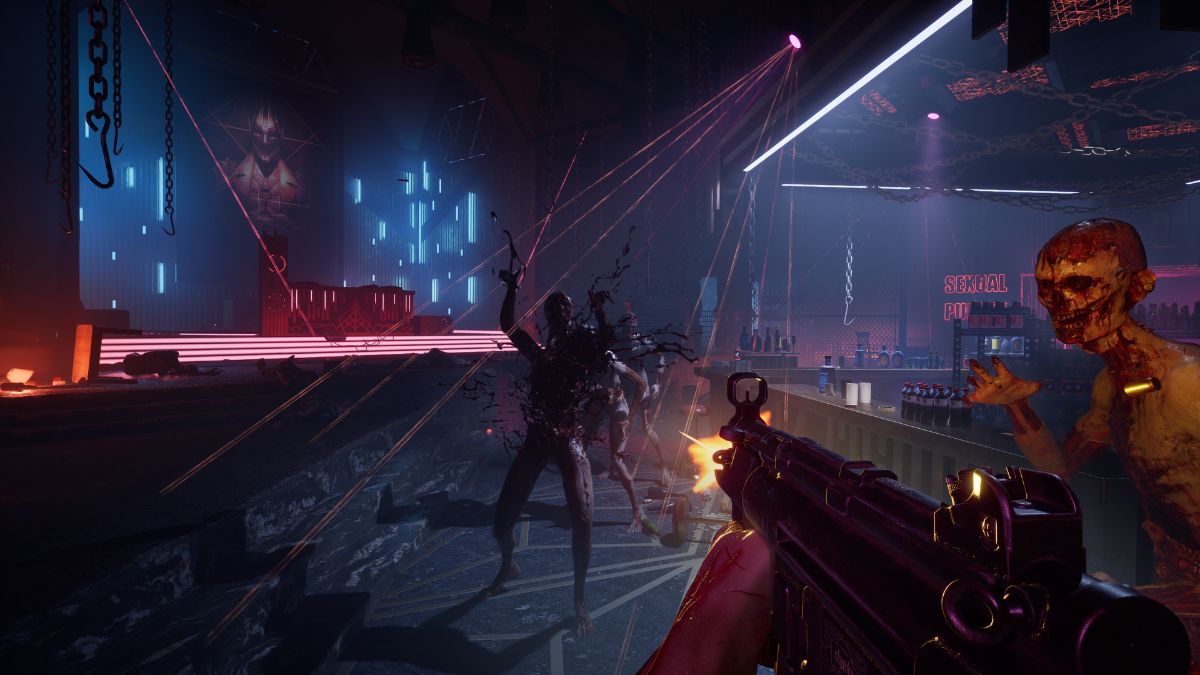
The Labyrinth is Hellraiser: Revival’s biggest accomplishment. It’s ambitious and claustrophobic. The Labyrinth is dark, brutal, and leaves surprises no matter how many times you wind up there. And more importantly, it’s a character in and of itself. The Cenobites in its corridors are terrifying, but the realm’s disorienting nature raises a tension that elevates the simple “run away from x” formula into something unique.
The puzzles that you solve in Hellraiser: Revival aren’t just about unlocking certain paths, but sometimes the path itself. This unique element of level design is a hallmark of the game and IP, and it does more than just slap a franchise level on the game. What makes the sudden location shifts feel great as a mechanic is how much they disorient you and highlight the developers’ approach to bringing the Hellbound Heart’s world to life.
Combat, on the other hand, isn’t the best. While I think the interactions only possible with the Genesis Construct are undoubtedly cool, the objects you can call to you and throw at enemy targets are difficult to lock onto.
Learning how to leverage direct combat and stealth will allow this depraved world to open up.
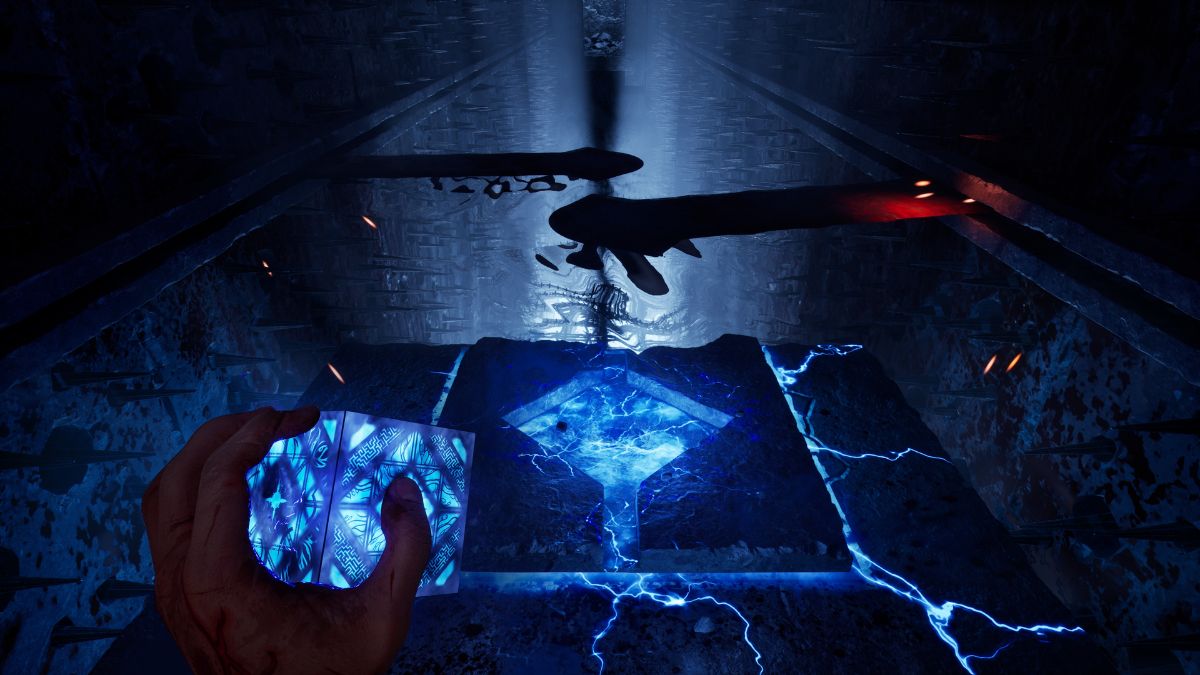
Additionally, the sensitivity of the small reticle on the screen at all times can make interactions outside of the exact right angle nearly impossible, forcing you to reload a save. This also impedes some of the game’s combat, and with durability a key factor for weapons, misswings can feel monumental.
Still, Hellraiser: Revival uses the franchise’s flair to make every encounter feel steeped in the hellish world. Each enemy is decked out in different variations of kink-ware. With nudity (full frontal and otherwise), sex, and violence at the core of every enemy design, the way that the developers have leaned into the depravity and excess of the franchise has to be seen to be believed.
The combat mechanics require a certain amount of precision. Still, players will be able to stumble through most encounters if they know how to move through the environments or use the game’s stealth features and security camera areas to plot their course through each level. Once you learn how to leverage direct combat and stealth, the world of Hellraiser: Revival opens up, and the new challenge becomes exploring every nook and grimy cranny of the game.
The game’s stealth mechanics may not be perfect, but their limitations make plotting your course through environments a creative endeavor. Not only that, but when a combat level becomes hard to pass, switching to stealth-based takedowns can change the game.
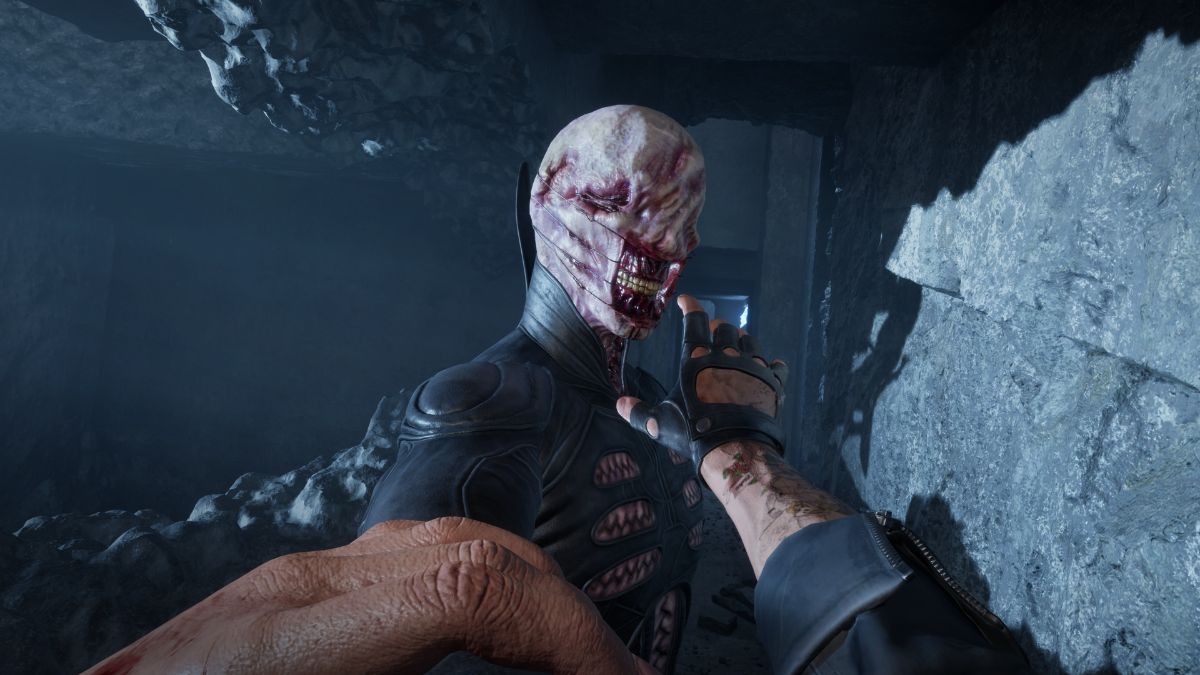
The last way that Hellraiser: Revival brings Clive Barker’s world to life is by utilizing its first-person perspective to the fullest. The limited field of vision makes the game’s horror stand out and makes jump scares easier to pull off. But this is also where the game struggles the most. During sequences where Cenobites are stalking Aidan, turning corners quickly and backtracking is essential.
To handle this, the game uses a mechanic called Quick Turn. The first time you use it, the on-screen instructions show a picture of the left thumbstick being moved down and then pressed upward. Or at least, that’s what it looks like. When it comes to executing a Quick Turn, precision matters. If you don’t input it correctly, it just doesn’t work.
Whether I was in handheld mode or using a proper Switch 2 controller, I rarely managed to execute it. This led me to turn off the mechanic altogether. The experience was frustrating. But once it was disabled, and I was more used to maneuvering and turning in general, getting through these sections remained tense, but didn’t hit a frustration ceiling.
Boss Team Games and Saber Interactive have made me believe a Hellraiser video game can be good.
Ultimately, though, Hellraiser: Revival is a game built for survival horror fans in and out. At the same time, those who love the franchise or even just Clive Barker’s brand of pleasure and pain will get even more out of the game and its original story.
For me, the original Hellraiser is vital to my understanding and appreciation of horror and its intersections with sex and romance. Ultimately, Hellraiser is always about romance in some way. But wanting more is how all humans fall, and Hellraiser: Revival tracks that in a way that horror hasn’t gotten.
Aidan is a broken man in more ways than one. Like many Hellraiser protagonists, Aidan also isn’t likable, and he shouldn’t be. His regret and transgressions help shape his story, and his connection to finding Sunny. But is it guilt or love that drives him to save her? That’s one question you grapple with as you move through the game’s narrative.
But the bigger one is: what would you do for the woman you love? And ultimately, is Sunny all that much better herself? Maybe, just maybe, she’s there because she wants to be. The tension between rescue and servitude is something the developers play with, and the desperation Aidan feels at every step of his journey is palpable.
Unfortunately, because the game’s so dedicated to bringing Hellraiser to life, some standard video game elements stand out like a sore thumb. The shop system, which is a woman named Zora popping up every now and again, feels shoehorned in, and even the use of money feels like a game design element that needed to be there, but didn’t exactly have the perfect way to feel natural.
The world of gaming is stronger by leaning into darker elements.

Even with that, and my hiccups with the Quick Turn feature, Hellraiser: Revival is invigorating for the horror game landscape. This is because, at a time when horror franchises have crystallized into asymmetrical slasher games that iterate on the same idea (albeit fun and good ones), this one asks its player to do a little more.
A story-driven title, Hellraiser: Revival makes the most of Clive Barker’s world and proves that you don’t need to shave off every rough edge to adapt a horror property into a video game. You can fill it with gore, where players stick their hands into bodies, and trigger warnings are plenty. You can show sex, display horrific violence, and the world of gaming doesn’t collapse. It’s stronger for it.
The game isn’t a love letter to the Hellraiser franchise. It’s a part of it. Aidan’s story fits into the canon of Clive Barker’s world. The art across the game, even in its obscene source of inspiration, is gorgeous. This is particularly true in Marlowe’s basement, where we see dismembered and flayed bodies on display and an oil canvas next to them, turning them from hellish to ethereal.
Much like the property it’s based on, Hellraiser: Revival balances its debauchery with concepts of holy beauty and pushes its audience to shift uncomfortably in their seats. The craftsmanship that goes into staring into depravity and keeping it cohesive and immersive can’t be overstated. Hellraiser: Revival is a decadently designed game that wants you to watch its violence in awe. Or horror, your pick.
Clive Barker’s Hellraiser Revival releases on PlayStation 5, Xbox Series X|S, and PC (via Steam).
Clive Barker's Hellraiser: Revival
-
Rating - 8.5/108.5/10
TL;DR
Hellraiser: Revival makes the most of Clive Barker’s world and proves that you don’t need to shave off every rough edge to adapt a horror property into a video game… Much like the property it’s based on, Hellraiser: Revival balances its debauchery with concepts of holy beauty and pushes its audience to shift uncomfortably in their seats.