
The ocean and what happens within it have become a major focus of climate change studies, and this has also made it an even bigger jumping-off point for horror-thrillers, like Netflix’s latest series, Below (2026). Set in a fictional Newfoundland town that has struggled for decades in the aftermath of Newfoundland’s Resettlement program and the long-term impact of the Atlantic fishery collapses on the population, Creator/Showrunner/Executive Producer Jesse McKeown has a lot to work with here to establish a community on the brink of its own collapse.
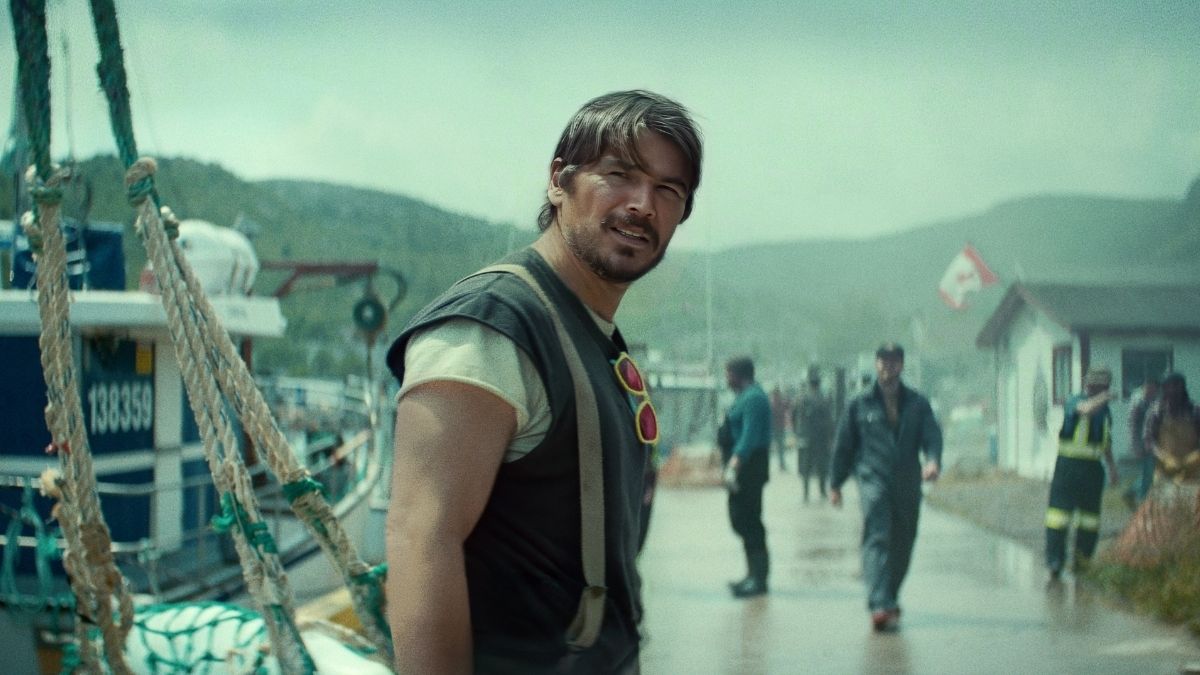
Below (2026) follows Calvin Penney (Josh Hartnett), a man struggling to scrape together a living off iceberg remnants while still haunted by his father’s death during the Resettlement. There’s an isolating sense of loneliness around Hartnett’s Calvin. He’s a man of few words and a widower. His family is mostly split apart, with two of his children having gone to the Mainland to seek opportunities while his remaining son, Wade (Charlie Heaton), sticks behind to keep watch over his father.
With renewed conversations around a new resettlement opportunity for the community and the chaos that comes with a ‘Come Home Year,’ a time when former residents of the town come back for a giant communal reunion, there’s a lot going on. And the arrival of an unknown sea creature, bent on leaving bodies in its wake soon after, has everyone on edge. As the body count climbs and his family is in the line of fire, Calvin takes it upon himself to figure out what this creature is and, more importantly, how to stop it before it destroys everything he holds dear.
Change is not always for the better, and that shows in Below (2026).
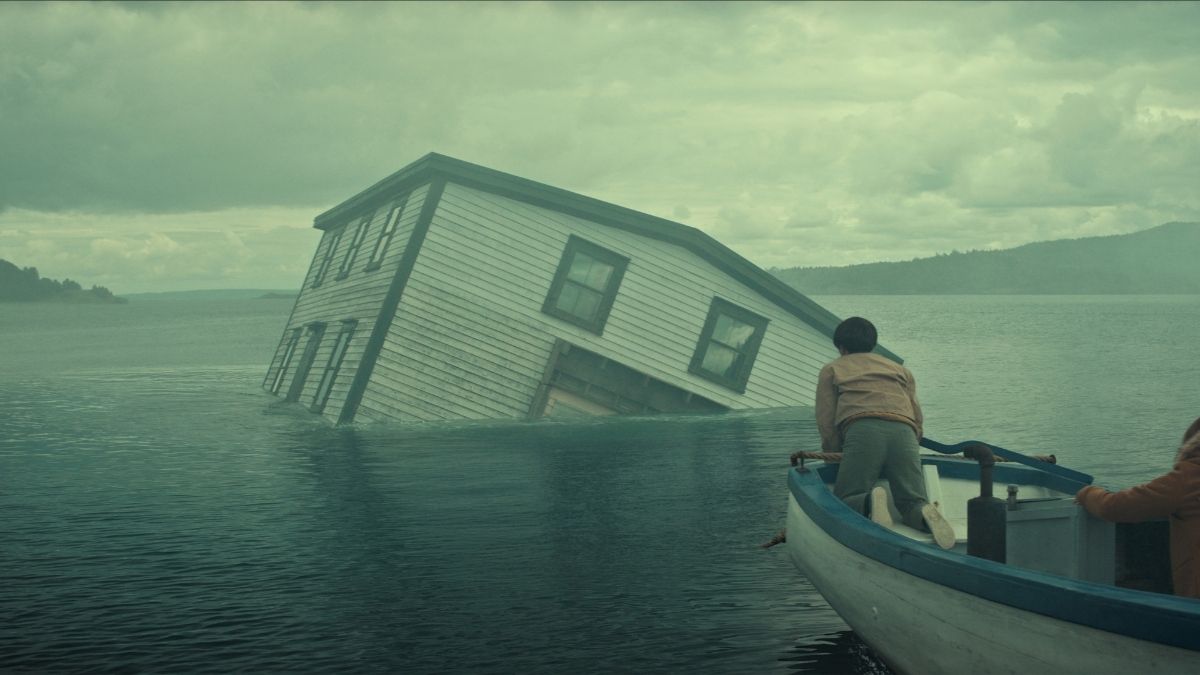
The focus on Newfoundland and Labrador is felt throughout Below (2026), from the regional specificities in the dialogue to bar hazing rituals and the like. The communal ties are strong, but so too are the aftereffects of government action placed on its populace.
For Calvin and his sister, Ruth (Willow Kean), the longstanding trauma of Resettlement keeps them rooted in place and feeds into the idea of a familial curse. But with dwindling financial prospects, McKeown shows the other side of the Resettlement conversation—that the money provided to move becomes a powerful lure when opportunities are scarce.
These scarcities, some of them the direct result of overfishing and indirect result of climate change, lead some community members to leave on their own. For the younger generation, like Mary Penney (Ruby Stokes) and Jay Penney (Rohan Campbell), there is no future in the province, but familial ties always bring them back. Below (2026) brings the clash of thoughts and beliefs about the future to life realistically. It is sometimes painful to watch because these conversations feel so familiar.
With the plot surrounding the mysterious sea monster, the idea of ‘Come Back Home’ takes on a whole new meaning. With the oceans as a beacon of rapid change, what emerges about the monster’s identity and motivations echoes current research on changing habitats and migration patterns.
The first nod to this is the arrival of a flamingo outside of its territory in Episode 1, a nod by McKeown to what might be on the horizon. This throughline carries through to the final moments of Below (2026), reminding us that as our oceanic systems change, something new can pop up at any moment and make itself at home.
What lies below takes on a whole new meaning for the residents that expands beyond the sea.
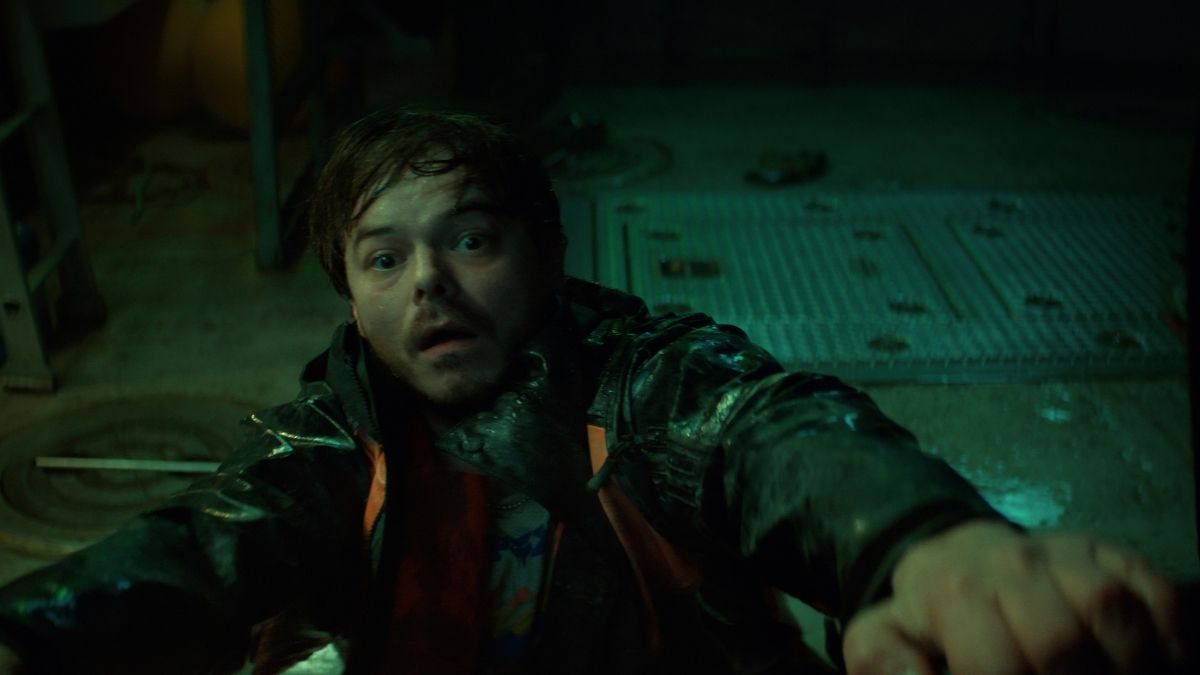
Broken down across its six episodes, Below (2026) resonates most in its first three, finding a thrilling beat in this coastal community. There’s enough to contend with when the sea monster shows up, and the immediate threat to Calvin’s family, as well as the community, is enough to keep one locked in. However, as Calvin and his family split up and follow their own paths in the series’ second half, the writing almost loses its way, with shifting focus and arguable side quests.
However, these side-quest moments in the latter half do carry plot-forwarding significance, like Calvin and Wade’s separation and reunification, the researcher sideplot, and more. They blend awkwardly into the storyline, making these necessary sections of plot momentum feel less natural and more convenient, despite their layers of drama and suspense.
That said, one character’s trajectory that arguably never finds its footing is Jay Penney’s arc. In general, the Penney siblings who’ve moved to the Mainland are the least developed, and that disconnect could be intentional given the familial dynamics seen in Below (2026). That said, Jay’s arc never reads as if it belongs in this series’ world. Does his arc ultimately find itself in some form of resolution? Yes. It just never connects with the grander whole.
Mackenzie Davis is a fish out of water in her more exposition-driven character role.
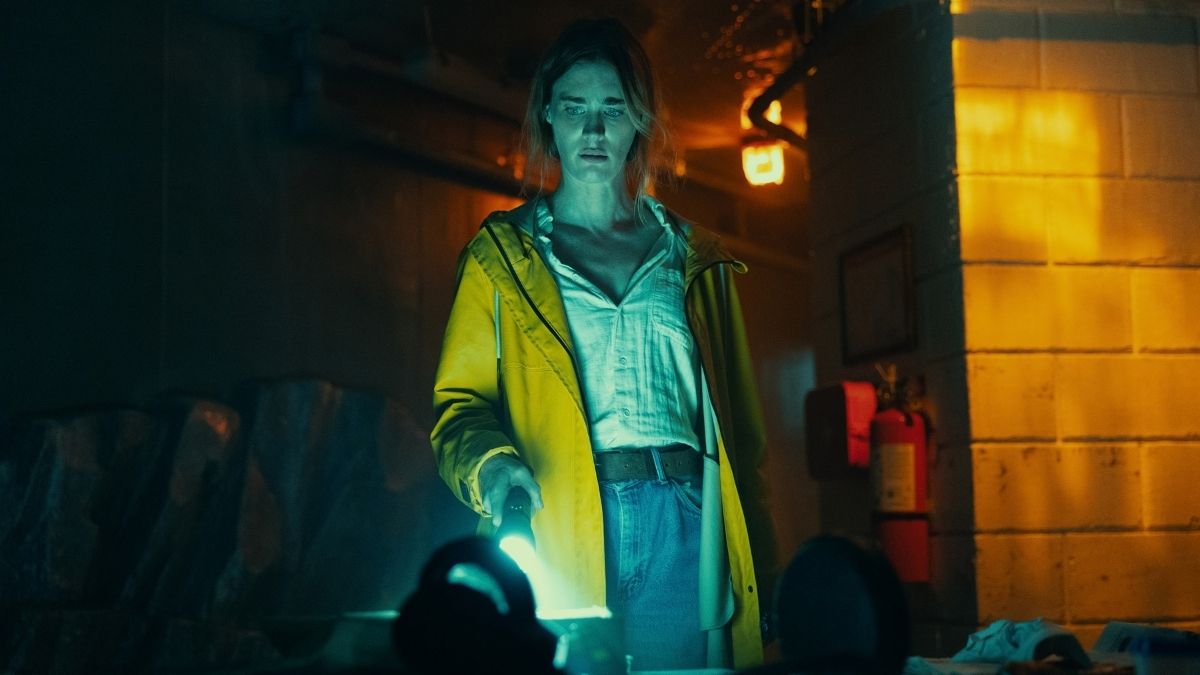
Similarly, characters like Mackenzie Davis‘s Fonda Howander struggle to find their identity outside of their assigned places in the overall story. As a marine researcher living on the outskirts of the community, there’s a natural barrier between Howander and the rest of the town’s populace.
Because Calvin is one of the few townsfolk who go to her for information, Howander naturally fills the expositional role for both Calvin and the audience. Unfortunately, this comes at the cost of developing the character beyond info bursts.
Which is a shame, because Howander almost seems to have the potential to be both a friend and a love interest to Calvin. Both have a natural thirst for knowledge, wanting to know what exactly is besieging the town and why. If the intent, though, was to create a feasible romantic prospect for Calvin, Davis and Hartnett have no chemistry when they’re together onscreen.
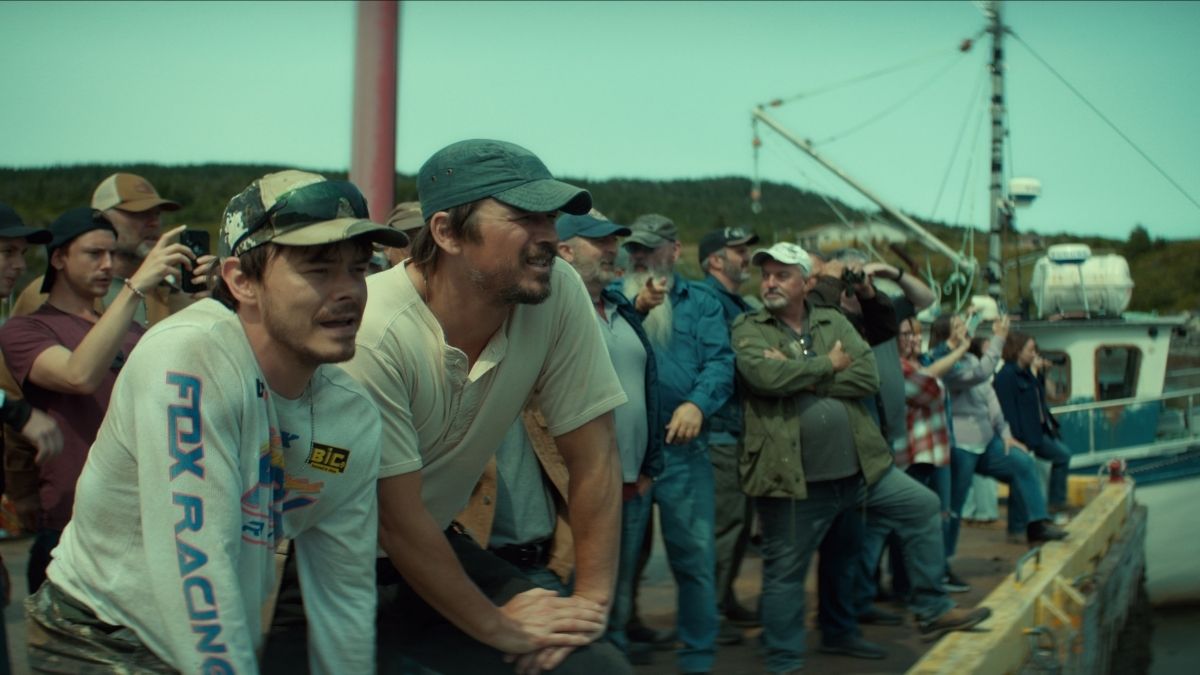
The same isn’t true of the familial chemistry and tension between Hartnett’s Calvin and Charlie Heaton’s Wade. Heaton perhaps goes a little too hard on the distinct Newfoundland accent (for those not familiar, picture a cross between Irish, Canadian, and occasionally a little American Southern, depending on region), coming off stronger than the family members opposite him onscreen. Still, in Wade’s journey with his father onscreen, we see two stuck souls find their rightful place, and it is beautiful to behold.
Ultimately, Below (2026) reminds us that climate change is here, and horror is not far behind.
When it comes to the horror-thriller elements, McKeown, cinematographer William Baldy, and the rest of the team have great fun setting up the moments that leave the audience in suspense. When things get bloody, they don’t shy away.
From a partially digested moose head to the evocative shot of the sea monster close-up before it devours its victim to the emergence of a supernatural entity that may or may not be real, there’s enough ominous energy to go around. For those expecting an outright gorefest, however, this is not the series for that.
Below (2026) finds itself in choppy waters the deeper it goes into its narrative, but eventually pulls itself back on course for its bittersweet finish. It’s both a love letter to Newfoundland and Labrador and a warning for those in the direct line of fire of climate change’s impact, and those of us who think we are on the sidelines. Even when we think the immediate threat is over, there’s something always on the horizon. Whether it’s an undiscovered creature or people operating with their own plans without thinking of the greater impact on the environment and the world.
Below (2026) is now streaming exclusively on Netflix.
Below (2026)
-
Rating - 6.5/106.5/10
TL;DR
Below (2026) finds itself in choppy waters the deeper it goes into its narrative, but eventually pulls itself back on course for its bittersweet finish.