


Everyone loves a good aquatic horror flick, and with the arrival of Pål Øie‘s latest horror film, Kraken (2026), the real horror might not be what audiences initially think going in. Giving a different kind of spin on the good-for-her style of revenge horror filmmaking, Kraken (2026) takes its time building up the tension and suspense before finally fully releasing the titular creature onto the screen. However, by the time the film reaches that point, the audience will (and should) be on the Kraken’s side because, frankly, it did nothing wrong.
Set in Western Norway, home to the deepest fjord, the Sognefjord, reports of salmon acting up around a nearby fishing farm bring marine biologist Joanne (Sara Khorami) back to where she once called home. She investigates the fishing farm and discovers that her ex, Erik (Mikkel Bratt Silset), has taken over their joint sonar-related research project and finished it to use against fish lice. Which is all well and good, except that the usage of the sonar may have awakened something from the deep.
This is shown in the mounting casualties, mostly tourists who might be just a smidgen too loud in the water. The soundscape crafted for Kraken amplifies this, making it all the more believable that an already cranky deep-sea dweller would do anything to not only investigate but also silence the noise reverberating through the water. With the creature threatening the community as an unintended result of the fishing farm owner’s (Øyvind Brandtzæg) desperation to capitalize on the sonar tech, something has to be done.
Capitalism and greed (accompanied by the damaging effects of sonar) are the true horrors in Kraken (2026).
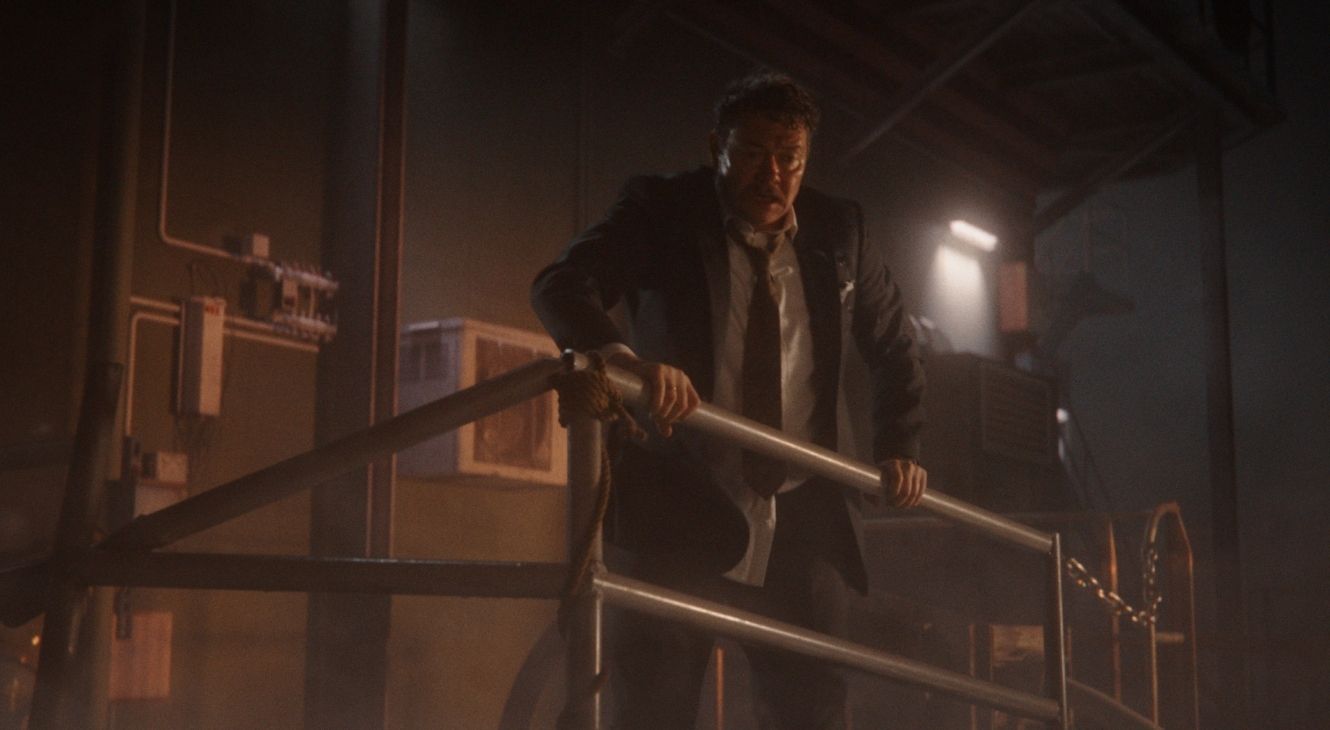
There’s a real basis to this horror. Water itself acts as an amazing conductor, making underwater sonar a penetrating and physiologically devastating force for underwater occupants. Humans are not exempt from its impact. Through the screenplay by Vilde Eide, Kjersti Helen Rasmussen, and Natasha Arthur, and by using Joanne as the primary expository force in tandem with visual effects, it’s clear that sonar is the real horror in Kraken (2026).
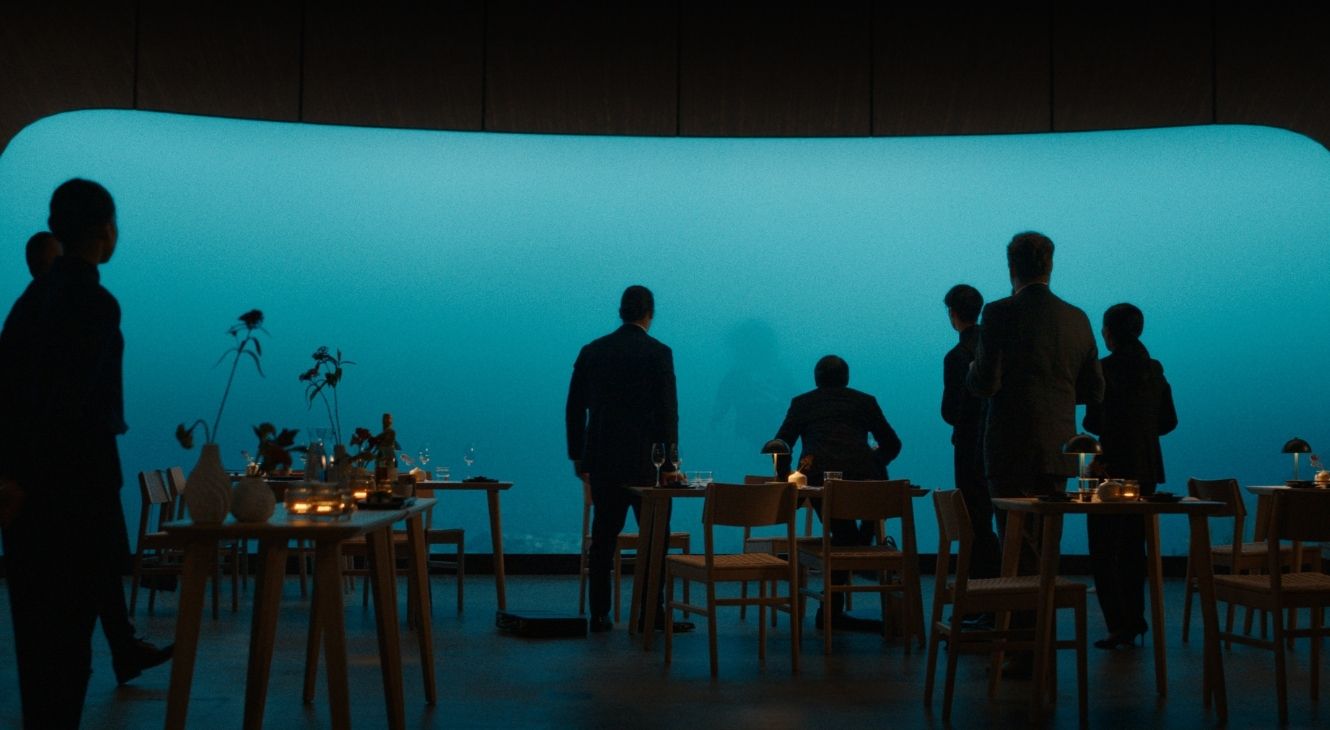
Yet, Øie never shies away from showing how dangerous the titular creature is. While we don’t get to glimpse the creature in its full might until the film’s third act, Øie shows us its strength through the trail of bodies it leaves behind. This lends itself to some of the film’s most striking moments. From the aerial shot of a circling jet ski before it meets its end to the glimpse of a severed body floating ominously in the water in front of a giant window, this creature may remain unseen. Still, its impact is undeniable once the deaths start to increase.
These moments are sometimes more captivating than the film’s characters, who aren’t fully fleshed out beyond their roles. Still, they do what they need to. At the center of Kraken (2026) is Joanne. While we don’t learn much about Joanne, Sara Khorami infuses Joanne with such passion for her work that you can’t help but eagerly follow her along for the ride. The guilt that mounts as soon as Joanne realizes what her work has contributed to, even inadvertently, lends weight to her actions, making her arc all the more understandable.
Simplicity is both the blessing and the curse of Kraken (2026).
Similarly, Mikkel Bratt Silset‘s Erik is properly overworked and exasperated, but never overly so. Much like Joanne, he has faith in his work until the data proves otherwise.
Both Silset and Khorami take what little is given and craft fully realized people we care about. Unfortunately, the same cannot be said for the other characters in Kraken (2026).
Øyvind Brandtzæg’s Avaldsnes may make an attempt at depth in how much he needs this contract, but his character is almost stereotypical in his actions. His wife, a police officer, and his daughter, the activist, are mostly forgettable, despite the latter’s epilogue restating the film’s thesis in case no one picked up the obvious message throughout. And therein lies the catch-22 of the film’s screenplay: its simplicity is both its strength and burden.
Kraken (2026) does just enough to make its mark, but it could be stronger.

Aside from the impact of sonar that ultimately kickstarts the events of Kraken (2026) and its setting, everything else struggles to stand out. In scaling back to prioritize its messaging (which, to be fair, is super important and more should be done to research and mitigate sonar’s harmful impact on life forms), the film struggles to maintain its pacing and stand out in a sea of similar horrors. And by the time the final climactic shock occurs on screen, one that should have had more emotional resonance, it arrives rushed and ready to wrap things up rather than allowing us to sit in the moment.
Still, Kraken (2026) does just enough to make its mark in an oversaturated genre, with the titular creature having justified vengeance in its need for blood. Still, it’s difficult not to think about how the film could have been stronger with some character adjustments and more refined pacing to better build toward the inevitable showdown. In the end, the Kraken is still baby and did nothing wrong, and that’s just enough for someone like me to go out and watch it.
Kraken (2026) will play in theaters and be available On Digital June 12, 2026.
Kraken (2026)
-
Rating - 6.5/106.5/10
TL;DR
Kraken (2026) does just enough to make its mark in an oversaturated genre, with the titular creature having justified vengeance in its need for blood.