

Hur Jin-ho‘s latest film, The Assassin(s) (Amsalja(deul)), captures a moment during a turbulent time. Anyone familiar enough with modern Korean history will likely recognize the name Park Chung Hee, the third president of South Korea whose actions in the 1970s propelled the country into a dictatorship until his assassination in 1979. With the film set around the infamous assassination attempt on August 15, 1974, and the conspiracies that followed, it sustains a thrillingly tense series of twists and turns up until the plot loses steam.
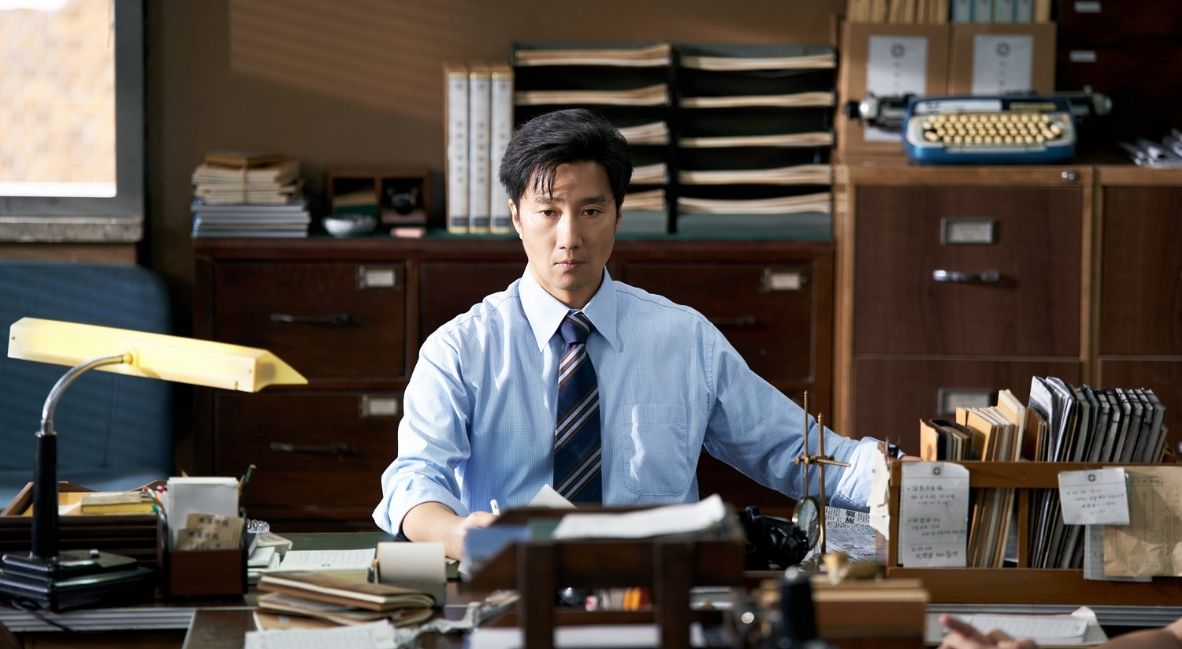
The Assassin(s) uses the perspectives of three characters from different backgrounds to dissect and explore the conspiracies afoot, while also fleshing out the time period it’s set in. Kim Jae-hwan (Park Hae-il) is an editor of a newspaper who is caught up in the crosshairs of government oversight and censorship.
His opening scene shows the kind of danger he puts himself in before the pivotal assassination, showing how far he’ll go before things hit the fan. He is not one to toe the line, and that’s a dangerous kind of man in this political period, for that level of unwavering commitment can inspire (and does).
Tensions run high in The Assassin(s) in pursuit of the truth at the heart of a conspiracy.
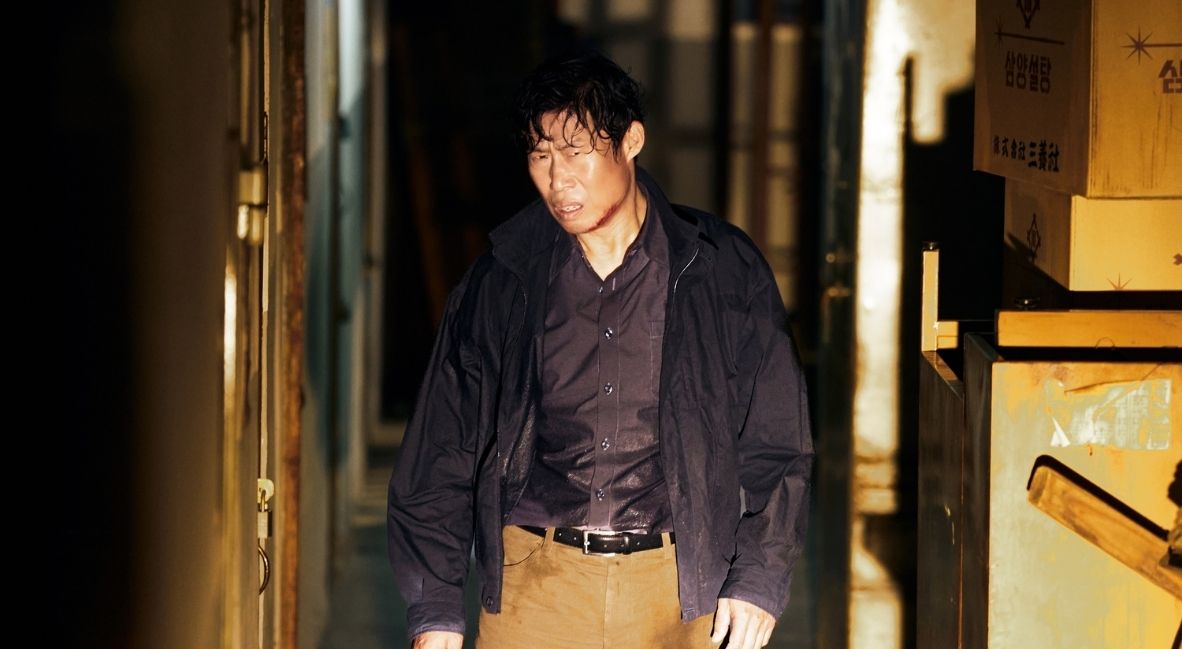
In contrast, Park Cheol-gu (Yoo Hae-jin) is a police officer who shows utmost loyalty to the country he serves. He is a man who would die by the sword for his country, which makes his journey in The Assassin(s) a significant one and arguably the most compelling.
From the pivotal moments leading up to the assassination attempt to the film’s end, Yoo Hae-jin portrays a man steadily chipped away until his loyalty and wholehearted belief and trust in the government he serves crumble into sand. It is a career-defining kind of role for Yoo Hae-jin, and he nails it.
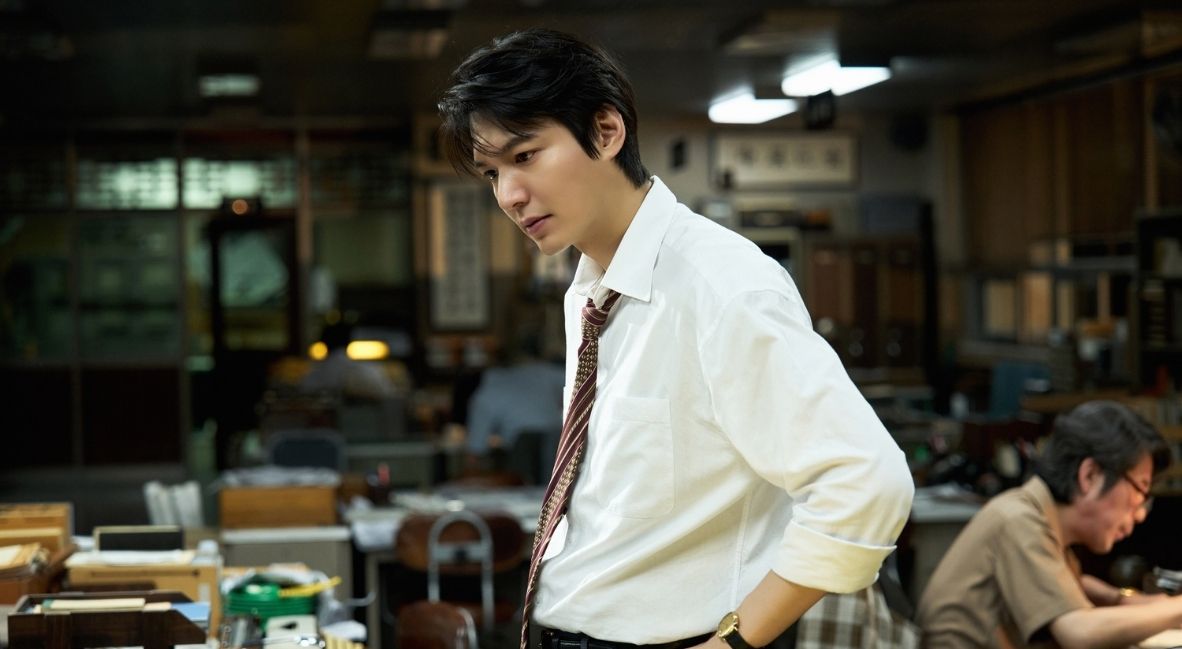
The youngest of the three characters is Han Young-il (Lee Min-ho), a rookie reporter assigned to cover what was initially supposed to be a Liberation Day celebration on his own. However, once the inciting incident occurs, it becomes a real trial-by-fire series of moments for the young reporter, where every minute counts to break the news. As someone with higher status in the country, he also quickly learns how his privilege can get him into spaces others might otherwise be barred from. And while the actor himself is arguably too old to pull off such a youngster rookie type, he does so with convincing earnestness.
The entire cast delivers the goods, but it’s Yoo Hae-jin who arguably steals the show.
Set in the 1970s, the styling, from costumes to sets to even the grainy quality of the sky in aerial shots, immerses the viewer in the time period. How cinematographer Lee Mo-gae frames specific shots, whether it’s a man turning away from a flag or purposely playing with shadows and light to omit a person’s face from view, paints a picture that speaks volumes. Each shot is meticulous, with slick editing that keeps up the escalating pace of the film’s mystery before the editing and visuals can no longer compensate.
With a screenplay by Kwon Ki-joon and Lee Ji-min, Hur Jin-ho makes good work of eking out tension for the majority of the film. Flipping between perspectives gives the ensuing conspiracy life, with a mystery that thankfully keeps the audience from guessing ahead and sustains suspense.
And while the three do converge on and off, their separation into individual missions broadens the scope of how far this conspiracy goes, and the consequences they each face give the danger real bite.
A final act undercuts the big climax it has been leading up to.
What ultimately lets The Assassin(s) down is that it drags on too long. Several natural stopping points toward the end of its runtime create jerky pacing that never quite rights itself. It begs the question of how this entire thing will actually end, ruining the natural momentum as it tries to reach a resolution. That, and the addition of another factor of the conspiracy introduced in the final third of the film, pushes the suspension of disbelief too far after such a riveting road traveled.
Despite this wavering in its third act, The Assassin(s) is timely and relevant. Hur Jin-ho takes this screenplay and weaves a tense, conspiracy-ridden tale that will suck people in. With three protagonists at its center, facing powers far greater than they are combined, the conflict is enough to make anyone root for the little man in this picture. And that’s enough to settle in and wait out the otherwise clunker of an ending.
The Assassin(s) had its world premiere at the 2026 Toronto International Film Festival.
The Assassin(s)
-
Rating - 7.5/107.5/10
TL;DR
Despite this wavering in its third act, The Assassin(s) is timely and relevant. Hur Jin-ho takes this screenplay and weaves a tense, conspiracy-ridden tale that will suck people in