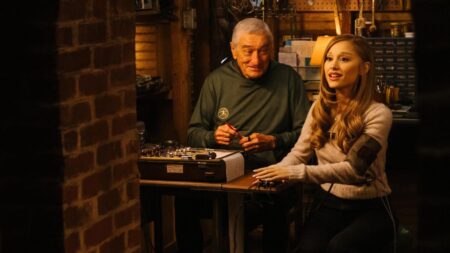

The spooling and snipping of film, the swift flick of light switches, the rhythmic pour of soda fountains, the airy refilling of RC Cola canisters, and the slow crawl of rotary phones all litter the opening of David Fincher’s Quentin Tarantino-penned The Further Mis-Adventures of Cliff Booth. It’s a film that luxuriates in the antiquated but charming analog world of 1977 Los Angeles.
Yet despite reveling in the tactility and handmade processes of its setting, the film itself feels like the antithesis of that world: slick, digital, artificial, excessively controlled, and calculated. It’s a fitting analogy for the film’s fundamental mismatch between filmmaker and material.
Fincher’s clinical precision leaves little room for the looseness, theatricality, and fluidity that this sequel to Once Upon a Time in… Hollywood repeatedly begs for, often trading atmosphere for precision. It’s a film that hopes to evoke a laid-back, atmospheric, immersive feel, but feels entirely at odds with that aspiration—a film caught in an identity crisis, desperate to tell us where we are with constant timestamps and reminders of when we are, rather than simply letting its world breathe and its characters and moments sit.
The Further Mis-Adventures of Cliff Booth is over-calculated with mismatched direction and story.
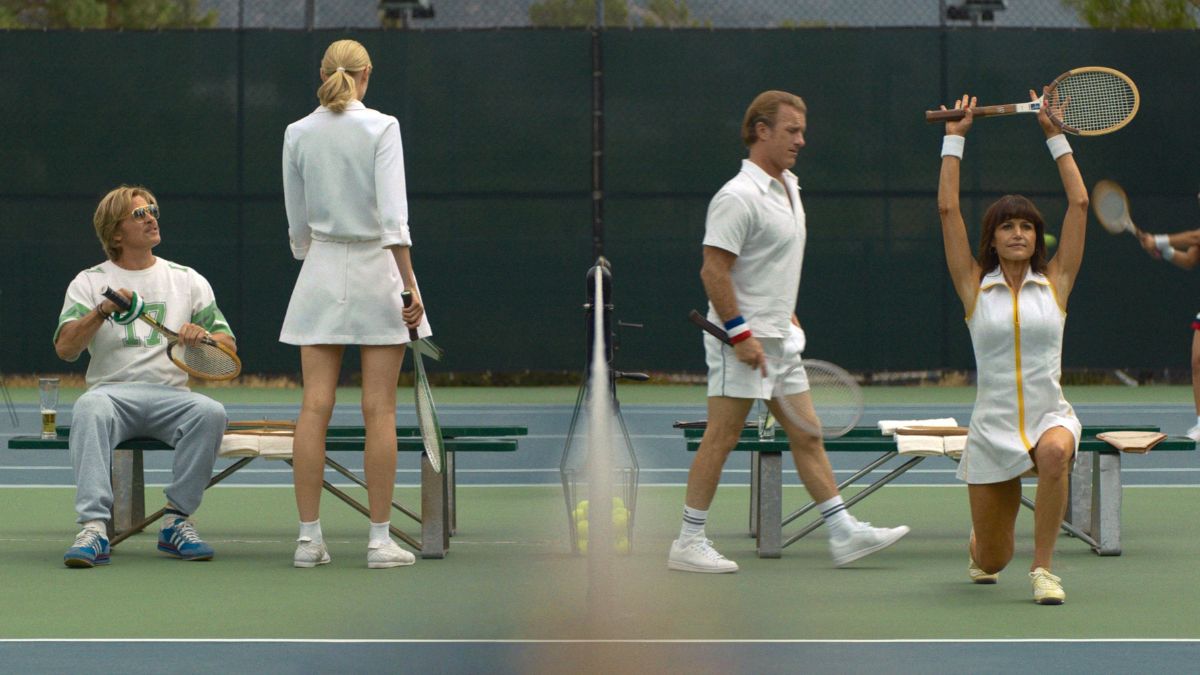
The result is a film that feels meticulously assembled, every beat and gesture calibrated to within an inch of its life, but is zapped of the form, feel, and flair that would make a hangout movie-meets-neo-noir sing. It’s a surprise given the caliber of talent behind it, but if nothing else, a reminder that no one is above making a film that’s an assortment of individual great moments that work beautifully in isolation but rarely connect into a satisfying whole.
Early in The Further Mis-Adventures of Cliff Booth, the titular stuntman says, “I know better than getting in the way of a good story.” It’s an ironic turn of phrase for a film that often gets in the way of its own nonexistent one, if only to get to the rare good beat in a film otherwise defined by staid, lethargic, almost stilted moments. It’s the product of Fincher’s rigid, overly controlled lens smothering whatever pulse the proceedings might otherwise have.
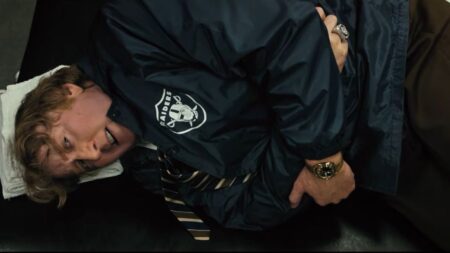
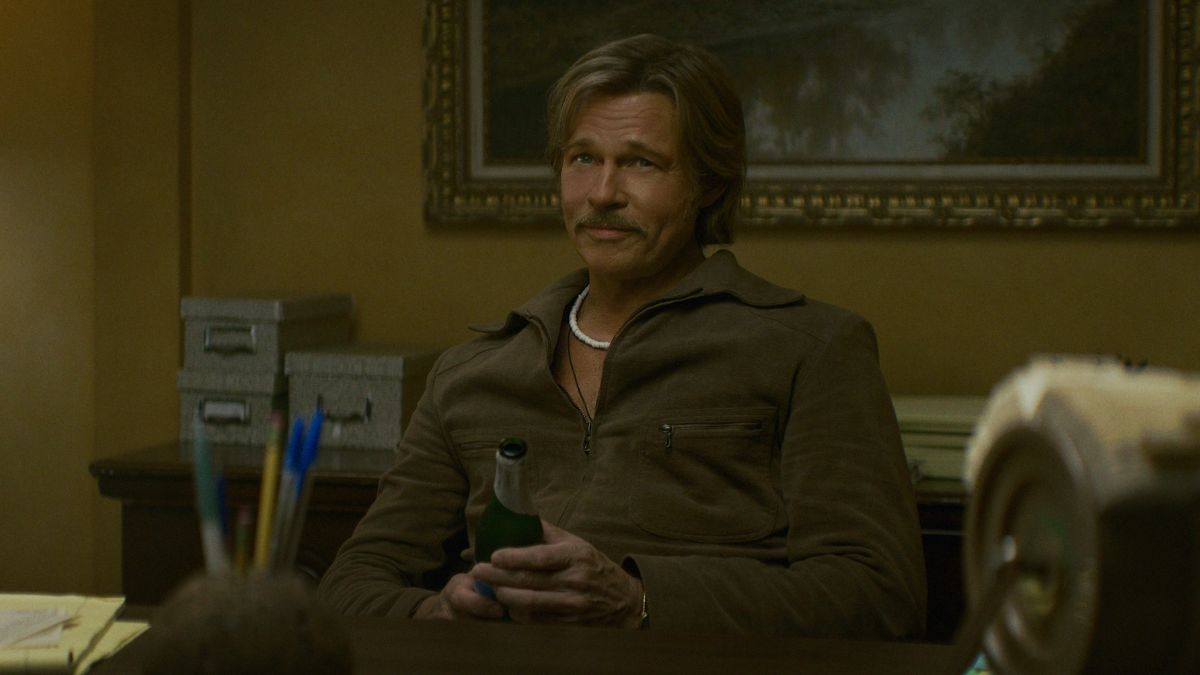
For much of its first half, Fincher’s film makes good, if imperfect, on its predecessor’s hangout feel, eschewing inciting incidents and bubbling conflict to simply follow Brad Pitt’s Cliff Booth through late-1970s Los Angeles. Having gone his separate ways from Rick Dalton and no longer working as his stunt double, Cliff rotates between shifts as a projectionist at the New Beverly Cinema and a bartender at a handful of tiki joints.
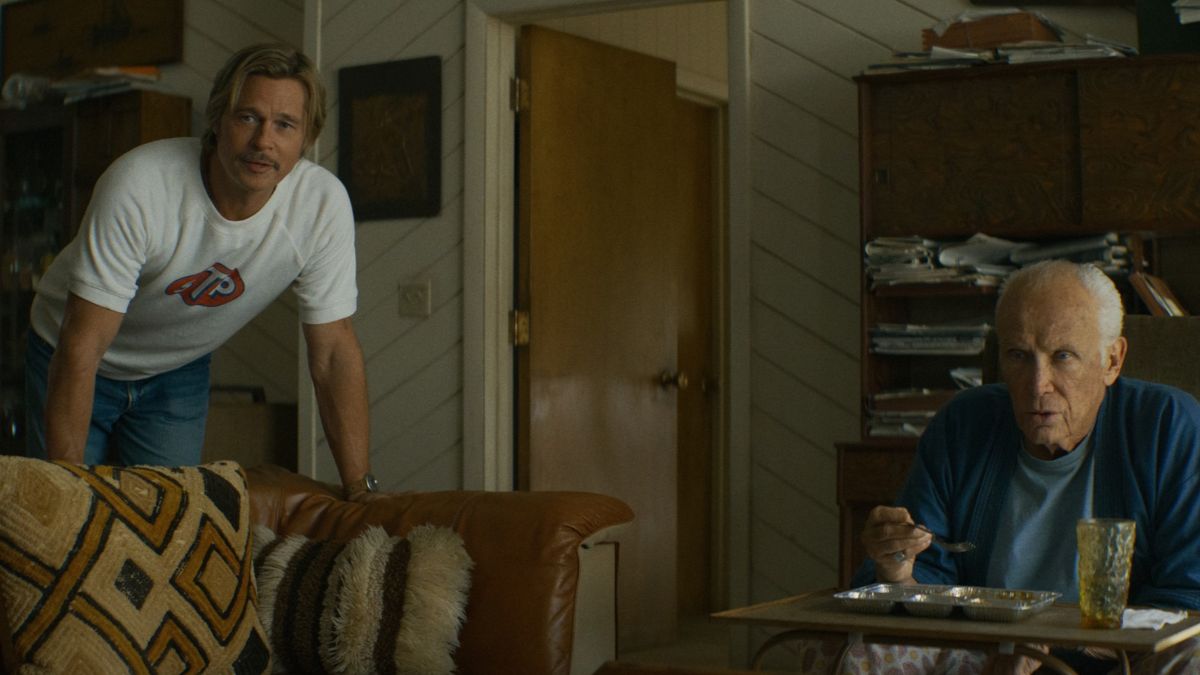
Meanwhile, he cares for his elderly father (Peter Weller) and takes on jobs as a “fixer” contracted to make problems disappear for Hollywood’s elite. The epitome of cool, Cliff is constantly asked about his past exploits, which include beating up Bruce Lee and being a World War II hero in the Philippines.
Yet it quickly becomes clear that much of the film’s pleasure lies in what its characters are saying rather than the images and frames in which they’re saying it. Non sequiturs about Golden Age actor Ralph Meeker’s performing chops and diatribes comparing cinema to burgers are fun from a purely literary perspective, seemingly primed to give as much pleasure as reading pages from a paperback as projected on an IMAX screen. It’s the material uneasily, incongruously slotted into Fincher’s exacting, rigorous visual language that proves problematic.
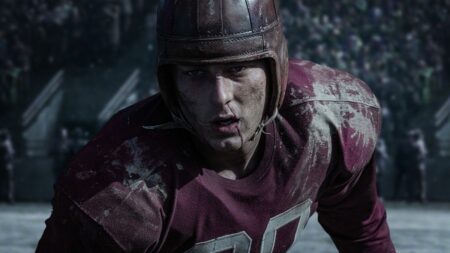
This is perhaps most apparent in the abrupt detours into Tarantino’s trademark narrations explaining the careers of fictional actors. Rather than feeling like amusing diversions, these passages are so suddenly and awkwardly shoehorned into the proceedings that they come across as little more than glorified expository PowerPoint presentations.
Brad Pitt’s Cliff Booth clearly isn’t equipped to carry his own movie.
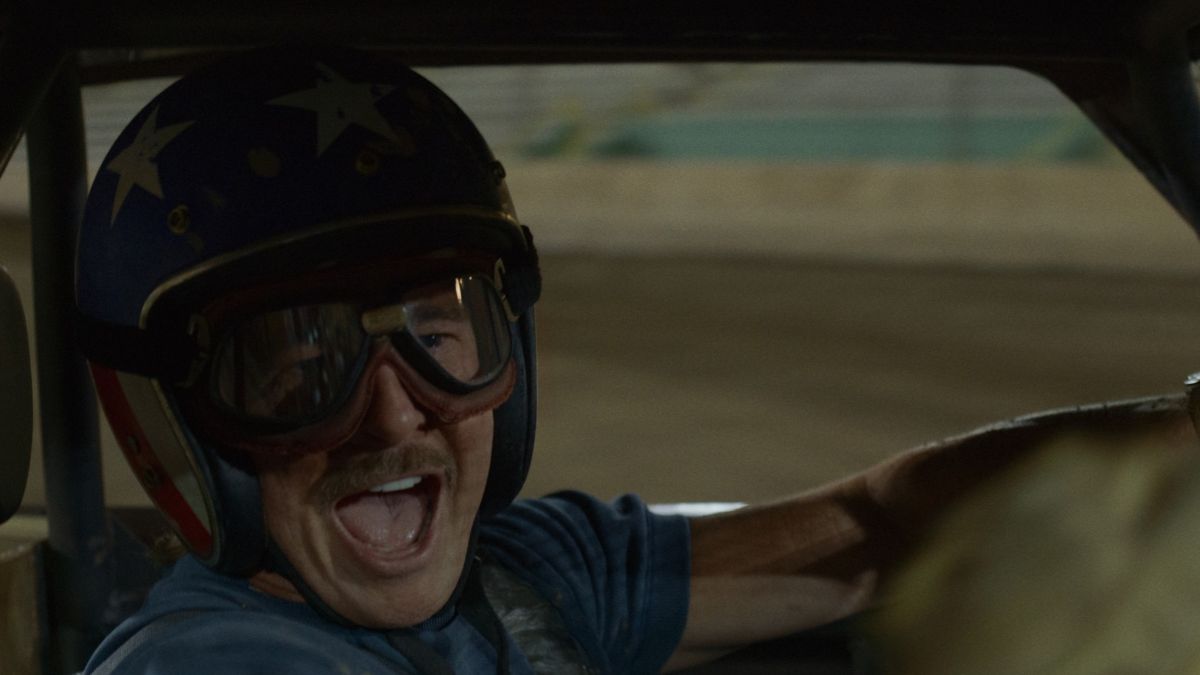
It doesn’t help that Cliff is perhaps the least interesting character in his own movie. Brad Pitt’s suave, laid-back, collected performance served as a wonderful contrast to Rick Dalton’s manic, reactionary energy in Once Upon a Time… in Hollywood. Here, however, that same affect quickly grows tiresome and repetitive. Seemingly hovering above everyone and everything he encounters, Cliff offers precious little in the way of flaws or vulnerabilities to latch onto.
It quickly becomes apparent that he’s one of Tarantino’s many fascinating creations who simply isn’t equipped to carry his own movie. There’s only so much mileage to get from watching him effortlessly stroll through scene after scene, particularly when the film itself seems desperately in need of the air, unpredictability, and pulse its supporting characters might otherwise provide. The result is a film so invested in posturing as a hangout movie that it forgets to give us a particularly compelling character to hang out with.
By the time the plot finally starts moving, we’re already somewhat disengaged. Cliff is contracted for another job by television star Charlie Peters (Scott Caan), who, having inadvertently struck a grave deal during a trip to the Philippines, puts Cliff on a collision course with two expert killers—and an increasingly complicated romantic entanglement with Peters’ agent, Karen Crosby (Elizabeth Debicki). It’s a dynamic that’s genuinely fun to watch unfold, but one that’s given surprisingly short shrift just as the film’s more conventional narrative framework finally takes shape.
The whole enterprise feels particularly phony.
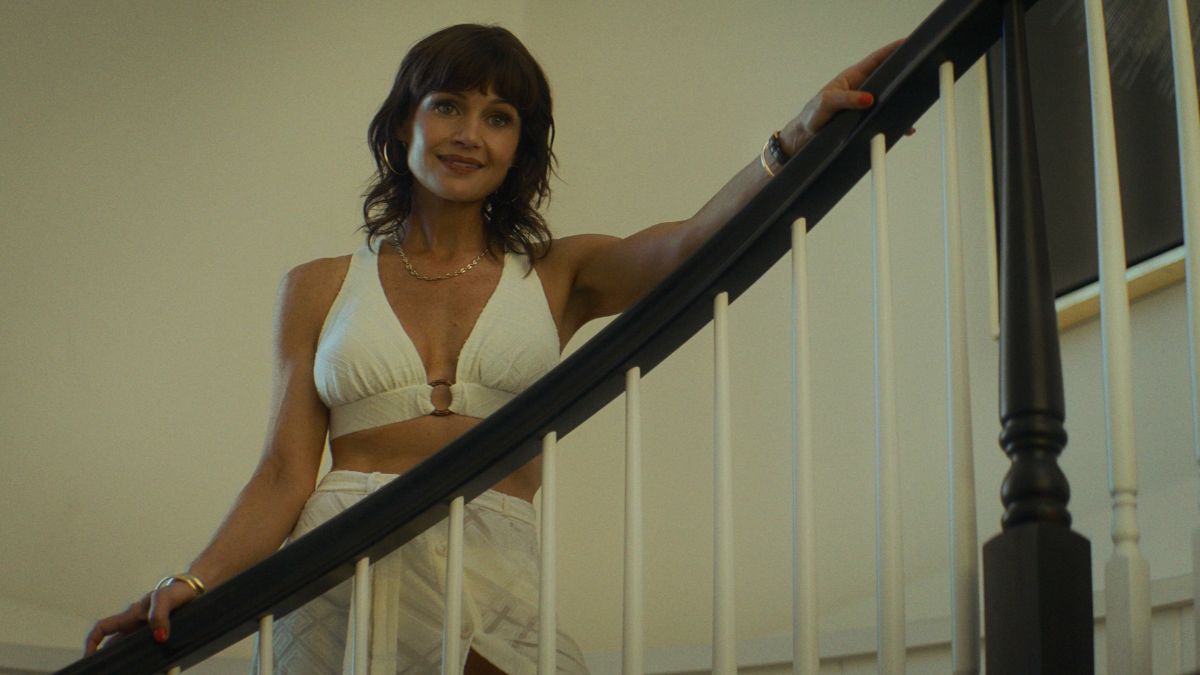
As The Further Mis-Adventures of Cliff Booth culminates in its best sequence, an expertly crafted, suffocatingly suspenseful finale that brings together mixology, personal mythology, faulty bullet-riddled speakers, and a burning establishment in a shocking, guttural, visceral crescendo, a dark cloud nevertheless hangs over the whole affair.
Not only is it a slog to get there, with storytelling that feels misshapen under Fincher’s all-too-precise lens, but the director’s use of generative AI to alter and correct lip movements plunges the film into an entirely different realm of artificiality, one that fundamentally defeats the purpose of making this spin-off in the first place.
For a film that feeds so heavily on the handmade qualities of its time and setting, The Further Mis-Adventures of Cliff Booth’s analog textures and (mostly) flawed personalities, the whole enterprise feels particularly phony. It’s a film that wants to desperately hang out, but routinely disregards the very human touch that makes doing so worthwhile and rewarding. A misadventure indeed.
The Further Mis-Adventures of Cliff Booth now playing in theatres nationwide.
Rating
For a film that feeds so heavily on the handmade qualities of its time and setting, The Further Mis-Adventures of Cliff Booth's analog textures and (mostly) flawed personalities, the whole enterprise feels particularly phony.