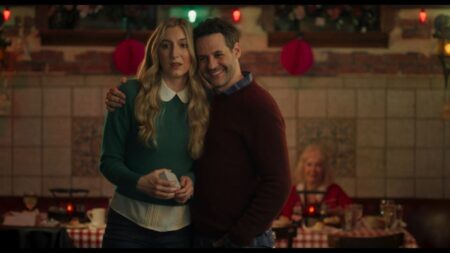

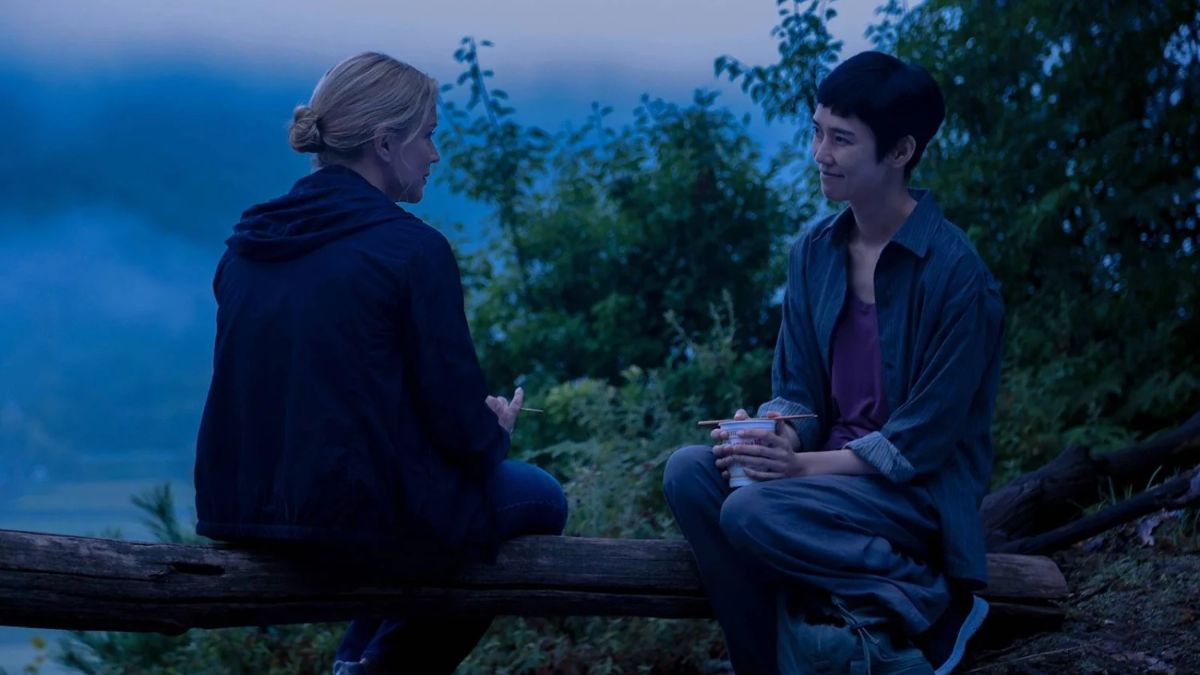
It takes no longer than an exhale in Ryusuke Hamaguchi’s radiant and radical All of a Sudden before his latest efforts steal our breath. First, it’s with color. Marie-Lou’s (Virginie Efira) blue blouse stands vivid against the overgrown greenery of her ‘Garden of Life’ sanctuary. Later, it’s a poignant connection between two women striving to make the impossible possible and, later still, those two women holding one another in their eyes, their fingertips, their souls, as they transcend the limits of time to embrace one another with as much vigor as a last breath, a last push for life, can manage.
A glorious undertaking, All of a Sudden shows a modern master at the top of his form by virtue of his innate understanding and compassion for humanity and the way art builds connection. Hamaguchi is no stranger to the need to connect with others to build a bountiful life. His filmography is rich with that necessity, both in how it fans the flames of progress and empathy and in how isolation breeds discontent and a malnourished spirit.
Co-written by Hamaguchi and Léa Le Dimna, there are nods to Hamaguchi’s prior efforts. From the bonds between women (Happy Hour) to the way capitalism rules the world (Evil Does Not Exist), the significance of art and theater as a stage to declare the cyclical nature of humankind (Drive My Car) to the staccato pacing so specific to cinematic language (The Wheel of Fortune and Fantasy), he and Dimna take methodical care in nurturing all of his greatest instincts. It even has the tenderness and healing qualities of a good foot massage that harkens back to Asako I & II.
Two lives intersect in All of a Sudden.
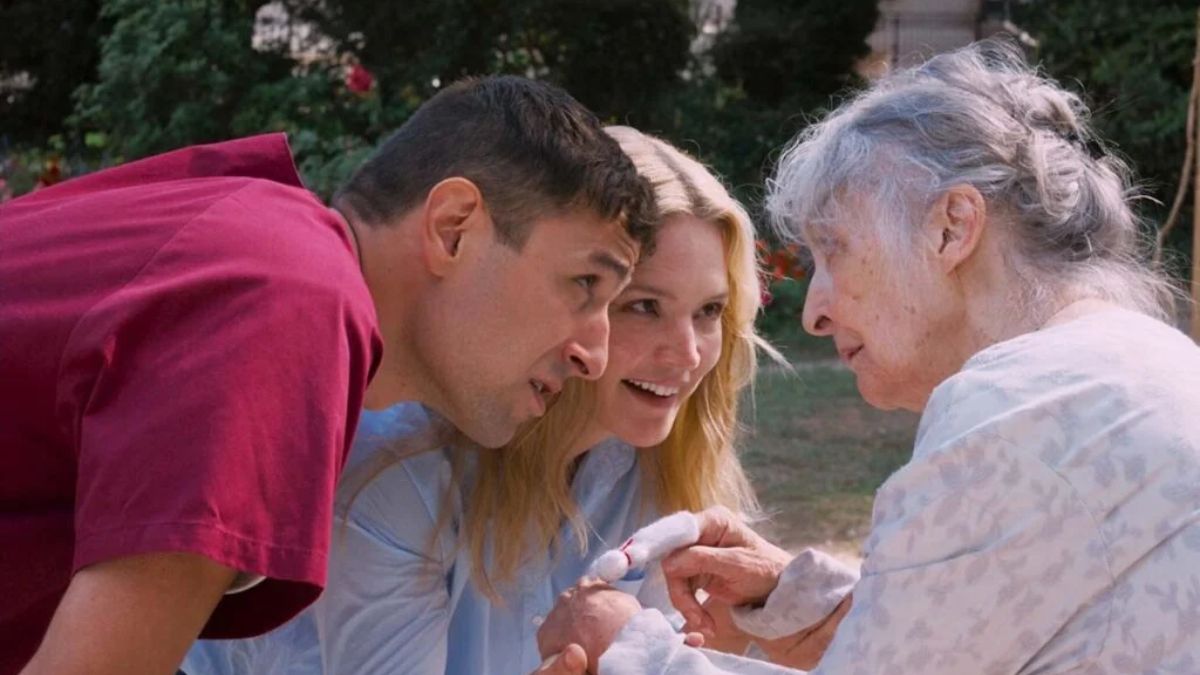
Transcending the barriers of language, All of a Sudden follows a month in the life of Marie-Lou and the enormity of a chance meeting. Fatigued and one bad cup of coffee away from full burnout, Marie-Lou is propelled forward by her earnest desire to make the world better. For her, it’s the nursing home she runs near Paris where she seeks to establish and run a program that provides elevated elder care. It’s not just about routines and the basic conditions we expect, but the decency and dignity that we all deserve.
She’s always tired but says she’s fine without sleep. She lashes out at long-term nursing staff when they push back on her ideals, questioning whether they’re realistic given the staff they have. Marie-Lou’s ideas are great, but it’s easy to see them as just that: ideas. Forced to take a day for herself, she finds it life-changing when she meets Mari (Tao Okamoto), a theater director in Paris, with her lead actor, Gorō Kiyomiya (Kyōzō Nagatsuka), and his grandson, Tomiko (Kodai Kurosaki), who has severe autism.
Their chance encounter is extended when Marie-Lou attends Mari’s production. Designed to encourage audience participation with instruments, the play itself is an amalgamation of language, concepts, culture, and ideals. The Japanese Gorō plays the Italian psychiatrist Franco Basaglia in front of a French crowd. At the end, while taking questions, Gorō explains that this is the best way to express the emotional truth of the piece. He speaks in his native tongue in the play to embody the role, but talks to the audience in French out of respect.
A life-altering friendship shapes the story at the heart of Ryusuke Hamaguchi’s latest.
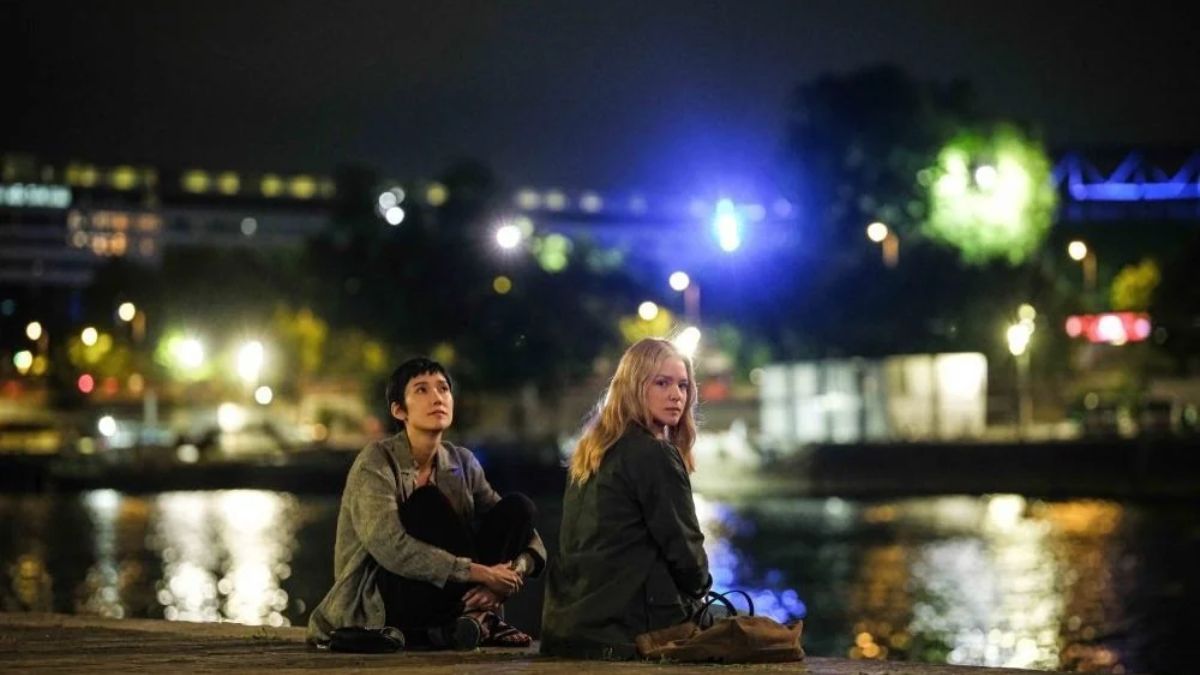
So, when Marie-Lou asks her question in Japanese, Mari is taken in. So much so that she divulges a truth she’s not yet spoken aloud to a crowd, a truth that only a handful of people in the audience will understand in this moment. She has terminal cancer. She’s already beaten the odds but later tells Marie-Lou that the moment her health declines further, it will be all of a sudden and rapid. Thus begins their life-altering friendship.
The deft and delicate writing exudes a rhythmic force in the conversation they share. From the moment they leave the theater, walking across cobbled stones and talking about anthropology, psychology, and Pom Poko, they’re in sync.
Hamaguchi captures this in literal step sequence, as their feet, their anchors to the earth, fall together. Here are two people who, at first meeting, are enraptured and ensnared by their desire to be seen and heard in a way that matters to them. To be told that the impossible is only so until it becomes possible, and that, for our impossible dreams to become possible, you must try.
All of a Sudden is a staggering triumph of the human spirt.
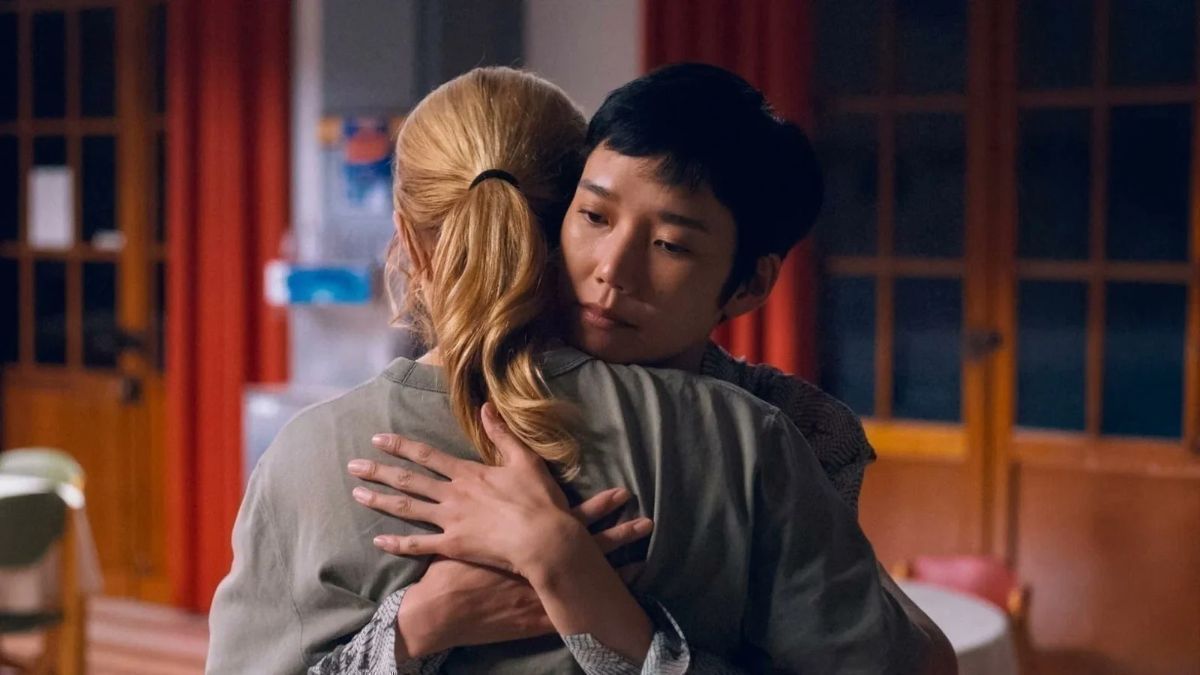
We can go our whole lives knowing someone—loving someone—without knowing everything. The beauty of Marie-Lou and Mari is how time seems to dissipate. While markers throughout the film show how much time has transpired, their moments together slip by, energized by such fierce chemistry that we might believe them lifelong friends rather than two souls who found themselves connected despite the odds. It’s about that impossible versus possible again. The impossible possibility of meeting the right person at the right time and the devastating knowledge that what you know might be all you get.
Despite the heartache central to the story as Mari’s health worsens, All of a Sudden possesses a quick, hypnotic energy. Hamaguchi’s films are masterfully immersive through meditative back-and-forth dialogue. Three hours fly by as the story evolves beyond its origins, never losing the intimacy of a shared cup of noodles or an embrace. The connection of someone who blooms greater for you and you alone, to the inherent romance of inner radiance, as someone’s face lights up upon seeing you.
As the film unravels, there’s a gradual, spirited sense of life, emboldened by Alan Guichaoua’s striking cinematography. The color shifts are immense, subtly transforming the film’s face through tricks of lighting and the passage of morning fog over the Kyoto mountainside. The beauty is transfixing, making mundane moments grand. And why shouldn’t they, Hamaguchi asks. Life is wonderful. Creating things is magic. What more could anyone want?
Awash with deep swaths of blue and a soft-edged, grainy aesthetic that evokes classic, timeless film, it’s a dream and a memory rolled into one. It’s the two-and-a-half minutes between a cup of noodles being ready to eat where, in that time, the possibilities of a life are mourned and the fear of the unknown shared. The film is so gentle with its subjects, so rich in narrative, that it would be easy to overlook its sheer beauty if it weren’t so staggering.
All of a Sudden espouses the need for tenderness and compassion.
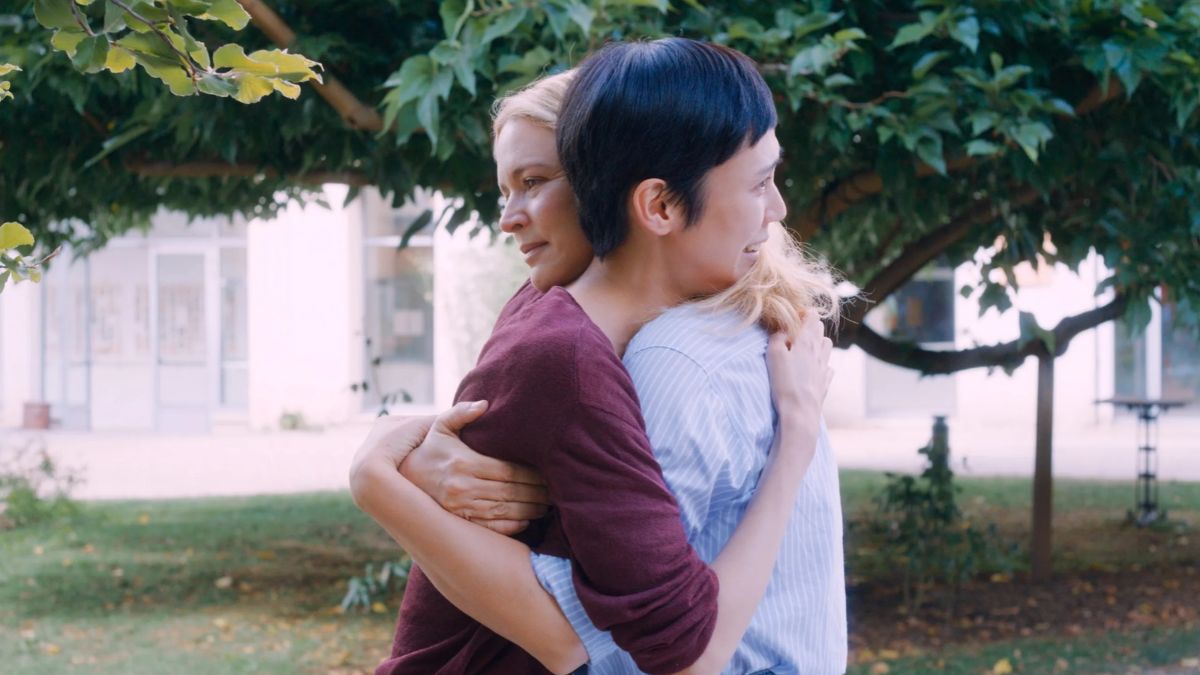
Efira and Okamoto share a genuine, lived-in familiarity that belies the little time they’ve actually known one another. Their eyes always meet, even when one challenges the other, and in a particularly charged scene, their bodies seem to align naturally as they hold one another in their gaze. When they ask “Who are you,” the question holds the weight of someone asking instead, “Who are you to me?” Both actresses play their emotions close to the chest, only giving way to little suggestions of inner pain. They never lose the insightful interiority necessary to make the characters work and for us to be so attached to them so quickly.
All of a Sudden is fearless in tackling any given subject that may arise for two women in their forties, confronting the limited nature of time and our responsibility with what time we have. But one that comes up often is the evils of capitalism and its necessity as Marie-Lou seeks more funding for her program. But what makes it feel so intriguing is how much of the film is about a different type of consumption as both women force themselves beyond their limits to have more time with one another, to learn more, to gobble up the blessed pieces of information that make an individual messy and combative, intoxicating and provocative, beautiful and blissfully alive.
We all want to live. To be present and locked in step with someone who knows us so impossibly, to become a possible chance at love. All of a Sudden espouses the need for tenderness and compassion. To give each life the dignity of care they desire, and to meet them on their level, to look them in the eyes and smile, palm upturned, giving rather than taking. Empathy is our greatest tool for change, and we must continue fighting together. Hamaguchi, through eclectic tastes and subdued contemplation, knows that to care is to be alive. And my god, we care so much.
All of a Sudden is out now in theaters.
Rating
All of a Sudden espouses the need for tenderness and compassion. Hamaguchi, through eclectic tastes and subdued contemplation, knows that to care is to be alive, and so many of us care so, so much.