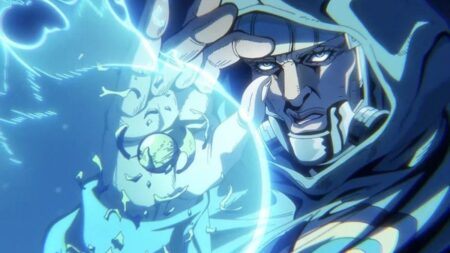


In a striking, imaginative turn of excellence from Kyoto Animation (A Silent Voice, Tsurune, Sound Euphonium!), Sparks of Tomorrow is an act of artisan prowess. Based on the light novel 20 Seiki Denki Mokuroku written by Hiro Yūki, illustrated by Kazumi Ikeda, with art and backgrounds by Momoka Nagatani, and published by the studio’s imprint, KA Esuma Bunko, the adaptation brings the story to life with textured animation, a compelling steampunk world, and clear, stirring reverence for innovation.
In a story about bringing electricity to the 20th century and how science can and will fuel the world, Sparks of Tomorrow, really, is about the necessity of art, creation, and the bounding leaps into the unknown required to bring mere curiosities to life.
In the first three episodes screened for critics, that point stands out the most. The idea of how dreams change, how youthful ambitions mature in an effort to transform the world into the image desired. And, more than anything, about how invention requires belief.
Sparks of Tomorrow dazzles with a vibrant personality.
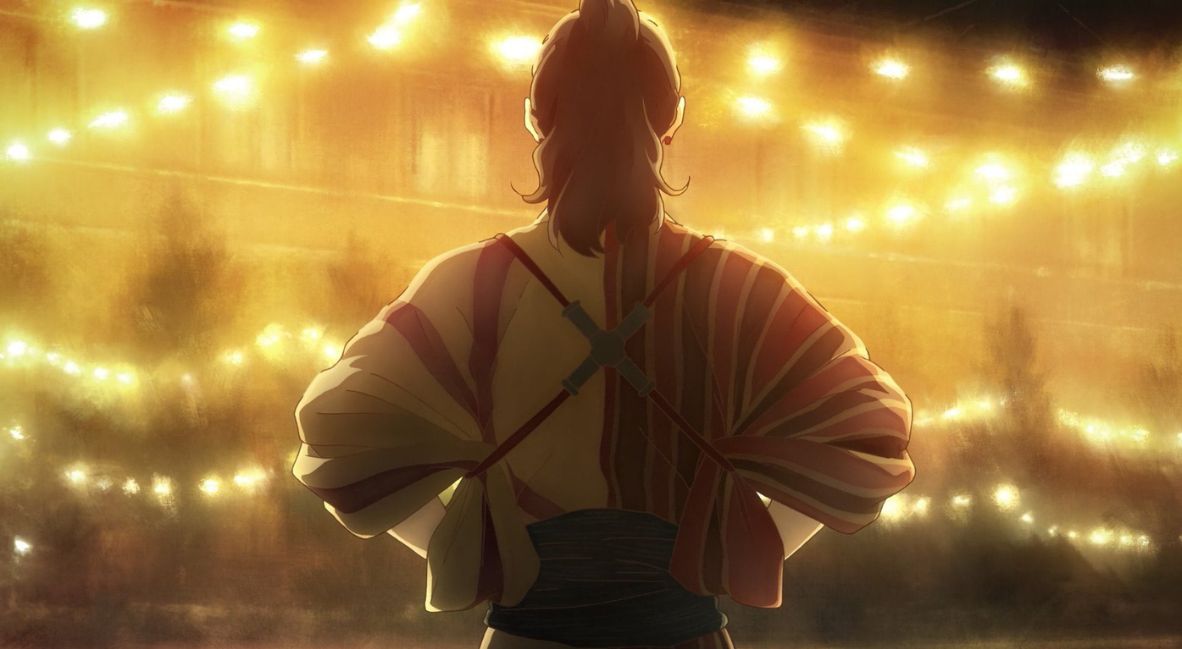
In the all-too-brief opening, that belief is found in the trust between brothers. As a young boy, Kihachi Sakamoto (Yuma Uchida) believes in every word his older brother, Seiroku Sakamoto (Daisuke Ono), says. Seiroku tells Kihachi to write down any ideas he has in a journal called the 20th Century Electrical Catalog. It’s Seiroku who shows Kihachi the power of invention and the potential of electricity, as they run through a city street, with fleeting light strings trailing them.
Kihachi is afraid of the dark, and his brother promises to light the path ahead. Promises matter to Kihachi. It makes sense, then, that when we pick up four years later, with Seiroku having gone to war and never returned, Kihachi now distrusts anyone he meets.
Despite his own creations and what’s he’s seen, he doesn’t believe in anyone, even himself, which makes his meeting with Inako Momokawa, the daughter of a sake brewer, all the more potent. Because, as she self-professes, she believes in everything.
Each character is important in the Netflix adaptation of Hiro Yūki’s light novel.

In the span of ten minutes in Sparks of Tomorrow Episode 1, the series introduces a dense ensemble. And each one of them matters, from Kihachi and Seiroku, to Inako and her older sister, Noriko (Minako Kotobuki), and Noriko’s fiancé, Kengo Kuga (Shunsuke Takeuchi), to the wonderfully unhinged antagonist, Yosuke Mizoe, who is the heir to a steam conglomerate; each character introduced serves a purpose in building out the greater, overarching storyline.
And, most importantly, they all have super distinguishable personality traits that allow them to be more than their archetypes. Kihachi is a self-professed scaredy-cat, jumping at a literal startled cat, but is also impossibly smug and overeager when talking about things he’s passionate about. He’s a cynical scientist who can’t believe the truth of something until he sees it with his own eyes.
Inako, meanwhile, is confident in her beliefs to the point where she says her ability to believe things is her only real strength. But we see multiple times in the first three episodes how this is very much untrue.
Yosuke Mizoe is a superb antagonist and indicative to the quality of writing.

She’s resourceful and courageous, a believer who allows the cynic to embrace the freefall of chance. It creates a fantastic central dynamic in which the give-and-take provokes deeper investigation. And it all centers on the 20th Century Electrical Catalog and its connection to the Sakamoto brothers.
The Sakamoto brothers and Yosuke Mizoe (Koki Uchiyama). Yosuke Mizoe is yet another character who feels as if he’s going to slot into a very specific anime character type before, slowly, revealing greater depths and despair. His flamboyance and melodramatics aren’t so much a performance as they are practiced armor. He is, no doubt, the antagonist as far as what we’ve seen, and yet between layered writing and Koki Uchiyama’s energized, elastic performance that wrings each ounce of hidden truths from his delivery, there’s this hint of something more than makes him all the more engaging.
These characters are the life source of a story that, if written with less vigor, might be easy to overlook beyond the overt beauty of every single frame. Set in an alternate version of Meiji-era Japan that depends on advanced steam power, this is, by all accounts, a historical drama with a steampunk edge. But the element of electricity and the characters’ desire to bring it into the 20th century as a source of innovation and change gives the show – and its title – that literal spark of magic.
The characters and the animation bring the story to life.

Dreams, here, are found through the power of electricity, making each character’s plight to uncover the truth of the 20th Century Electrical Catalog all the more pressing. It’s a truly engaging story that builds throughout the early episodes, revealing more intense plights for truth and desires that ground the series and its sillier, heightened moments in tangible emotions.
And while the story will always have been its own draw, the real work of wonder in Sparks of Tomorrow is the laborious artistry evident in each frame. This is, without question, one of the single most stunning anime adaptations of the year. Unsurprisingly, to a degree, considering Kyoto Animation’s history of top-notch work, where the animation synergizes with the story to become something alive and textured, where each shot is meant to evoke the specificity of a single character’s current emotions.
But the work going on here is so wholly cinematic that it’s a wonder to watch unfold. The tapestries alone in the background are awe-inspiring. Considering how long this series has been in pre-production, there’s evident care and attention put into every single moment, a reminder of the tenacity of artists who, like Kihachi, are seeking the truth behind the magic trick and, like Inako, believe enough to make wondrous visuals come to life.
Kyoto Animation outdoes itself (again), giving Sparks of Tomorrow a cinematic scope.

There are a few standouts, but truly, hit pause in almost any scene and you’ll find yourself immersed in the scenery and backdrops that play with different textures, patterns, and colors to make the alleyway streets and overgrown temples come alive with lived-in tactility. From quilts that hang over clotheslines to the way the smoke and steam engulf certain areas to the wear and tear of the shrine Inako visits, there’s a visceral sense of feeling the elements of the world.
The backgrounds use watercolor effects and brushstrokes, letting the canvas at the base remain visible. There’s a scene that, with breathtaking efficiency (whether deliberately or not), evokes Turner’s Sun Setting over a Lake through its use of burnt orange pigments. This is a series crafted by artists utilizing every trick in the book to bring a rich story to life with the flourishes deserving of it.
The moments where Sparks of Tomorrow stumble are also the moments that end up, in the end, enriching the series further. The use of CGI and 3D styling can sometimes feel jarring when set against those subtle, evocative backdrops. And the character designs lean into an overt shininess that makes them seem like they’re walking on top of a setting, rather than living in it. But that same practice brings moments such as Kihachi’s brief dream interlude to life.
Sparks of Tomorrow is a gorgeous and gripping must-watch.

Kihachi, in a moment of inspiration, conjures up a vision of life bolstered by electricity. The art style shifts dramatically, using 3D models and garish hyperrealism for character models to show the endless possibilities of a single tiny spark. The tonal shifts can be jarring, especially as they pivot between introspective drama and cartoonish comedy. Still, while they stick out in brief moments, the overall effect comes together for a cohesive, enthralling journey, visualized by the daring ambition of the artistry.
There’s no denying that this is a passion project from Kyoto Animation. With painstaking effort, Sparks of Tomorrow comes alive in mere moments. In a story about a few individuals looking to expand on our horizons and challenge the status quo, to seek a way in which dreams become realities and the ephemeral, tangible, KyoAni steps up to the challenge with enthusiastic finesse, concocting a story that defies our expectations of excellence by championing and putting to screen the very throughline the story itself is telling and showing us how passion and curiosity can deliver on something spectacular.
Sparks of Tomorrow Episode 1 is out now on Netflix, with new episodes premiering each Sunday.
Sparks of Tomorrow
-
Rating - 9/109/10
TL;DR
There’s no denying that this is a passion project from Kyoto Animation. With painstaking effort, Sparks of Tomorrow comes alive in mere moments.