

Dr. STONE feels like the sleeper feel-good anime that had a niche following, and has only grown with time. As one of the series that survived the COVID-19 pandemic, with 93 episodes (plus one TV special), this teen sci-fi-adventure is ultimately a fun ride. The story proves how fascinating human science is, even when it dips into the sci-fi petrification. This series ending the same year that Project Hail Mary dropped, and NASA has been around the moon again makes me more excited for more sci-fi/space-related stories like these.
Dr. STONE is an adventure anime that begins when modern society is lost as a mysterious light turns humanity to stone. Thousands of years pass, and high schoolers Senku Ishigami (Yûsuke Kobayashi) and Taiju Oki (Makoto Furukawa) awaken in an overgrown version of the world they once knew. With Senku as the brains and Taiju as the brawn, they’re determined to revive the petrified masses and rebuild civilization—but some of the other revived survivors have other plans.
The Dr. STONE manga, written by Riichiro Inagaki and illustrated by South Korean manhwa artist-turned-manga artist Boichi, had its original run in Weekly Shōnen Jump from March 6, 2017, to March 7, 2022. In total, there are 27 printed volumes. The anime series is directed by Shinya Iino, with Yuichiro Kido as scriptwriter, and Yuko Iwasa as character designer. Tatsuya Kato, Hiroaki Tsutsumi, and Yuki Kanesaka composed the series’ music.
Dr. Stone perfectly encapsulates the characters Senku encounters.
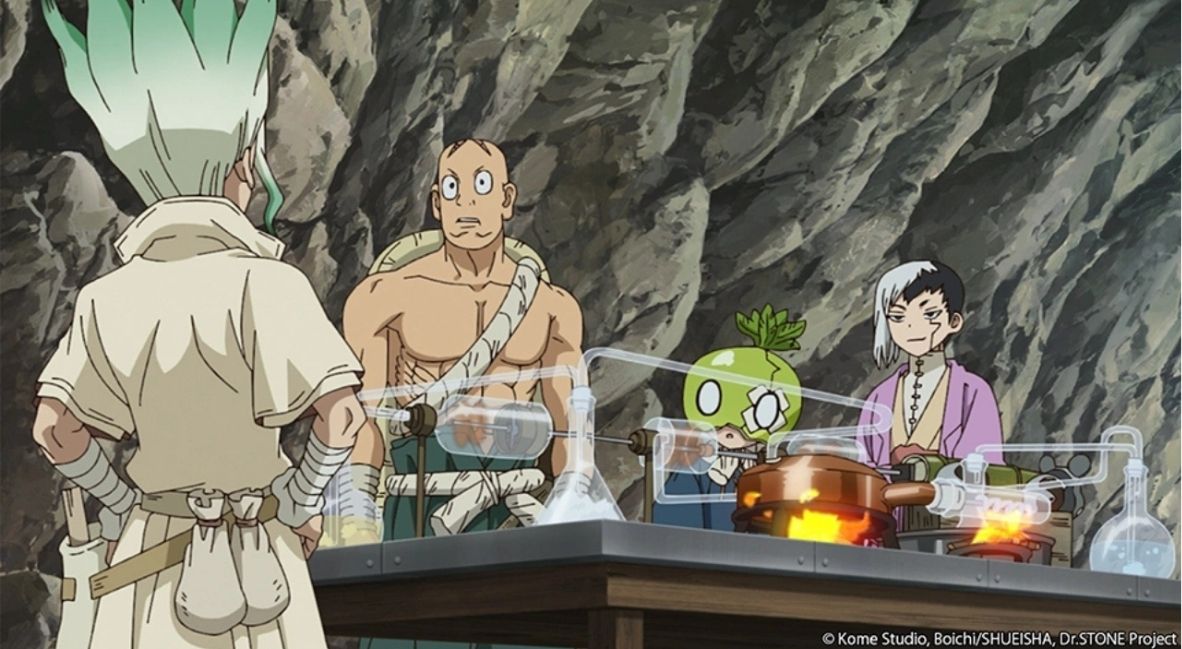
Whether audiences jumped in on Dr. STONE with the original Japanese or the English dub, the voice acting and characters successfully drive this series home, from an emotional and story-driven aspect. The journey starts and builds out from nine core characters: Senku, Taiju, Yuzuriha Ogawa (Kana Ichinose), Kohaku (Manami Numakura), Chrome (Gen Satô), Kinro (Tomoaki Maeno), Ginro (Ayumu Murase), Suika (Karin Takahashi), and Gen Asagiri (Kengo Kawanishi).
Arguably, Ryusui Nanami (Ryôta Suzuki) could be the tenth member of the core cast, but he joins them after two seasons. Even Tsukasa Shishio (Yûichi Nakamura) could be an honorary member, even though he begins as an antagonist, similarly to Gen.
The Kingdom of Science is based on this nine-person fellowship, and their character arcs are fully explored throughout the series. These nine people are also the heart of the show, and it becomes heartbreaking to watch any of them get injured or face certain death throughout Dr. STONE. The anime perfectly encapsulates the characters Senku encounters, from the moment he wakes up to the people he needs to help build a rocket ship near the end of the series.
Dr. Stone always keeps its storytelling nice and simple.

In the most wholesome way, Dr. STONE similarly collects cast members. Luffy picks up stray friends and crew members of the Straw Hats in One Piece. Not all antagonists are villains to the end in Dr. STONE. These morally ambiguous characters make the show thrilling to watch, and the writing leaves fulfilling arcs for those who present as simple villains—but have multiple layers to them.
If there is one part of Dr. STONE that could have improved upon, it is its animation, but more so as a nitpicky critique. Dr. STONE’s animation is not the best; it’s no Frieren: Beyond Journey’s End or To Your Eternity in the animation category. However, Dr. STONE chooses to keep it simple for the storytelling. For the aforementioned shows, the animation and art style have to be beautiful because the purpose is to immerse audiences in their respective fantasy worlds. Whereas Dr. STONE is more grounded within the realm of its post-apocalyptic setting; it helps when the animation is contextually straightforward.
For example, whenever Senku, Xeno, or another character is trying to explain the scientific intricacies of a machine or technological concept, diagrams pop up on the screen. These visuals are super helpful for a general audience, making it easier to understand one of Senku’s scientific explanations, as if it were an episode of Bill Nye the Science Guy or The Magic School Bus.
Dr. STONE Scienc Future makes the most of Xeno and Stanley as villains.

Easily, Dr. STONE is just as entertaining as it is educational. The show even adds a warning at the end of every episode about how audiences should not try making the machines or recipes that the Kingdom of Science creates. It’s cool when a show can do both well, and this anime series strikes a balance between entertaining and educational. While it doesn’t provide the most accurate one-to-one creation of items and machines, the show intuitively sparks ideas for the audience.
While Dr. STONE has a bunch of villains-turned-Kingdom-of-Science crew, the once-antagonists work so well because of their conflicting ideologies. For Tsukasa, it makes sense that he wants to make a world that avoids the bureaucracy and government structures that are in place in the modern 21st century. Moz (Kazuyuki Okitsu) and Kirisame (Kaede Hondo) justifiably wanted to protect their village, and were content to continue living with their lives under Ibara’s rule as stewards to the village leader. Ultimately, the villains have thought-out arcs throughout the show.
Xeno Houston Wingfield and Stanley Snider are Dr. STONE’s greatest antagonists because they embody humanity’s smartest and strongest individuals combined—in this fictional world. As they enter the fray in Season 4, Dr. STONE Science Future, they threaten Senku and the Kingdom of Science to their limits. The three-part structure of the final season works for these last few arcs because the ratcheted suspense of science versus science continues to rise in the first two parts.
Dr. STONE is a wonderfully diverse series.

Dr. STONE is also one of the most diverse anime, including important characters from around the world. Not only are there diverse characters, but there are many LGBTQ+ people, too. Senku himself presents as asexual, actively rejecting any romantic prospects. And there’s Francois, who uses non-binary pronouns. Ryusui lives up to his name as the man who wants to own everything and shows his queerness when he says he calls both men and women beautiful.
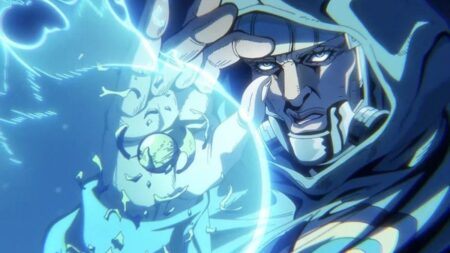
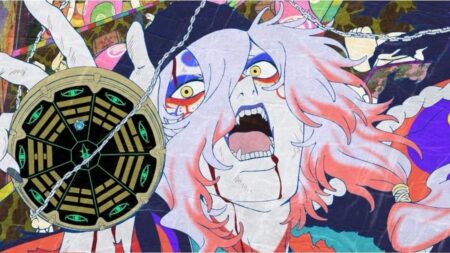
The final part of Dr. STONE Science Future answers the final question of the show in a one-to-one way the manga did: who is Why-man, and why did they turn all of humanity into stone? Much like in the manga, the reveal when the crew makes it to the moon is about as contextually strange. However, the animation holds up for the constantly moving sentient beings. The amount of line work is amazing to see because each tiny organism has plenty of metal cuts and lines on them. It’s great to see the animators didn’t skimp out on these minute details.
Just as Senku and the Kingdom of Science have adapted, the same is true with the evolution of Dr. STONE’s animation. The machines that Senku and the Kingdom of Science members create are the majority of the moving parts. But also, a lot of the animation occurs during the explanatory diagrams of how these machines or materials work or can be created.
Dr. STONE is a once-in-a-lifetime anime story.

Dr. STONE’s music and score evolve as the seasons progress, too. The most consistent themes are these Viking instruments, a sound that fits the show’s stone world. In the last two seasons or so, more techno beats have driven up tense moments.
More rapping and singing songs begin to play over specific important moments for the Kingdom of Science members. In Season 4, Senku and the various Kingdom of Science members are constantly on their toes, and some fast-rapping Japanese hip hop music starts playing when they are running away from Stanley and his army team. Overall, the music and score drive the show’s pacing up as the seasons progress. By Season 3, Dr. STONE’s staff seems to have recognized the anime’s auditory identity and kept providing a full orchestral experience that fits the show.
Across the board, Dr. STONE is a once-in-a-lifetime anime story—capturing how far humanity has technologically come. It’s a show that works like a time capsule of human progress. For a show that survived a pandemic and humanity’s new era of moon exploration, the timing of the release couldn’t be any better. It’s quite inspiring and positive for a post-apocalyptic story.
Dr. STONE is the first anime series I could see being used as an educational show for science class in middle school or above. This wild ride of a show balances its educational and exhilarating parts, which is something that sets it apart from many other shows. If audiences want an anime that’s informative as much as it’s entertaining, this is a perfect watch.
Dr. STONE is streaming now on Crunchyroll.
Dr. STONE Science Future
-
Review - 8/108/10
TL;DR
Dr. STONE is a once-in-a-lifetime anime story—capturing how far humanity has technologically come.