Teach You A Lesson (Chamgyoyuk) blends chaos and catharsis all into one in its dramatic approach to tackling problems within the education system. From bullying to cheating scandals and more, the show uses each episode to shine a spotlight on an issue that some may have seen in headlines, and for others may feel incredibly close to home. Amidst all the serious topics, however, the show never loses sight of keeping things light, even if it means a proverbial smack across the face.
For many, school can be a haven, but for others, it can be a literal hell. In Teach You A Lesson, we follow the fictional Educational Rights Protection Bureau (ERPB), which is designed to enrich not just the students but the teachers as well within an educational environment. The catch is that they can use any means at their disposal to make this happen, including violence. The latter becomes most apparent from the first episode, when ERPB inspector Na Hwa-jin (Kim Mu-yeol) open palm smacks a neerdowell student repeatedly. It’s an immediate hook.
Accompanied by the incredibly militant (and occasionally shrieky) inspector Im Han-rim (Jin Ki-joo) and the tech-savvy former civil servant turned inspector, Bong Geun-dae (Pyo Ji-hoon), Hwa-jin moves from school to school, with each episode of Teach You A Lesson spent addressing a specific topical issue within education. A common storyline emerges, however, centering around Hwa-jin, the Minister of Education and founder of ERPB Choi Gang-seok (Lee Sung-min), and the former student-turned-killer, Cho Gyu-cheol (Lee Bong-jun).
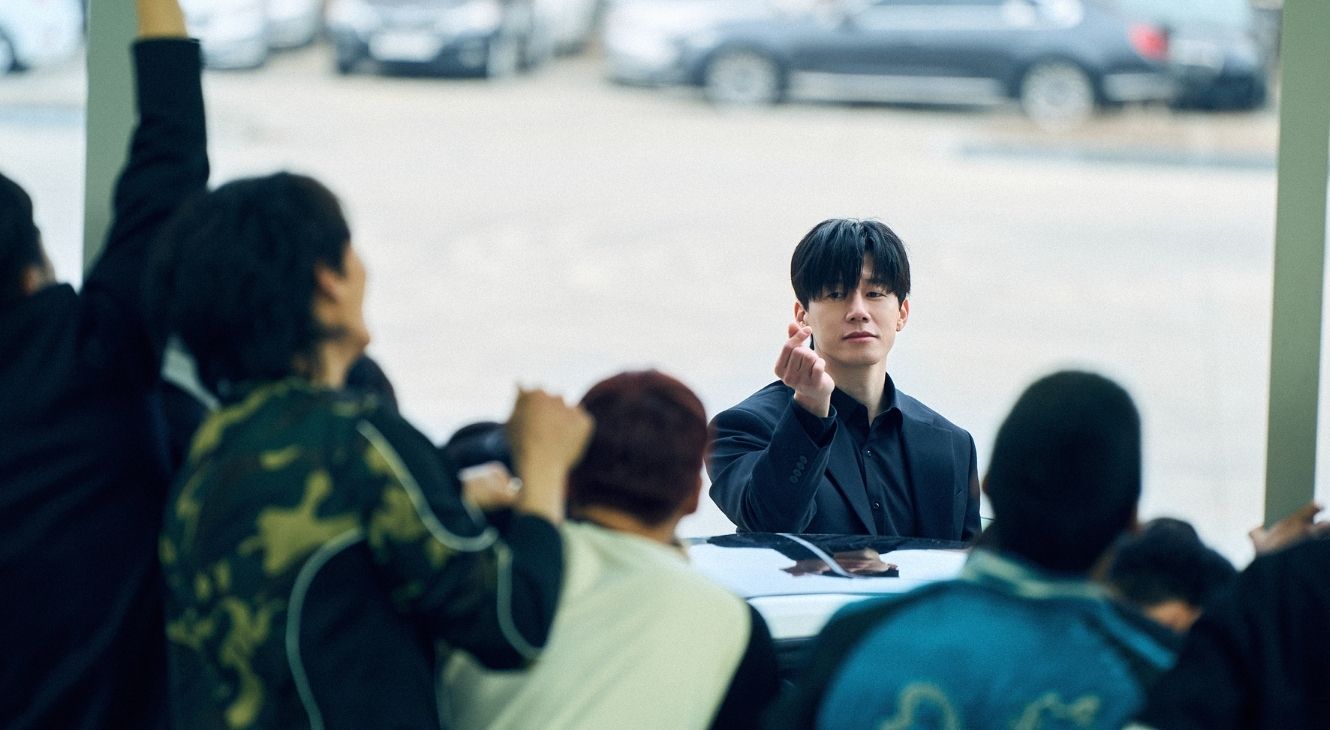
Na Hwa-jin’s eerie calm draws you in Teach You A Lesson.
And while the gradual transition from the “event per week” or episode, as it were, format to the overarching battle between the ERPB and Cho Gyu-cheol is a tad too convenient and rushed towards the end, all the debates and struggles the ERPB faced make it almost a natural conclusion. Almost. The strength of Teach You A Lesson stems in part from the realistic debate the ERPB’s tactics spark among the general public. It echoes the kinds of conversations that would naturally be had in any country that might implement a similar program.
That’s where the reality kicks in the most with the series, reminding us that while Teach You A Lesson is a fantasy, there is an all-too-real underbelly to education systems that permit the negative behaviors and environments seen. And part of why Cho Gyu-cheol’s character and his trajectory (and the ERPB’s subsequent reactions to later story developments) are both a blessing and a curse to how the series concludes.
Teach You A Lesson relies on the path laid down in each episode and the breadcrumbs of backstory to shape the conflict among Gyu-cheol, Hwa-jin, and Gang-seok. We see how effective Hwa-jin, in particular, is in handling crises. Through Kim Mu-yeol’s stoic approach to the character and generally fixed expression throughout, even taking on a troll-like playful energy when he’s most comfortable, we get a sense of how in control Hwa-jin is. Which makes the reveal of why the ERPB’s origins are more telling in what can and has made him crack.
Dissecting and prompting discussions on how the education system is failing are among the series’ strengths.
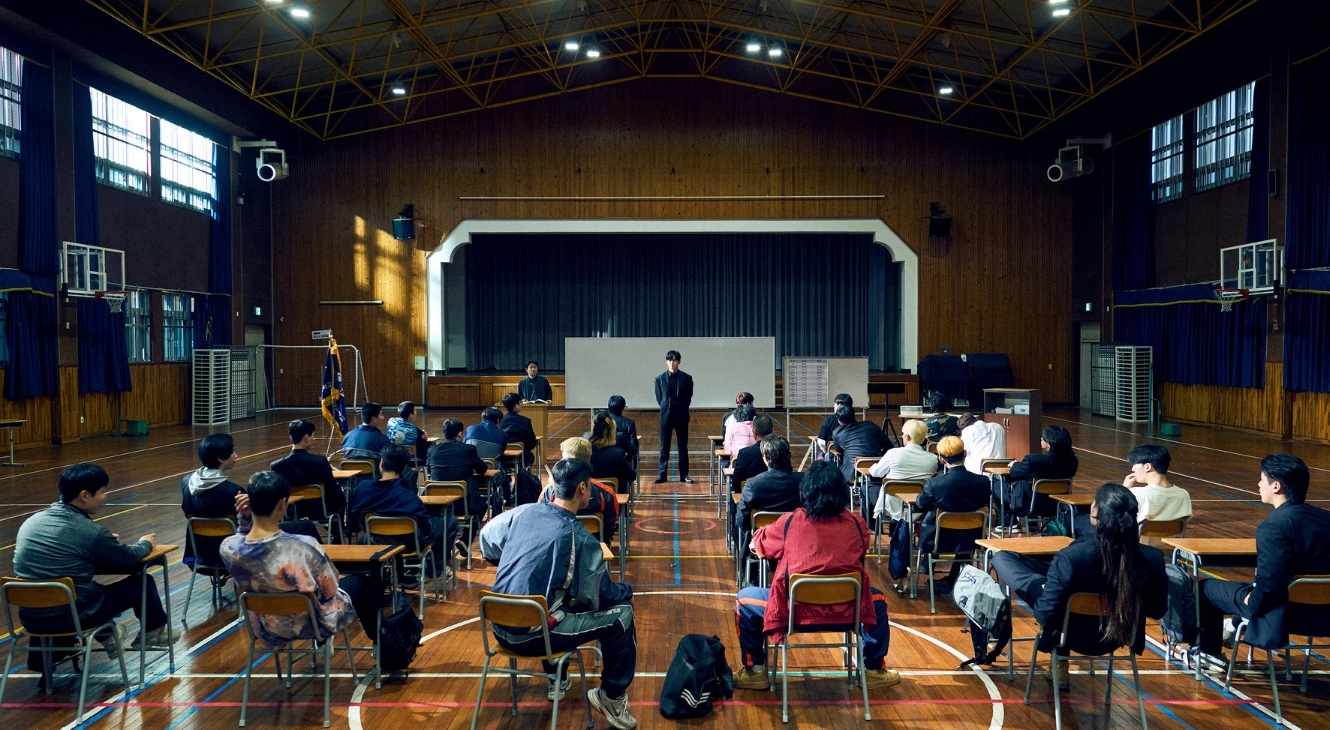
In fact, for all the projection of strength, we see the members of the ERPB face moments where they are tested throughout. This reminds us often of how fragile and new the program is. As the Minister of Education and the founder of the ERPB, Choi Gang-seok faces an onslaught of criticism and political enemies circling after Episode 1. Every moment of his is being watched. And once the program starts making news, all ERPB activities are on notice, regardless of success rate.
This helps, in some ways, to segue from the case-per-episode structure to the major conflict between the ERPB and Cho Gyu-cheol, as a case prompts Gyu-cheol to cross paths with Hwa-jin. From there, the wheels of the story begin to turn, folding the once harbinger of memory into the story’s present-day happenings. And, unfortunately, chances taken with the teenager’s trajectory leading up to the finale are too conveniently orchestrated to feel earned. Yes, there are hints, but it’s not enough to wholly suspend disbelief.
For a show that strikes a fine balance between fantasy and reality, that suspension of disbelief is vital for viewers. And, for the most part, Teach You A Lesson succeeds because the actions ERPB takes in the series would never happen in the real world. As demonstrated in the series, there are too many people who would work to ensure a program like that is never approved. And that reality lends itself to the fantasy that is presented.
But the reality of where Gyu-cheol’s path leads him at the height of his villainy is where the writing falters because it is too outlandish. It is one swing that overshoots. This is despite some pretty wild swings leading up to the finale, but they are more situational than an endgame plot point.
The secondary leads as well as the supporting cast go all in on both the chaos and their performances.
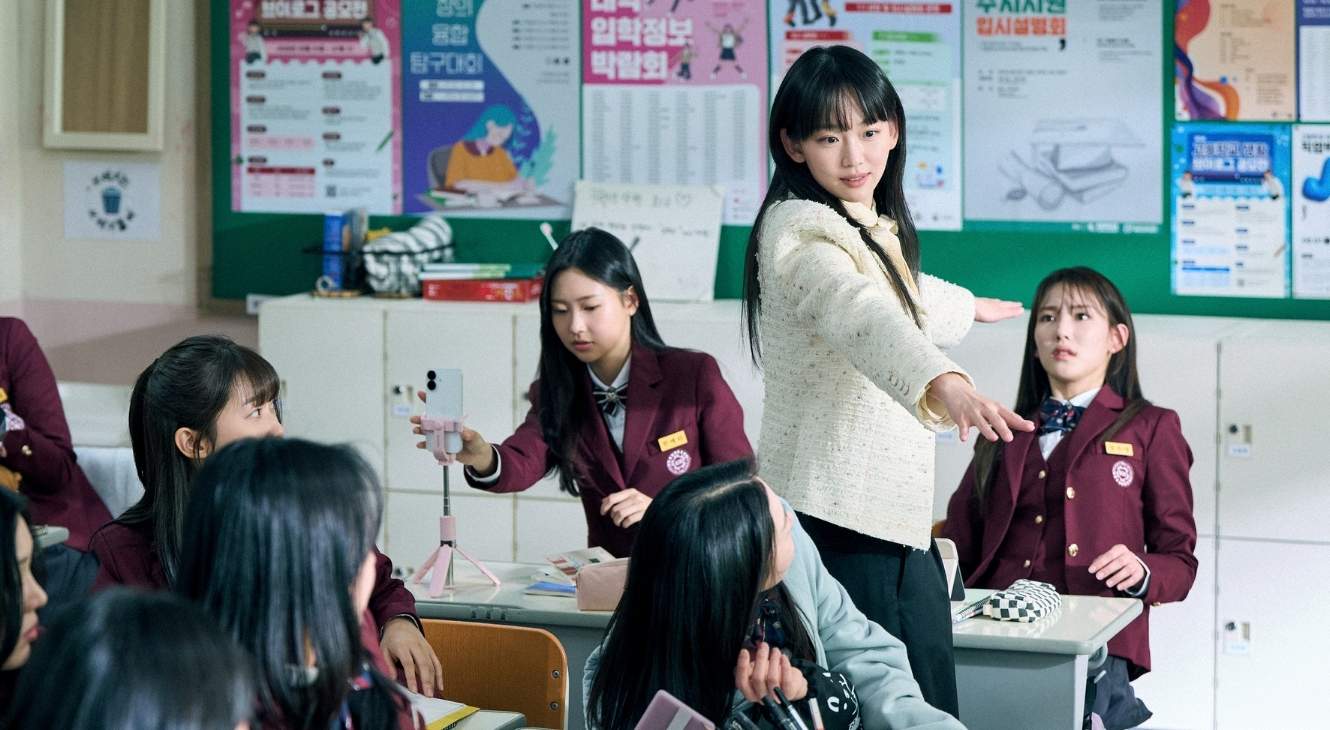
These swings encompass not just the characters but the episodic specific cases as well, presented in Teach You A Lesson. As his subordinate who supports Hwa-jin, Jin Ki-joo’s Han-rim can be a bit one-note at times, coming across as shrill more than comedic. Quick to anger and discipline those who are disorderly, Jin Ki-joo gives everything physically to the role (and genuinely had me worried about her vocal cords). While not as tech-smart as her coworker Bong Geun-dae, her abilities come out most in high-stress combat situations.
As a character, Geun-dae offers a different kind of comedic relief. With his bumbling mannerisms and generally geeky nature, Pyo Ji-hoon completely sells the character type. However, the decision to use this character, who is clearly not a teenager, to infiltrate schools more than once is one of the most unintentionally funny decisions. Especially since the first school Geun-dae is sent to infiltrate is full of some rough-looking teenagers.
What makes most of these outlandish scenarios work in Teach You A Lesson is everyone’s commitment to the bit. With Jin Ki-joo and Pyo Ji-hoon giving such animated performances that stand in stark contrast to the more restrained Kim Mu-yeol and Lee Sung-min, the hilarity naturally ensues as these opposing energies come together. And this format works when placing Kim Mu-yeol’s Hwa-jin when coming in for the final lesson of each episode, with the character’s more sadistic trolling tendencies coming to the surface.
The action scenes give much for viewers to feast on, with some risks working while others are undercut by baffling editing decisions.
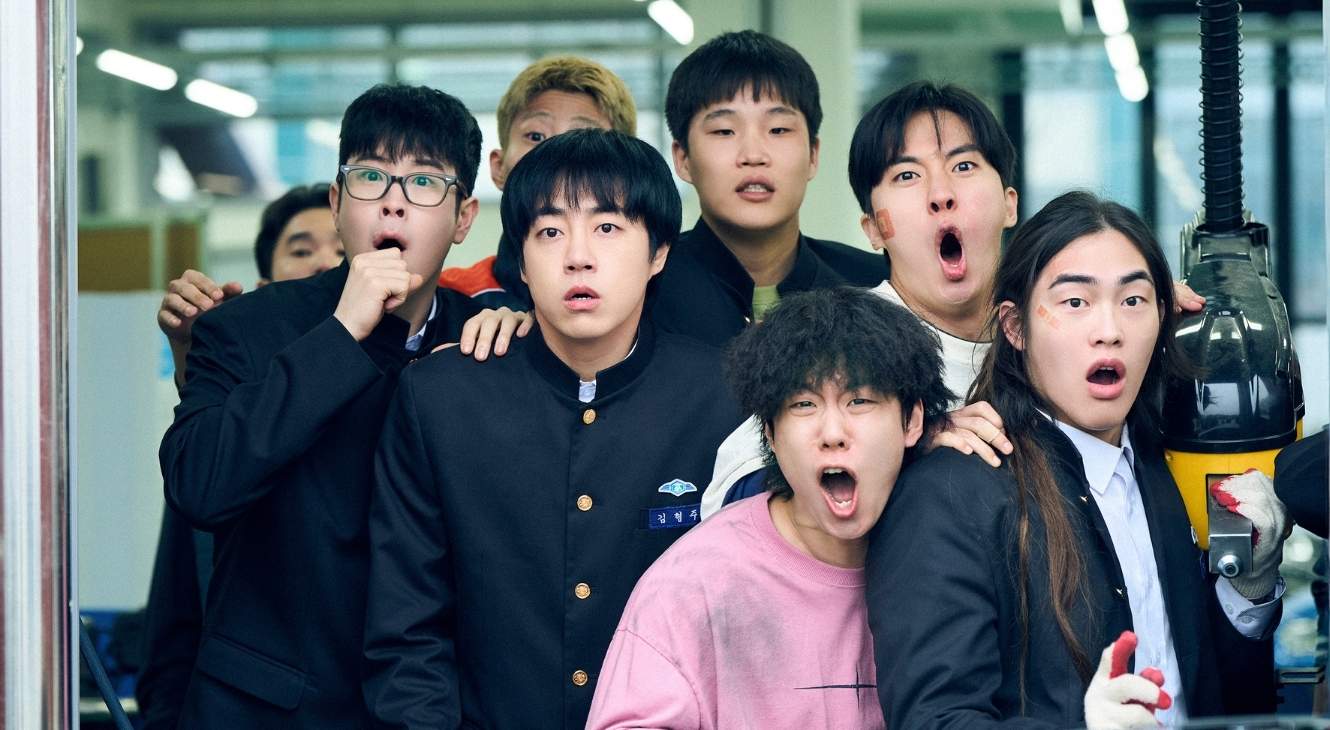
The leaning into the comedy helps further punctuate the ridiculousness of some of the scenarios presented and how the members of the ERPB react to them. Whether it’s Hwa-jin being forced to take care of a bunch of elementary school students, or Han-rim being forced to portray a defenseless geek, or even Geun-dae getting roped into a gambling ring, how they react to these changes that force them outside of their comfort zone makes the series worth watching. And this is before we get into the action sequences.
The fighting is part of the joy of Teach You A Lesson. Heck, the biggest hook is in the opening episode, where Hwa-jin smacks a student repeatedly with ample replay. Due to the nature of their job, the ERPB are oftentimes placed in scenarios where they have to run, fight, and essentially just get the upper hand on their opponents. This lends itself to some of the series’ most interesting sequences. The second episode, in particular, is an action highlight spotlighting Hwa-jin, with a nighttime rain final boss fight that is absolutely cinematic.
Ultimately, Teach You A Lesson is good fun, but rushes its final blow.

At times, though, risks were taken in the fight scenes that didn’t quite pay off. The one instance that stands out is during the gambling den fight, when an interesting first-person shaky-cam shot seems to be in place for Han-rim’s eyeline. That is, until there is an unclear transition where the camera shifts to third person and follows Hwa-jin as he fights through, before the camera pivots to take in Han-rim. Those editing decisions, while initially cool in the moment, led to confusion, making the cinematic risk unsuccessful.
Thus, Teach You A Lesson ultimately ends as a chaotic viewing experience. With its blend of action, comedy, and incredibly serious subject matter, it’s a lot to take in, but it culminates in a mostly fun venture. Each episode shines a spotlight on a different issue, provoking necessary discussion about issues plaguing the education system that are also almost universal in some ways worldwide. Had the ending been less rushed to allow that suspension of disbelief to better cultivate, Teach You A Lesson would be much stronger. Still, it’s a heck of a watch.
Teach You A Lesson is now streaming exclusively on Netflix.
Teach You A Lesson
-
Rating - 7.5/107.5/10
TL;DR
Teach You A Lesson ultimately ends as a chaotic viewing experience. With its blend of action, comedy, and incredibly serious subject matter, it’s a lot to take in, but it culminates in a mostly fun venture.