

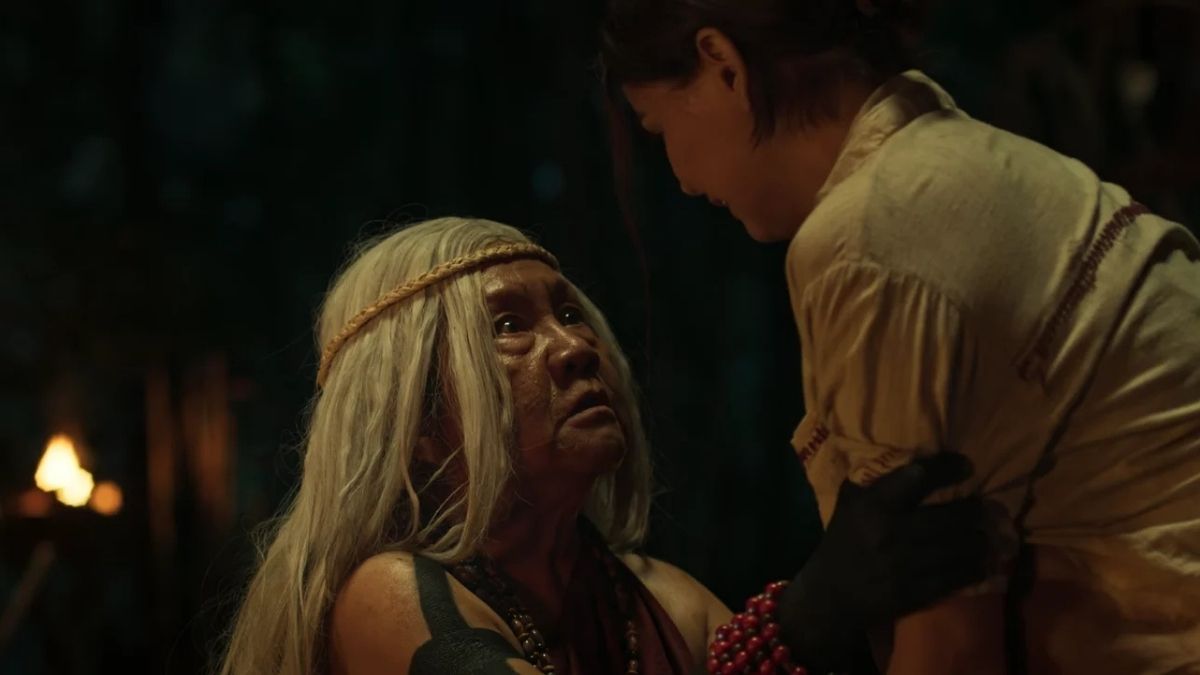
Our connection to the land is an oft-explored one—a reminder we all desperately need but also a theme that opens itself up to a realm of possibilities. This is seen in Balaraw: Blood Island, where a woman’s connection to a mysterious island, coupled with her mother’s disappearance, drives her to seek the place that has haunted her dreams since birth. Created by Rae Red, Jericho Aguado, and Dodo Dayao, this series tries to deliver a fulfilling folk horror haunting, but bites off more than it can chew.
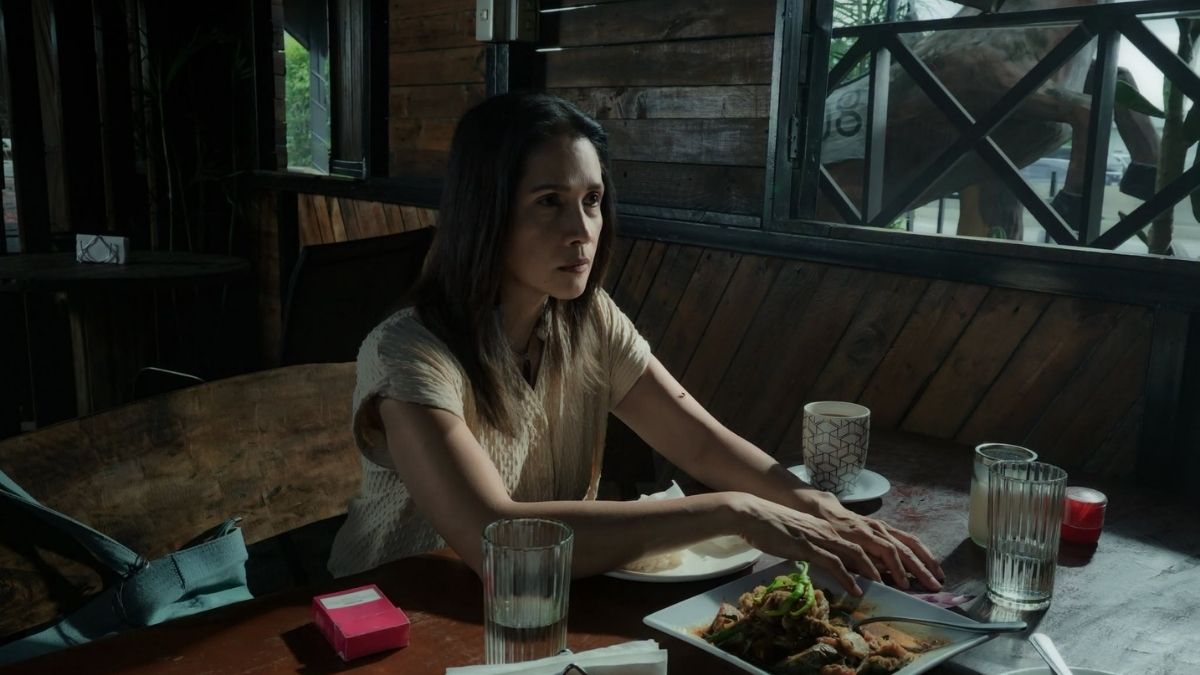
The series opens with a shocking scene of the horror to come. Not at the hands of the series’s interpretation of the Manananggal, but at the hands of the island’s residents who have imprisoned men to be used for an undisclosed, life-ending purpose. A man’s attempt at an escape reveals the futility of trying to leave the island, already setting up stakes for our future protagonist, Sabina (Janine Gutierrez), and those who stand by her side when her search for her missing mother, Rebecca (Agot Isidro), leads her to the same island.
The island itself is one constructed from legend. Shaped like a dagger, the island is practically untraceable. The only way to know if one is nearby is through the emergence of a mysterious fog and the giant swell of a colossal wave bearing down. If one is lucky enough to survive the wave’s wrath, they awaken on the island. And then they have to contend with the real danger of the island’s occupants. This is how Sabina and her friends ultimately end up on the island in Balaraw: Blood Island, and from there, it gets a tad convoluted.
Rebecca’s disappearance is a strong hook that gets the ball rolling in Balaraw: Blood Island.
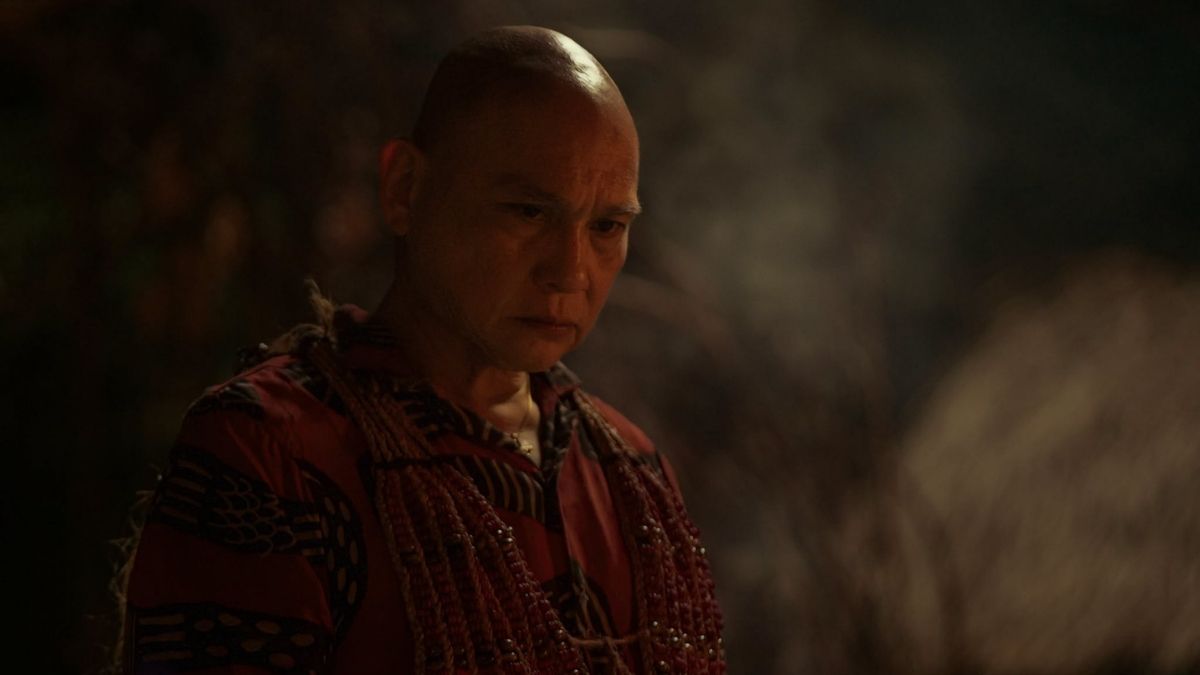
Part of this is due to the impact the Cardomas brothers have on the island and its inhabitants in Balaraw: Blood Island. Led by Ramon (Nonie Buencamino), the brothers have assumed leadership of the island’s indigenous people since their fiery arrival by a downed aircraft. Over the decades, their power over the people has grown, and Ramon’s insistence that it is God’s will sets up a sense of superiority the brothers exude over the island.
However, their will clashes with the island’s inhabitants and their connection to a creature (or creatures, rather) that also make their home on the island. Balaraw: Blood Island reimagines the Manananggal in a terrifying form. Its presence among the islanders creates a “devil” for Ramon and his brothers to combat and reinforces their holier-than-thou behavior. The thing is, this particular storyline and the breakdown of power between the brothers and the islanders is the stronger of Balaraw‘s storylines.
Remarkably, Sabina’s path once she reaches the island lets the character down most and leads to more puzzling mythos-building decisions. Rae Red, Jericho Aguado, and Dodo Dayao use the writing to connect Sabina’s origins to the island’s mysterious nature in Balaraw: Blood Island. With more time, it could have been fleshed out into something much stronger and far more rewarding. Especially given the yonic visual symbolism evoked later on and the final-hour mythos dump surrounding the island’s first visitor.
As more gripping storylines take over, Sabina fades into the background.
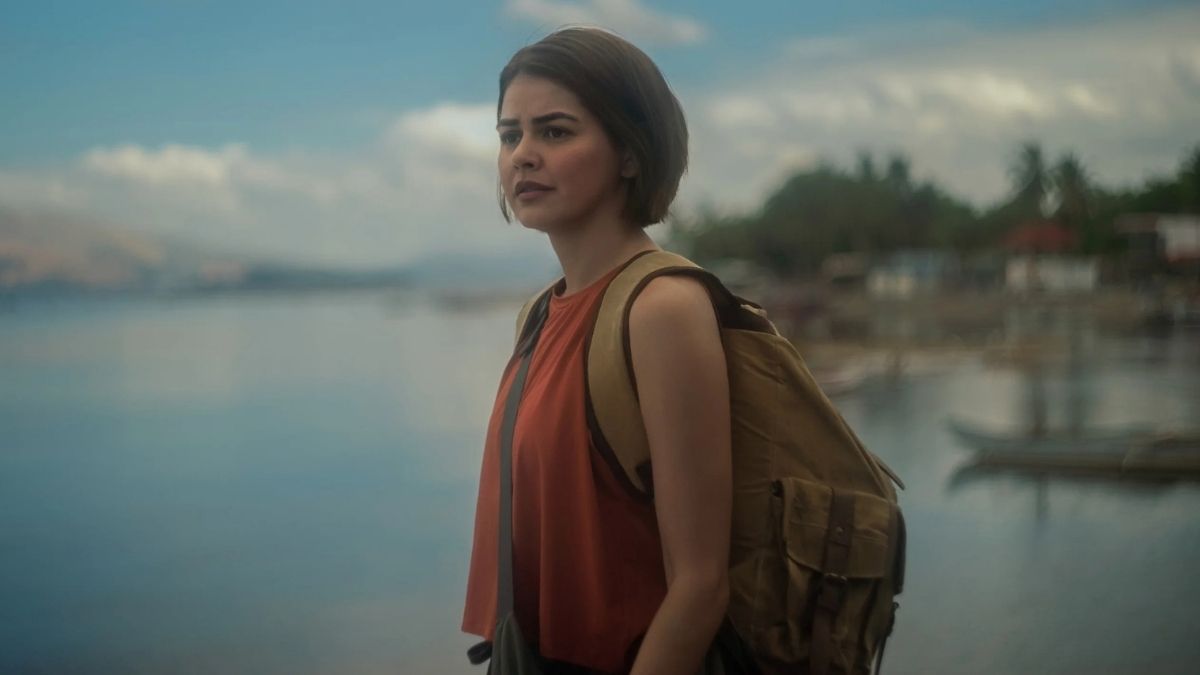
Sabina loses some of that drive that landed her on the island once she arrives. Sure, she gets some leeway once she finds herself face-to-face with the islanders and Ramon. She’s a literal outsider trying to figure things out. However, she becomes almost passive as her story takes a more mystical turn about her origins, somehow robbing her of the personality she started with. With that character inconsistency and the poorly finessed handling of her origin story toward the series’ end, Sabina’s storyline is the weaker one in Balaraw: Blood Island.
In some ways, that weakness carries over into the horror. The Manananggal is rightfully terrifying, with each new one carrying slight differences that provide some differentiation. One particular incarnation in the final episode is the ultimate evolution of horror imagery, as the creature’s abdomen opens to reveal a gaping maw. These are mostly achieved practically. However, when the team relies on CGI for more physically defying sequences with the Manananggal, the rendering looks and feels awkward and almost comical in its movements.
Arguably, the most horrifying component of Balaraw: Blood Island is Ramon and his brothers, whose sense of superiority over the islanders makes them easy villains. The ease with which they view these islanders as disposable is concerning, and belies the blasphemy and corruption that reside in the brothers’ hearts despite their embrace of God. It’s a more subtle kind of horror, particularly when considering the clash between religious superiority and Indigenous peoples here, but it might not be enough to unsettle viewers.
Ramon and his brothers are arguably the island’s real monsters. That is until the cliffhanger-like end.
This all ultimately culminates in a resolution that ties up most of the loose ends, though one character gets a tear-jerking end and is mostly forgotten after his demise. The only thing left open for further exploration is a conversational moment between the island and Sabina that reveals the island’s intentions for Sabina’s return. This connects to the last ten minutes of Balaraw: Blood Island, where, if there is a second season, there is more room to explore the implications.
Balaraw: Blood Island has enough here to capture the viewer and spark (hopefully) further interest in rich Filipino folklore and its many horrifying creatures. That said, the series struggles to balance its storytelling to deliver a stronger bite and loses sight of its protagonist when set up against competing characters’ storylines and stakes.
Balaraw: Blood Island is now streaming exclusively on Netflix.
-
Rating - 6.5/106.5/10
TL;DR
Balaraw: Blood Island has enough here to capture the viewer and spark (hopefully) further interest in rich Filipino folklore and its many horrifying creatures.