

It is not controversial to say that Sheep in the Box-director Hirokazu Koreeda is one of our greatest living filmmakers. His 30-year career has garnered extensive international acclaim, including multiple perfect scores on Rotten Tomatoes. Six of his films are in the Letterboxd Top 500, a feat that ties him with the likes of Alfred Hitchcock, Stanley Kubrick, and Charlie Chaplin and has only been bested by Christopher Nolan, Andrei Tarkovsky, Ingmar Bergman, and Akira Kurosawa.
Koreeda is also one of today’s more prolific filmmakers. Sheep in the Box is his third feature in four years, not including the two television miniseries he’s also written and directed during that time. And his next feature, the live-action adaptation of Look Back, is set to release just four months after Sheep in the Box originally premiered at Cannes. Unfortunately, he is not infallible.
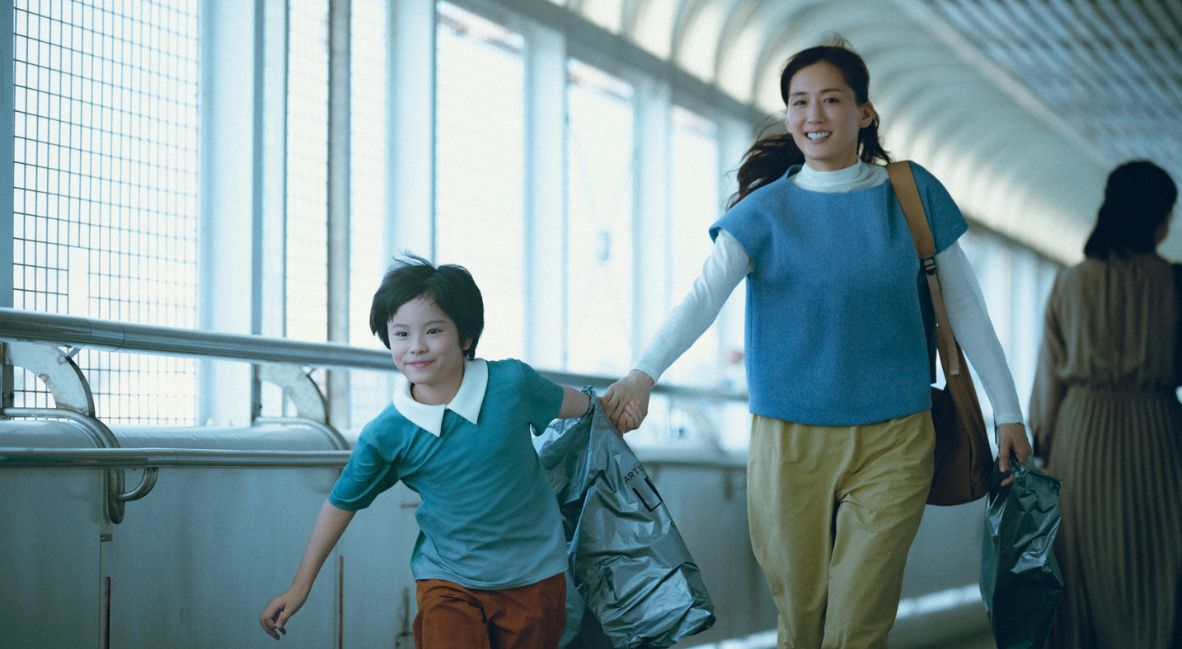
Sheep in the Box centers on architect Otone (Haruka Ayase) and carpenter Kensuke (Daigo Yamamoto), a married couple who lost their young son Kakeru (Rimu Kuwaki) two years prior. The guilt that accompanies outliving your child only gets worse when they start to receive targeted advertisements from a tech company offering a lifelike android in Kakeru’s likeness. Kensuke immediately hates the idea, comparing it to a grief-exploiting Tamagotchi, but is unable to dissuade Otone from going through with it.
Hirokazu Koreeda creates an intriguing but shallow dystopian world.

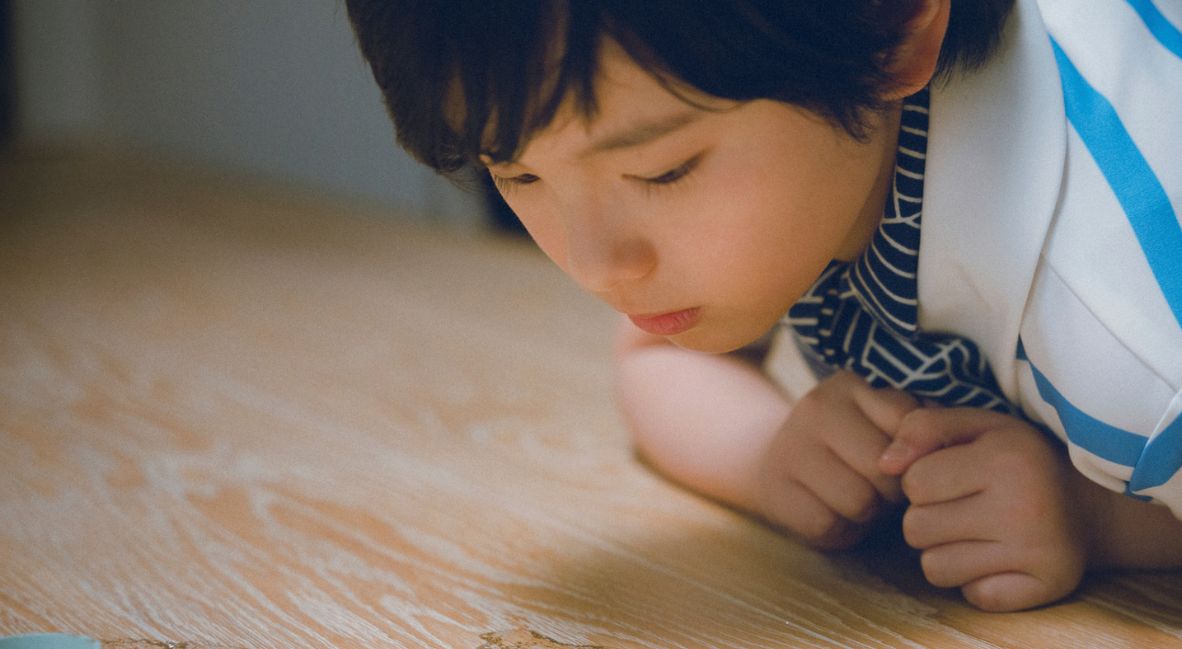
The illusion that this new Kakeru might replace their son falters almost immediately. His personality is entirely programmed by his parents’ nostalgia, which means it’s missing the things that made the original Kakeru… well, human. Otone and eventually Kensuke decide they might be fine living with only a shadow of their dead son if it helps them work through their grief. But Kakeru-2, questioning his existence after meeting other androids, might not be as willing to participate in a relationship where he is only a means to an end.
There’s an opening text denoting Sheep in the Box as taking place in the near future, and Koreeda does an incredible job of creating a world that feels just one or two steps beyond our own. The sky is filled with package delivery drones. Parental responsibilities are offloaded onto robot babysitters. Private companies have harvested enough data about the populace to conduct marketing campaigns aimed at a single person’s biggest insecurity. Otone finds her career as an architect unfulfilling because she spends it arguing with AI instead of actually creating anything.
It is incredibly dystopian and also incredibly familiar. And for a filmmaker of Koreeda’s caliber, it is an easy opportunity to say something meaningful. He does not. Sheep in the Box occasionally touches on something potentially significant, but always meanders into another direction before reaching relevance. This would not be a dealbreaker if the film stood on its own as a drama. It does not.
Despite the many ideas introduced, Sheep in the Box struggles to deliver on them.
There’s nothing here about artificial intelligence or grief or parenting or adolescence that hasn’t already been said better in other movies. There are some obvious comparisons, like Spike Jonze’s Her, Thomas Cailley’s The Animal Kingdom, and, for some reason, Peter Hedges’ The Odd Life of Timothy Green.
But anyone who has seen a movie about these relatively broad topics will feel like they’ve seen it before. Sheep in the Box seems like it wants to scratch some sort of societal itch, but it can’t decide which itch to scratch. Or how to scratch it. So it ends up saying little to nothing.
Characters do not evolve in this film because they are never afforded enough depth to have something to evolve from. Otone and Kensuke’s relationship is barely shown, so we never have the opportunity to appreciate how Kakeru-2’s presence affects it.
The craft is there but the story is largely lacking in real substance.
Otone’s relationship with her mother and sister set up potential growth that never happens. Kensuke tries to confront a past that doesn’t exist, but he never properly reckons with reality when he’s faced with it. Kakeru-2’s relationship with freedom-seeking androids is barely a side plot until it’s suddenly the only thing the film is interested in. Opinions change. Opinions change back. No one ever does anything serious enough for those changes to have mattered in the first place.
The biggest shame is that, despite all of this, it is still incredibly obvious that Hirokazu Koreeda is a gifted filmmaker. There is a magic to how he assembles a shot and pieces together a dialogue. He draws compelling performances from his cast despite a weak script. Unfortunately, the film lacks a spine, which means its strengths are entirely unsupported. So while Sheep in the Box is never actually terrible, it also never manages to be good. Here’s hoping the next one is better.
Sheep in the Box arrives in theaters July 24, 2026.
Sheep in the Box
-
Rating - 4/104/10
TL;DR
Unfortunately, the film lacks a spine, which means its strengths are entirely unsupported. So while Sheep in the Box is never actually terrible, it also never manages to be good.