


Straight to Hell (Jigoku ni ochiru wa yo) is Netflix’s latest biographical drama that retells a dramatized version of Japan’s most controversial fortune teller, Kazuko Hosoki. The series is written by Manaka Monaka and directed by Norichika Oba and Tomoyuki Takimoto. Erika Toda stars as the real-life figure, Kazuko Hosoki; Sairi Ito plays writer Minori Uozumi, and Toma Ikuta plays Masaya Hotta, and Toko Miura plays Chiyoko Shimakura.
Straight to Hell reimagines the life and times of Kazuko Hosoki, a famous Japanese fortune teller who captivated Japan with her divination practices to make her predictions. The series begins during the post-World War II period, with Hosoki’s family barely surviving in extreme poverty, and ends with her becoming a successful figure in Tokyo’s nightlife and later a famous fortune teller and influential media figure.
At the height of her career, Hosoki is being interviewed by Minori Uozumi for a biography. As Uozomi spends more time with Hosoki, a bond and understanding form, and as she does additional research into Hosoki’s past, some of the darker parts of it come to light.
Straight to Hell parallels Japan’s post-war transformation with Hosoki’s own evolution.

Erika Toda delivers an impressive performance as Kazuko Hosoki, which truly anchors the show in making the main character so enthralling. Toda expertly plays the endearing, charming sides of Hosoki as well as the darker, more insidious ones. Toda’s performance does an excellent job of portraying Hosoki as a complex, layered individual, which really sells the show’s appeal.
The show takes audiences on a story that spans decades as it recounts Hosoki’s life and the eras she lived through. One of Straight to Hell’s strongest elements is how it aligns the country’s post-war transformation with Hosoki’s own evolution over the years. During the post-war era, the settings and characters are surrounded by poverty, ruin, and rubble.
Hosoki’s appearance as a young girl in a tattered red dress amongst the crowded streets, with people trying to survive. Years later, as the country starts to rebuild through cultural shifts and economic booms like the Olympics and disco, so does Hosoki’s appearance and status also flourish.
Kazuo is endearing as she is cunning.
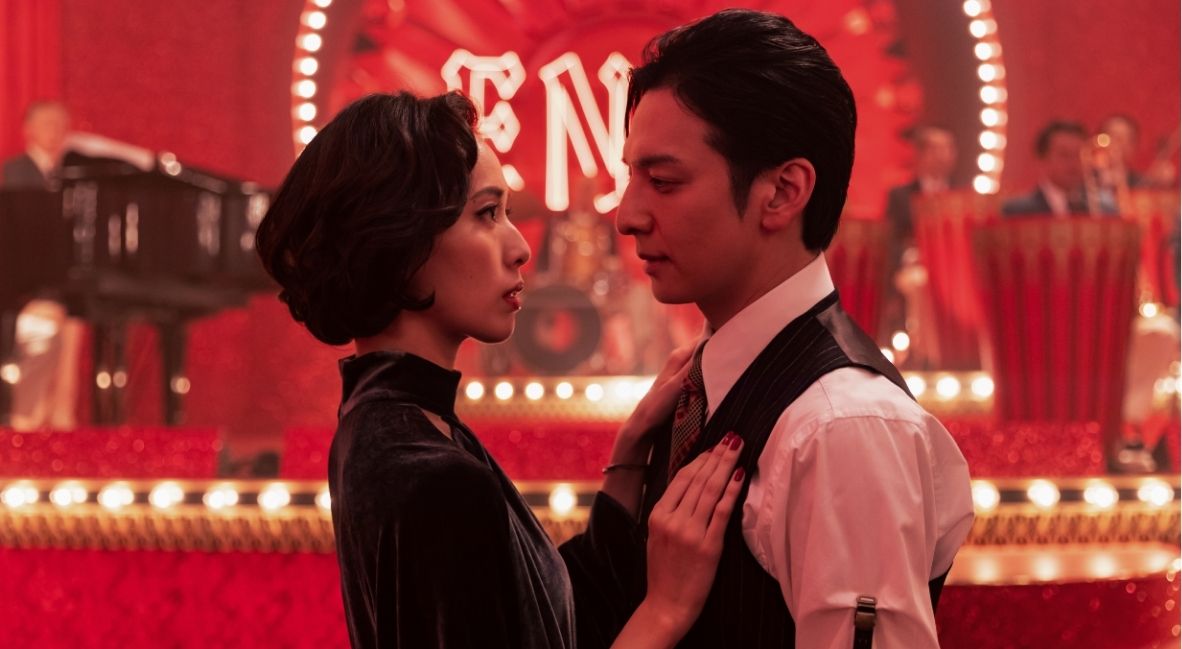
Straight to Hell tells a complex story that makes you want to root for Hosoki while simultaneously wanting her to face justice for her darker secrets. What makes the show so compelling is that it does not firmly categorize Kazuko as an outright hero or villain, but rather positions her between an antihero and a villain.
Most of the episodes portray Kazuko as an endearing, resourceful young woman who perseveres in the face of adversity. Throughout her life, she faced her fair share of hardships and pain and was even taken advantage of by powerful men.
Initially, Hosoki’s biggest goal was to get as much wealth as possible to escape the poverty that her family had come from. However, once she gets a taste of power and wealth, she uses them to exploit and scam others. Hosoki, unfortunately, becomes no different from the people who once used her, as she sees no problem in exploiting and discarding people as soon as their usefulness to her is spent.
Straight to Hell should appeal to fans of stories about scammers and con artists.

For fans drawn to stories about con artists and scammers, Straight to Hell sits firmly within that appeal. Fans of stories about swindlers like Hosoki will be drawn to her rags-to-riches tale, the thrill of her life’s ups and downs, and the show’s unexpected storytelling formula.
Nothing about Hosoki’s life seems to be wholly straightforward; every rise in her life comes with risks and hidden costs, and every success seems to be twisted in deception. Even as the show reaches its climax and a predictable ending where Hosoki faces justice for her misdeeds seems within sight, it pivots yet again.
The show does not shy away from or excuse Hosoki’s ruthless and cunning nature. However, the show clearly draws connections between the causes and effects that lead to Hosoki’s decisions. Hosoki’s decisions to exploit and scam others were learned responses to growing up in a world that seemed to reward cruelty over ruthlessness. The show does not exactly ask the audience to like Kazuko, but rather to understand her as a person beyond the facade she puts on.
Straight to Hell delivers a compelling retelling of Kazuko Hosoki’s rise, fall, and return to fame and fortune.

Straight to Hell’s pacing starts a bit slow in the early episodes, but the drama and story gain traction as the series progresses. Some arcs of Hosoki’s story feel rushed, while others are stretched out to heighten the drama. One plot point that is especially stretched is between Episodes 4 through 7, as Hosoki’s highs and lows as a nightclub owner, yakuza schemes, and power dynamics play out in the most unexpected ways.
Another interesting plot device in Straight to Hell is that the character Uozomi is not based on a real person but rather a fictional creation, used to retell Hosoki’s story through the audience’s eyes. Uozomi’s perspective is important for viewers to see the story unfold through a character who, like the audience, first feels deeply connected to Hosoki and her story. However, Uozomi does not let that connection blind her from the truth behind Hosoki’s success, which leads her to uncover the dark secrets the fortune teller would rather keep hidden.
Some viewers may not like the ending’s messiness. The book Uozomi has worked so hard on goes unpublished, but it is actually a scathing magazine exposé that takes Hosoki down a peg; she is not knocked down for long. In the end, Hosoki, following the exposé, never confesses or acknowledges any of the allegations against her. Although she loses her television show, she later releases a fortune-telling app that makes her even richer than before. In the end, Hosoki still comes out on top, with everything she wanted in the end.
Straight to Hell is a story about survival and perseverance as much as it is about greed. Straight to Hell delivers a compelling retelling of Kazuko Hosoki’s rise, fall, and return to fame and fortune. The series is packed with drama and romance, layered with twists and turns that captivate the audience and keep them watching from start to finish. The show does not ask the audience to like or root for the main character, but it does ask them to understand the woman behind the fame and fortune telling.
Straight to Hell is streaming now, exclusively on Netflix.
Straight to Hell
-
Rating - 8/108/10
TL;DR
Straight to Hell delivers a compelling retelling of Kazuko Hosoki’s rise, fall, and return to fame and fortune.