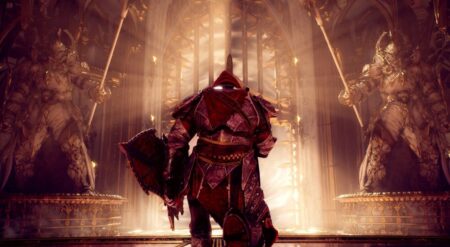


The OPUS franchise thrives on intimate stories about ordinary people caught up in massive events while dealing with some form of loss and grief. Each entry has widened the scope without losing what makes the series stick. Now, with Shueisha Games co-publishing, OPUS Prism Peak arrives as the fourth game in the series, and it’s SIGONO’s strongest work yet.
Narrative adventure games tend to lean heavily on coming-of-age arcs. Teenagers and young adults are standing on the edge of possibility, figuring themselves out for the first time. It works. But OPUS Prism Peak isn’t interested in just rehashing what works.
Eugene Chen is a 40-year-old photojournalist who’s already watched his possibilities dry up. His parents split when he was a kid. He got divorced. The publication he worked for shut down, and his photo café went under. His grandfather, the person who first handed him a camera and showed him a photograph that could mean something, just died. Eugene sold his camera and is heading home for the funeral when a car accident drops him into the Dusklands, a surreal mountain realm that feels more like a half-remembered dream than a real place.
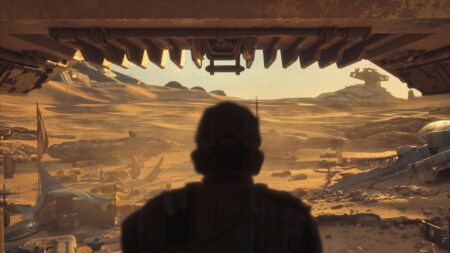
The dynamic between Ren and Eugene is the heart of the game.
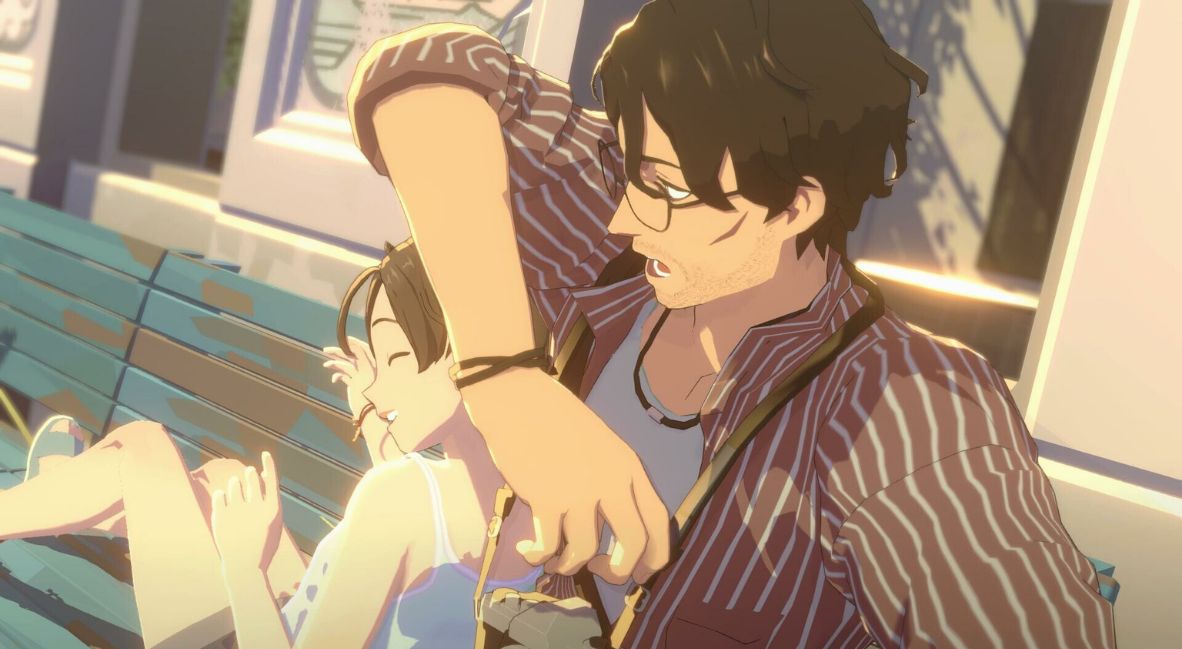
Those opening childhood vignettes do the heavy lifting early, warm with his grandfather’s patience but clouded by the confusion of his parents’ failing marriage. Flash forward to Eugene at 40, and SIGONO paints a man who has let failure become his baseline. He doesn’t mope about it. He’s resigned. Because of that, every genuine connection he finds in the Dusklands feels earned. Other games would force a dramatic breakthrough. OPUS Prism Peak lets Eugene’s realizations sneak up on him.
Eugene doesn’t wander the Dusklands alone. Early on, he meets Ren, a girl with no memories who latches onto him with a stubborn optimism that clashes hard with his exhaustion. Their dynamic carries the entire game. Ren’s cheerfulness pokes holes in Eugene’s resignation without the writing ever treating her like she’s just there to fix him, and their bond ends up anchoring everything else in the story.
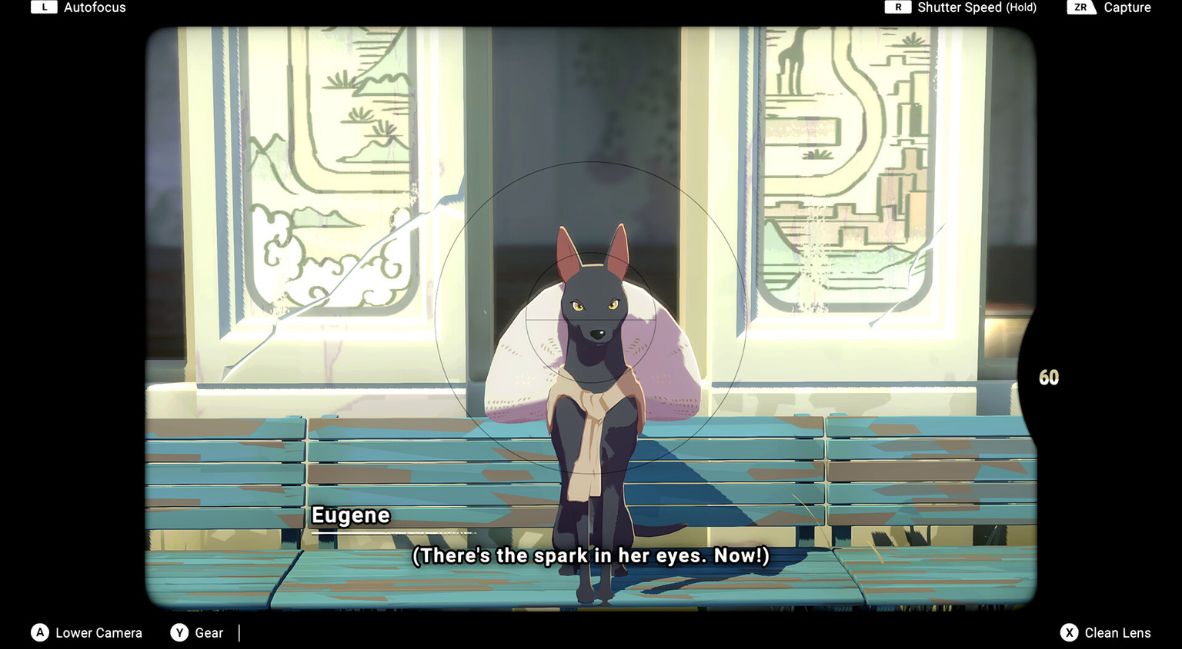
Animal spirits populate the Dusklands, and each one ties back to someone from Eugene’s past. A blinded deer. A brash factory worker. They’re compelling on their own, but once their connections to Eugene’s real life lock into place, every earlier conversation takes on a different meaning. Uncovering a spirit’s true name through photography hits harder than you’d expect from the mechanic on paper.
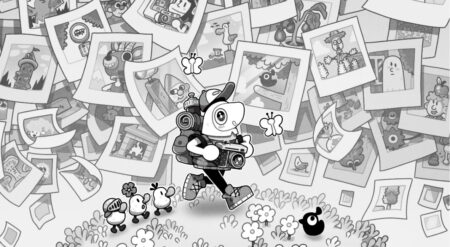
Photography is key to how OPUS Prism Peak plays out.
OPUS Prism Peak forces Eugene to sit with relationships he neglected or actively shoved aside, and the game’s black-and-white flashback sequences hammer that home. These visual novel segments cut between childhood memories and adult wreckage, structured like flipping through a photo album you forgot you still had. Some pages make you smile. Some pages gut you.
The story stumbles here a bit. Eugene’s arc plays its hand openly, and attentive players will piece together the bigger reveals before he does. A few emotional beats land exactly where you expect them. However, the writing sells it. You know where things are headed, but the delivery still tightens your throat when you get there.
OPUS Prism Peak commits to photography harder than any narrative adventure has in years. Eugene’s camera is how he interacts with the Dusklands. Aim at an object and hidden details surface. Photograph a spirit, and you might reveal their true name. Sacred firebowls scattered across the world house fragmented memories, and matching your photos to those fragments earns items, lore entries, and camera upgrades that pull you deeper into the mystery.
A well timed photo is sometimes the only defense.
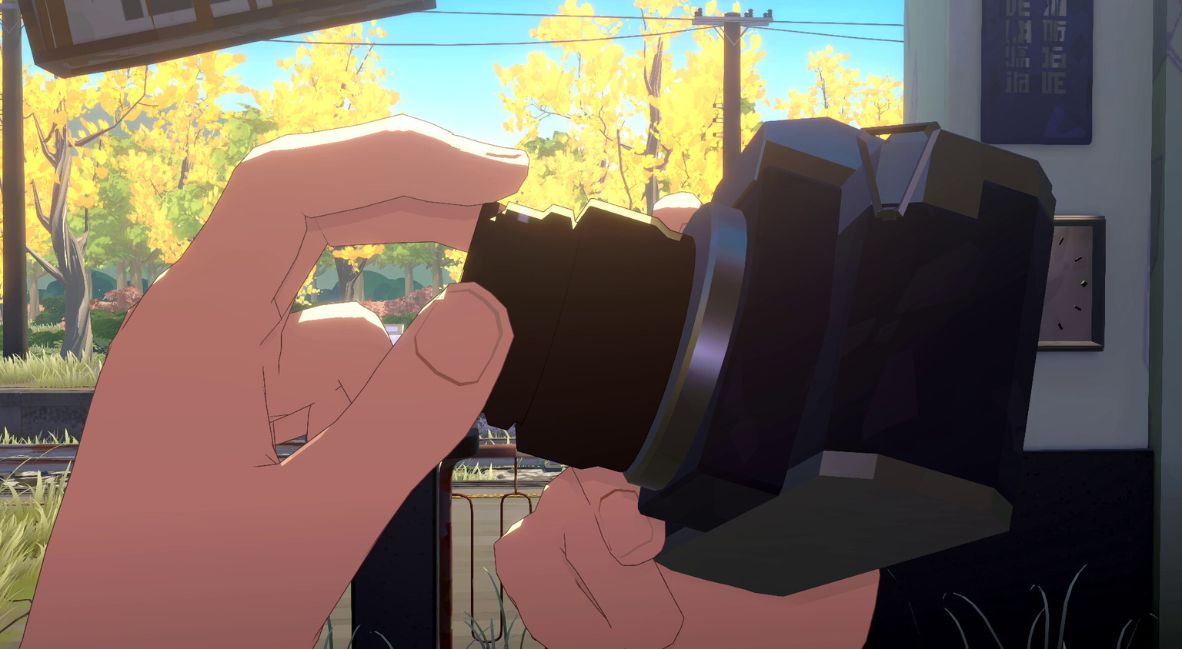
The camera starts bare-bones before OPUS Prism Peak layers in complexity. Shutter speed adjustments and collectible lens filters come first, with manual focus unlocking later than you’d expect. Once the full toolkit opens up, the game genuinely asks you to think about composition and timing.
The Dusklands filter blows things wide open by revealing hidden information baked into the environment. It’s the obvious choice from the moment it’s available, which does push the other filters into novelty territory. The Shade, a recurring threat, forces Eugene into tense encounters where a well-timed photo is his only defense. It’s a shot of real danger in a game that otherwise lets you breathe.
The camera fumbles with movement, though. Eugene locks in place the moment the viewfinder goes up. If you need to shift two inches to frame a mural properly, you have to lower the camera, reposition, and raise it again. A D-pad input could solve this without disrupting anything, but as it stands, the friction stacks up. You adjust to it, but you never stop noticing it.
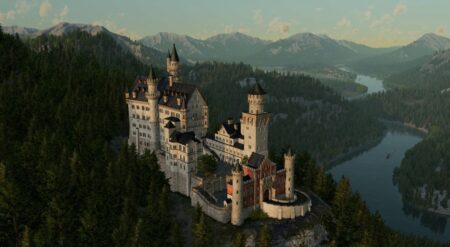
The world of Opus Prism Peak blends beauty with melancholy.
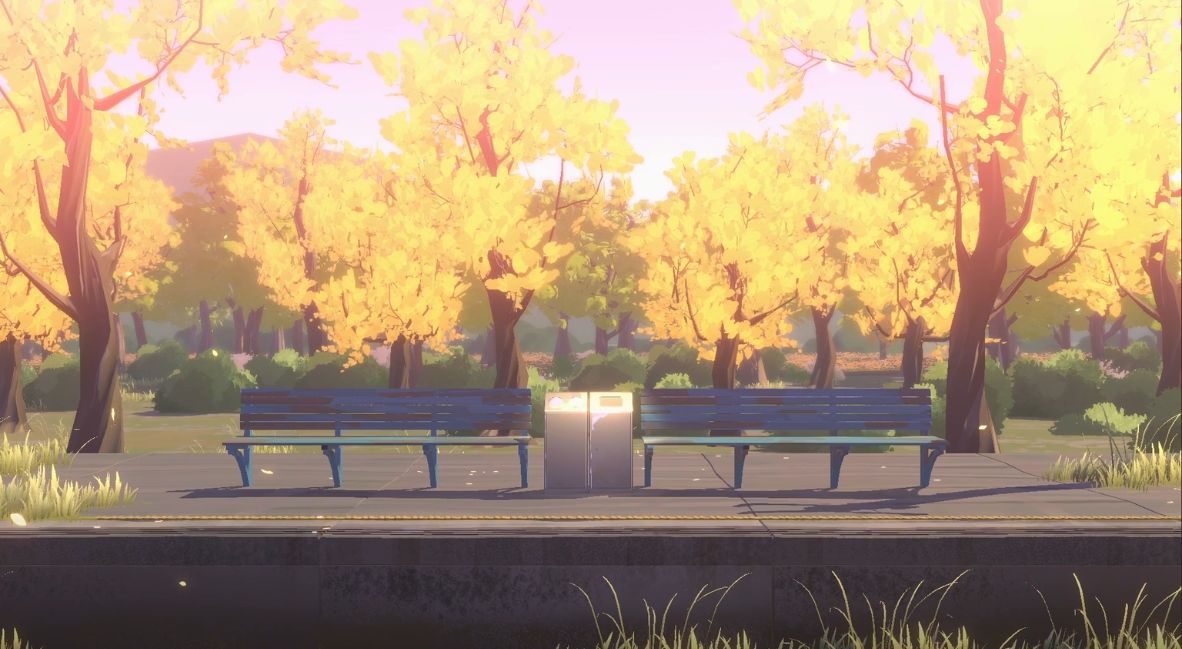
A photography game needs a world worth looking at. OPUS Prism Peak clears that bar and keeps going. The art direction leans into the Makoto Shinkai and Studio Ghibli influences that have shaped the OPUS series from the start. The Dusklands are a 3D anime-inspired world where golden light spills through cloud breaks, abandoned factories sit heavy with atmosphere, and wide mountain vistas practically dare you to waste film on them.
Character models use a soft style that pops against the detailed environments, giving the whole game a handmade warmth that screenshots can’t fully capture. On the surface, everything is bright and inviting, but a melancholy lies beneath the architecture. Crumbling walls, overgrown well-timedpaths, structures that clearly belonged to someone once. The world looks like a vacation and feels like a funeral. That tension is by design.
The orchestral soundtrack hits just as hard. Quiet piano during exploration, strings that build during emotional reveals, stretches of total silence that let a scene’s gravity settle. It never oversteps. The English and Japanese voice tracks are excellent. The English cast delivers grounded reads that keep the spirit characters feeling like real people rather than cartoon mascots, and the Japanese dub brings a warmth worth hearing on a second playthrough. For a game about a guy who communicates through pictures, Prism Peak sounds phenomenal.
OPUS Prism Peak makes a lasting impression.
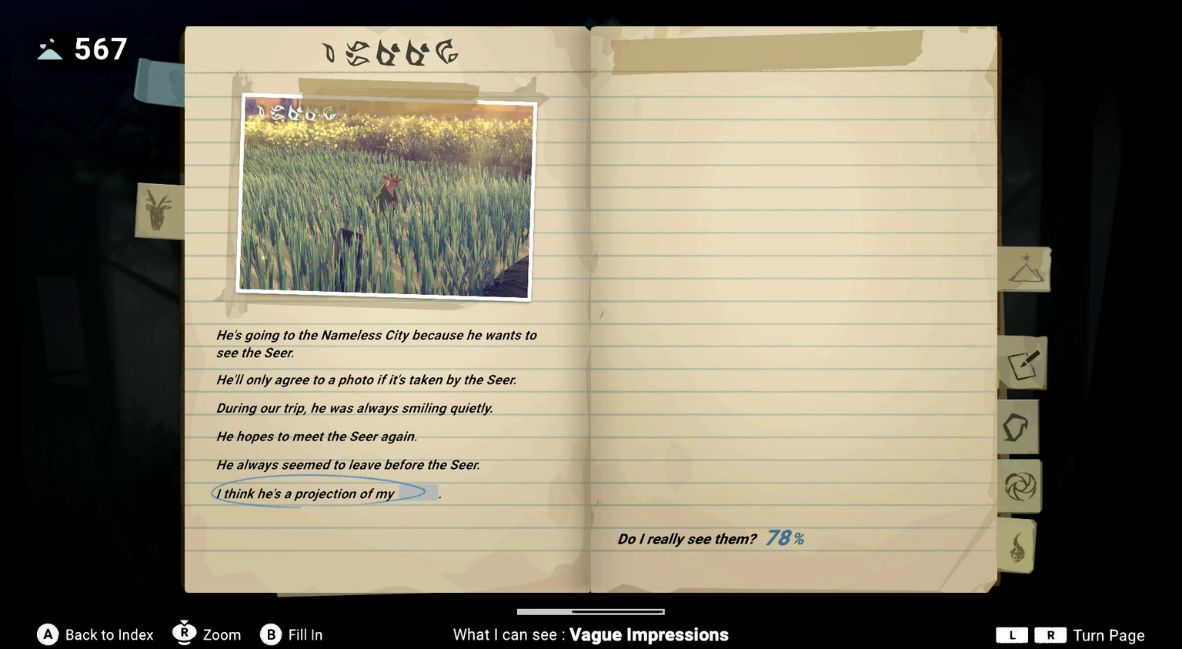
OPUS Prism Peak doesn’t wave goodbye after the first set of credits. Eugene’s journey branches slightly based on the bonds he builds and the choices he makes, with four possible endings making multiple playthroughs genuinely worthwhile. A detailed journal system tracks lore, character backstories, and collected photos, and filling it out demands sharper eyes and a strong read on environmental clues. SIGONO also buried unlockable developer audio recordings in the post-game, along with commentary on the creative decisions behind specific scenes, for players who want to keep digging.
Prism Peak moves at a deliberate crawl, and while that fits the reflective mood, later chapters lean into objectives that test your patience. Eugene doesn’t have a sprint option. He walks everywhere at the same measured pace, and there are stretches where you’re crossing familiar ground to ferry items or trigger conversations. It bends the experience without breaking it. A faster walk toggle would tighten the back half up without undercutting the tone SIGONO built.
OPUS Prism Peak leaves a heavy, lasting impression thanks to beautiful environments and emotional storytelling. SIGONO built a game about the weight of memory, the mess of regret, and the terrifying clarity that comes from pointing a camera at your own life and actually developing the film.
OPUS: Prism Peak is available now on PC, Nintendo Switch, and Nintendo Switch 2.
OPUS Prism Peak
-
Rating - 9/109/10
TL;DR
OPUS Prism Peak leaves a heavy, lasting impression thanks to beautiful environments and emotional storytelling.