

The musical biopic is nothing new. Ludwig van Beethoven, Giuseppe Verdi, Richard Wagner, and Niccolò Paganini had all seen their lives immortalized in film before the technology for incorporating sound into cinema was even invented. But director Antoine Fuqua and writer John Logan’s Michael (2026) finds the genre in the midst of a bit of a renaissance.
Elvis, Freddie Mercury, Elton John, Bruce Springsteen, Bob Dylan, Whitney Houston, and Bob Marley have all received big-budget biopics in recent years, often to significant box office success. That Michael Jackson would receive the same treatment was inevitable.
Michael opens with its title character still a child (Juliano Krue Valdi). The family patriarch, Joseph Jackson (Colman Domingo), is desperate to pull the family out of poverty, forcing Michael and his brothers to rehearse the family musical act constantly. They do find success, signing to Berry Gordy’s (Larenz Tate) Motown as The Jackson 5. But it’s not enough for Joseph, who continues to abuse his sons and maintain strict control over their lives.
Michael doesn’t give its subject nuance. It doesn’t even make him interesting.
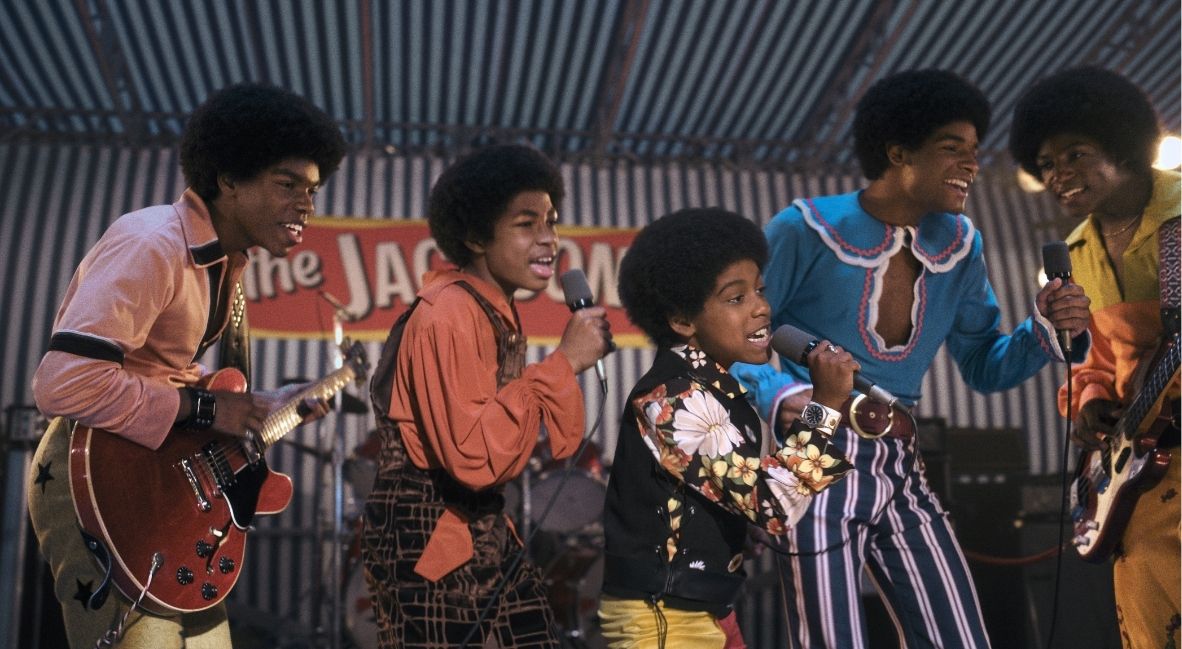
By adulthood, Michael (now played by Jaafar Jackson, Michael Jackson’s real-life nephew) is the obvious star of the now wildly successful Jackson family. But he’s emotionally stunted and still unable to stand up to his father. When the family moves to Epic Records, Michael receives Joseph’s permission to record a solo album, provided he only works on it during his nights and weekends. That record, Off the Wall, achieves enough success to finally give Michael the leverage he needs in his relationship with his father.
No one was expecting Michael to offer a nuanced portrayal of Jackson’s life. The late musician’s estate has been very publicly involved in the film’s long and complicated production, and it’s obvious the film is more interested in supporting those business interests than actual storytelling. There is a good deal to be said about the way in which Michael ignores the decades of sexual abuse allegations made against its subject, but it’s hard to judge the film for being unable to broach the topic when it doesn’t even have the ability to make The King of Pop appear interesting.
John Logan’s screenplay doesn’t offer much in the way of actual narrative. Instead, the film plays out like a greatest-hits album of Michael Jackson’s life. His childhood is touched on, then abandoned. Significant moments from his solo career are thrown together haphazardly and with little regard to how they’ll play into the moments before and after them.
Greatest hits made less great.
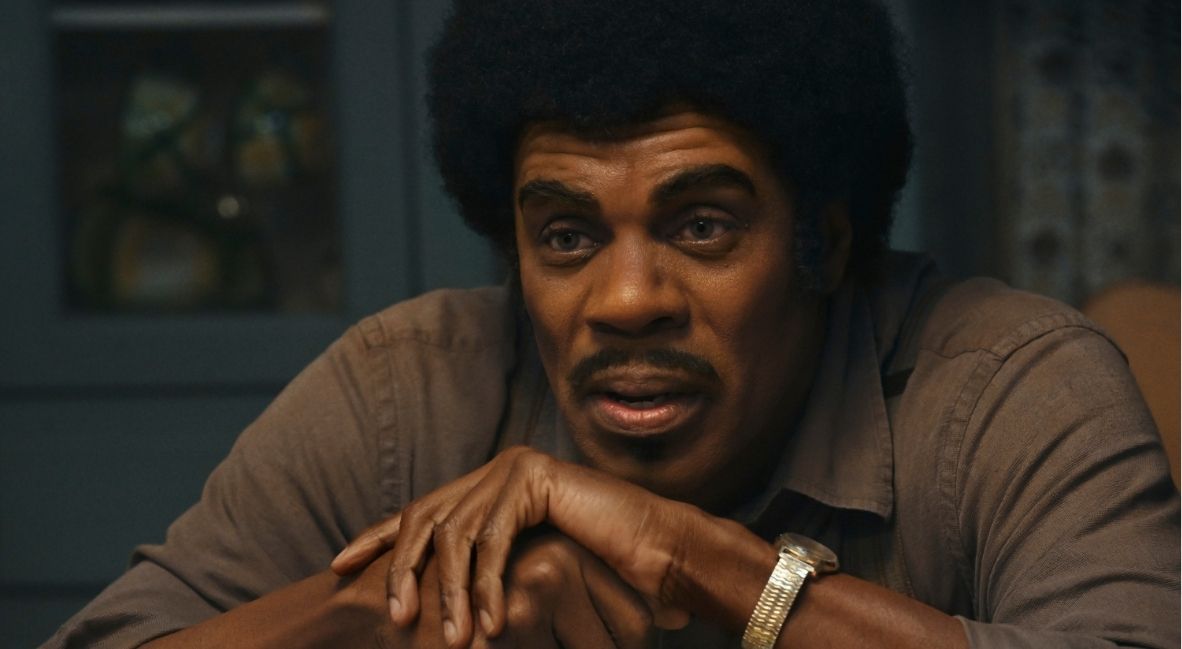
Events that should be interesting, like Michael Jackson attempting to use the music video shoot for Beat It to combat gang violence or the negotiations that led to his becoming the first Black artist to enter rotation on MTV, are executed with such cheesy aggrandizement that they become genuinely laughable.
Admittedly, audiences who turn out for music biopics expect to see the hits. This sort of hits approach might work just fine if the music and the visuals are excellent. But they aren’t. Musical sequences that attempt to recreate original recordings are a significant step down from what viewers will be familiar with. Music video sequences are less interesting than the classics they’re attempting to imitate.
And the film is absolutely bloated with dreadful CGI. It is understandable that a biopic may not invest heavily in visual effects, but this isn’t just a few lackluster shots of Bubbles the Chimp. Jafaar Jackson, who already looks like Michael Jackson on account of the two being closely related, has his face very obviously digitally augmented for much of the film.
Juliano Krue Valdi and KeiLyn Durrel Jones are the only real highlights.
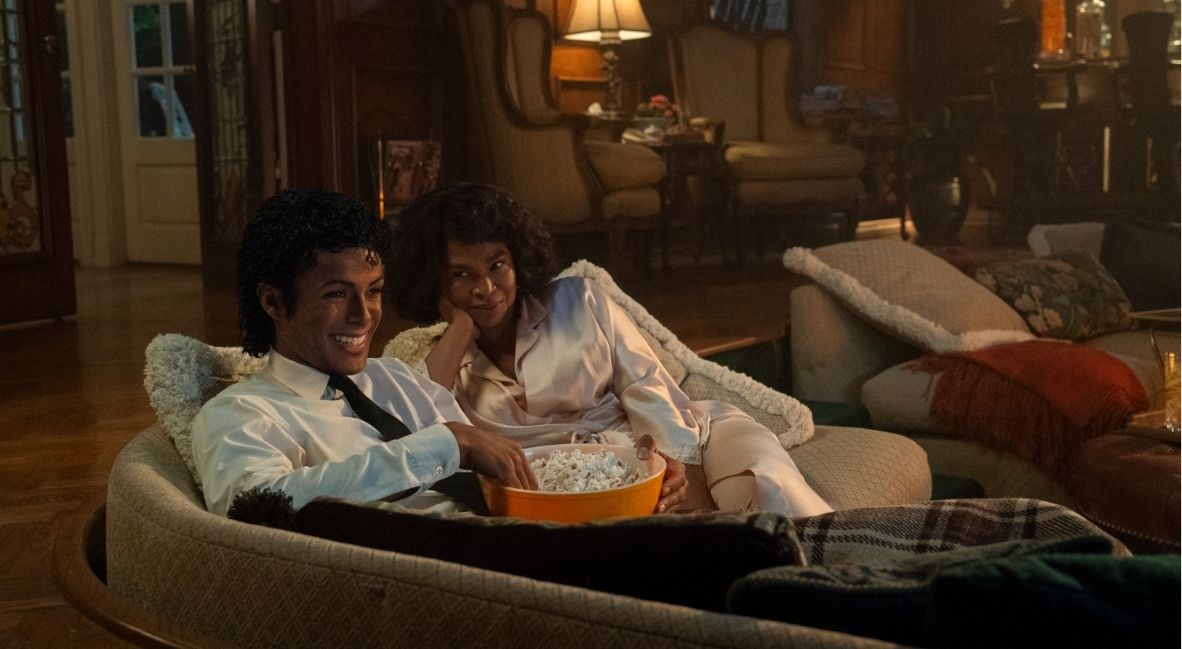
This is not Man in the Mirror: The Michael Jackson Story, the 2004 television movie that attempted to tell Michael Jackson’s story, despite not having the budget to include his music or a decent cast. Michael’s production budget is reportedly a whopping $200 million, making it twice as expensive as big-budget biopics like Baz Luhrmann’s Elvis and Oppenheimer. There is no reason a film this concerned with image and with this bloated a budget should struggle with such basic aspects of blockbuster filmmaking as music and visual effects.
There are only two real positives here. First, the brief glimpse of Michael’s childhood is excellent. While the adult version of the character is limited to delivering awkward one-liners like a 1980s sitcom character in search of a catchphrase, Valdi’s Michael Jackson manages depth and complexity despite appearing in only a few scenes. Had the film focused on the early days of the Jackson 5, diving deeper into their early rise to fame and Michael’s mentorship by Berry Gordy, it could have been truly special.
The second bright spot is KeiLyn Durrel Jones, who elevates every moment of screentime he has as Michael’s bodyguard, Bill Bray. The moments between Bray and Michael are the only ones where the King of Pop feels like an actual human being rather than a caricature. If any good is to come from this film, it’s that it will hopefully bring Jones and Valdi more exciting opportunities.
It’s bad. It’s bad. Really, really bad.
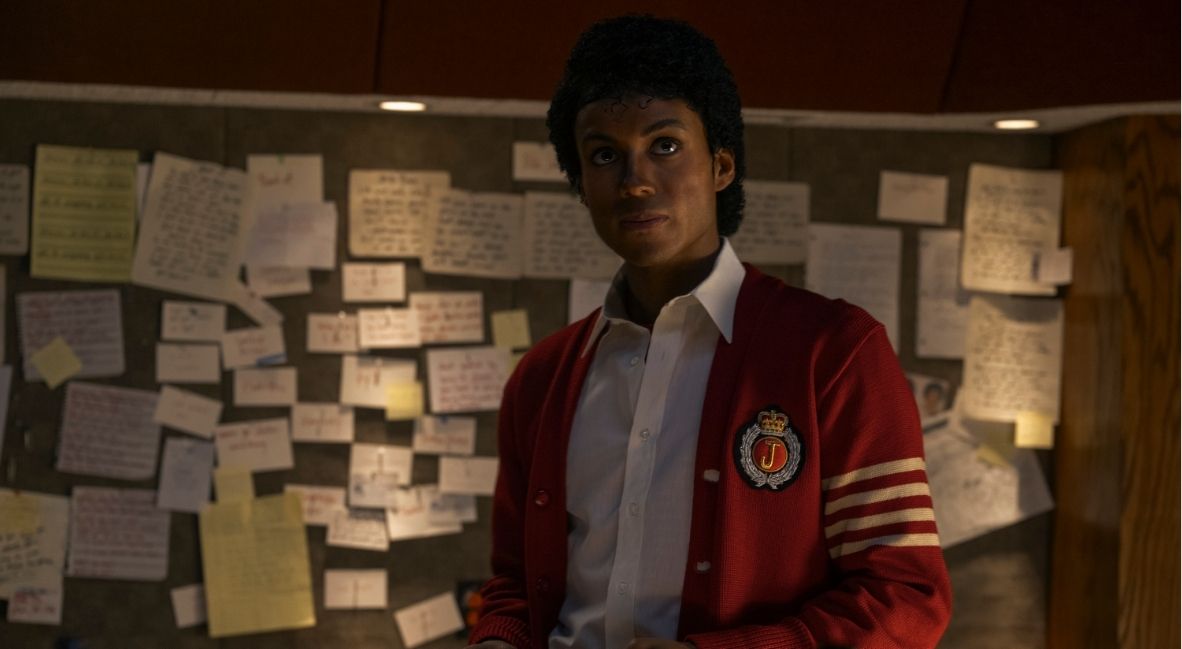
There is no reason for a film with this much money and this talented a cast and crew to be this bad. Antoine Fuqua is an outstanding director. John Logan is a great writer. Nia Long, Miles Teller, Laura Harrier, and Mike Myers are all in this.
Which makes the most likely culprit for this mess the Michael Jackson estate, whose creative control over the film has it feeling more like an infomercial for the artist’s albums than an actual movie. But the target audience already owns these albums, and everything they’ll appreciate about the film can be done to greater effect simply by playing them at full volume and dancing in the living room.
A sequel is in the works, as evidenced by the goofily Marvel-esque “MICHAEL JACKSON’S STORY WILL CONTINUE” card that drops before the credits roll. I won’t hold my breath.
Michael (2026) is in theaters now.
Michael
-
Rating - 3/103/10
TL;DR
There is no reason for a film with this much money and this talented a cast and crew to be this bad.