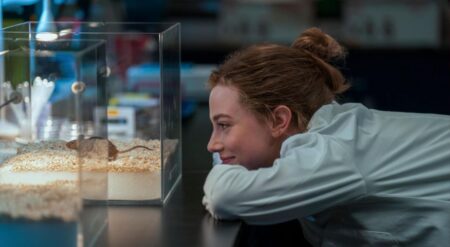


The Devil Wears Prada 2 is an exercise in all that is tired about nostalgia-bait films. And it’s worse, because now it’s targeting me. Has been targeting me, rather. The original 2006 film was hardly an infallible prize, and to this day, the jokes about Andy’s weight feel yucky.
But there was a puckered, scathing humor, led by Meryl Streep’s cool and clawed Miranda Priestly, that helped it overcome any theater-kid shenanigans or feel-good schmaltz, made all the more apparent by Anne Hathaway’s doe eyes and easy-wrung tears. There was bite.
The Devil Wears Prada 2 forgoes sharpened teeth and bruising barbs. What arrives in its stead is viral girl power anecdotes and one-liners (prepare to cringe at the delivery of “my boss is badder than yours”), lazy trips down memory lane, and the toxicity of forced positivity. There are moments that shine, but they’re outdone by the clunky dialogue and tepid plotting.
In many ways, the film, directed by the returning David Frankel and written by Aline Brosh McKenna’s attempts to modernize the story in an interesting way. It tackles the erosion of journalism as a viable career and the way it’s minimized before being completely shafted for the sake of the budget that goes entirely to ad space. And in some of the funnier bits, it puts a scalpel to the perspective of what it means to be a culture writer today. It wounds but is effective.
The film clearly has an eye for what it means to pursue a dream in a field where change isn’t just rampant but unstoppable in its titanic force. A field where we’re made relics through each rushed scroll to the bottom of the article, each AI Ghibli prompt, each TikTok review that boils down a two-hour film to a 20-second clip.
The Devil Wears Prada 2 has a point to make.
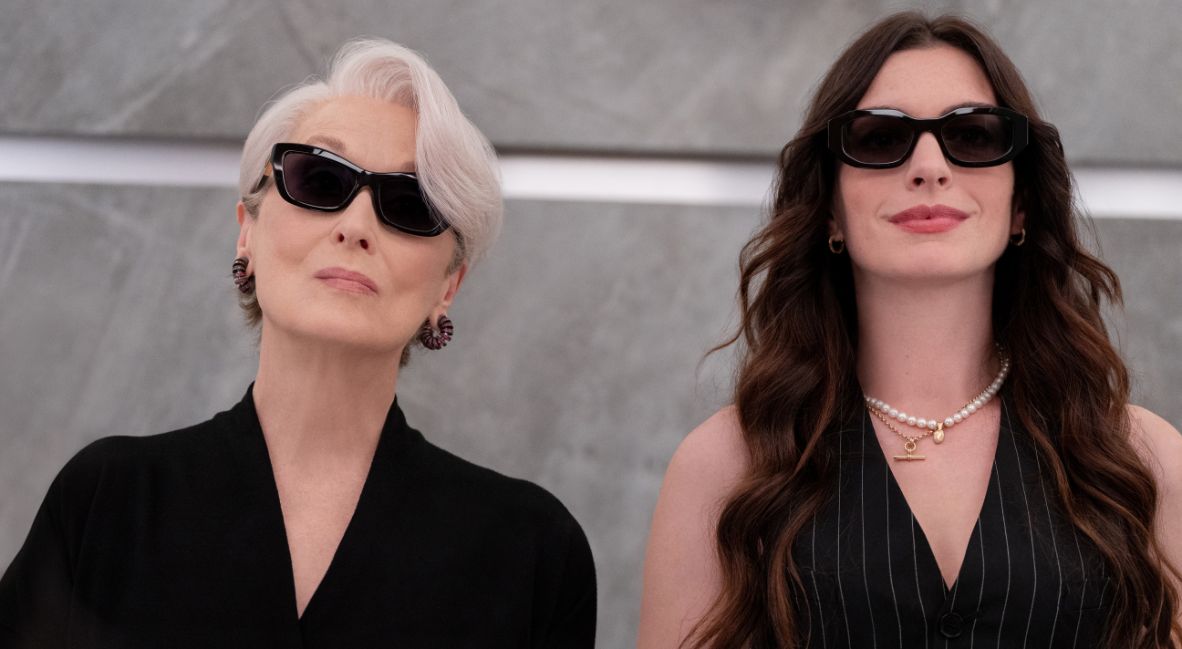
With wistful self-indulgence and a smattering of smug pride at its own championing, The Devil Wears Prada 2 proudly declares the obvious truth: journalism matters. Stories and art created by people matter. This is an easy message to get behind, considering (gestures vaguely), you know.
If times are tough out there for legacy media, then independent outlets and their very sleepy, overcaffeinated writers are hanging on by a thread, driven by spite and love of the game. It does, unquestionably, matter to have a wide-release film condemn the actions of malignant business bros who don’t see art for what it is, but as another asset to control and move.
With that said, The Devil Wears Prada 2 only half earns this rallying cry. Because while part of the movie is about the damage journalism has fought against and the way in which what’s old can never be a new moment again (heavy wink, heavy sigh), the rest is a montage of fabulous places with fabulous people in glamorous gowns. That, plus some shoehorned in romance, a rushed grab at third-act drama, and nonsensical plotting that forces the story along.
Twenty years have passed since Andy Sachs first worked at Runway, an influential magazine run by Editor-in-Chief Miranda Priestly, a riff on Vogue mogul Anna Wintour. Having seemingly left the world of fashion behind her, Andy has traded in her Chanel for slouchy blazers and trips to Milan for fashion week in favor of globe-trotting, following the “story” wanderlust.
Sure, she might have to whack her faucet to get clean running water in her bathroom, but I have to kick my license plate to get the lights to turn on, and my dryer hasn’t worked for six months. We’re all struggling. At least she’s getting paid to go to cool places in the meantime.
Fate leads Andy, Miranda, Nigel, and Emily back together.
Armed with a genuinely fabulous artillery of sunglasses at her disposal, the best hair game since Nicole Kidman and Sandra Bullock in Practical Magic (another millennial favorite about to sour), Hathaway’s Andy remains plucky, self-righteous, and determined in her path as a journalist. Her passion burns so bright that, even when dealing with being laid off from a paper that cut its entire journalistic team, fate leads her to being offered a new chance. She can return to Runway and work as the Features Editor, a plan that will both save face for the brand while giving Andy a chance to revitalize an outlet she both revered and, at the time of the original film, had outgrown.
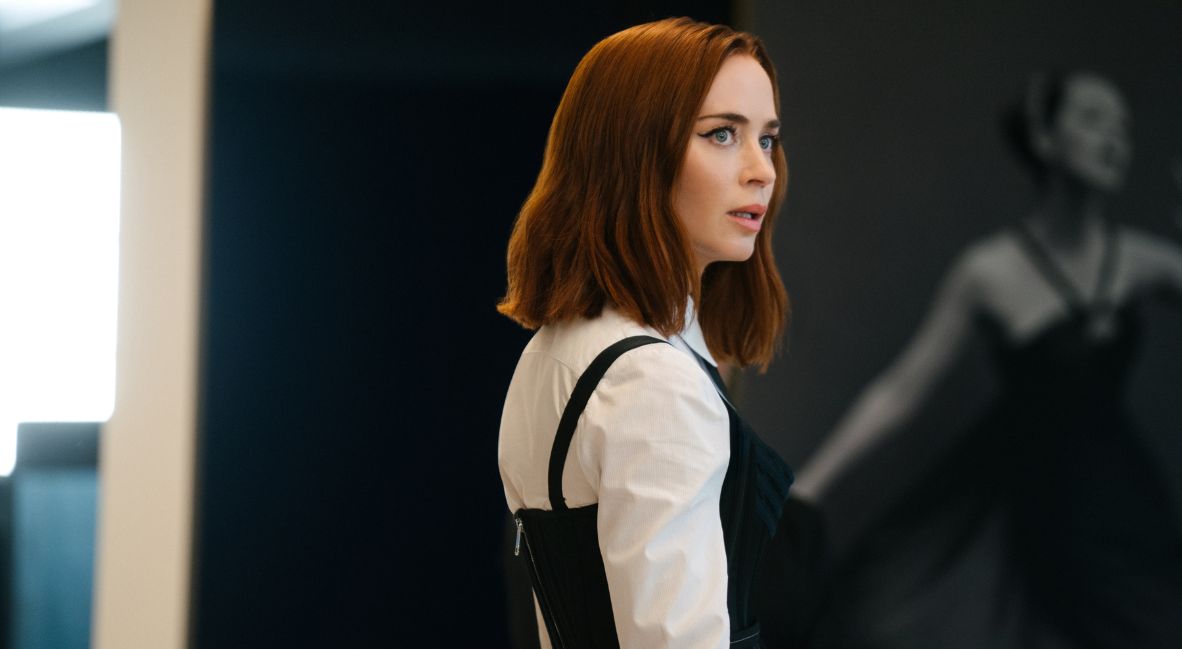
This leads her directly back onto Miranda’s path, who, given current times and less leniency toward general awfulness, is kinder to her assistants – though it’s always with a pull of the lip, an eyeroll, and a dissatisfied flip of her coifed bangs. But she holds contempt for Andy, not even acknowledging her (at first), even though her work partner, Nigel (Stanley Tucci, a bright light of inextinguishable charm), and ex-employee, Emily (Emily Blunt), clock her immediately.
Emily is now the head of a luxury brand, having shifted focus from steering the conversation to selling to its audience. They’ve all, for the most part, changed in subtle ways, but the more familiar tics remain the same. But what’s damning is how, which chafes against the overall quality. Because it’s nice at times to see a Miranda who is less on the prowl, how they defang her plays in a way that only serves the narrative rather than feeling like a natural form of growth.
It takes far too long for the script to find an end goal.
Meanwhile, Andy remains so clumsy, so out of sorts with this world of fashion, that despite her efforts and achievements, she feels frozen in place. Surely we’ve moved beyond the era of not recognizing Hathaway’s sheer, intrinsic poise and cheekbones? She is no longer (she never was) the ugly duckling ready to blossom.
The Devil Wears Prada 2 takes too long to figure out what it’s all about. Because at first, it seems like former wunderkind, now seasoned reporter, Andy is getting her second chance to tell meaningful stories at Runway that matter. And that’s it, that’s the rub.
But it continually transforms, from dabbling in book deals (with an appearance from Crazy Ex-Girlfriend star, Rachel Bloom – we need more of her), to the haute couture of fashion week planning, to the weird, frictionless animosity between former coworkers, Andy and Emily, to the tonal shift in the last leg as Runway must find a new path to the future. And it’s that last note that is the main backbone of the story, but it takes more than half the film to get there.
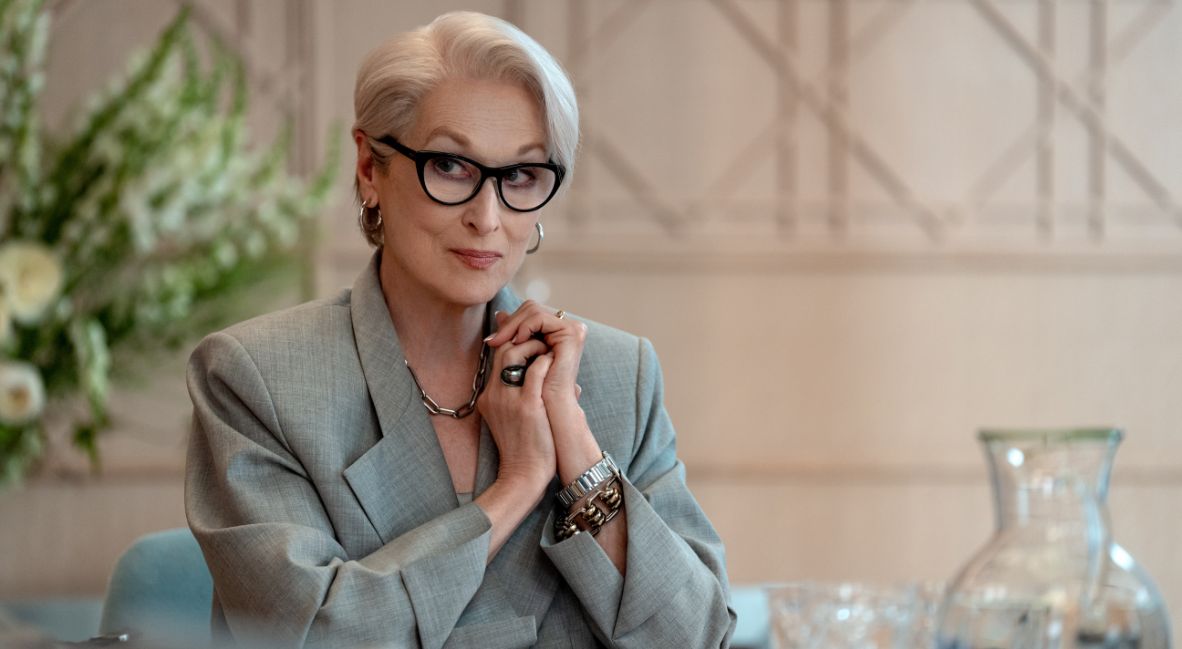
Meryl Streep and Emily Blunt assume their roles with naturalism and humor.
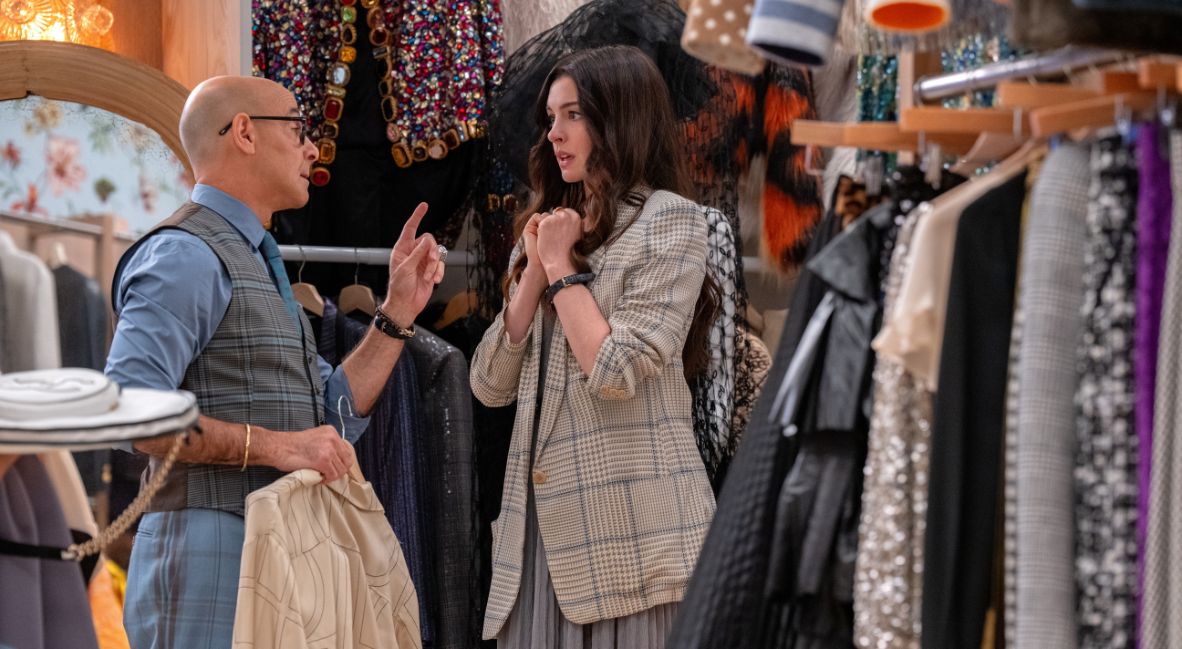
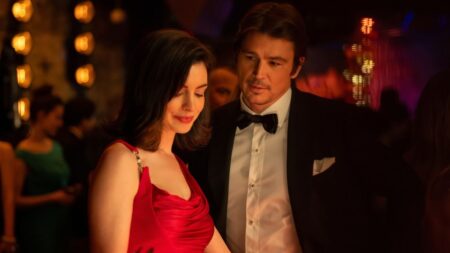
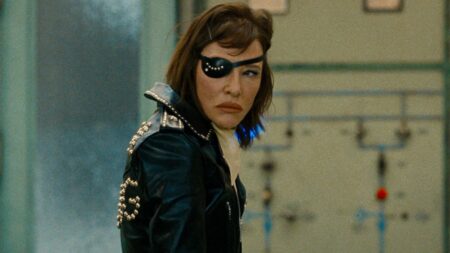
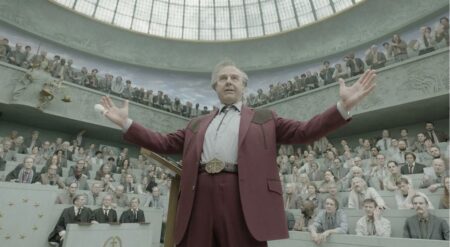
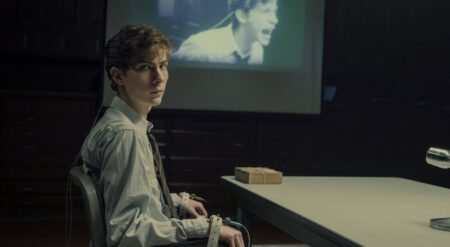
It’s where actors such as B.J. Novack (obnoxious and forgettable) and Justin Theroux (shockingly unrecognizable) appear, to show how men with money dispose of fine art with emotionless ease. And while there’s a push for real, emotional drama by the end, it ends on a limp note because we haven’t witnessed any of the threads that lead us there.
Credit where credit is due – Streep slinks back into this role with ease, even when the writing is trying to work against her. There remains no actress alive who can quirk her mouth to tell such a story with a micro-expression. Even watching her talk through a clenched jaw, a pained smile plastered on her face, is a joy. Blunt also assumes her role as the wannabe mean girl with a soft center, Emily’s insecurities seemingly ruling every aspect of her life, even now in her forties with two kids.
Hathaway, meanwhile, is another story. There is no question she possesses star-caliber presence and has for a long while. It was (checks notes) three days ago when I called her an “enigmatic performer, straddling the line between theater-kid sincerity and tender, bruised depths.”
Anne Hathaway is a star who doesn’t always understand her specific strengths.
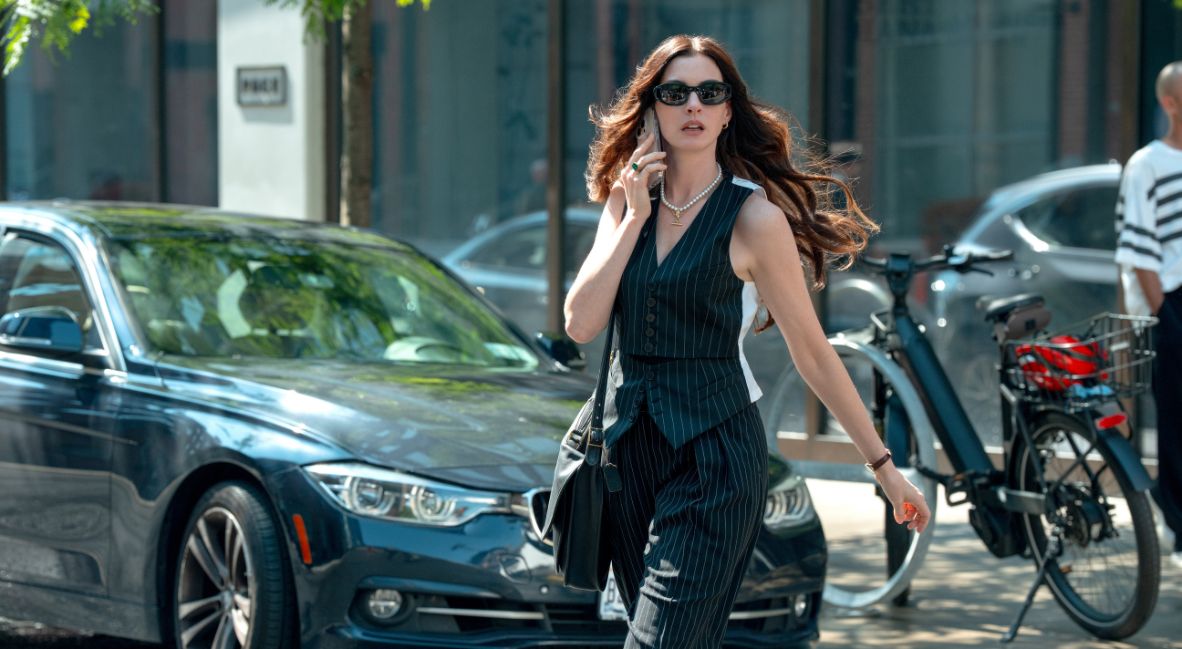
Regardless of the performance, we like to watch her. But she leans too hard into earnestness and wide-eyed naivety that work in opposition to who Andy is meant to be at this point. You’re either expecting her to break into song or hug every person she comes across, and it doesn’t work. It feels less like a character and more like a concoction of Hathaway’s star persona, which has weathered undue criticism over the course of her career.
With a feel-good, can-do attitude and a warm, gooey center, The Devil Wears Prada 2 is desperate for you to like it. Many will. Nostalgia has long moved past simply targeting Star Wars fans.
We want joy, and fluff, and a movie with such exhaustive sincerity is going to strike us just where our world-weary bones need it. But the film, despite the chemistry between the core cast, some resolved dynamics that carry over from the first film, and thoughtful analysis of the current state of media, is emotionally hollow. It has all the markers of a good, triumphant story, but with none of the signs of stress or wear and tear.
The Devil Wears Prada 2 channels hope at the cost of an engaging story.
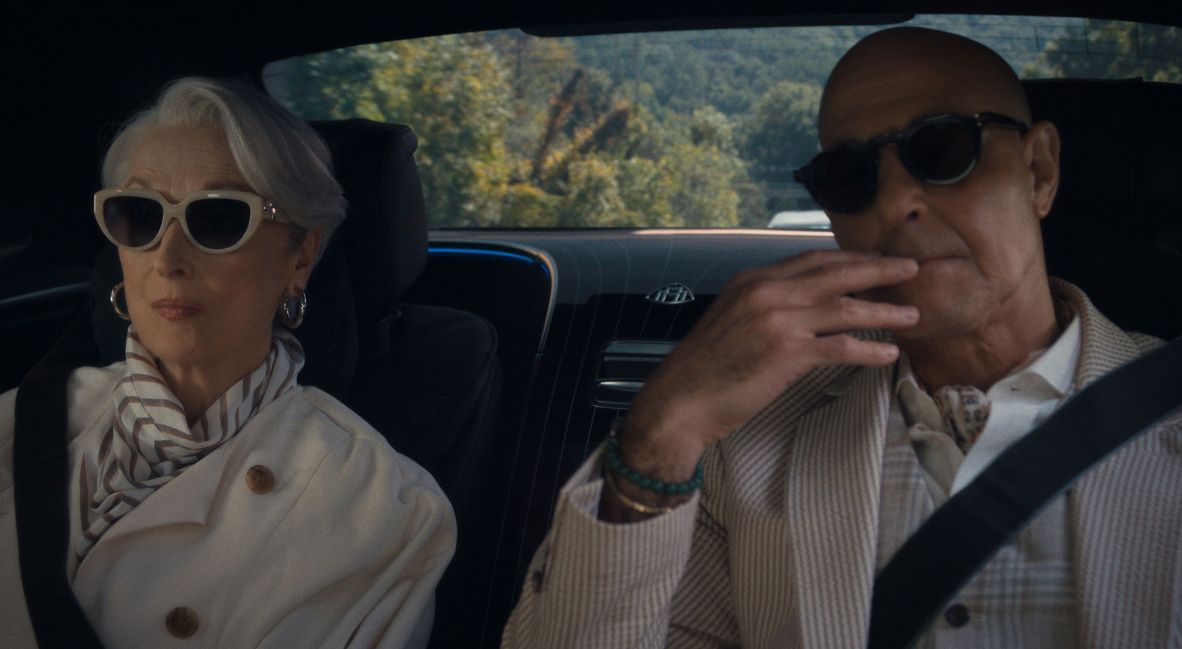
It’s too cloying, too cute. It wants to be both a rehash of the original, without the poorly aged gags, and also soften what made the original such a cultural touchstone of the time, earned or not. In its completion, The Devil Wears Prada 2 both feels archaic while shockingly relevant to the times.
No, most outlets won’t fund your trip to an overseas event. That is a bygone era. But yes, this friendly, fangless feel-good cheer is what people want most right now. So is the film good, or simply the escapism people need? Is this just Barbie packaging, but instead of dressing the stars in bright pinks, the studio is trouncing them all out of blacks, whites, and reds?
Rushed yet overstaying its welcome, The Devil Wears Prada 2 proves, again, the diminishing returns of stories born from nostalgia. There are high points, and even some laughs. But it lacks naturalism or ease, a story too weighed down by pop-cultural osmosis and a calorie-deficient studio marketing system that cares more about making a branding moment than a film that, start to finish, earns its keep. The gowns are beautiful, the hair envy strong. But it all amounts to a blip on the radar, with a straight-to-streaming afterglow.
The Devil Wears Prada 2 arrives in theaters May 1.
The Devil Wears Prada 2
-
Rating - 4/104/10
TL;DR
The Devil Wears Prada 2 proves, again, the diminishing returns of stories born from nostalgia… it lacks naturalism or ease, a story too weighed down by pop-cultural osmosis and a calorie-deficient studio marketing system that cares more about making a moment than a film that, start to finish, earns its keep.