


Logging into a deceased or sick family member’s old computer is a daunting experience, even without the prospect of the supernatural entering the equation, yet that’s exactly what Desktop Explorer asks would-be detectives to do. Inheriting their sick uncle’s computer dating back to the 90s, players will have to dig through puzzles masquerading as text files, images, and more.
As they peel back the layers in the Outersloth-published title, players will learn about the computer’s previous users and their digital footprints, thanks to the mysterious program labeled Desktop Explorer. Developer Recurring Dream succeeds in capturing the feel of the 90s, the early internet, and the looming horror and dread inspired by internet urban legends.
Starting with your uncle’s profile on the computer, players learn the basic rules that govern most of the puzzles in Desktop Explorer, showing them how to manipulate files or find hidden information to proceed. For the most part, Desktop Explorer does a great job of revealing additional methods for solving puzzles, many of which are useful for the rest of the game. Even when I found myself at a dead end, the game was sure to let me know that I had all the available information needed to succeed.
Desktop Explorer’s screen horror is more than a gimmick.
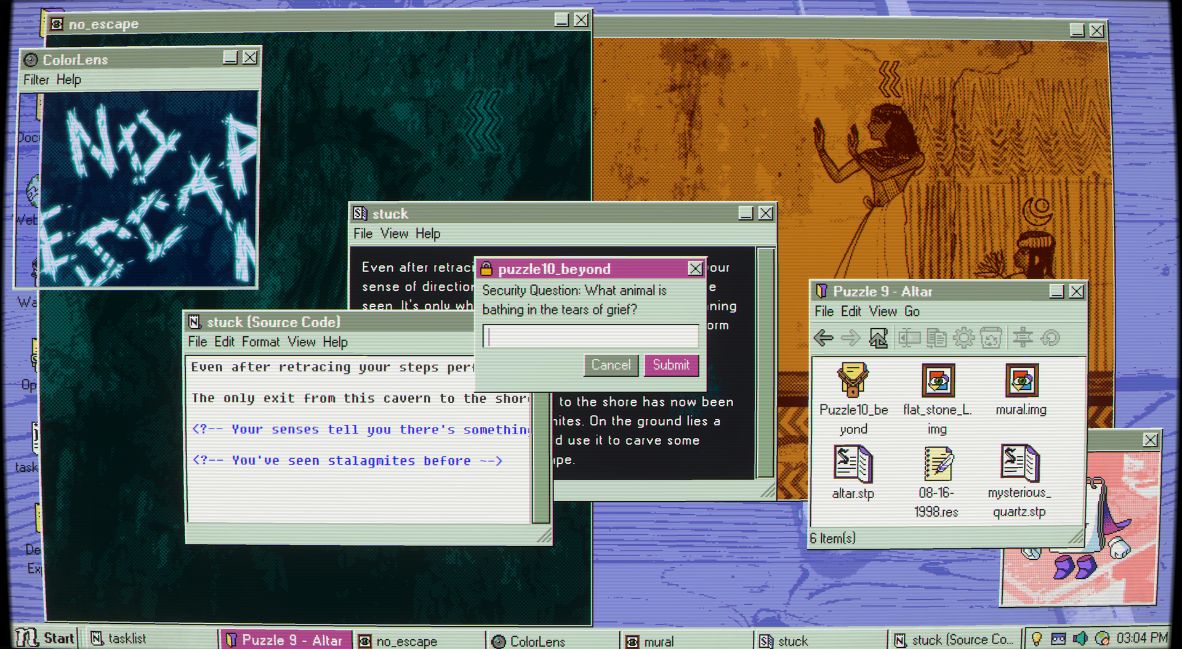
Sure enough, once you turn over the same clues enough times, you catch a glimpse of the solution, though the hint system is frustrating in the event you are well and truly stuck. Pizarro, Desktop Explorer’s avatar or mascot, will offer hints that almost pertain exclusively to general computer knowledge.
Thankfully, this is the developer’s way of hinting at solutions without directly giving you the answer, but sometimes a more direct approach would be appreciated. Having completed the game in spite of these hints, there are many solutions that will make you feel like a genius when you finally crack the code. The puzzles in Desktop Explorer are some of the most clever I’ve encountered in any game, requiring players to change file formats, duplicate files, and much more.
Players will eventually progress through three User profiles on the computer, each one with its own brand of nostalgia. The highlight of Desktop Explorer is the middle section, allowing players to explore a now defunct website for younger users, hearkening back to the Neopets and Geocities era of the early internet.
Exploring this section felt like reliving a creepy pasta, where a formerly friendly website was inexplicably infused with some malevolent force, displaying disturbing visuals and creating an oppressive atmosphere as you wander the now-abandoned digital spaces.
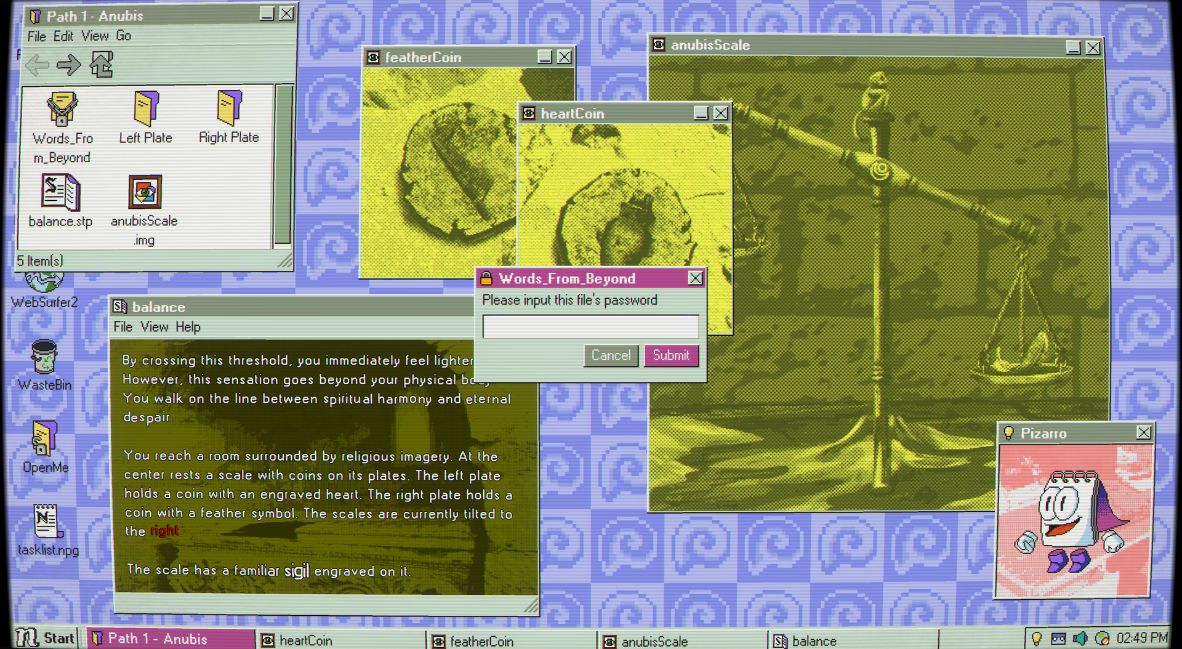
Desktop Explorer’s themes are explored through each of the puzzles, revealing memories, conversations, and more to build up a picture of each character. Grief, guilt, isolation, and the feeling that your identity is out of your hands are all prevalent throughout the game, and Recurring Dream does a stellar job of tying them and the characters together.
The horror comes not only from the seemingly supernatural activity infecting the computer, but from discovering diary entries for each character. These are discovered out of order, giving us a few snapshots of each character’s life before fleshing them out, and in at least one case the horror stems from both the game’s atmosphere and from an understanding of internet safety and the consequences that can befall someone who is careless online.
The resulting journey is fraught with heartbreak and, as someone learning the information years after the fact, an almost painful yearning to return to a simpler time to make everything right. Desktop Explorer doesn’t always stick the landing, though; some of the puzzles are baffling, and to make matters worse, the final segment of the game refuses to give any hints at all, citing that the player was “smart enough to get that far” so they shouldn’t need it.
Desktop Explorer is built on heartbreak.
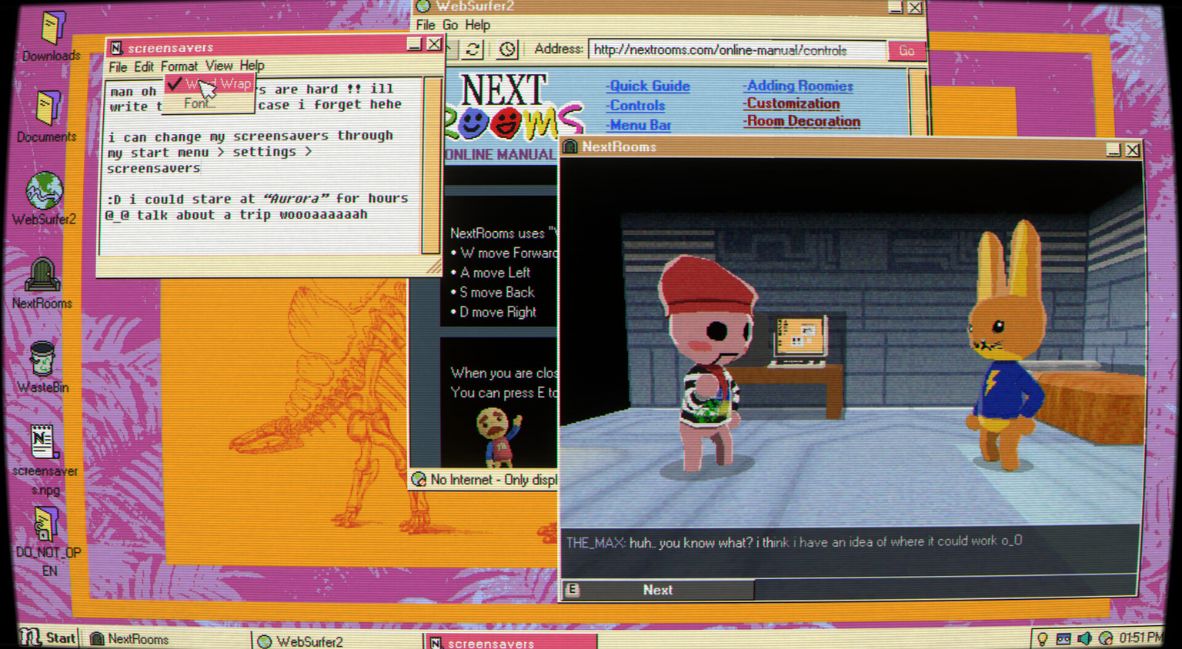
The game gives players many tools over the course of the story, so by the end it’s hard to know which tricks you’ll need for each of the final puzzles. Further, while the story is, for the most part, a fun but creepy throwback to 90s tech culture, a few of the story beats are a bit too outlandish, diminishing some of the horror that comes from Desktop Explorer.
One particularly irksome section that had me stumped was due to an important file vanishing, leaving me unable to complete the puzzle it was tied to. After realizing that wasn’t supposed to happen, I managed to reacquire the file and solve the puzzle, a frustrating bug that has thankfully since been patched out.
Despite these setbacks, Desktop Explorer remains one of the most enjoyable and clever puzzle games I’ve played. The puzzles are unique, the horror is ever-present, and the aesthetic will appeal to anyone who grew up in the 90s, complete with a nostalgic soundtrack that suits each segment of the story.
Desktop Explorer is available now on PC.
Desktop Explorer
-
Rating - 8.5/108.5/10
TL;DR
Despite some setbacks, Desktop Explorer remains one of the most enjoyable and clever puzzle games I’ve played. The puzzles are unique, the horror is ever-present, and the aesthetic will appeal to anyone who grew up in the 90s, complete with a nostalgic soundtrack that suits each segment of the story.