

It’s easy to forget you’re holding your breath throughout the emotionally raw and unsettlingly sinister Leviticus. Written and directed by Adrian Chiarella and starring Joe Bird (Talk to Me) and Stacy Clausen, the film sticks to a deceptively simple premise as two teenage boys must seek a way to escape and outrun a violent entity that takes the form of the person they desire – each other. This is made even more fraught, considering they live in a homophobic, religious community whose members are constantly wary of one another.
It makes for a rich, thematic core that spins the wheel of self-destruction through prejudice and fear-mongering. When we first meet Naim (Bird) and Ryan (Clausen), they’re safe in one another’s space. They’re one another’s refuges, holed away and uninhibited in a way the rest of their town won’t allow.
The threat is present from the moment the film begins in the face of a community. It grows nastier still when the one place they felt safe is threatened, no longer able to enjoy their intimacy and, in a larger sense, chased away from their own queer identities because to be attracted to one another is to be attacked.
Leviticus is a stunning debut for filmmaker Adrian Chiarella.
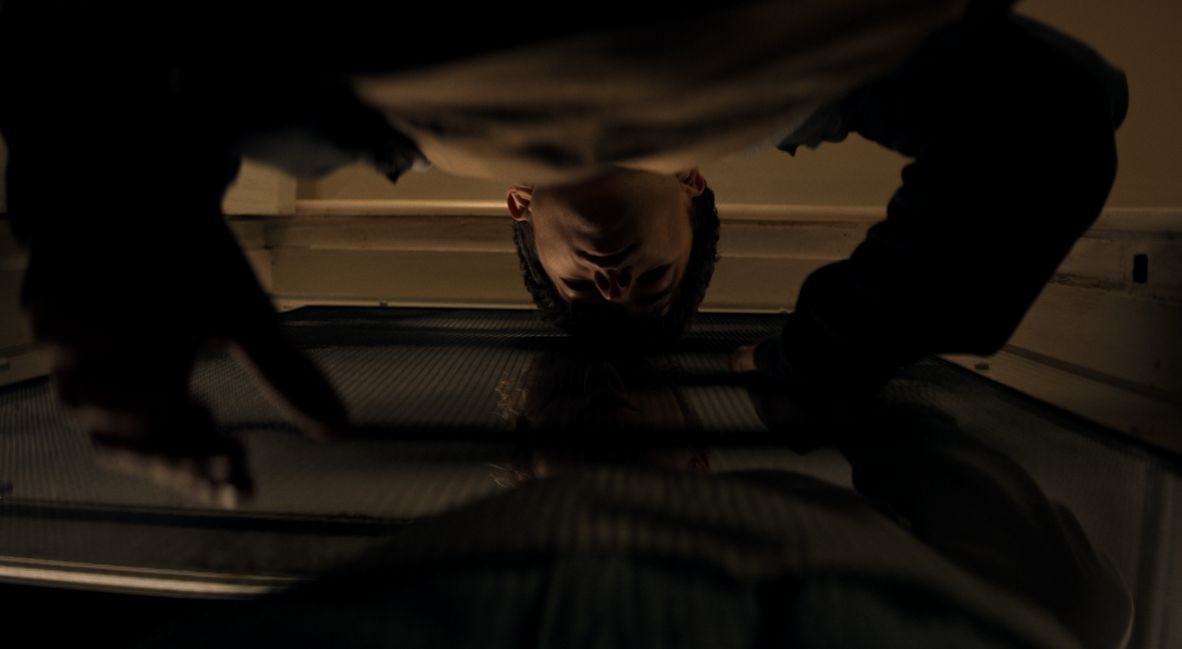
It’s that convergence of queer coming-of-age story, young love, and all-encompassing horror that gives the film its pulse. And, according to filmmaker Adrian Chiarella, that balance was crucial.
“It was a balance that we worked on constantly through the whole process. I kept revising and polishing the script around that. Through the rehearsal process and the shoot. Even in the edit. Right up until just before we finished the film and went to Sundance, I think I unlocked the edit and changed a couple of things in that bus scene.”
The bus scene in question is a pivotal moment in Leviticus. On the one hand, it’s stressful because, up until this point, we’ve been taught not to trust Naim or Ryan at face value. However, there’s also a sweet defiance to it. Chiarella called it the “center of the whole relationship and the journey that the two characters were on,” saying, “We really needed to make sure that we were getting the balance right between the sense of [whether] I should be feeling dread right now or should I be inspired by the passion between the two of them. It was a really great challenge as a filmmaker to face that.”
The chemistry between Joe Bird and Stacy Clausen is essential in building the unsettling, stirring effect.
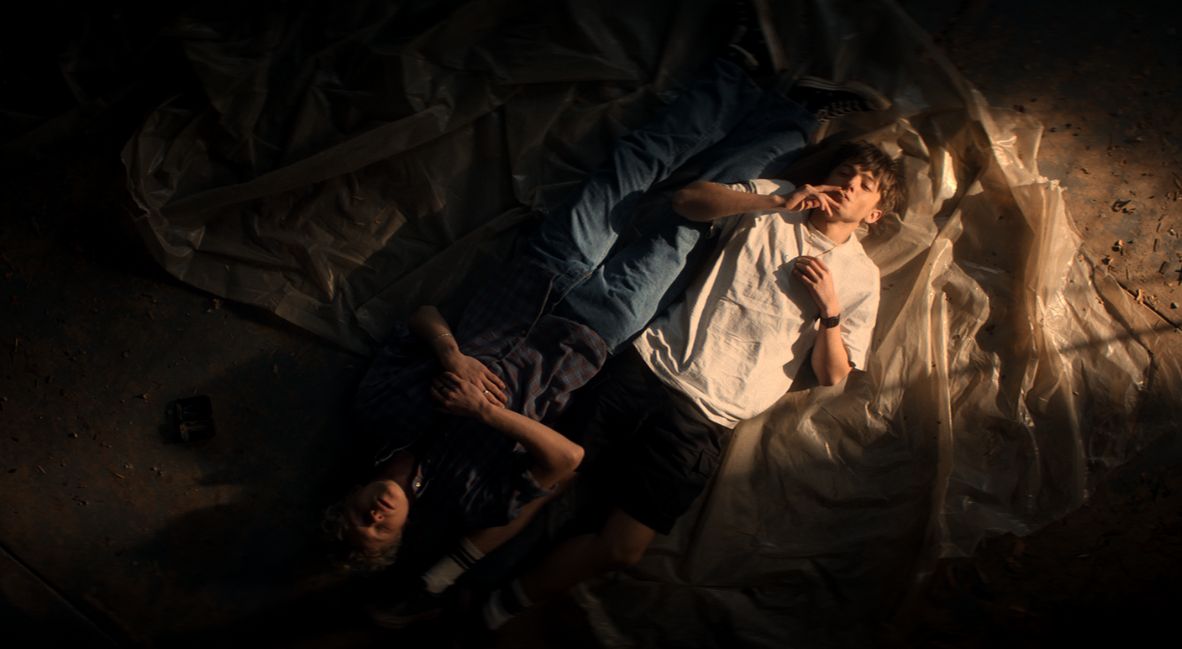
A scene like that, and the film as a whole, works because of the two characters at its center and the tender longing they tentatively hold between one another. We both want to root for the characters while also fearing for their livelihoods when they throw caution to the wind. None of it would work without the chemistry, something carefully built between the cast and crew, with Joe Bird and Stacy Clausen given activities in pre-production to take part in to get to know one another, along with questions to develop a bond.
“Adrian was kind of a puppeteer with that stuff,” Bird said, recalling that a lot of the activities were rooted in a sense of fear. “He wanted us to be scared around each other and to be our most vulnerable selves around each other so that we could build that connection and that rapport.”
As an audience, we have to believe in their mutual yearning, no matter the horrific scenarios they face or the personal demons they’re running from (literally and figuratively). We need to believe that there’s a gravitational pull between us, orbiting one another despite the many obstacles in our path.
Joe Bird commends the film’s fearless nature.
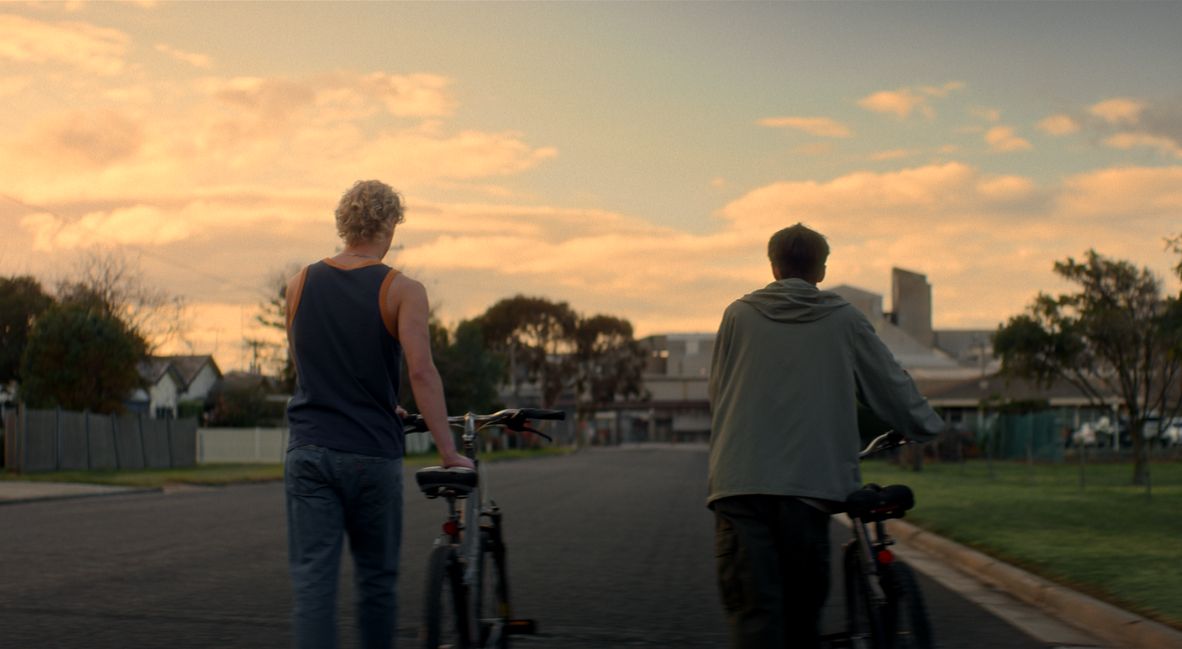
It comes back to that sense of balance. Chiarella noted that it was important for Bird and Clausen to be able to make themselves available to one another. “This film is both a horror movie and a love story. I don’t think either side of the story would work without that connection. Obviously, the love story is not going to work, but that entity, that horror movie monster we came up with, the lore of it, and the mechanism of it only work if you buy into the connection between the two characters.”
There’s a frankness to the film, an unwillingness to shy away from some of humanity’s greatest misdeeds and fear of the unknown. And it’s made more apparent when that ‘unknown’ begins to wear the face of community outsiders. When talking about what first drew him to the script, Bird recalled a scene that was one of his and Chiarella’s favorites, even though it was ultimately cut.
“I remember it was the fifth or sixth page, and there’s a scene where Naim is in a dam, and all of these other people, the schoolboys Hunter and Ryan, are throwing mud at him and forcing him to sing the national anthem.
It was this kind of bullying scene, and I was like, ‘Wow, that is so confronting and so messed up.’ And I was like, ‘Yeah,’ this script isn’t afraid to go places. And if they’re not afraid to go places in like, the first three minutes, then the film [as a whole] isn’t afraid to have its meaning instilled into the film.”
Finding catharsis in horror.
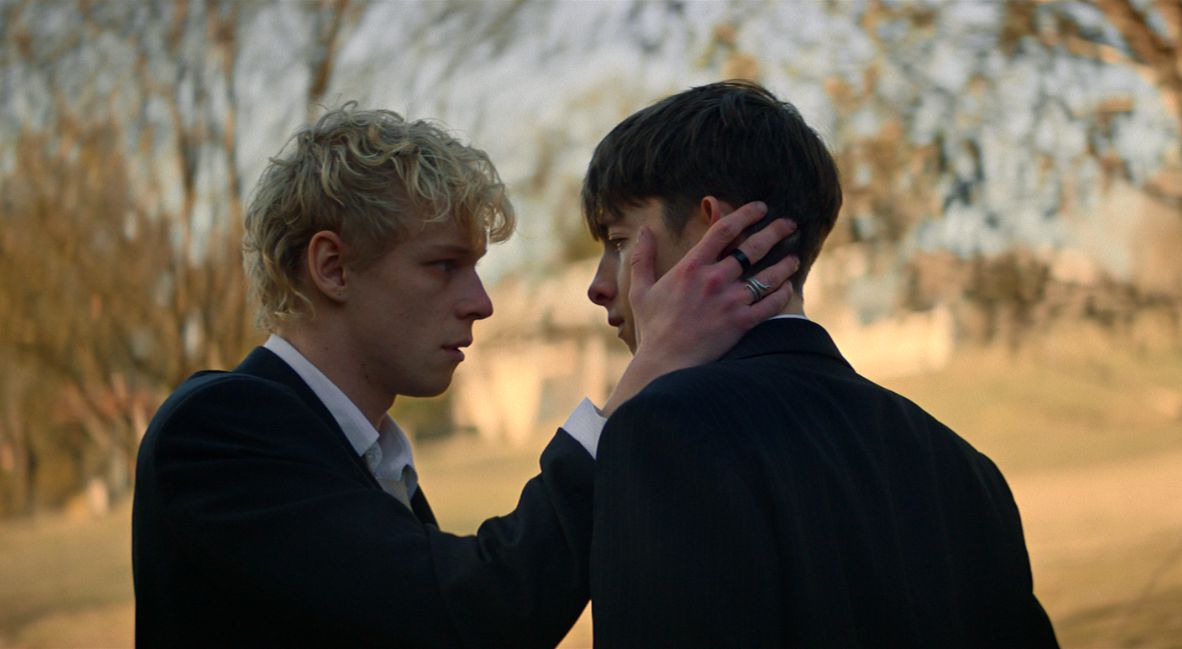
Queer identity has a longstanding presence in horror films, something that Chiarella is aware of. And it’s part of what makes Leviticus such an engrossing experience because there are so many layers upon layers of generational heartache, bigotry, and religious trauma that exude from the vacant planes of their town. A town of dirt, dry air, and church, where the object of your affection is just as likely to burn the earth for you as they are to sacrifice you for their own protection. This fear of the unknown and the fear of self is pivotal to both the film and to horror as a genre, especially in how they meet in the middle.
It was no single moment that truly inspired the film, Chiarella said, but “years and years” of context and experience. “It’s one of those where there are some ideas that you can pinpoint on a particular moment and some that have just been brewing with you over years or even, sometimes, your lifetime [laughs] if you think about it. ”
For Chiarella, a horror fan as a kid, there was no shortage of inspiration. “When I speak to other people, queer people who, while growing up, were going through all of those same feelings and emotions that you’re going through, horror movies were the ones we turned to. That was a big part of the inspiration of the film, thinking back to that era of movies I loved a lot and found a lot of comfort in, in an odd way, even though they were such tense films at the same time.”
Leviticus is now in theaters.