

D-topia comes at a time in our history where dystopia arguably already exists, and a truly utopian society seems like an impossible ideal. Marumittu Games, a studio founded by former Professor Layton devs, plays with that idea in a narrative adventure full of simple puzzles. In my 20-minute demo at Summer Game Fest 2026, D-topia effectively builds its interpretation of “utopia” through calming puzzle-solving and sustains engagement through clear objectives.
D-topia, perhaps unsurprisingly, gets its name from its setting. It’s one of many districts in the Utopia Project, which aims to create the “greatest happiness for the greatest number of people.” Out of all those districts, D-topia apparently comes closest to meeting that goal. In this world, everything is decided by an omniscient AI. From the details like your schedule, to your occupation, and where you live are part of its design.
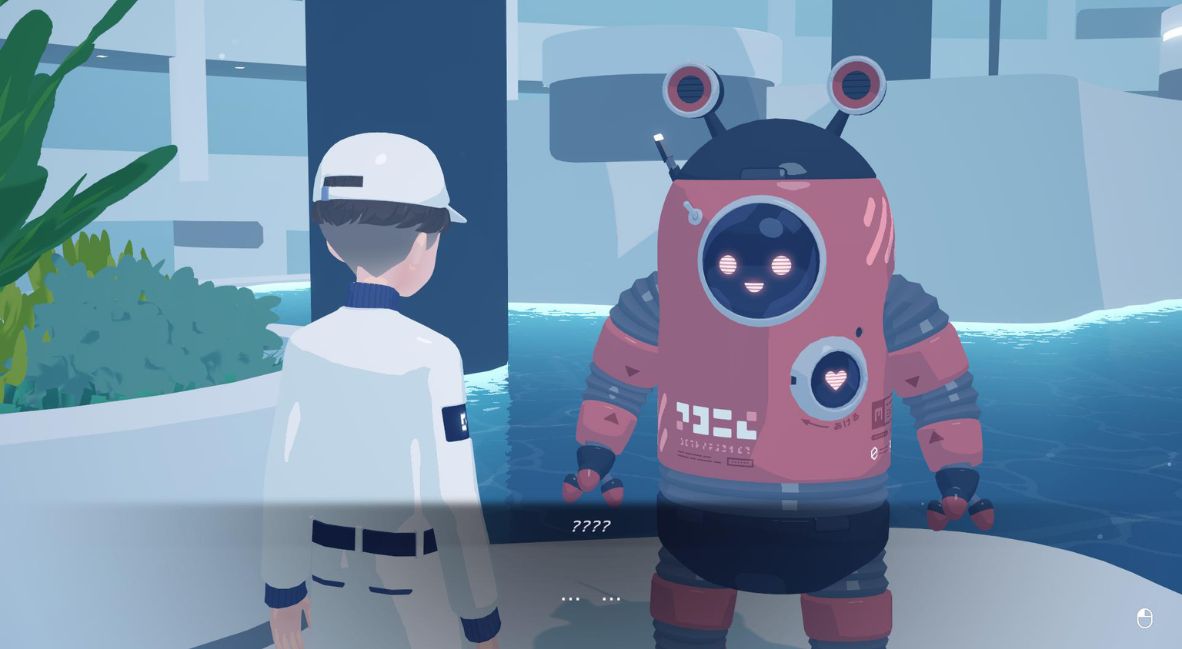
In the game you play as No. 46, the 46th inhabitant approved to live in D-topia. During the demo, I didn’t learn much more about them than their role as a Facility Mechanic or “Facilitator.” This type of role is in charge of fixing Troids, the robot workers in D-topia, and other defects that can only be seen in an alternate plane called the Block Side. No. 46 can enter the Block Side through a machine that turns it “on,” freezing real life in place (i.e., people don’t move but are still visible) and exposing previously hidden abnormalities.
D-Topia is a calming and gentle-paced puzzle adventure.
Fixing defects takes place inside puzzles. Most of the puzzles I solved throughout the demo involved matching numbered blocks with squares labeled with the same numbers. Sometimes, that meant moving the block through a passage that increased the number (i.e., turning 1 into 2) or temporarily leaving the block in one area to open a blocked passage, then moving it again to properly match a labeled square.
Even outside set working hours, No. 46 explores D-topia by interacting and agreeing to take on a variety of tasks from strangers. One of those tasks involved jumping into the Block Side and solving puzzles similar to those No. 46 sees at work.
In that sense, the game easily lives up to its advertisement for a “gentle-paced puzzle adventure.” It doesn’t take long for the players to solve the block-based puzzles and it doesn’t require a higher understanding of math and similarly difficult subjects.
The lighthearted story shows signs of darker depths.
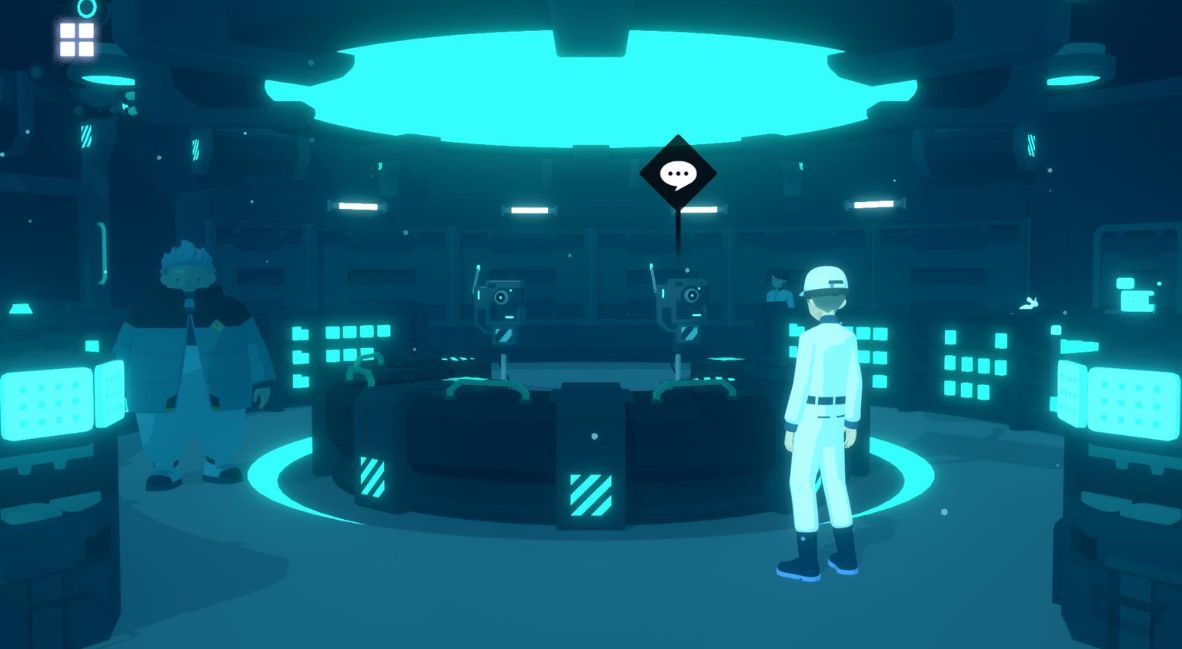
D-Topia fits the expectations of a cozy game. Through its aesthetic it adopts cutesy, minimalist graphics in a colorful and well-designed world. It may not come with the expected farming, dating, and crafting seen in a typical cozy game, but the puzzles and life-sim gameplay make it easy to imagine playing it before going to bed or during study breaks when you need some down time. And, more than anything, if you’re interested in the story, it sells.
The story as players first get acclimated seems lighthearted at first. However, the framing of the narrative and how it plays out suggests that the game may have something more sinister underneath its glowing reputation. After fixing a malfunctioning Shop Troid from the Block Side, a mysterious watcher claims to be investigating No. 46 for an unknown reason. Even from the very start, claiming that D-Topia is “perfect” or a “paradise” should be enough to trigger the red alarm of any proper cynic.
For that hook alone, D-Topia is worth recommending for narrative gaming fans who enjoy light puzzle gameplay between the scenes.