

Out of the Blue Games and Kwalee were a bright part of 2020 with their release of Call of the Sea. Six years and an Unreal Engine release later, they’re back with Call of the Elder Gods, a direct sequel to their hit narrative puzzle adventure. As the name suggests, the game is heavily rooted in Lovecraftian mythos. This time, the story is much more upfront about its ties to the occult and ancient knowledge.
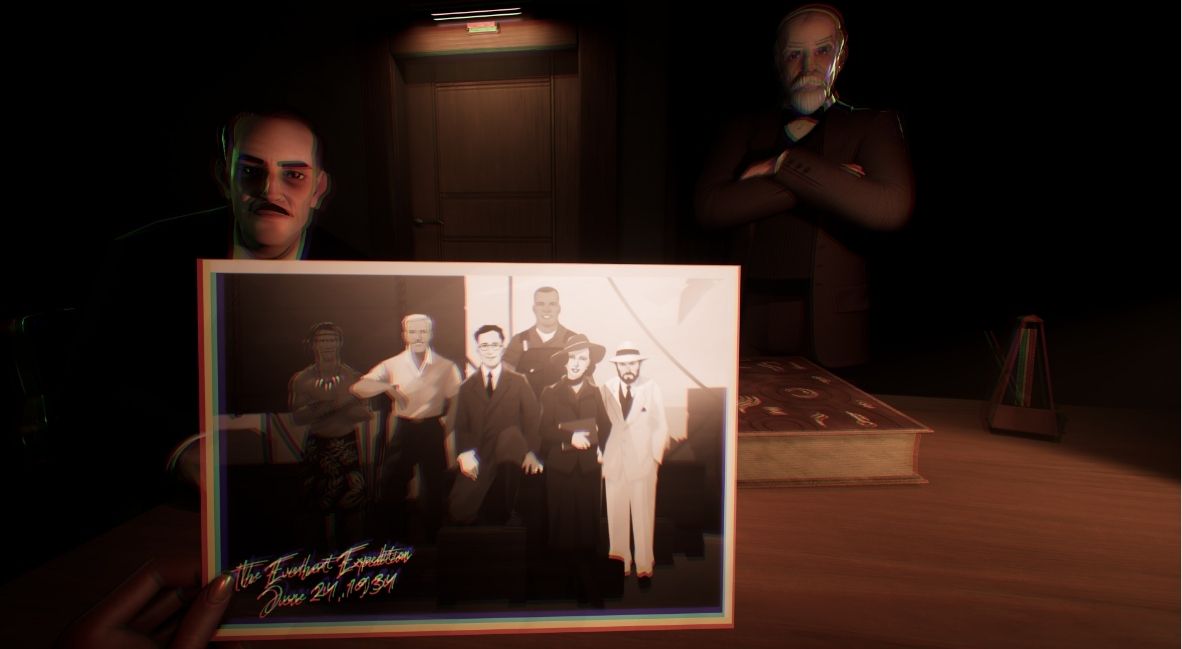
Many years after the end of Call of the Sea, Call of the Elder Gods begins. You play as Evangeline Drayton, a college student who’s to meet with the lone survivor of the first game, Professor Harry Everhart. Evangeline has been cursed by dreams of a mysterious world and an idol full of black goo. Yet when they were scheduled to meet, Harry was attacked by a cult.
Harry has been hiding much more about what happened on the island, where he lost his wife and crew years earlier, which can help the cult achieve its limitless goals. With Evangeline’s help, Harry survives the attack, and they go on an Indiana Jones–like globe-trotting adventure to put a stop to whatever the cult hopes to achieve.
Call of the Elder Gods picks up six years after Call of the Sea.
What is odd with the sequel is how complete the first game felt. There was an open-ended aspect to the first’s ending. Particularly with how there was no real set outcome. One felt more right than the other, yet either felt viable after connecting with Norah over the course of the game.
Call of the Elder Gods chooses the ending where Norah accepts the transformation, becoming who she was born to be. Taking place years later, building on her husband, Harry’s, depression after losing his wife, and inadvertently sending the crew to save his wife to their doom. What adds even more to the story is Evangeline. She has a lot deeper ties than even she and Harry know at first.
Their apprehensive partnership builds onto something grander as the story unfolds. Harry, a crotchety older man who’s lost those he loved and is haunted by numerous ghosts, and Evangeline, a young, optimistic woman who wants to just figure out what’s wrong with her from the prime expert. What really shines through is that they need each other to get to the bottom of the cult that’s roped them into their ulterior motives.
Call of the Elder Gods adapts portions of Operation Paperclip.
And where the story eventually goes is entirely unexpected, yet it makes complete sense in this universe. Even some additions tend to make historical sense, too. Like the involvement of the Nazis and their research into the occult. As in the involvement of the Ahnenerbe, the SS’s pseudoscientific division.
The remnants of their influence are heavily involved in several parts of the game in quite interesting ways. Call of the Elder Gods even uses portions of Operation Paperclip to show how America’s use of Nazi intelligence continued to harm its people.
Ultimately, the game speaks on how even Old Gods aren’t the truest form of evil that affects Earth. Not by a long shot. Drawing those parallels helps highlight the involvement of horrendously evil groups and the lengths they went to trying to get their hands on limitless power.
Call of the Elder Gods wears its influences on its sleeve.
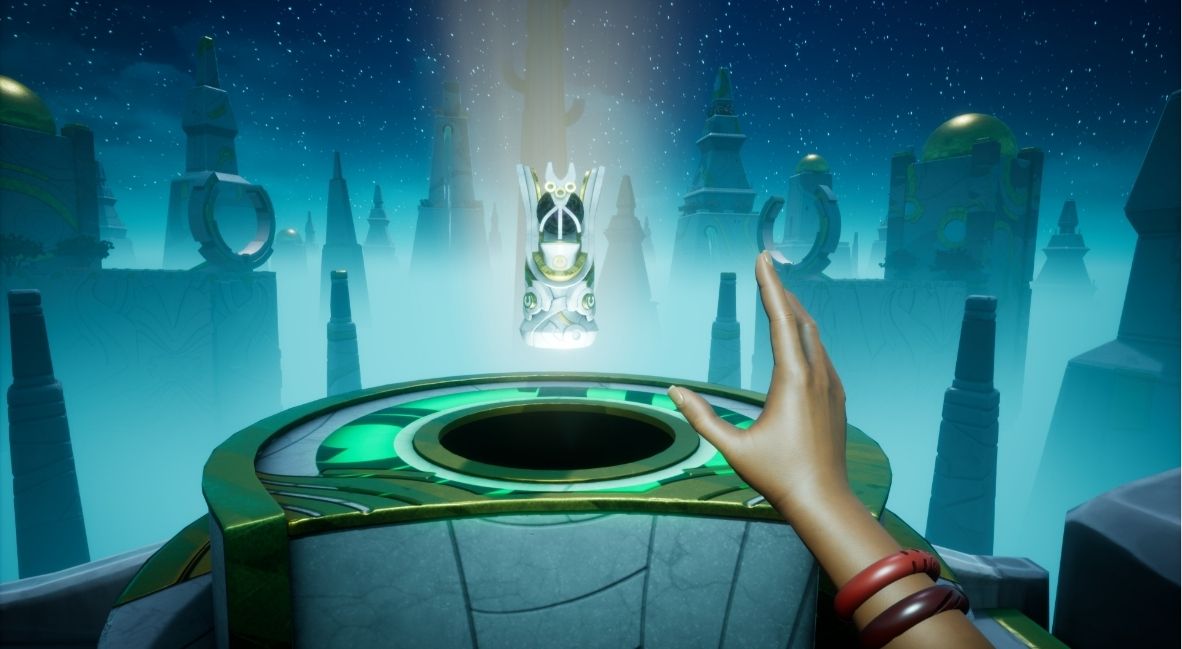
One big change from its predecessor is the narrative structure. Call of the Elder Gods is much more influenced by the likes of Indiana Jones. It even uses map-jumping to show the pair’s travels, finding the clues, and following the cult’s tracks. Having numerous settings throughout the world helps with the game’s pacing. It never drags on because the scenery changes quite regularly. From an old mansion to a snowy Icelandic fjord, even to the cult’s headquarters, to find out more about them, every area is quite distinct, including wholly unique puzzles that keep you on your toes.
If you’re familiar with Call of the Sea, there isn’t much difference in gameplay. If you aren’t, well, expect a narrative-focused adventure full of detailed puzzles to solve. There are no enemies, there’s no combat, and the stakes may feel high from a narrative standpoint, but from a gameplay perspective, it’s quite chill.
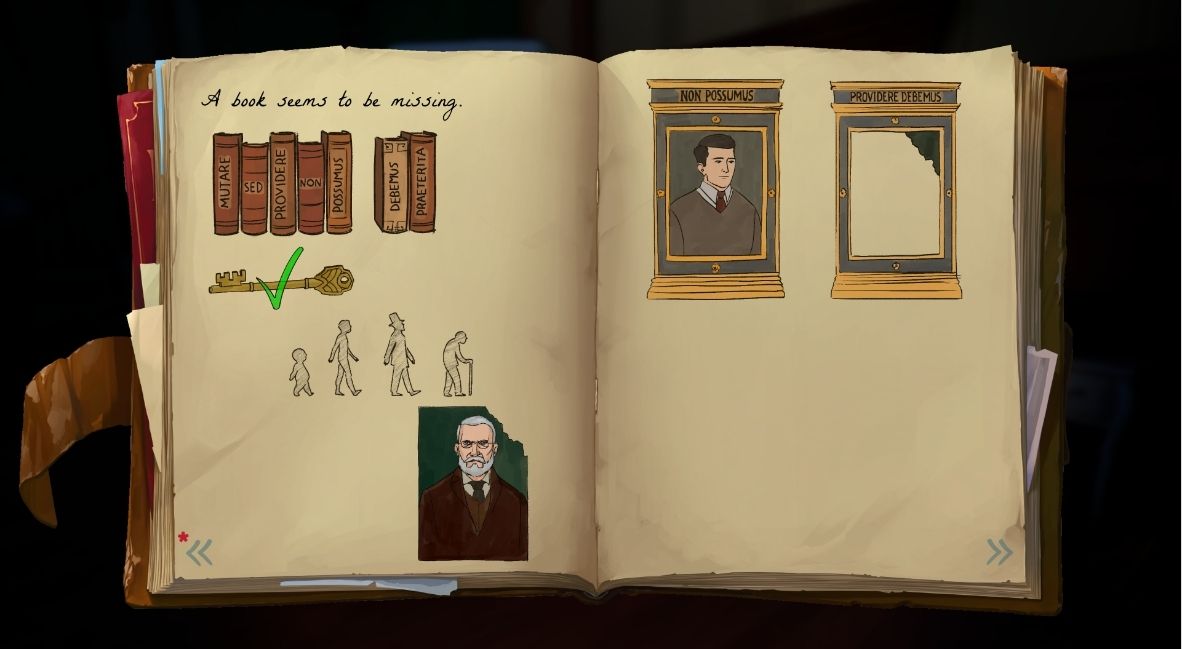
You investigate an area, find clues as to how you solve some mysterious combination that even you may not know where to put at first, then execute it. What helps is that you’re given a journal that tracks everything you collect that’s of any importance for any of the environmental puzzles.
Evangeline and Harry talk too much.
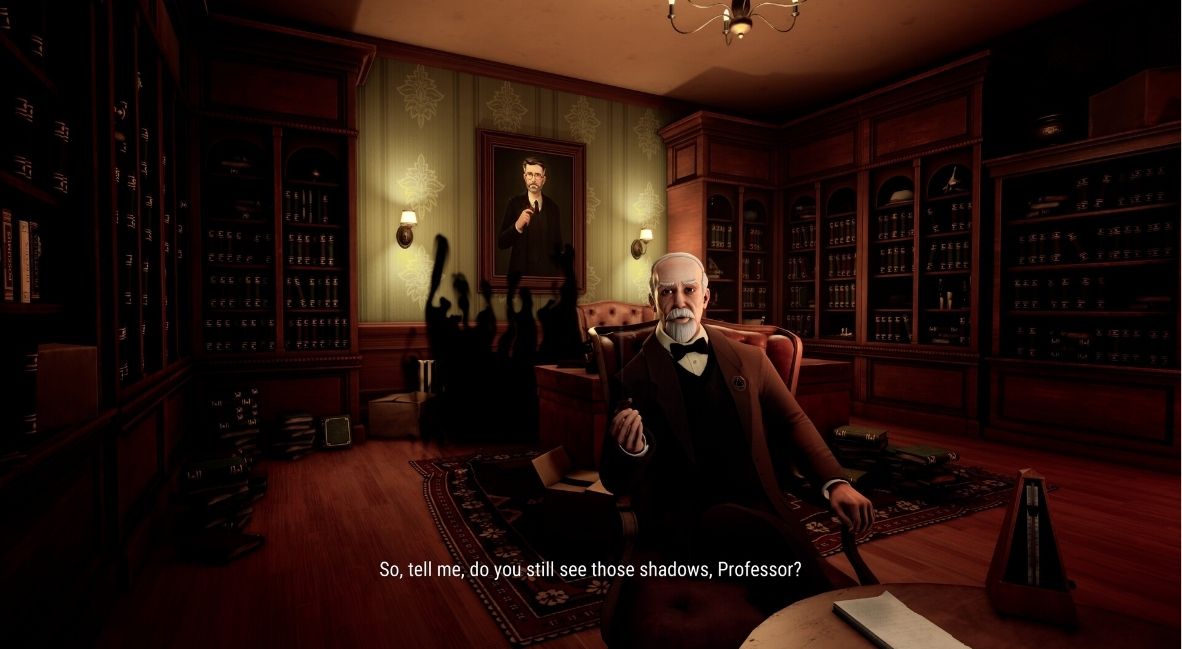
Some clues require detailed reading or even thinking outside of the box to piece together. Yet no solution is too outlandish or requires fourth-wall-breaking thinking to overcome them. Every solution is findable and able to be pieced togther with every resource you’re given. If you think you’re missing something, searching more in the area will probably lead to the one last clue that ties everything together.
However, there are some downsides to the gameplay. Specifically, with how much Evangeline and Harry talk whenever you click on any interactable item. Sometimes, their dialogue even has additional clues that may help with coming up with a solution. But the talking stops whenever you click away. So if you’re frenzy-clicking, you’ll just get quick snippets of a conversation. It would be nice if the talking kept going as you explore more, instead of being tied directly to objects and notes scattered throughout.
Similarly, the basic movement is quite slow. You’ll be holding down the run button a lot to speed things up, especially in some areas that get fairly expansive. A run toggle would help immensely, or heck, just speed up how fast Evangeline and Harry move.
Out of the Blue have outdone themselves yet again with their visual work.
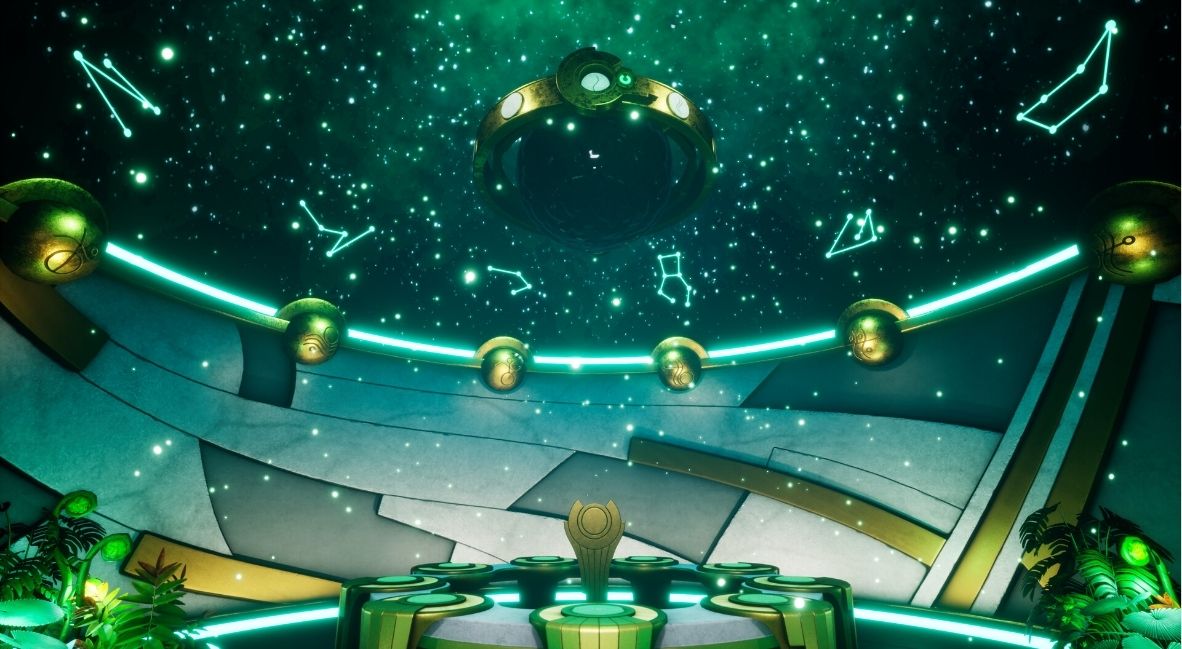
The slow pace isn’t always bad, though. With an atmospheric soundtrack and a gorgeously cartoonish art style, Call of the Elder Gods is beautiful to take in for the eyes and ears. Out of the Blue have outdone themselves yet again with their visual work. While many games have issues running on Unreal Engine 5, this game seems simple enough; yet it uses the engine to its fullest and avoids those same hangups.
Lastly, the hint system is such a nice aid for when some things may be too difficult to piece together. The hint system is always present in the menus and doesn’t affect the gameplay in any way besides helping you along. Every hint starts obtuse enough to nudge you in the right direction, and eventually just spells out a solution so you can advance. Just having that be there is nice—like a hint in an escape room nice. You may not need them, but it’s good to have that option for when even sleep can’t help you come up with a solution.
As its name implies, Call of the Elder Gods is much more blatant about its Lovecraftian roots. While it is quite a short game, no moment overstays its welcome. Puzzles, especially, are as complex as the first game, yet focus more on a primary puzzle to solve to advance, rather than solving a bunch of mini ones to build up to a grander final puzzle to advance.
Out of the Blue has delivered another feast for the eyes and ears.
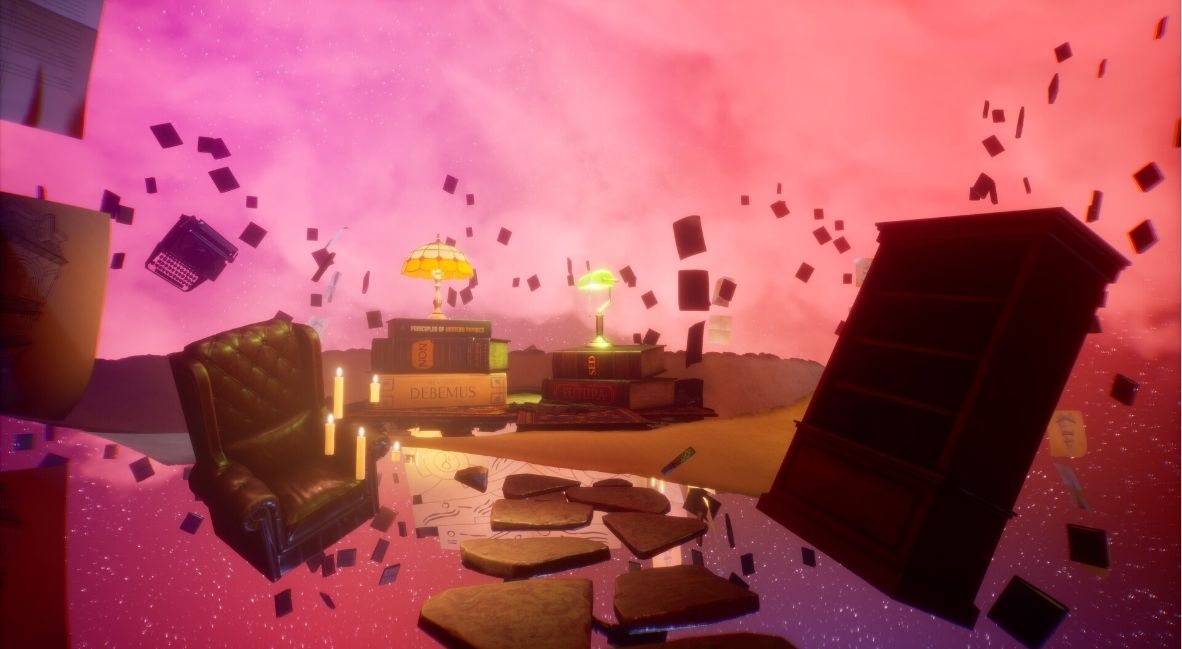
This game may feel odd at first as a sequel to a game with a complete, open-ended story, but it proves its worth with an intriguing narrative and good voice acting for its two leads, Harry and Evangeline. Both have deep ties to the events of the game. And their knowledge together is the only way they overcome the mysteries and put a stop to a much deeper mystery than fans of the first game may expect.
Ultimately, Out of the Blue has delivered another feast for the eyes and ears in a fun, chill puzzle game that still finds ways to balance the horrors of the beyond with the horrors of our own existence.
Call of the Elder Gods is available May 12th on Xbox Series X|S, PlayStation 5, Nintendo Switch 2, and PC.
Call of the Elder Gods
-
Rating - 8.5/108.5/10
TL;DR
Out of the Blue has delivered another feast for the eyes and ears in a fun, chill puzzle game that still finds ways to balance the horrors of the beyond with the horrors of our own existence.