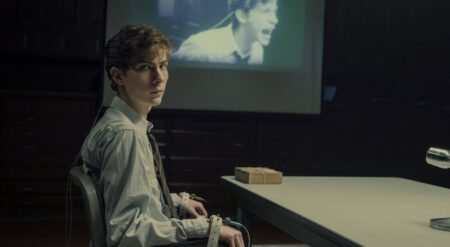


“What’s wrong?… People.” A snappy, pointed verbal riposte that anchors one of many blissfully observant moments in Mike Leigh‘s latest, intricately lived-in slice of life, Tender Loving Care. But as much as that response expresses frustration with mankind’s foibles and failings, it also holds onto the idea that other people are all we have; they’re our salvation and our damnation.
It’s a truth that has echoed across Leigh’s multi-decade dissection of working-class struggles and sits firmly at the heart of Tender Loving Care. Yet, as its multitude of layered conversations and interactions paint a charming, complex portrait of family, kinship, and aging, the spectre of death looms over each moment.
With Leigh having stated that Tender Loving Care is likely his last outing due to illness, that awareness is deeply felt across the film’s various afternoon teas and evening wines. Though both a retread and a culmination of all the class-conscious themes Leigh has cultivated across more than 15 features, Tender Loving Care astutely hones in on the simple, inescapable sadness of life being pulled along by the cold march of time, and all the changes and inevitable losses that must be embraced because of it.
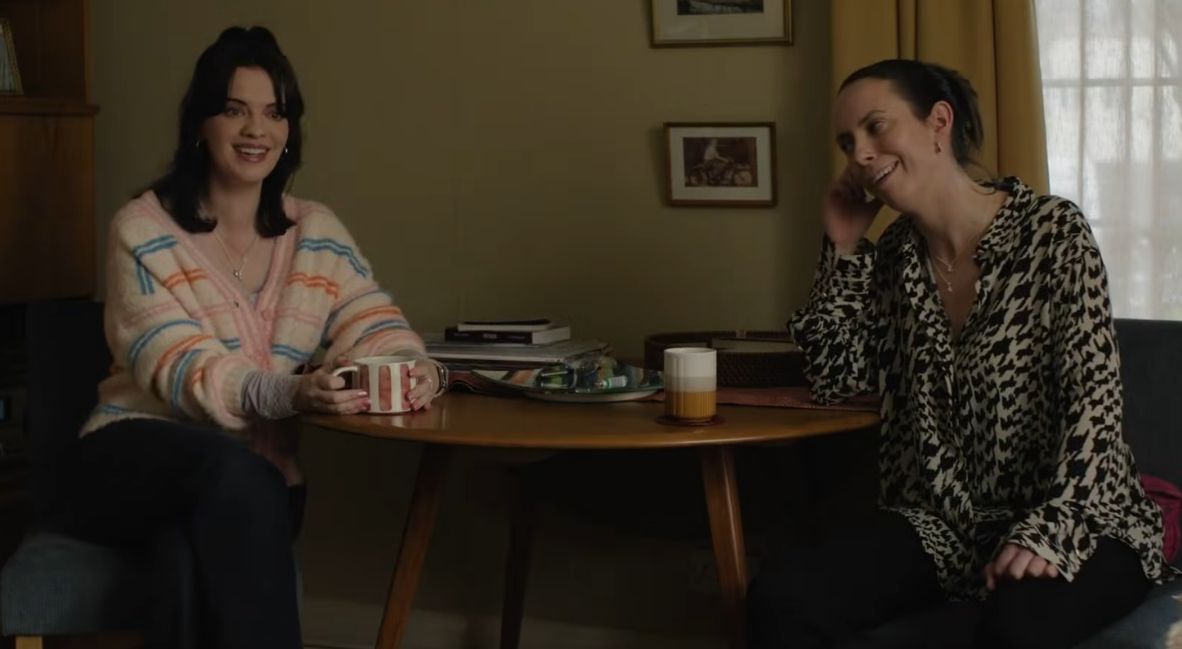
Following Amy (Kate O’Flynn), a late 30-something devoted social worker who pours her body, mind, and soul into her job to care for those in need, Leigh’s poignant screenplay finds her in flux after she splits up with her boyfriend and moves in with her bubbly lifelong friend, Rosie (Alice Bailey Johnson), who too is a social worker with a choppy dating life.
Tender Loving Care reminds us that, in all their quirks, people are all we have in the end.
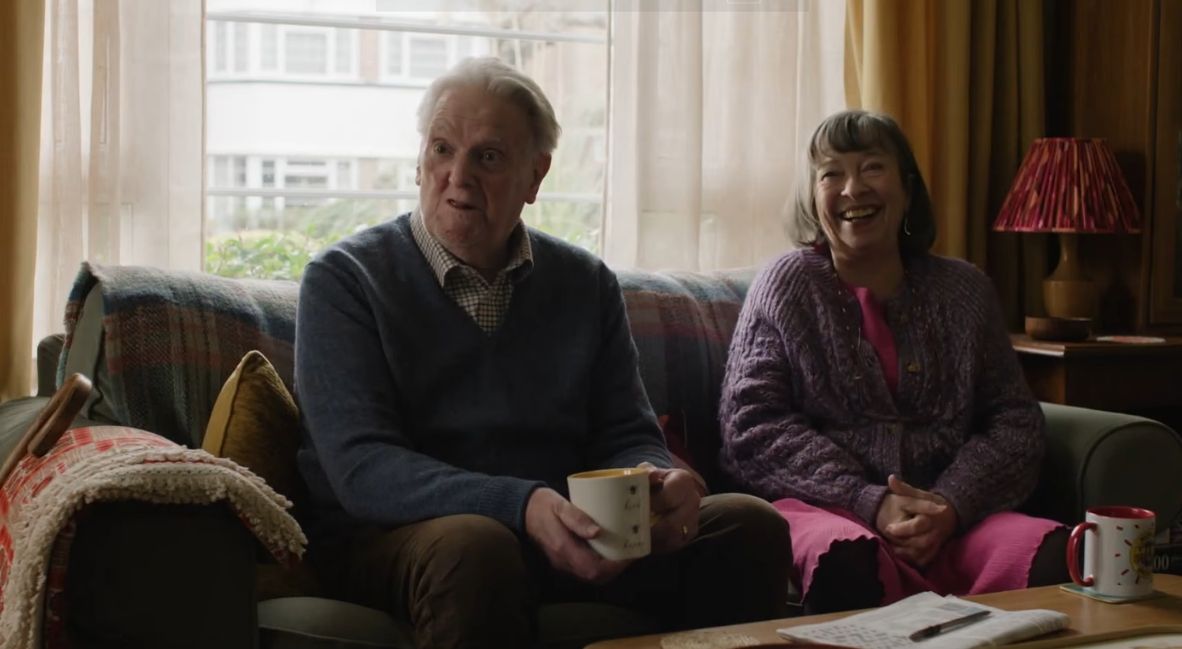
Meanwhile, Amy’s mother, Birdie (Marion Bailey), and father, Geoff (Paul Jesson), navigate the ebbs and flows of old age through endearing chats with each other and their beleaguered, jaded friends. Yet, when Geoff is suddenly diagnosed with an illness, Amy and her mother must adjust and make peace with their new reality, while Rosie becomes a jovial but crucial emotional anchor for the two women.
Across prolonged chats and tragic peeks into Amy and Rosie’s social work, Leigh’s signature, patient touch doesn’t seek drama in grand revelations and confrontations but finds it in the seemingly mundane rhythms of weathered people talking, bickering, reminiscing, and simply trying to make sense of one another. The result is an earnest coda that understands both the absurdity and tenderness of human connection: people can be the source of our deepest frustrations, but it’s the power of the smallest acts of compassion and care that ultimately lets beauty shine through the starkest realities of life.
Woven throughout each episodic encounter in Tender Loving Care is a pointed critique of a modern world where both the old and the young have been left behind, where the ever-deepening gutting of social welfare renders the titular act of “tender loving care” an exception, rather than the rule—a helpless, thankless task in the face of an overwhelming list of disregarded senior citizens and neglected youths.
But in classic Leigh fashion, such observations eschew being explicitly stated or preachily divulged, instead seamlessly emerging through an engrossing aether of loving anecdotes and sweetly tragic reminiscences, all conjured through carefully observed, tableau-like staging and composition.
The seamlessness with which Mike Leigh infuses his themes gives them room to breathe and be absorbed.
Leigh’s restrained, almost deceptively hidden sense of style breaks open the borders of its seemingly small canvas, pulsating with spirit and life as it unearths humour, heart, and humility in the subtlest of gestures and exchanges. Like all of Leigh’s work, there’s a deep well of generosity and compassion in the way he observes people here in Tender Loving Care, allowing their frustrations and absurdities to scrupulously peer into a wealth of hard-won experience that we never actually get to see unfold on screen. It all blissfully accumulates and coalesces into something both quietly devastating and unexpectedly hopeful.
Such an emotionally penetrating effect is the result of the meticulously realized humanism of Leigh’s much-discussed directorial style, which wrings such extraordinary naturalism and emotional specificity from his ensemble. As if shaped by years of history audiences aren’t privy to, O’Flynn, Bailey, and Johnson—in a star-making turn—tap into entire lives of compromise, affection, disappointment, and resilience through the subtlest glances and inflections.
With every hesitation and interjection, each moment breathlessly informs the next, allowing the film’s broader meditations on aging, care, and our ever-imminent mortality to take awe-inspiring, devastatingly intimate shape. It all coalesces into a coda like no other, with Leigh’s final, masterful time behind the lens illuminating all the different ways we care for one another. Whether we’re social workers, wives, husbands, sons, or daughters, we will all, at some point, hopefully find ourselves on either the giving or receiving end of someone’s care.
As one character softly notes, “We’re going to be okay,” you can’t help but believe it, even knowing that many won’t be. It’s a revelation only Leigh could deftly deliver at the twilight of his career here in Tender Loving Care, after a mythic canon spent probing the fractures and fault lines of everyday human connection. As the credits roll, he leaves us with a simple, fragile faith in our capacity to care for one another, even when everything feels like it’s falling apart.
Tender Loving Care screened as part of the 2026 Toronto International Film Festival.
Tender Loving Care
-
Rating - 8.5/108.5/10
TL;DR
It’s a revelation only Leigh could deftly deliver at the twilight of his career here in Tender Loving Care, after a mythic canon spent probing the fractures and fault lines of everyday human connection.