

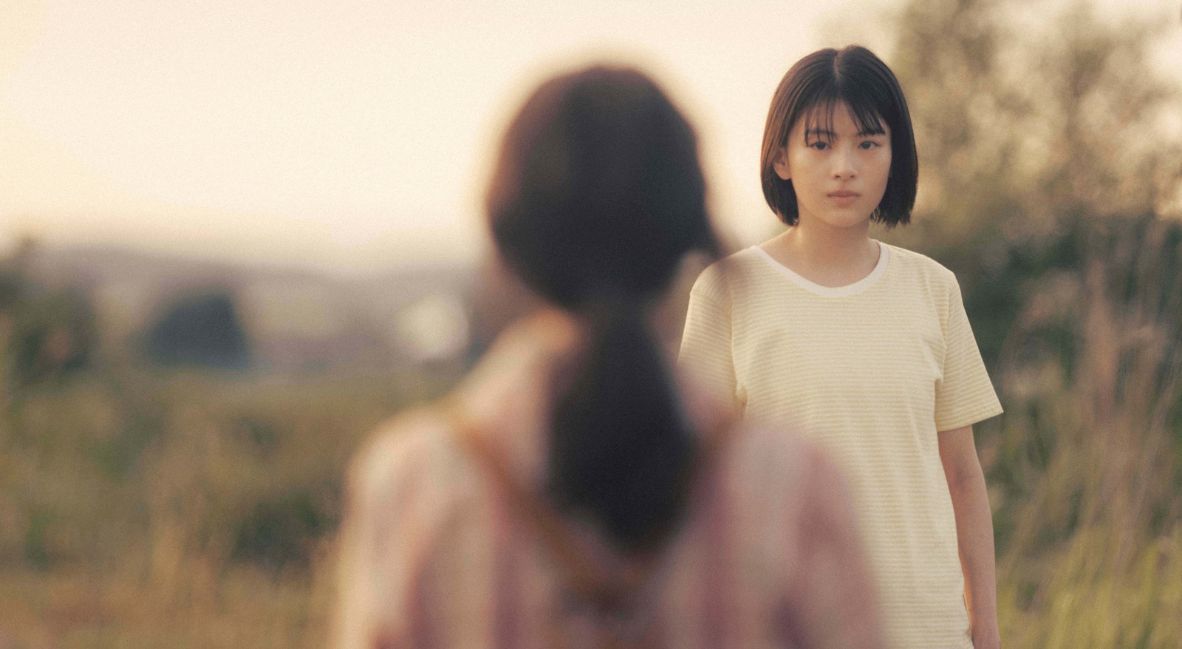
Following his lackluster efforts with the treacly, uninspired Sheep in the Box, Hirokazu Koreeda returns with a stark reminder: he’s one of our greatest living directors, and here’s proof. Look Back (2026) might not be the best adaptation of Tatsuki Fujimoto’s brilliant 2021 one-shot. It’s not even one of the filmmaker’s five best films. But it is, resoundingly, gorgeous from start to finish, with lush, evocative visuals that blend the story’s quiet contemplation with artistic cues that feel plucked straight from the backdrops of classic cinema. Painterly. Sheer artistic splendor.
Shot in 35mm film on location in Nikaho, Akita, Look Back (2026) uses a grainy lens that brings vivid life to the rural surroundings and the vast, open plains of the little town our protagonist calls home. Gifted but not without effort, when we first meet Fujino, she’s a middle schooler who already hopes of being a popular mangaka, a manga artist who will be popular enough that her original story will be serialized and adapted into an anime. To her, that’s the dream.
She meets Kyomoto, who is more naturally talented and is, at first, jealous, uninterested in befriending someone whom she sees herself as chasing. An anxiety-riddled shut-in, Kyomoto is inspired by Fujino, deigning to leave her room for the sake of meeting her idol – a girl who draws four-panel comics at school. Blissful over the interaction, Fujino travels home on the oft-trodden path that links their homes and hearts, skipping with the youthful glee of being seen. Of being seen and complimented.
Look Back (2026) finds fresh ways to bring Tatsuki Fujimoto’s brilliance to life.
It’s just one of many charming interactions between the two before the story inevitably turns to heartache. But it’s in the developing bond, and the pursuit of creation, where Look Back (2026) once again hits its greatest narrative stride.
As Fujino and Kyomoto grow from adolescence to near adulthood, and as Natsuki Deguchi and Aju Makita take the place of Furi Nanase and Rokka Okada, they form an artistic partnership, rise in popularity, and follow the path Fujino once dreamt of. With Fujino’s eye for storytelling and character creation, and Kyomoto’s lavish backdrops that enrich even the most slapstick stories, they work together, envisioning endless worlds and possibilities through the stories they imagine.
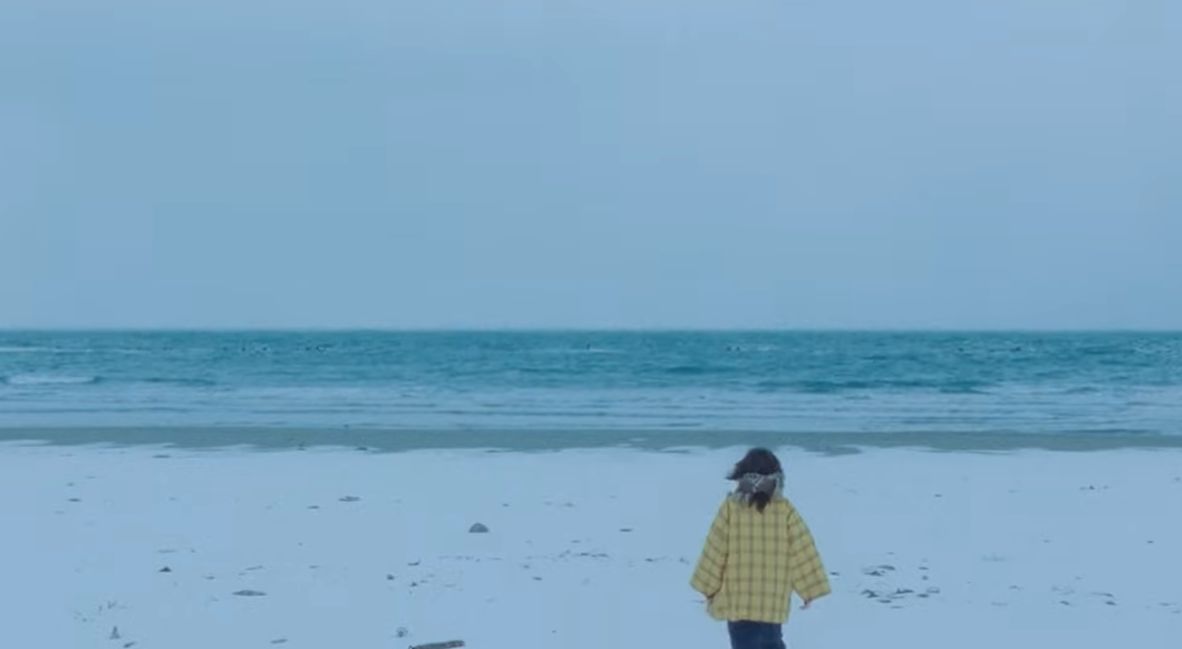
Koreeda has a keen eye for coming-of-age stories. A glance at his work shows a storyteller tapped into the furious swell of adolescent emotions, from Monster to Nobody Knows. Look Back (2026) shows a similar approach. Where Fujimoto catches the awkward cadence of a pre-teen/teenager, Koreeda finds the inner poise that convinces us of a 17-year-old’s steadfast ambition. He captures that poise and heavy sense of farewells in each walk the two take up and down that path, whether crunching underfoot with snow or stirred by a summer breeze, suggesting the next might be solo.
Hirokazu Koreeda brings expected grace to his latest coming-of-age story.

Shot on location over nearly a year and on film, with Senzo Ueno’s cinematography, the changing seasons feel tangible. Each nighttime stroll, each parting at sunset, carries more weight because of the contrasting natural colors and superb lighting. It feels like a memory, bottled and cherished. It feels like nostalgia: what-ifs and daydreams, crumpled notes in forgotten drawers, and a worn souvenir.
It looks like film. And in an era so inundated with bad lighting and carbon-copy sludge aesthetics in films with incomprehensibly big budgets, Koreeda’s vision and the texture of the plains of nature are so refreshing it’s breathtaking. Yuta Bandoh’s twinkling score adds to the effect, sweet and sweeping, taking lift off in the moments where Fujino and Kyomoto’s imaginations become airborne, nearly out of their reach.
Look Back (2026) is, without question, stunning. A gorgeously rendered, ruminative affair that brings together our teenage odd couple as they navigate their friendship and creative pursuits, begging the question of why we “draw,” why we create, when it so often chips away at us. Why make art when art has such capacity for self-destruction? Because we have to. Because it creates life.
Why do we create art?
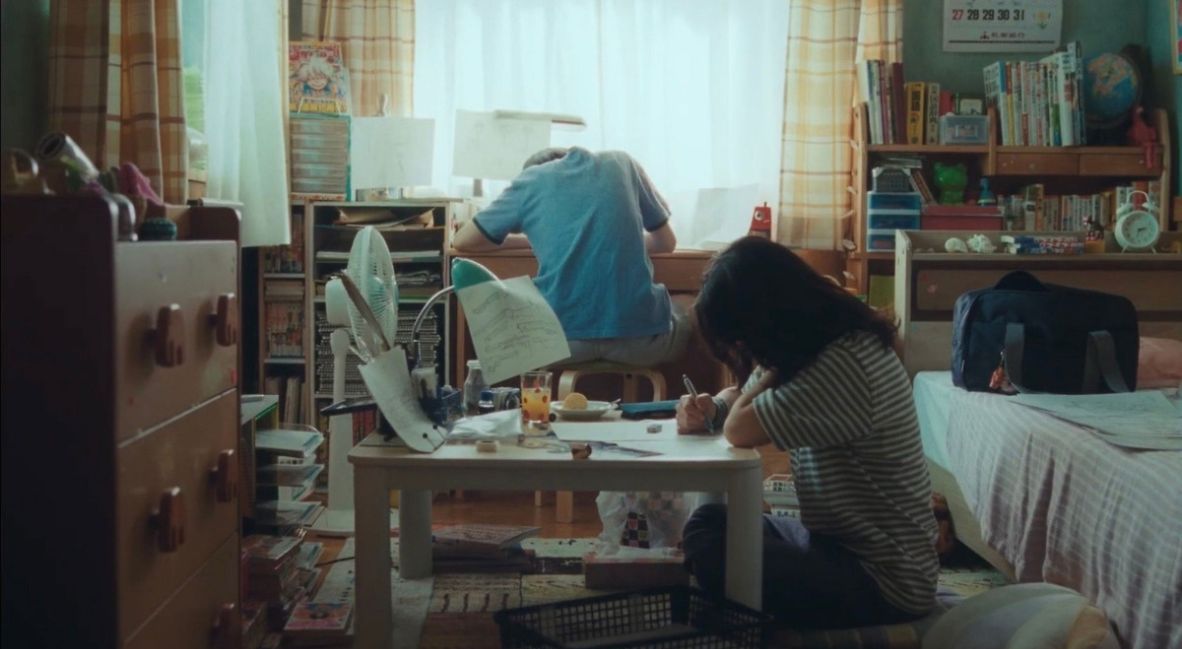
It inspires us. And it brings Kyomoto into Fujino’s life. It allowed Kyomoto to see beyond the recess of her room. Connection is the greatest source of joy art can create, and that truth burns bright, scorching the story with its uncompromising embers.
We create because we must; it drives us to recall the specific notes of our youth that make up the chorus of our lives. Look Back, in each iteration, is such a raw piece of storytelling because it hones in on that truth.
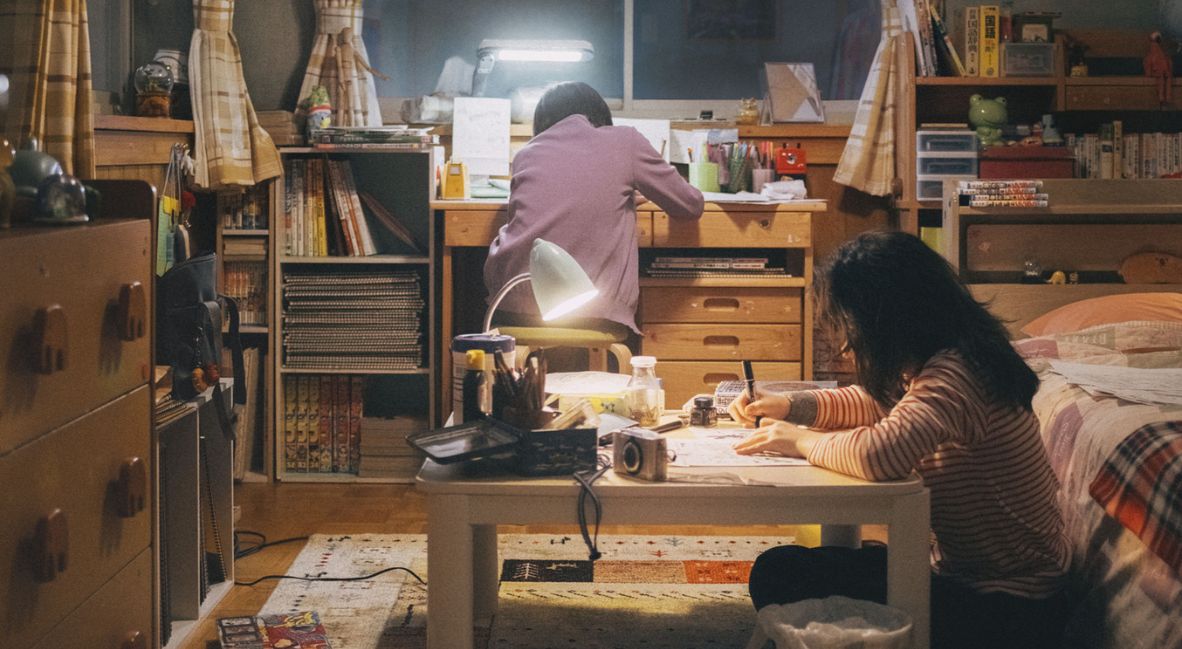
And it does so with reverence for the act of creation itself, the click of a desk lamp, the scrape of pens and X-Acto knives, the closeups of white out and the steady click of corrections the stories way of shifting in gears into new eras. And, in the end, the seamless transition between the actresses’ faces reminds us how the past informs the present and inspires the future.
The live-action adaptation is beautiful, but the 2024 animated feature is worth discovery too.
The only real drawback to Look Back (2026) is that it’s the second adaptation, and Kiyotaka Oshiyama’s 2024 animated version remains superior. At an hour long, the film best captures the frenetic linework and madcap energy of Fujimoto’s work, even in his most subdued story. The skipping sequence in Koreeda’s is charming. In Oshiyama’s, it breathes new life into what was already a kinetic explosion of personality.
The two versions can exist. But animation as a medium is so consistently passed over, seen as a lesser option. And now, a whole new audience will discover the story’s brilliance. Hopefully, it leads them to the animated version, which shines with even greater brilliance and vibrancy, a pursuit of expressive discipline that brings the message of the story to a head in the same medium it champions.
It only ever falters in the more over-the-top sequences, one notable one at the end. The tone simply doesn’t mesh well with the live action, both too silly for the film it’s been up until this point but not silly enough to elicit the same confounded feeling that the first time experiencing it brings out. Luckily, this one snag transforms into one of the film’s greatest additions, cleverly segueing into a tear-inducing animated sequence.
Look Back delicately observes the painful truth of time and art’s liberation.
Look Back (2026) is timeless, aching with the passage of time and all it takes in return for what it allows us. Under Koreeda’s masterful gaze, the story finds new, if not greater, depth as it follows Fujino and Kyomoto late into the night into their created worlds of childlike wonder.
The itch to create emboldens them, and the story follows suit, looking ahead at the two of them as they seek to find new ways to develop their art, to improve, and to look for those kindred spirits that know to live is to create. That you need to look back in order to move ahead. A subdued whirlwind of colors as the pink skies kiss the tops of the overgrown trees, Look Back (2026) celebrates the exhausting vitality of art and the youthful dreams that drive it.
Look Back (2026) played as part of the 2026 Toronto International Film Festival.
Look Back (2026)
-
Rating - 8/108/10
TL;DR
Look Back (2026) is timeless, aching with the passage of time and all it takes in return for what it allows us. Under Koreeda’s masterful gaze, the story finds new, if not greater, depth.