
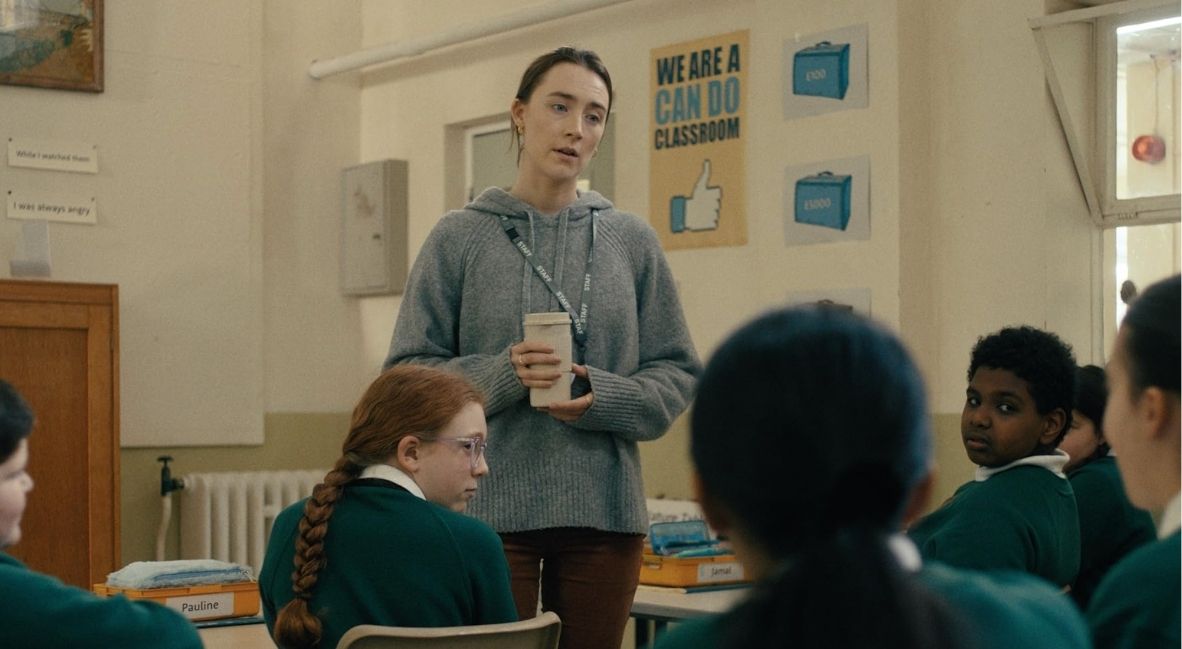
Where to even begin with a movie like Bad Apples? Directed by Jonatan Etzler and written by Jess O’Kane, based on a novel by Rasmus Lindgren, it has a bizarre but somehow effective premise that is burdened by a weak script and bolstered by the power of Saoirse Ronan. Maria (Ronan) is a school teacher with one particularly bad student, Danny (Eddie Waller). After an incident on a field trip, Maria tries to get in touch with Danny’s father, Josh (Robert Emms), but one thing leads to another, and Maria ends up accidentally kidnapping Danny and locking him in her basement.
Lest you get the misimpression that Bad Apples is a different kind of movie based on that outlandish premise, it is, in fact, a comedy. A dark, dry British comedy that takes its humor from irony rather than outright humorous situations. But it’s a comedy nonetheless. It even has moments for uncomfortable chuckles, especially as the movie progresses and you become accustomed to the absurdity and almost begin rooting for Maria and Danny to figure things out.
But the problem is, there’s also Pauline (Nia Brown). Pauline starts as a teacher’s pet-type you genuinely find charming. She kisses up to her teacher a little, but it seems to come from genuine admiration for Maria. Unfortunately, as the film goes on, more of Pauline’s character is revealed, and her dialogue is absolutely cringeworthy.
Saoirse Ronan is a phenom, and Eddie Waller holds his own with her quite well.
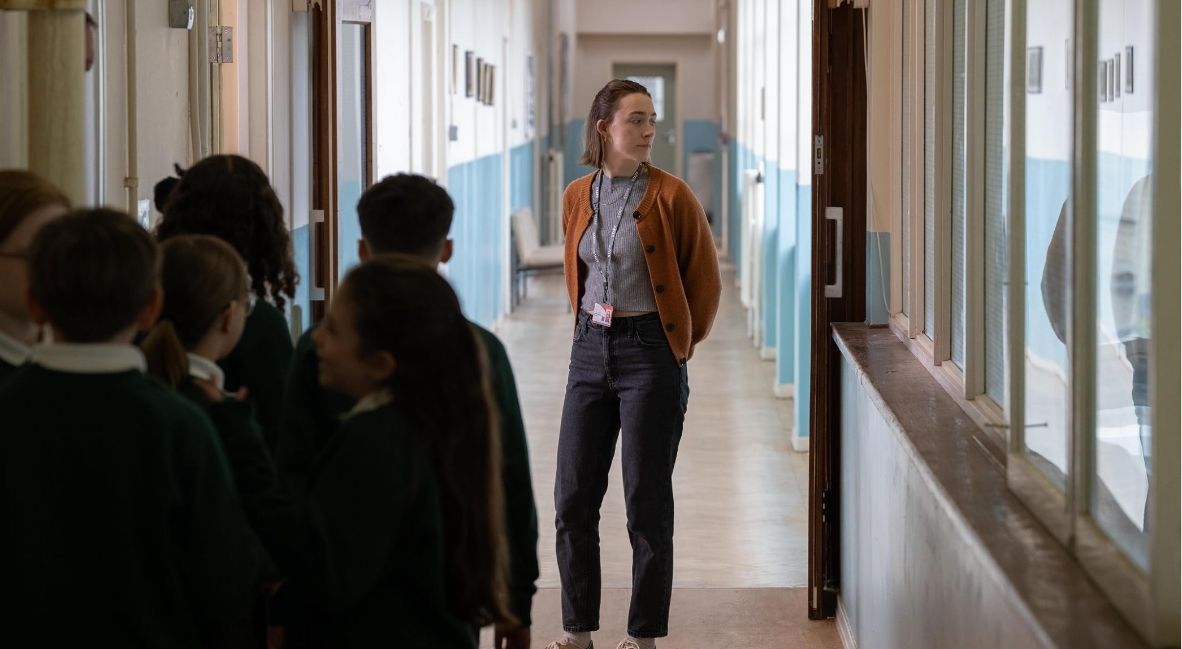
Brown plays the part well, but it’s such an uncomfortable character that it distracts from everything interesting going on between Maria and Danny. It’s certainly the filmmakers’ intention to make you uncomfortable, but it has an almost entirely adverse effect on the movie as a whole.
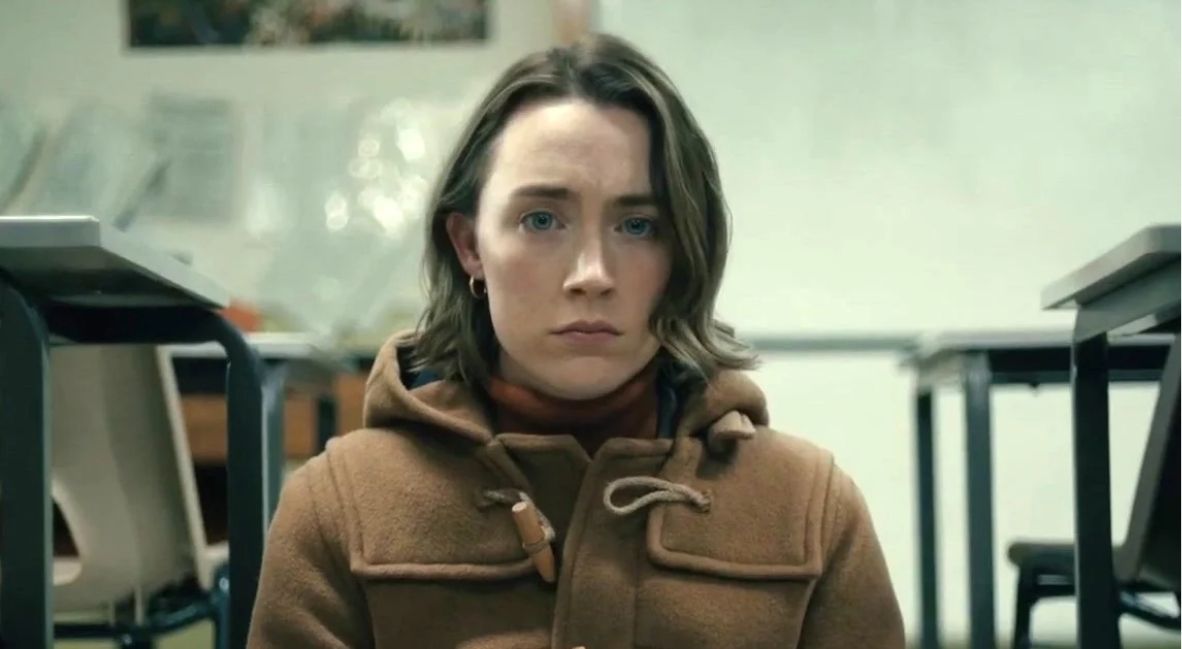
Because what’s going on in Maria’s basement is fascinating. Ronan, for starters, is a phenom. Even when she’s acting against nobody, let alone groups of children, her powers are unmatched. She has some moments in particular where her facial expressions work wonders, even without dialogue. Her character doesn’t possess enough depth on paper for her to dive into quite as deeply as you would like, but she mines it for all it’s worth anyway.
Eddie Waller, too, puts on a pretty good show as Danny. The boy does well demonstrating the extremes of emotions, from raw anger to complete helplessness, with a layer of sweetness in between. While Bad Apples might think it has something interesting to say about apples and how far they fall from their trees, or the way that one could rot the whole bunch, Danny’s not given quite enough room for perspective either to entirely prove the axioms true.
By the time Bad Apples settles into its third act, the ridiculousness of the situation feels less and less absurd.
What Bad Apples really needed, other than a script that plumbs the characters’ depths a little deeper, was more time with Danny’s father, Josh. He has a few key moments with Maria, including some that offer a glimpse into what Danny’s world is like at home. But too much remains open. There are too many ways to interpret what that home life might be like, compared to the clearly toxic home Pauline comes from.
With such an obvious set of issues in her life, it’s unfair to Danny as a character to be left with so much to have to infer on your own. No version of implication feels quite right, and the movie would have been better for having just said things more clearly on Josh and Danny’s behalf.
By the time Bad Apples moves into its third act, you, like Danny, are pretty well-settled into the ridiculousness of their situation. Maria is trying to help reform and support Danny out of true passion for his well-being. And Danny slowly starts to open up. The scenario only works because Ronan plays it so sincerely. She doesn’t wink or let on that she, too, is deranged like most everyone else in the movie. She acts as a balm against the unsettling children and upsetting adults that fill the rest of the movie.
Bad Apples is a bizarre bunch of elements that don’t really meld together.
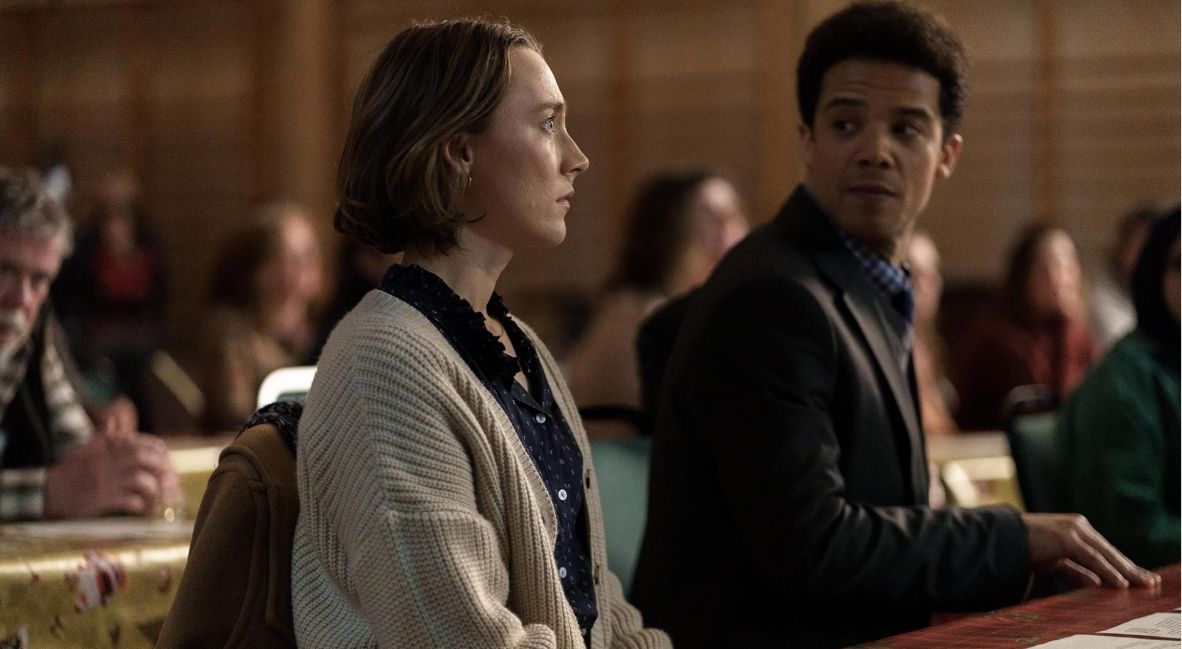
But through the third act, as everything starts to unravel, it’s impossible to decide how to feel. In some ways, that’s a great feeling. Bad Apples uses the kind of dramatic tension and audio cues usually reserved for a thriller to set up a tone of unease and looming disaster.
The tension never fully pays off, though. So the unraveling is somewhat cathartic, in that the tension turns into abject absurdity, but it falls short because your expectations of where the story is going have to change so many times in the last third that no conclusion feels satisfactory anymore.
Bad Apples is a bizarre bunch of elements that don’t really meld together. It has some great performances and a fascinating premise, but it severely lacks in character. A weak script leaves too much for the viewer to wonder for themself about what the movie is trying to say, even though the notion it’s trying to get across should be fairly obvious. It’s not all bad, but the core is, unfortunately, rotten.
Bad Apples is playing now in select theaters.
Bad Apples
-
Rating - 5.5/105.5/10
TL;DR
Bad Apples is a bizarre bunch of elements that don’t really meld together.