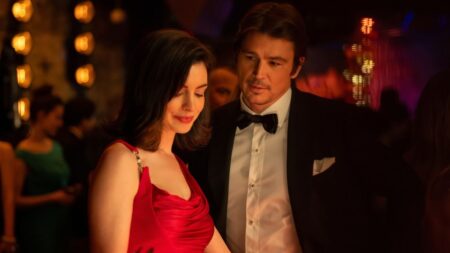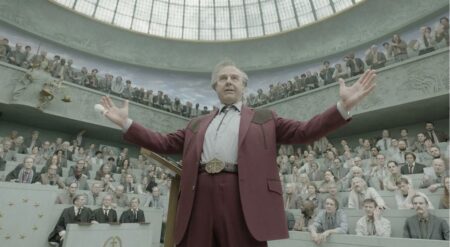
Much like its blunt, monosyllabic namesake, Danny Boyle’s Ink (2026) pitter-pats and blots the screen with spunk and style from its first frame. A dizzying cacophony of brash formalism and energetic excess, Boyle—alongside a “Sorkin-lite” script from James Graham—attempts to trace the machinations and calculations that killed real, honest journalism and ushered in our current, hellish age of tabloid sensationalism and pornographic reporting. Yet, aside from a few pointed, if fleeting, moments that deftly capture the “day that the news died,” Ink (2026) amounts to little more than a toothless rendition of The Wolf of Wall Street set in swinging late ’60s London—the “Wolf of Fleet Street,” if you will.
Though armed with a vigorous, anachronistic verve, Boyle’s aggressively filthy, sporadically successful direction quickly clashes and sputters against trite, hackneyed biopic material. His kinetic flourishes awkwardly curdle this tale of depravity and ill morality into stilted, clichéd underdog brouhaha, while the film itself labors to say anything about the industry or its history beyond the blunt declaration that, well, it was very bad that this happened.
Sex, drugs, and time-inappropriate rock’ n’ roll are liberally slathered over the anarchic proceedings but mostly serve to glaze over any meaningful interrogation or meditation on the coordinated forces that transformed journalism into superficial spectacle.
Ink (2026) is all flash, running out of steam and intrigue as soon as we flip past the front page.
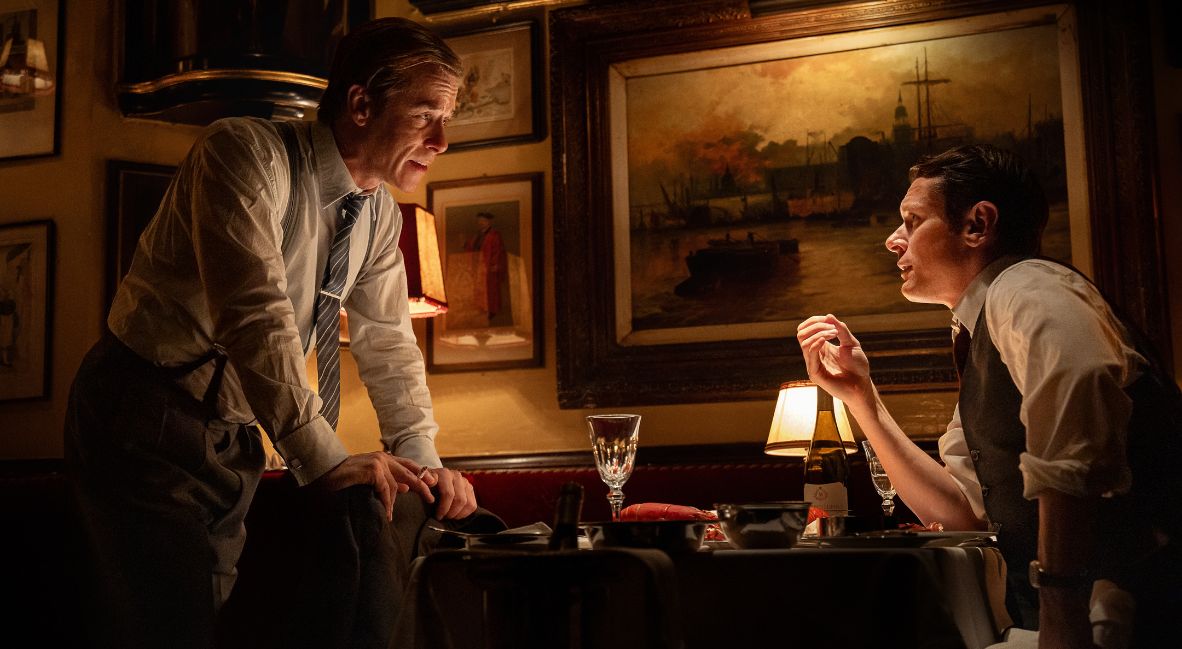
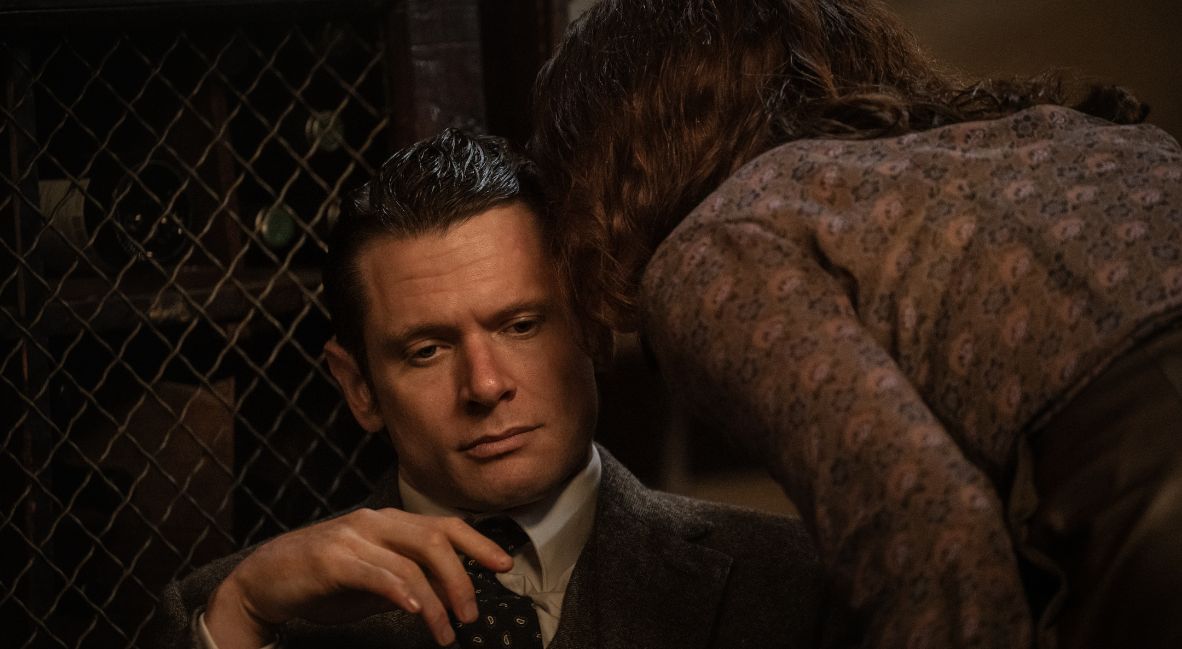
Ink (2026) opens with its greatest scene: a twisting, contorting conversation in which the now-infamous Rupert Murdoch (Guy Pearce) persuades seasoned but hungry newspaper editor Larry Lamb (Jack O’Connell) to oversee the newly acquired but dwindling daily, The Sun.
As Boyle’s frenetic camera whips and circles the two protagonists, manically rifling through quick asides, references, and detours, Ink (2026) arrives as an explosively edited pop-art package, seemingly intent on taking a scathing torch to the people, ideas, and systems that flattened the news landscape into a dirt road devoid of substance or diligence. But much like the superficial, titillating headlines it portrays, Boyle’s film is all flash, running out of steam and intrigue almost as soon as we flip past the front page.
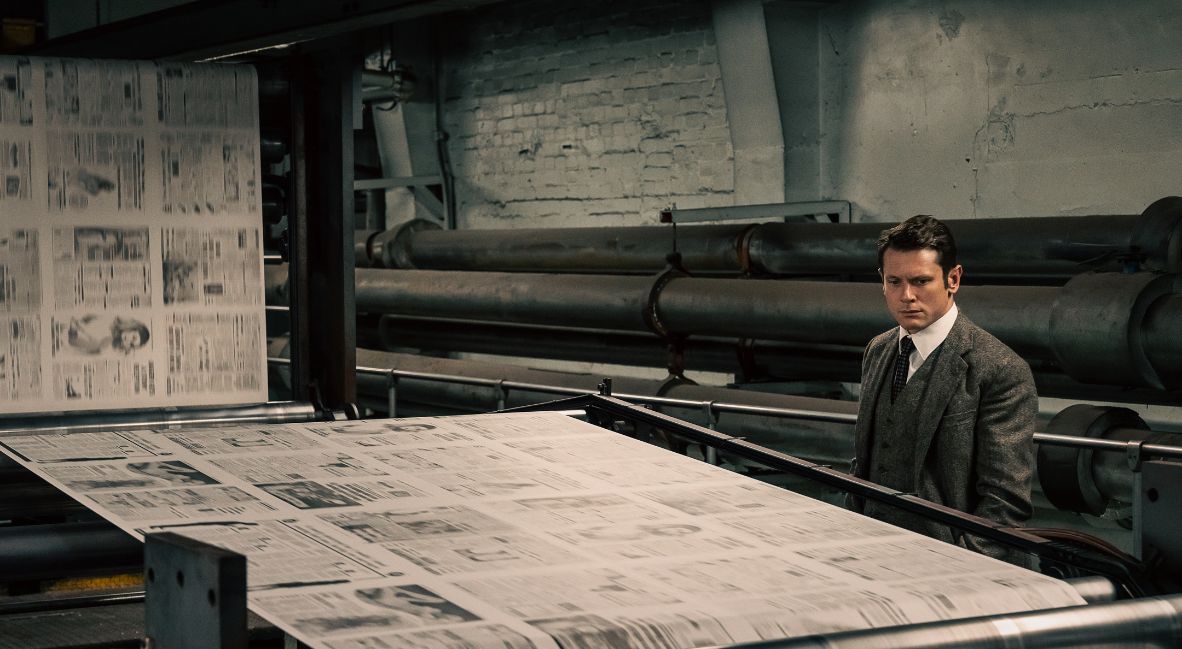
From there, Larry goes for broke to grab readers in the fiercely competitive British media market, throwing anything and everything extreme onto his pages to catch both their attention and ire. The tactics work, sending The Sun’s circulation into the stratosphere, threatening the establishment like The Daily Mirror, and setting in motion a series of increasingly boundary-pushing escapades and decisions that make one thing clear: nothing is too far gone if it means selling another paper—not even a person’s life.
Foy’s character is reduced to a vessel for plot mechanics and scant gender commentary.
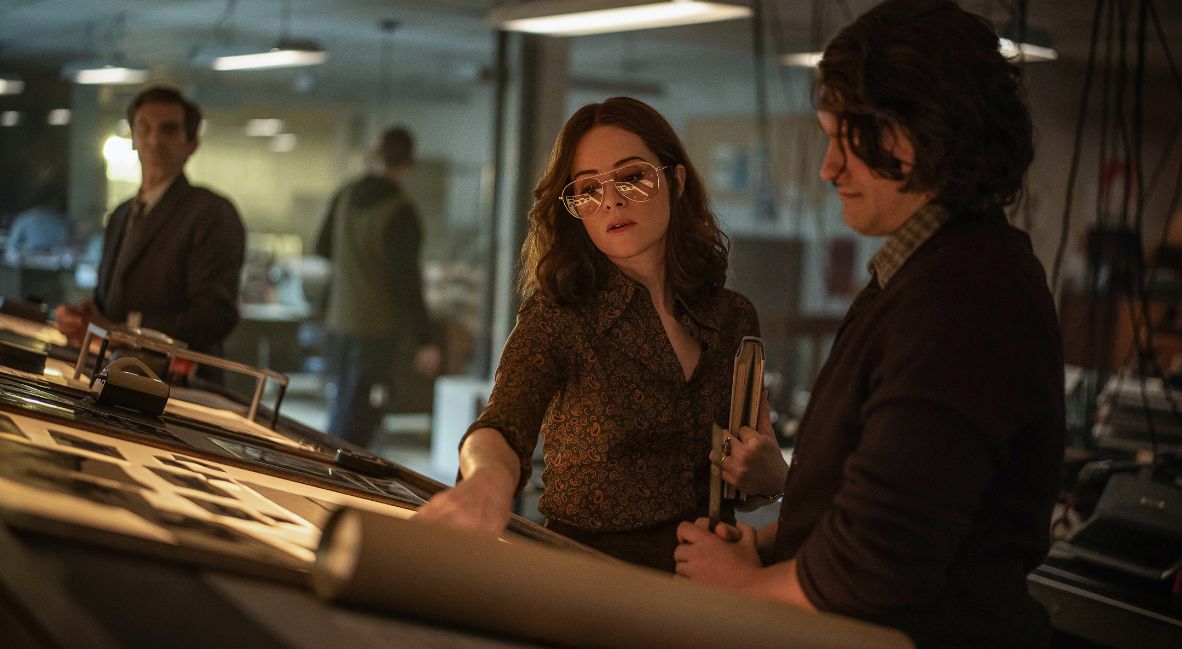
In appealing to the lowest common denominator, Larry’s “new and improved” daily paper affords room for all kinds of reporters, whom Boyle introduces in a series of Trainspotting-esque crash edits. Chief among them is Jules Davies (Claire Foy), who breaks through with articles infused with a modern woman’s perspective, including titillating tutorials on masturbation and sex positions.
Just as Ink (2026) seems to be hitting a new stride with Foy’s Jules, however, the film quickly reduces her to a vessel for plot mechanics and scant gender commentary rather than a fully realized character. Her sudden, undercooked romantic relationship with Larry does little to add dimension or narrative complexity to what is increasingly revealed as a banal morality play. Soon enough, she’s relegated to set dressing, sporadically regurgitating trite pleas for decorum and humanity as Larry brazenly spirals further into moral depravity and debauched excess.
Every whip-pan, Dutch angle, smash cut, and abrupt shift to a monochromatic palette seems designed to convince us that something dangerous is happening beneath the surface. But as intoxicating as Boyle’s cranked-out tics can be, they do little to embolden a film terrified of sitting with its own subject long enough to tap into, or discover, anything complicated or nuanced about it.
Ink (2026) is remarkably content to traffic in the same cheap sensationalism it claims to skewer.
Eschewing any meaningful interrogation of the class appetites, commercial incentives, institutional complicity, and cultural conditions that enabled the cold, cruel machinery of tabloid journalism, Boyle and company offer, at most, a perfunctory nod toward such conversations. For a film about the death of serious journalism, Ink (2026) is remarkably content to traffic in the same cheap sensationalism it claims to skewer.
Despite textured and arresting turns from Pearce and O’Connell, Ink (2026)’s hot, piping cinematic press jams early, laboring throughout to keep its thematic headlines fresh and absorbing. With its titular ink run dry, Boyle is left with little else but to unearth a silly, trite closing montage that makes its ideas painfully explicit. As O’Connell’s Lamb, delirious and disconsolate, stares into the closing frame, we’re left equally stunned by how something so loud and furious could have so little to say —or, erm, print.
Ink (2026) played as part of the 2026 Toronto International Film Festival.
Ink (2026)
-
Rating - 4.5/104.5/10
TL;DR
Despite textured and arresting turns from Pearce and O’Connell, Ink (2026)’s hot, piping cinematic press jams early, laboring throughout to keep its thematic headlines fresh and absorbing.