This interview contains spoilers for Supermassive Games’ Directive 8020’s Episode 1 and has been edited for length. To listen to the full interview, hit play on the audio player below.
Directive 8020, the latest in Supermassive Games’ Dark Pictures Anthology series, is a solid horror experience that appeals to a broad audience by embracing the cornerstones of the space horror genre. While it wears its inspirations on its sleeves and weilds them to the game’s advantage, the other key to the game’s success is its characters.
With every choice you make mattering in some way, causing ripples throughout the eight-episode story, it’s the characters that drive investment. You root for the crew of the Cassiopeia, you bond with them, and ultimately, they each embody archetypes that go beyond the expected tropes.
We spoke with Directive 8020’s Creative Director, Will Doyle, about Supermassive Games’ approach to storytelling in the Dark Pictures Anthology series, the characters they love, and how their latest title shifted their narrative formula.
If you’re unfamiliar with the title, the game is part of the studio’s Dark Pictures Anthology, which began with 2015’s Until Dawn. With a cinematic approach to storytelling, the series’ choice-driven environment, featuring branching narrative beats, shapes the core of Directive 8020’s gameplay.
Characters are what define The Dark Pictures universe.
With over a decade of experience crafting branching narrative experiences, Supermassive Games has leaned on horror to tell its stories, with a different subgenre helping them shape each subsequent title. Regarding development, Doyle explained that at the beginning of the anthology, the developers saw how broad horror was and decided to explore its subgenres.
“Coming off the back of Until Dawn, which we had a lot of success with, we thought we wanted to make our own series here,” Doyle said. “We looked at horror as a whole, and I think we identified 39 different sub-genres, which we could pin to a board. Then we went through those [subgenres], and we whittled them down to which ones would make good stories and ended up with this shortlist. The really, really great thing about it is [that], as storytellers, because of that variety, it allows us to go in so many different directions.”
Adding, “We want to scare your pants off! So, it’s got that fear that [going] through it, but there are so many different emotions and themes that you can lean into within each different [sub-genre], it gets really interesting for us. [Variety is good] as storytellers, but it’s also really, really good for our team to have this variety of artists. [The developers] don’t know exactly what they’re going to work on next, or they know that they’re going to work on something different next, which is really fun. That keeps our writers sharp, and it just shakes things up.”
One of the cornerstones of sub-genres is understanding how differently archetypes and tropes are defined. For Directive 8020, the developers clearly brought to life references and expectations from other media, but it’s how they adapted them to The Dark Pictures Anthology that makes it all stand out.
Cooper’s role in Directive 8020 embraces the archetype established by Vasquez in Aliens.
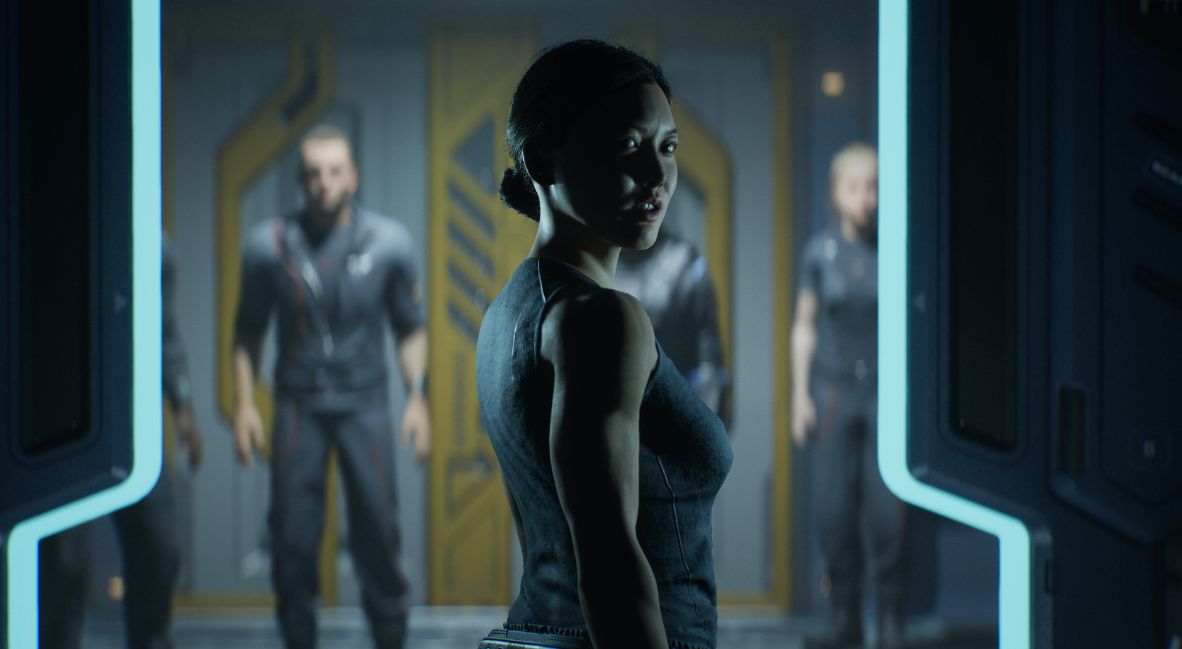
For me, that was Samantha Cooper. The ship’s doctor and a former Marine, Cooper’s character design focuses on her muscles, while her dialogue choices allow players to be straight-laced or joking, depending on how they want to play. But ultimately, regardless of the choices you make, she is tough as nails, and she has been through the wringer. When asked about how she fits the archetype established by Pvt. Vasquez in Aliens, Doyle took a dive into how the team approached building out the characters in Directive 8020.
“In The Dark Pictures [games], we’ve always sort of worn our influences on our sleeve a little bit. It’s kind of one of the great things about video games is it gives you the chance to put yourself in a ‘what if’ situation. ‘What if I could play that horror movie [that] I love,’ and ‘What if I was in that situation, what would I do?’ When it comes to the characters, we looked at a whole bunch of horror movies and sci-fi horror, and we [defined] strong archetypes that we can identify with, but our games are branching,” Doyle explained.
Doyle added, “The best set of characters for our games are ones that have different outcomes, so they can end up in different ways. Of course, we have survival, so you know the basic outcomes [are that] you live or you die. But if you live, we want the character to go to different places, and we often end up being quite binary about that.”
“We say, ‘Well, this character could go here, but [they] could go there.’ In a way, it’s sort of like classic screenwriting that we look at each individual character, and we go, ‘Well, what are their wants and needs?’ We identify that, and then we think, what are the challenges [that are] in their way, and where they can end up in this game.”
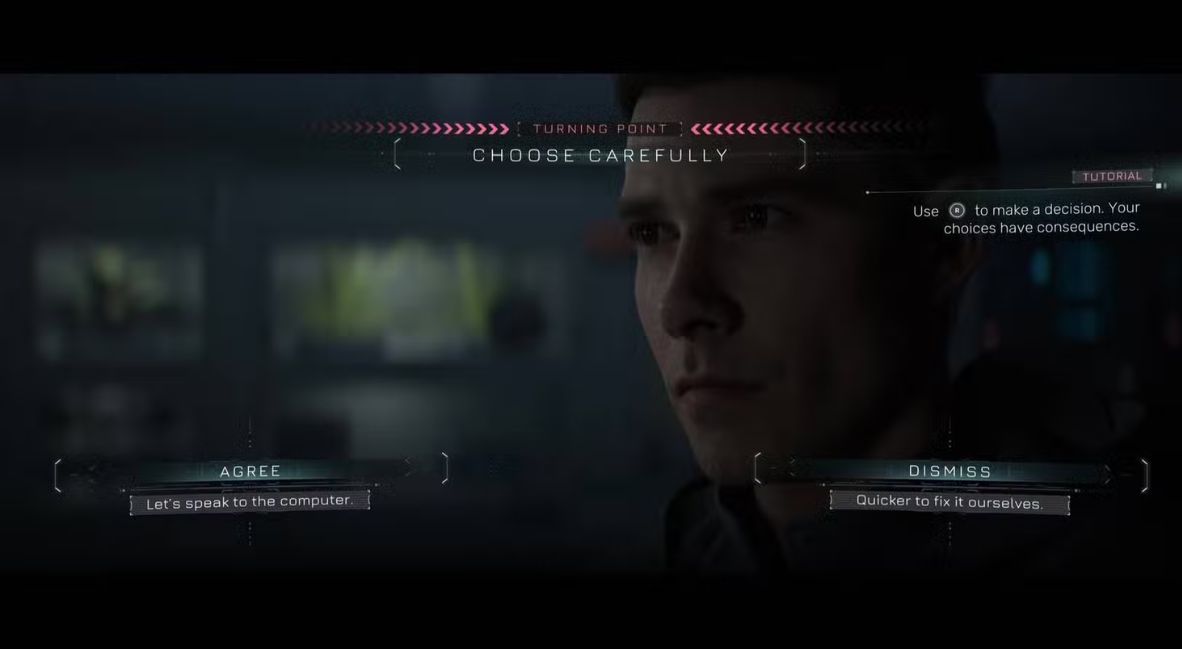
While the Supermassive team’s anthology series is growing consistently, they’re also refining their approach to that branching narrative. With Directive 8020, one of the key elements of the branching narrative was the introduction of the Destiny system, which locks a character into an outcome based on the choices you make, including the responses you choose for them to other characters as they develop a more rounded personality throughout the game.
Doyle explained how that refinement impacted development, saying, “[In Directive 8020], we advance the formula a little bit by codifying some of it with the Destiny system. [Now], it actually says, ‘this character can get this Destiny or that Destiny,’ which represents the journey that they’ve been on [throughout the game].”
As the conversation looped back around to archetypes, Doyle explained that some of it is also intuitive and driven by being fans of the genre they bring to life in games. “As with all creative things, some of it is just gut instincts of [asking] what do we like? We’ve got a whole load of fans of horror and sci-fi [on the team]—I’m a massive fan of Aliens, so yeah, having a little bit of Vasquez in Cooper was cool.”
Directive 8020 approaches branching narratives as screenwriters do, with the character first.
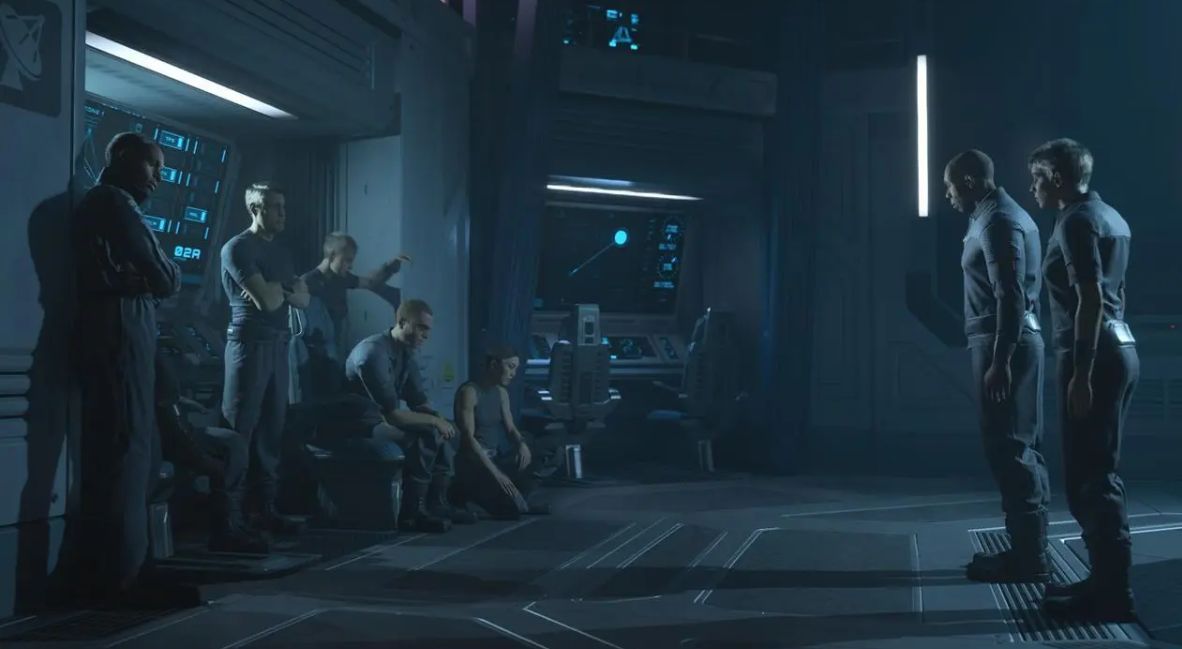
Directive 8020’s structure, beyond branching narratives, is also key to how players feel about the characters, because we can play as all of them. “Because all our characters are playable, we have this issue that we often think that a gamer will take control of a character, and if they don’t really like that character in our games, well, they can [just let them] die,” Doyle said. “We always have that [in the] back of our heads.
A character’s death should mean something, and that’s Supermassive’s goal. Doyle explained, “We’ve seen over time that players don’t really like [disliking a character]. They want to love everyone. So finding a way to make the characters appealing is really interesting. We do a couple of things [to do this].”
“We write down what would happen if we took this character out of the story. Obviously, the story should be diminished in some way if that happens to play some role. And [we ask] what is it about that character that you’re going to love?”
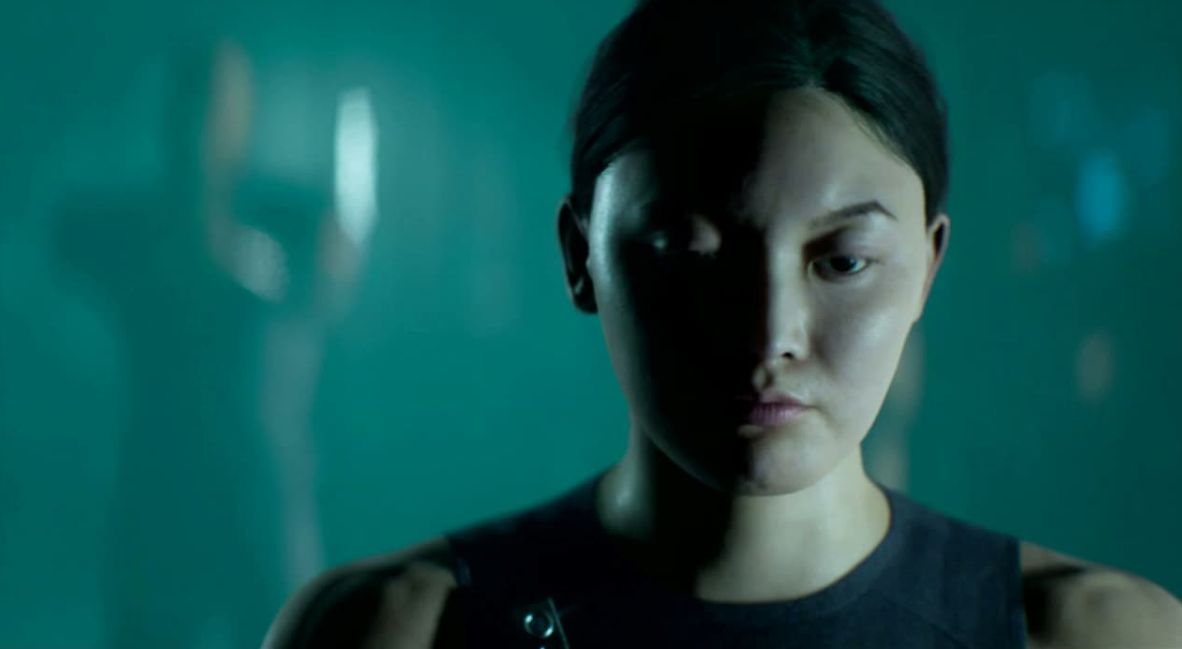
And then, we were back with Cooper. Doyle continued, “For Cooper, we always had [the idea that] she’s badass. She’s been a Marine, so she’s got this kind of real toughness to her. She’s funny. She has this relationship with Anders, which is different from the rest of the crew, but she also has a vulnerability to her. She has this kind of tragedy in her past, this story of survival, and so we figured that it was going to give her some empathy. There’s going to be something there that you, as a fan, can kind of hook onto. We did that for sort of all of them.”
Cooper’s vulnerability resonated with me. She’s the kind of character that I latch onto because she’s tougher than most of the men around her, but she’s also connected to her emotions. While the toughness is Vasquez, the sensitive side that we get to see from Cooper as a leader and friend makes her more than just the archetype of the “strong female character.” Instead, she’s three-dimensional and more than just her muscles.
That sensitive side of Cooper and her empathy is only scratched at when you have a playthrough where Stafford, the ship’s captain, is alive. If Stafford dies, Cooper is thrust into leadership, and the vulnerabilities that come from her past bubble up even more. In fact, if you play Cooper while Stafford is alive, her past tragedies and survival, including Mitchell’s role in it, aren’t immediately seen. Instead, you collect her past through notes and videos, and small lines between her and Williams. The full context doesn’t come out.
Supermassive Games has to find the balance between player choice and making sure the story comes through, regardless of your choices.
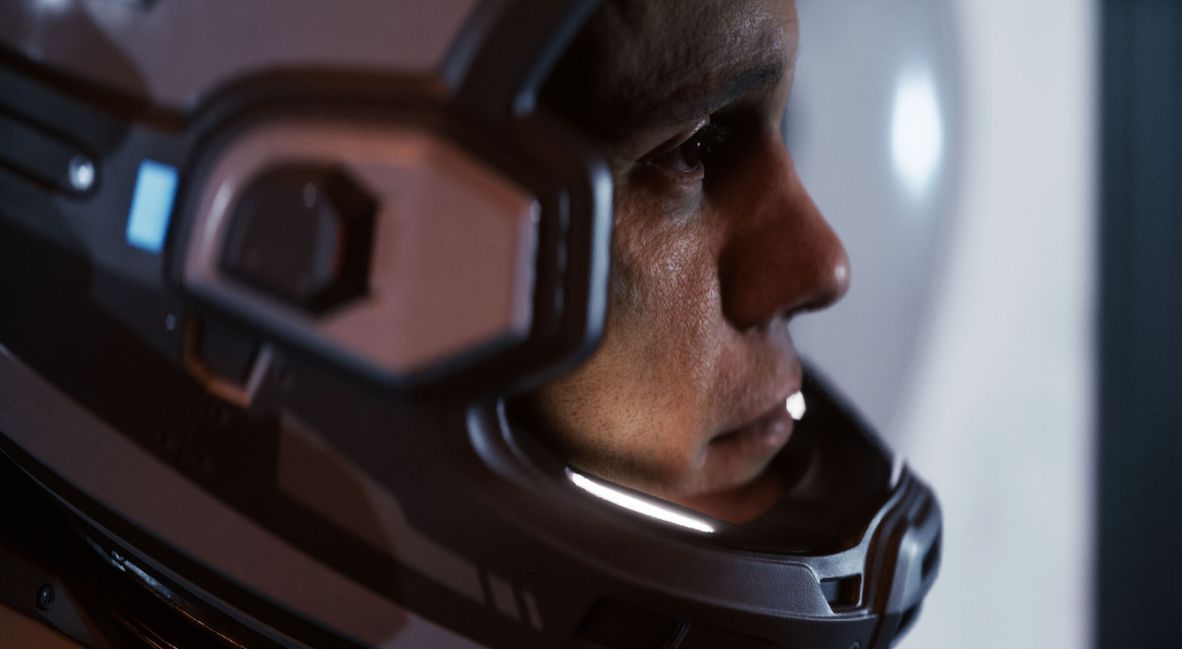
Still, Cooper remains a fascinating character, and it’s Supermassive’s approach to storytelling that allows her to remain dynamic, even if she’s in a smaller role. Doyle explained how the developers approach ensuring that every character is rich, regardless of how you experience them.
“We hit a real set of challenges with this, because if you give away or explain too much, you’re forcing [players down] a path through the story, and [since] ours is a branching game, so [that] clashes against player agency. One of the pillars of The Dark Pictures [universe], from the design side, is discovery,
Part of the fun of our games is peeling away the skins of the onion, working your way through it, and finding out all the little [pieces] of lore and hidden interactions. So we have to allow some of that, but we also want you to learn certain things about the character that are essential [to them], and sometimes certain story points are essential [too],” he said.
“There’s a load you can find out about her, but a lot of her playtime is dependent on other characters dying,” Doyle continued. “There’s a fun thing we did in this game where we tried to make it so that the final episode, could [be] played [with] almost anyone, and you could even have [only] one character alive on their own… Even for us as developers, having made it just to play it and kind of go, ‘Let’s go through a Cooper ending where other characters have died,’ and then Cooper rises up in the story.”
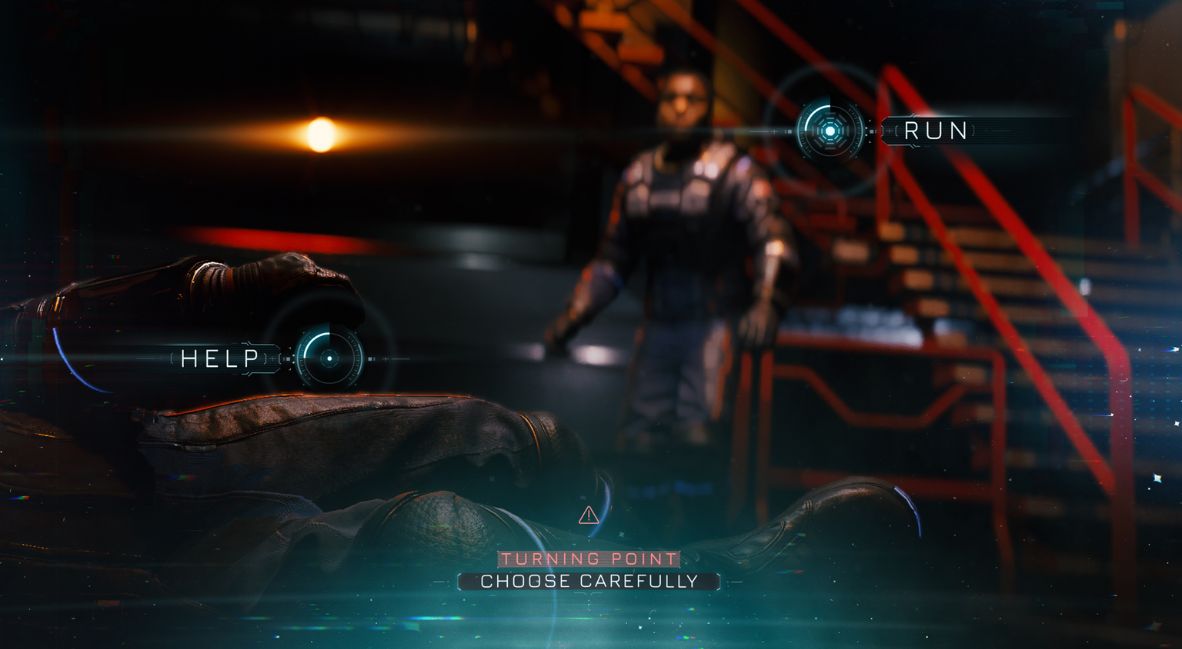
The balance between branching narratives, secrets, and the need for multiple playthroughs with just good storytelling necessitates essential moments in the story. Doyle took us through how the team came to refine that process with one of their earlier games, House of Ashes.
“In House of Ashes, one of our earlier games, we knew that we really wanted this theme at the heart of it, [that] the enemy of my enemy is my friend,” Doyle started. “There’s a moment between two characters, Salim and Jason, where that theme really comes to the forefront, and you can’t miss that, you have to have that bit.”
“We have these kinds of linchpin moments for certain characters that just have to occur, and then sometimes we hit problems. With House of Ashes, for example, I won’t say what, but there’s a certain part of the story that you learn near the end that is crucial to understanding how the monster exists.
“We initially had it kind of hidden, and we had to change the story after testing it, because people could take a certain path through [the game], where they’re like, ‘I don’t know what happened there?’ [or] ‘What was that?’ That led to an unsatisfying ending, so we had to change the story to elevate that [them], and we did similar things in Directive 8020 as well. ”
Even the first characters that die have an impact.
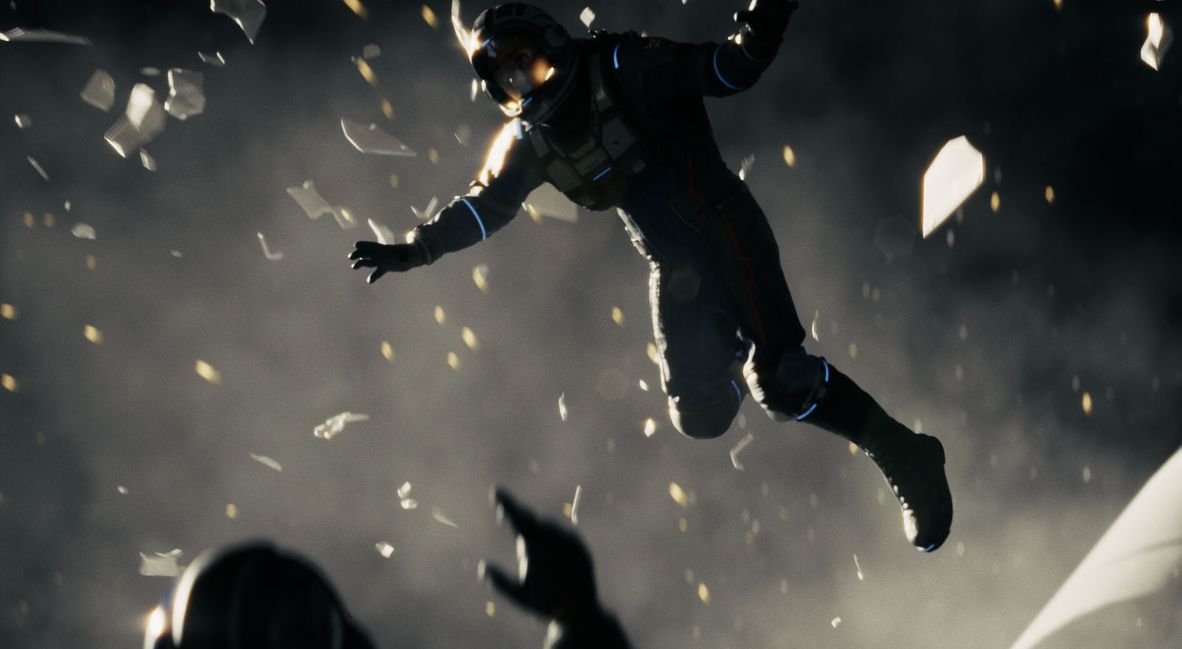
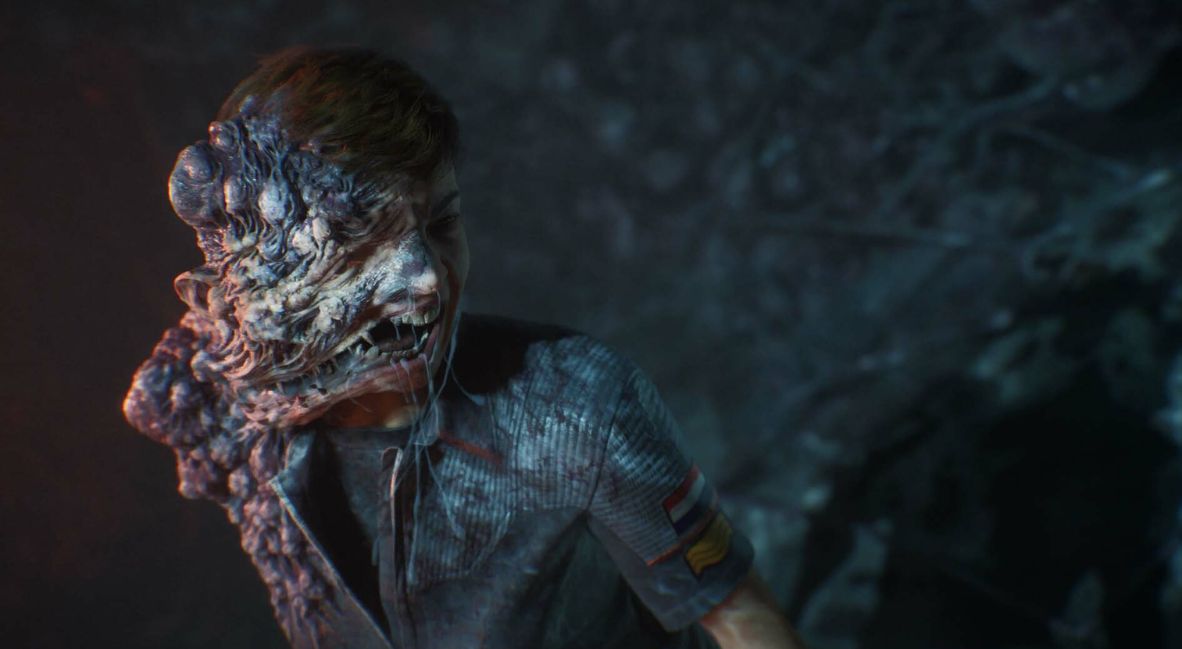
In Directive 8020, you play as the crew of the Cassiopeia, a ship on the way to Tau Ceti F, in order to find humanity’s home. In the process, the ship is struck by something, breaching the hull and turning the mission into a test of survival as the alien threat tries to kill the crew while manipulating them with its shapeshifting abilities.
And all of this kicks off immediately when the first two people you meet, Simms and Carter, have to reckon with the hull breach in the game’s cold open. For this introductory episode in the game, players play as Carter, one of the sleep technicians on the Cassiopeia. You and Simms, the other sleep technician, are trying to repair the ship, and the outcome is a classic horror cold open. They die. But more importantly, Simms dies first, and Carter is the one who sends the warning to the crew that will eventually wake up, only to die second.
But unlike other cold opens, Directive 8020 doesn’t forget about them. Instead, it incentivizes players to find Simms’ video logs to both learn more about the story and to learn about who she was. It’s a unique element that makes the game’s storytelling and characters stand out. But this also breaks from what The Dark Pictures series has done in the past.
“This is actually a little bit new for us,” Doyle explained. “We’ve always had this prologue where people die, and it sets the stakes for [the player], that this is a game about death. But most of our prologues prior to [Directive 8020] are quite divorced from the game’s main setting. This [prologue] takes place [days] before everyone wakes up. It’s the same ship, the same crew.”
“…It would be kind of fun to make it so that you could keep them alive, because people love them so much, but no, they must die.”
The choice to add weight to Simms and Carter paid off for the Directive 8020 developers. Doyle explained:
“A development thing that we’ve not really spoken about before, [is that] when we started off this story, we wrote it so that either Carter or Simms could die last. We actually wrote a whole load of stuff where they could swap over, so it could be Carter all the way through. But that’s the sort of villainous character, and it’s, you know, Carter can go off into space. And basically, the problem we had was that they ended up so similar to each other. And we thought it was making them boring.
“We ended up saying, ‘Okay, it’s going to be Simms that becomes this kind of villain, and then that gave us so much more [to work with]. That gave us the idea of doing the messages to her mum, and having [players know that] although she’s going around causing trouble and killing people, we always wanted to show [them that] this is who she was originally, and that’s always going to kind of tug on your heartstrings. We then created the big differences between [Carter and Simms].
“We did a similar thing with Carter, where we wanted to get Carter’s family in there, and we wanted to show [that] Carter’s got a daughter and a wife back at home, and that [pulls] on the heartstrings as well. It’s fair to say that the characters this time around, those prologue characters, have been huge hits for us.”
“We knew it when we tested the game—we were like, those guys were coming back [with] really, really high [appeal]. People say they love them, almost as if we could turn back time, it would be kind of fun to make it so that you could keep them alive, because people love them so much, but no, they must die.”
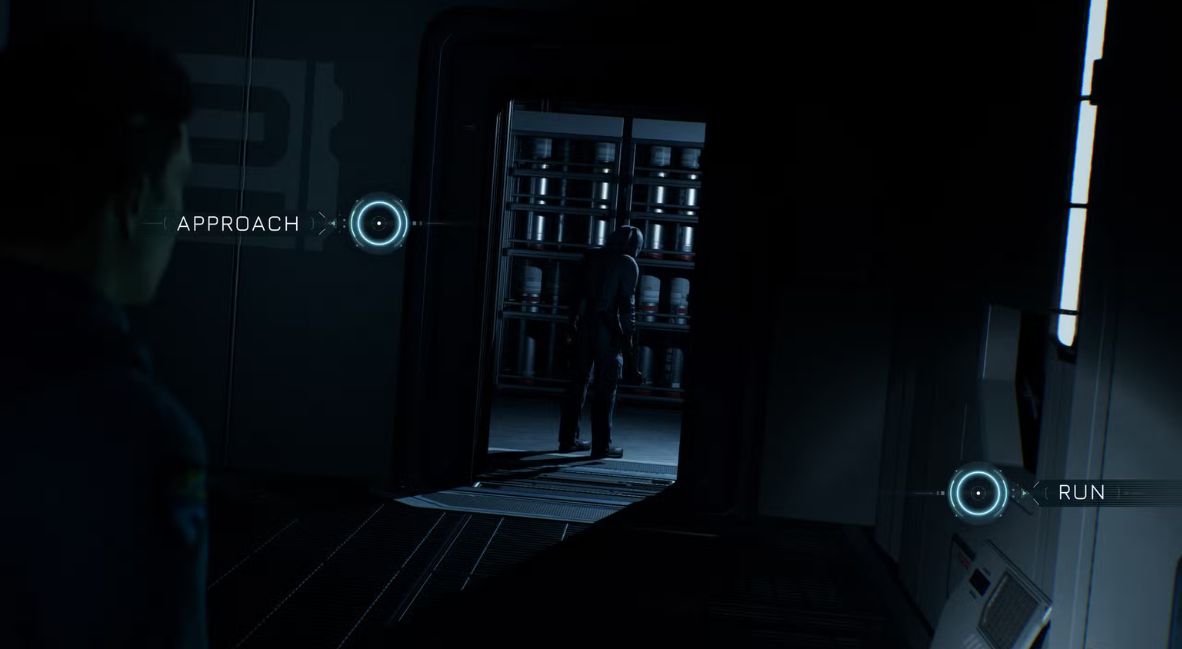
Carter and Simms are the first characters we meet. They’re also one of the sharpest examples of embracing horror tropes and expanding on them, adding to them, and defining them as something unique to Directive 8020. But as only two members of a large cast, the characters who do live (or at least die later on) show the same kind of narrative effort and concern without pushing players into a single way to play.
As a horror game, Directive 8020 is a testament to the character work that Supermassive Games has honed over its years of crafting The Dark Pictures Anthology. Weaving in the horror experiences they love and learning from the past, Directive 8020 is a refinement of their previous games and an impactful addition to the space-horror game canon.
Directive 8020 is available now on PlayStation 5, Xbox Series X|S, and PC.