

Sci-fi that makes you weep is my favorite, and Aphelion expertly delivers a story of love, grief, and humanity in a harsh but beautiful sci-fi setting. A cinematic adventure game where traversal is the primary mechanical focus, Aphelion is developed and published by Don’t Nod, and stands out against the rest of its library.
In Aphelion, set in 2060, you play two scientists who have crash-landed on the planet Persephone, the newly discovered ninth planet. Sent by the European Space Agency (who also partnered with the studio on the game), Ariane Montclair and Thomas Cross make up the Hope 01 scientific mission to survey the new planet and hopefully find a future for humanity.
Ariane and Thomas shot to different parts of the planet, and in different states of health, as they each try to make their way to each other across the frozen planet. Stranded and isolated, you must survive the truly unknown, find each other, and complete the mission. The catch, though, is that you all are not alone, and a lurking threat becomes bigger every step you take toward the planet’s center.
Aphelion is cinematic, but the traversal mechanics all have depth.
When you want a cinematic game, you know you can depend on Don’t Nod to deliver, and with Aphelion, they tackle science fiction in a way that embraces the very best cinematic elements of the genre and thoughtfully decides where gameplay really sticks.
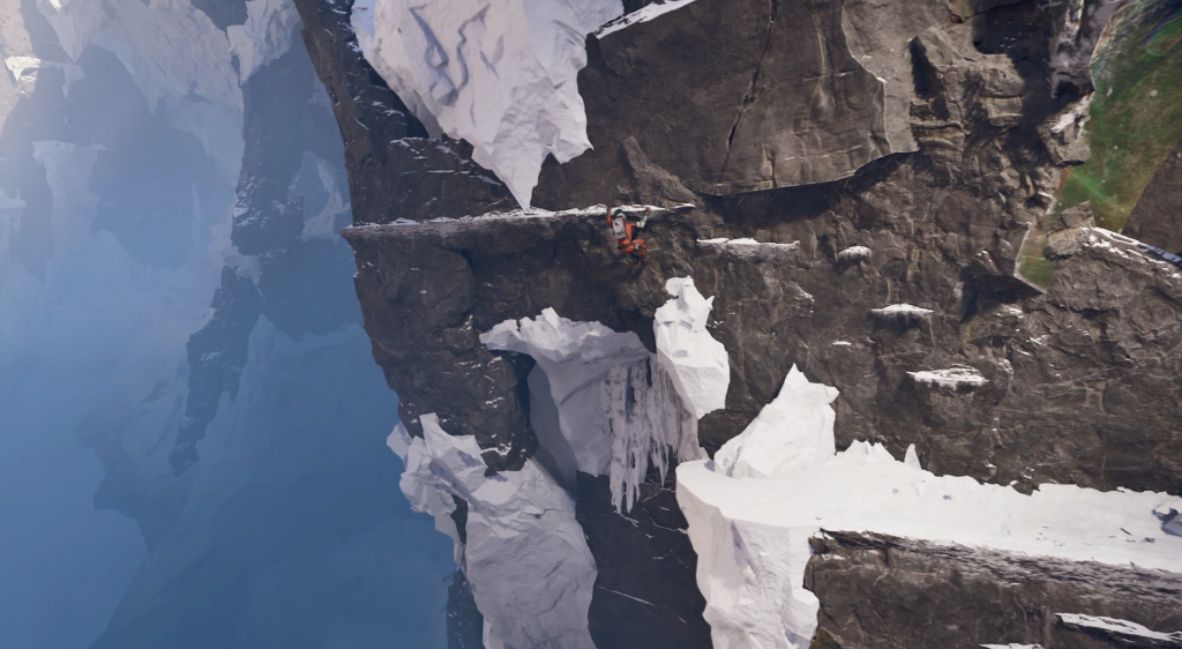
While some might assume that the gameplay focus would be dialogue choices, something that the studio is known for, it’s not. Instead, it’s traversal. Climbing and scaling rock faces, players maneuver through the environment and explore to find a path to their partner. Using your Pathfinder visor, you must use your oxygen tank, grappling hook, and ability to tap into the planet’s frequencies to survive.
My initial reaction to Aphelion was to question its simplicity. Stripped down, this game is a walking simulator that tasks its players to move from point A to point B, with long cinematic story breaks in between the action. However, as you move forward in your quest, Persephone’s frozen and dangerous landscape becomes its own character, adding depth to the journey and forcing you back to attention if it ever feels like a lull.
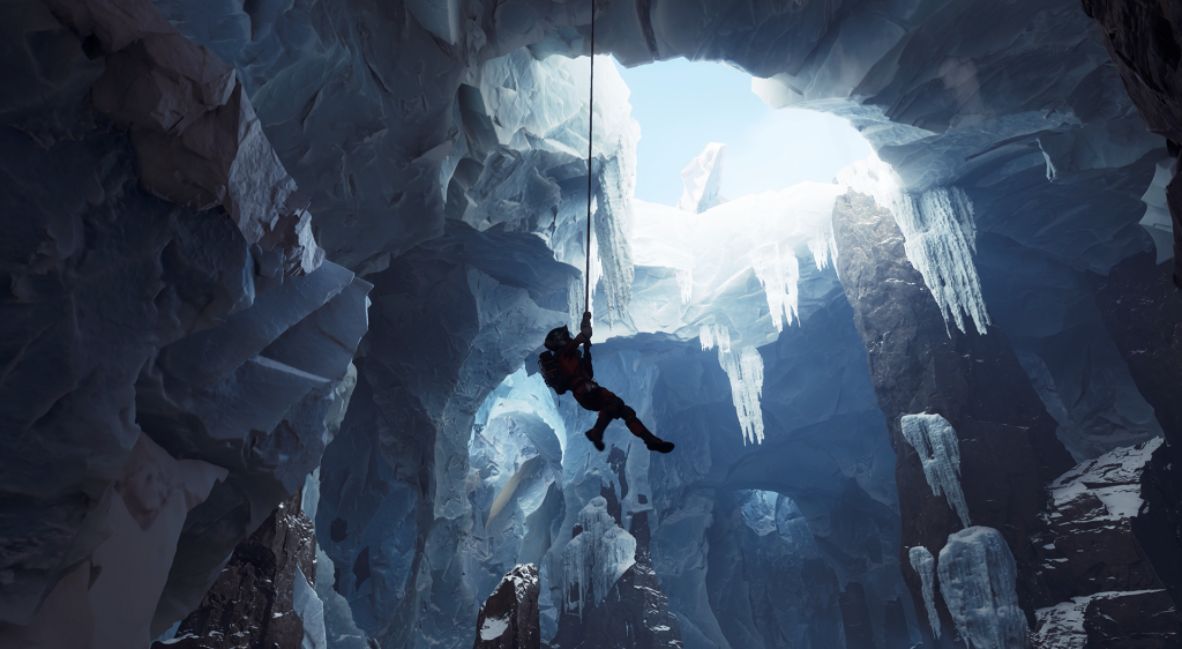
Starting in the crashed shuttle as Ariane, you’re immediately introduced to the bulk of the game’s movement system. With your escape tutorialized, you make it out alive only to learn that there is just more danger ahead. While climbing and perfectly clinging to ledges is simple, there is something rewarding about just moving forward. It’s hard to describe because Aphelion doesn’t introduce anything new in its system, which makes it easy and intuitive to pick up.
However, as the environment changes, you’re faced with new challenges from the world that force you to walk with care. One of the best traversal-focused mechanics in Aphelion comes in the form of ice. As you chart your path through Persephone’s frozen tundra, you discover that some of the surfaces you’re walking on are fragile ice sheets, thinned by a mysterious warming that you can’t understand.
To cross the ice, you must move slowly, each step causing a crack, and the pattern of breaking is different every time. Each step you take has to be carefully considered as you navigate the ice, moving from one safe spot to another. While Aphelion’s pop-up tutorials are consistent, making every traversal element easy to follow, the world design and how you interact with it are extremely intuitive.
Persephone is a planet as gorgeous as it is dangerous.
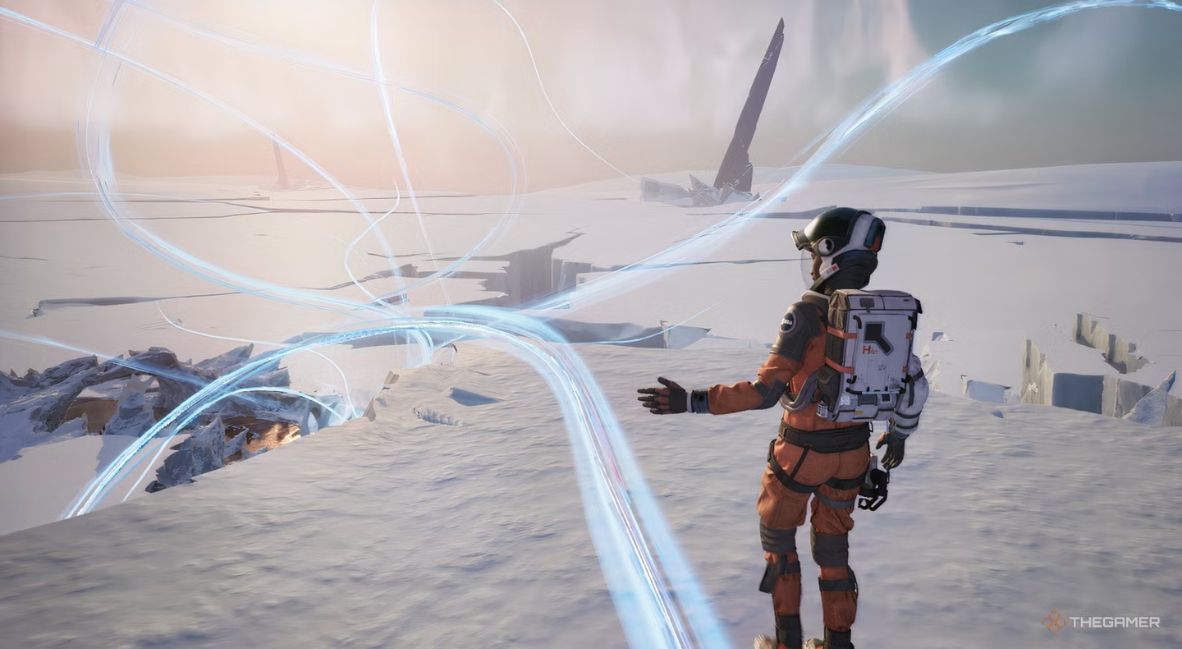
Subtle ledge markers become easy to read, letting you understand if you’ll need to tap X to regain your hold on the ledge. Audio frequencies become easy to follow and guide you, while also providing interaction points and puzzles to solve at the same time. But that’s the extent of the complexity, and still, I found myself easily moving forward, always engaged, and never bored.
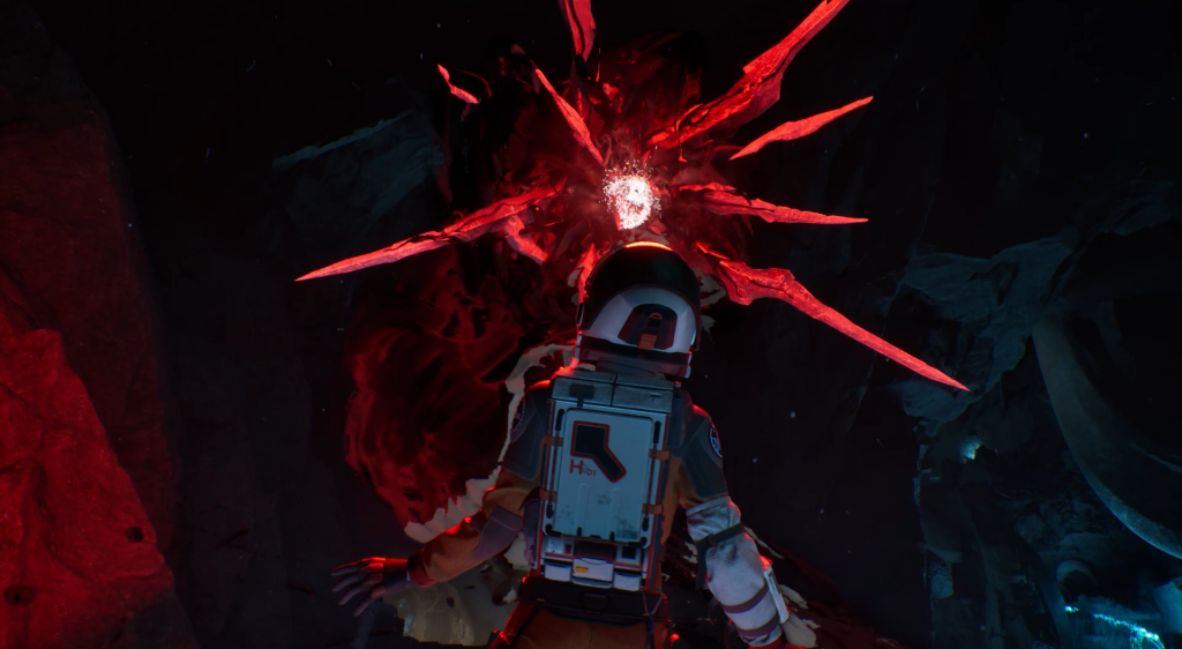
Additionally, Ariane comes face-to-face with a mysterious energy stalking her, adding danger to her journey. If traversal is the focus, stealth is the result. As you move through the glacial caves of Persephone, you come face to face with an alien lifeform that reacts to the sound of your movement. By interacting with the environment, you work to distract the entity and escape each situation lest you truly become prey.
Stealth is unavoidable and integral to Aphelion’s mechanics. But the important element is that there is no combat. Stealth isn’t used to attack; it’s used to avoid and survive. At her core, Ariane is a scientist, not Rambo. That reality is what keeps the player engaged, and for me, kept me rooting for her. This element makes it so that you aren’t just running forward, but rather understanding the steps that you take.

In Aphelion, you play the bulk of the game as Ariane. Having escaped the crash unscathed, she sprints, climbs, and scales rock faces with her grappling hook. She isn’t superhuman, and the grounded approach to traversal makes the game stand out, as does the fact that Ariane and Thomas move entirely differently.
As Thomas, traversal is much simpler. Ditching the climbing and verticality to strategy, Thomas escaped with an emergency oxygen tank and a metal rod piercing his side. Compared to Ariane, your time as her partner is spent on the ground, with slow vaults, and the added task of oxygen management.
Playing a different role than Ariane, Thomas is no less invested in finding his partner. Still, his circumstances serve as a reminder of mortality for the player, intensifying the stakes that begin to feel unavoidable and shaping the narrative. Every step, as Thomas feels, is labor-intensive and makes you question the chance of success.
Aphelion’s simplicity is necessary and executed beautifully, all in service of the story. With gorgeous lighting and cinematic cinematography in every cutscene, the linear story and on-rails guided path transport the player into what essentially feels like an interactive film.
Apehlion is dark, vulnerable, and above all else, it’s a romance.
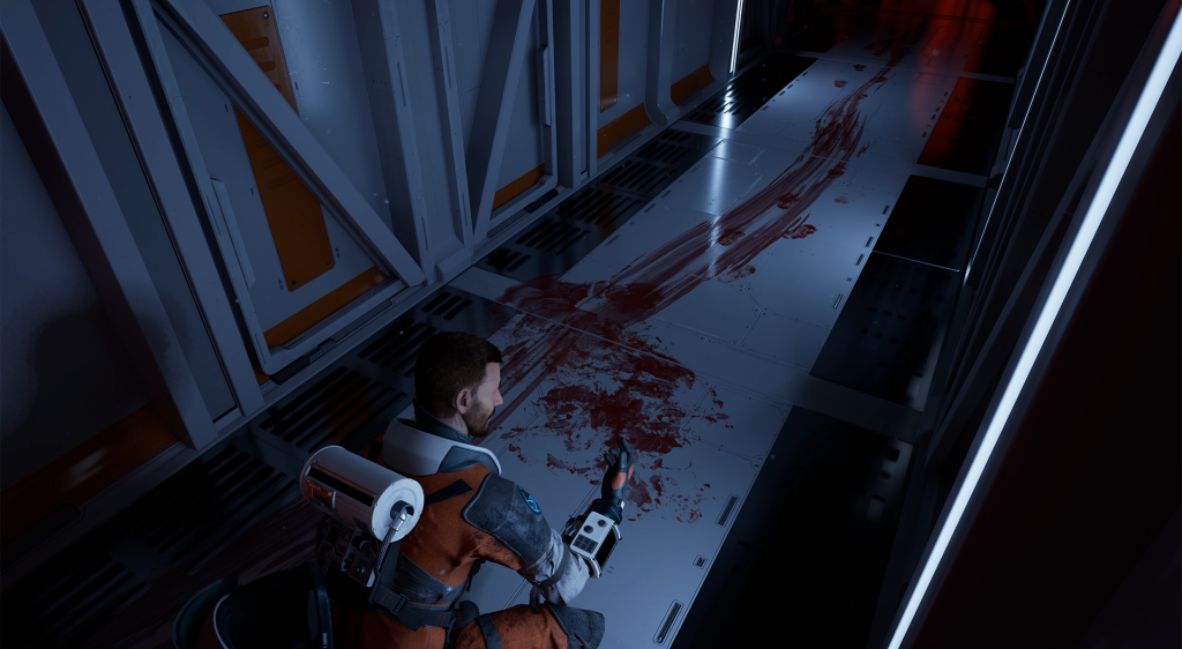
It cannot be overstated how easy it is to fall into Aphelion’s story. With pacing set by every leg of the journey, the intensity ramping up is underscored by an incredible score, and each new cinematic moment makes you desperate for the next.
The switch between Ariane and Thomas is seamless, thanks to the chapter structure, feeling more like switching focus in a film. Shifting between the duo gets hard emotionally as the game goes on, but all of that emotion makes it so that you don’t feel like anything is missing between them.
A short game with 13 chapters, once you get past the halfway point, it’s difficult to put Aphelion down. It’s easy to just fall into the game and keep playing until you’re done. In fact, the way each chapter narratively builds on the last makes it so that you crave more, wanting to get to the end.
This is one of the most beautiful games I’ve played in terms of interaction with the environment and a prescribed path and outcome. So much so that it’s left me hoping that a film studio would take on the job of adapting Apehlion, a thought I’d never had toward a video game.
At its core, Aphelion isn’t just a sci-fi story highlighting how humans will destroy what they touch in the name of progress, even on the edge of the solar system. Instead, Don’t Nod’s focus is on the connection between two people and the regret of taking their relationship for granted.
While the two make up the Hope-01 mission, their survival in this new, brutal world isn’t just because of science; it’s also because of love. Ariane and Thomas share a deep connection, and throughout the story, we see glimpses of their relationship, but more importantly, their dialogue and longing teach the player how deep their love and bond are. What could have been resolved turns into an ache for both Thomas and Ariane.
They know they love each other, but they can’t be together. But that changes when they crash, and suddenly, the most important thing becomes finding each other. While it begins as a need to complete the mission, Ariane’s dialogue shifts to a longing to be with Thomas, to know he’s safe, to know he is alive.
Aphelion is Don’t Nod’s contribution to space sci-fi, and it excels.
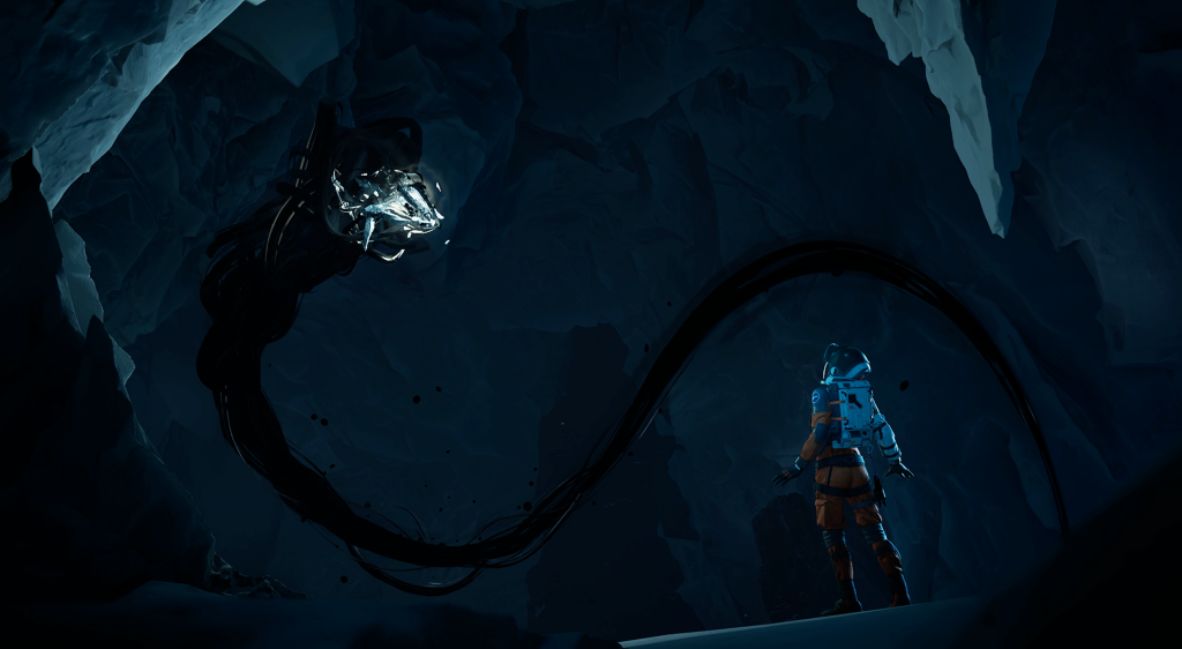
With no way to communicate with each other, Ariane’s regret starts to push her forward as much as her desire to survive. Their relationship fell apart because of their careers and the mission, but now, when everything feels like it’s at the end, Ariane is confronting terrifying odds to find Thomas, and in the process, understanding that the fractures between them can be fixed, but first, she has to find him.
Much of Ariane’s journey is spent grasping for Thomas in the dark as visions of him begin to guide her. For Thomas, his faith in Ariane never falters, and his love for her is palpable. Both characters move through Persephone differently, but they also reflect on their relationship and future differently.
Aphelion is at its best when it’s doubling down on emotion. While the stealth gameplay works overall, the on-rails nature of each chapter makes the stealth moments stand out as the most challenging elements of the game. Still, the stealth elements of Aphelion lack the punch that the game’s narrative is pushing. That is, until it brings Ariane and Thomas together.
Don’t Nod’s work speaks loudly for itself. Aphelion isn’t just aiming to compete with iconic titles like Dead Space; it’s also aiming to stand among cinematic greats. More still, the romance at the heart of this space story is what moves mountains for the genre in gaming.
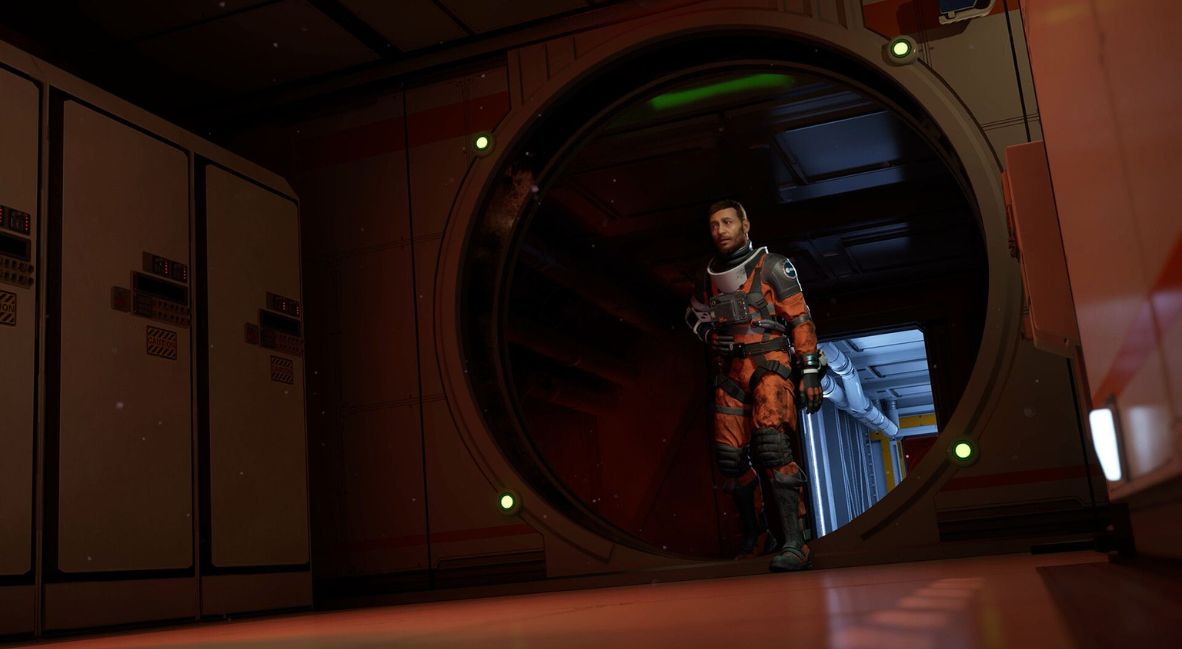
Cinematic in every way, the game also showcases that cinematic quality need not be only found in choice-based cutscenes, but can be loved in tandem with good traversal mechanics. In fact, because we spend so much time surviving in the world and moving forward with our two protagonists, the weight that each character carries as they make their way toward each other is evident in how they move, climb, and simply exist on Persephone.
Ariane is dedicated to her work and to Thomas, even though she doesn’t realize it at the beginning. One of the strongest performances in games this year, Vanessa Dolmen’s mocap and voice acting are emotive and powerful when they need to be, anxious as tension rises, and resilient as her mission and life begin to change irreparably.
For his part, Eric Geynes‘s performance matches the vulnerability we see in Ariane. But more importantly for his role in this story, his dedication and deep belief in Ariane is his North Star. While Thomas gets much less screen time, what he does have is impactful and ripples through Aphelion.
Aphelion is one of the best pieces of science fiction, in any medium.
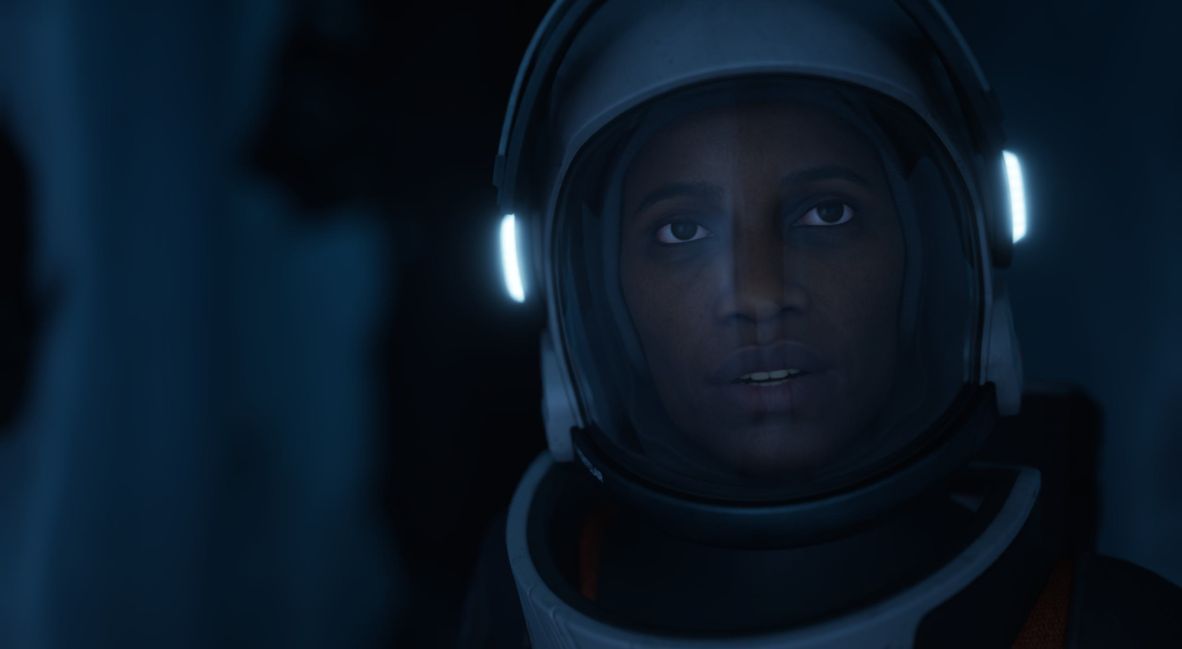
There are many lore-building elements that show how Earth became uninhabitable and how humans caused the entity in the planet’s core to awaken. Still, the world we find on Persphone, while beautiful and rich in science-fiction potential, is just one piece of the game. Thomas and Ariane’s love for each other is really the whole point.
Ultimately, Aphelion is a small game that hits hard with big emotions by embracing the very best elements of science fiction. It embraces humanity and connection while still showcasing the genre’s love of alien planets and condemnation of evil corporations. The game’s ending brings everything home, even if it captures the bleakness of Ariane’s situation.
In the end, though, Apehlion is one of my all-time favorite sci-fi games because of the romance, the heart, and the regret we walk through. At just around seven hours, the game doesn’t overstay its welcome and still lands among the best.
Aphelion is available now on Xbox Series X|S, PlayStation 5, and PC.
Aphelion
-
Rating - 9.5/109.5/10
TL;DR
Aphelion is a small game that hits hard with big emotions by embracing the very best elements of science fiction. It embraces humanity and connection while still showcasing the genre’s love of alien planets and condemnation of evil corporations.