


The second cinematic space game we’ve gotten in as many months, Directive 8020 takes a different approach to its embrace of sci-fi cinema. Where Aphelion leans into films like Arrival, The Martian, and Lost in Starlight in how the game uses isolation, love, and contact, Directive 8020 is more focused on the space horror we’ve seen in films like The Thing, Alien, and Event Horizon. Despite its familiar conflict and horror take, it’s the game’s execution that makes it stand out.
A Dark Pictures Game, Directive 8020, is published and developed by Supermassive Games. A cinematic sci-fi survival horror experience, the game can be played single-player, with the player embodying one character at a time, or with up to four other players (five total) for a movie night experience.
In Directive 8020, you’re a member of the crew of the Cassiopeia. At over 12 light-years from Earth, the Cassiopeia is humanity’s last hope as it heads toward Tau Ceti f, a Goldilocks planet that, with a little terraforming, could become humanity’s second home.
Directive 8020’s inspirations are clear, but its execution of them is perfect.
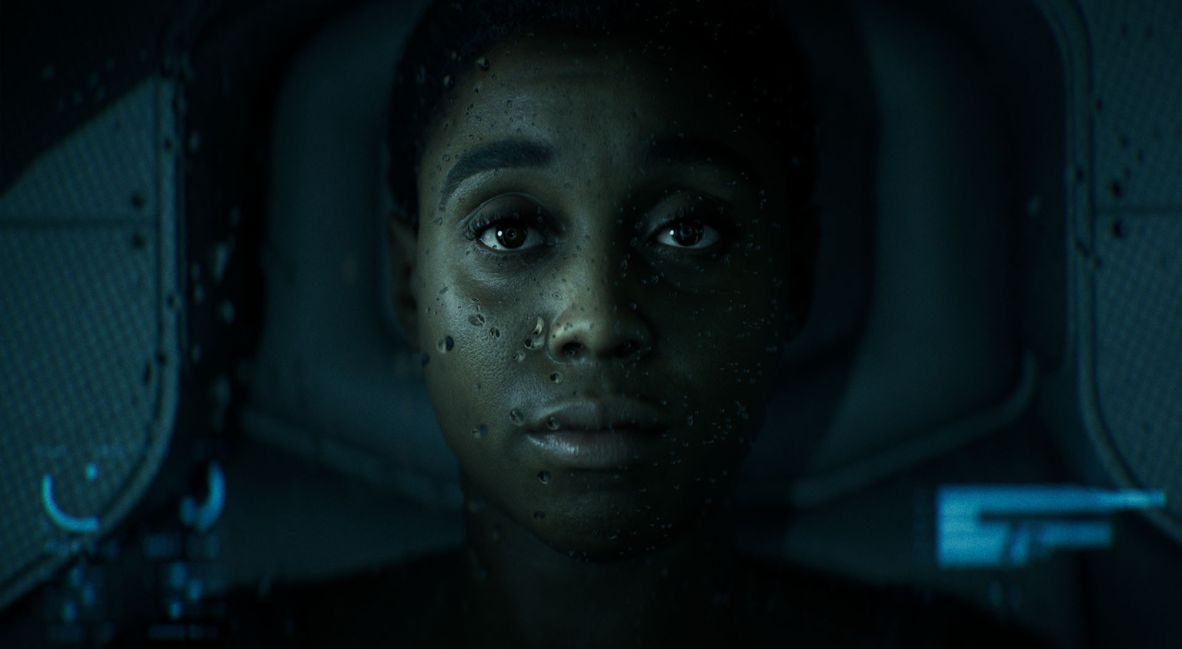
With the majority of the ship’s passengers (read: colonists) in stasis, the two sleep technicians, Carter (Frank Blake) and Simms (Anneika Rose), set out to repair the ship when the hull is breached. The intruder on the ship winds up being too much for the two to handle, leaving the set of officers that were scheduled to wake up, including their company’s CEO, alone to figure out the missing pieces and find a way to survive.
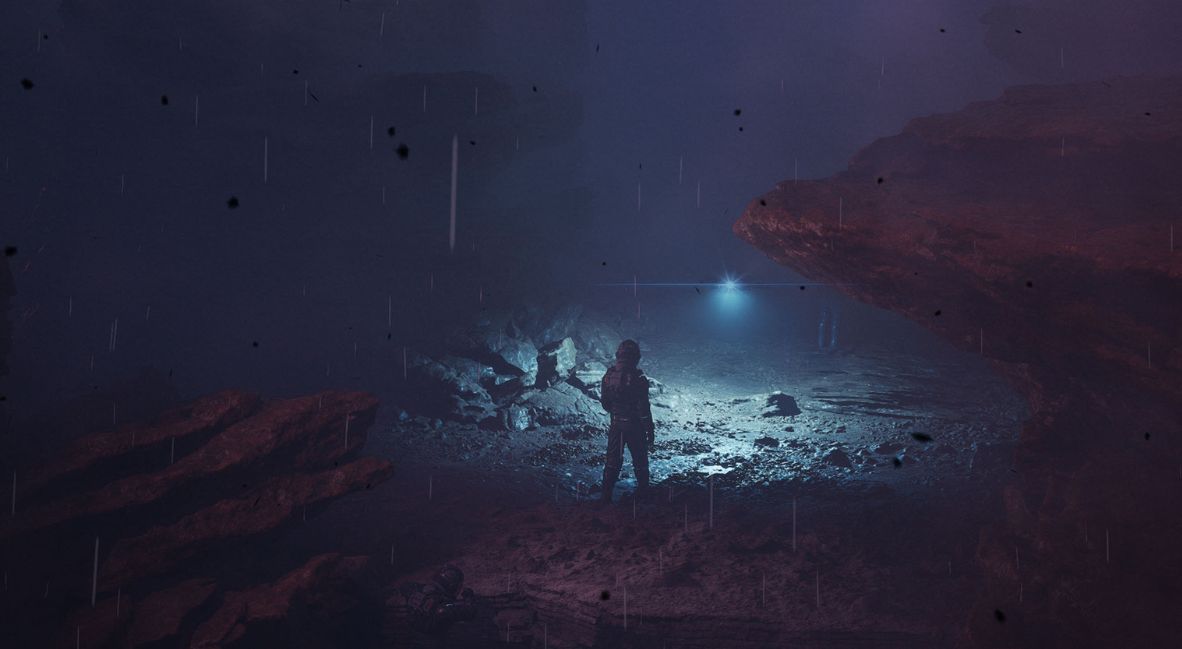
When the breach ultimately causes the Cassiopeia to crash-land on Tau Ceti f, the colony ship’s crew begins to repair the ship, find out exactly what is on it, and survive an alien life form that mimics its prey.
With clear horror inspirations from The Thing, the themes of trust and isolation immediately come to the surface, while also holding close inspirations from Alien when it comes to environmental interaction, and of course, films like Event Horizon also play a part in the game’s visual language as we see aliens’ human forms.
The crew of the Cassiopeia must outwit their hunter to make it home alive. Unlike other space-horror titles, Directive 8020 isn’t a shooter. Instead, the crew’s survival is affected not just by the player’s ability to handle stealth mechanics and perfect timing in every sprint and crouch, but also by every choice.
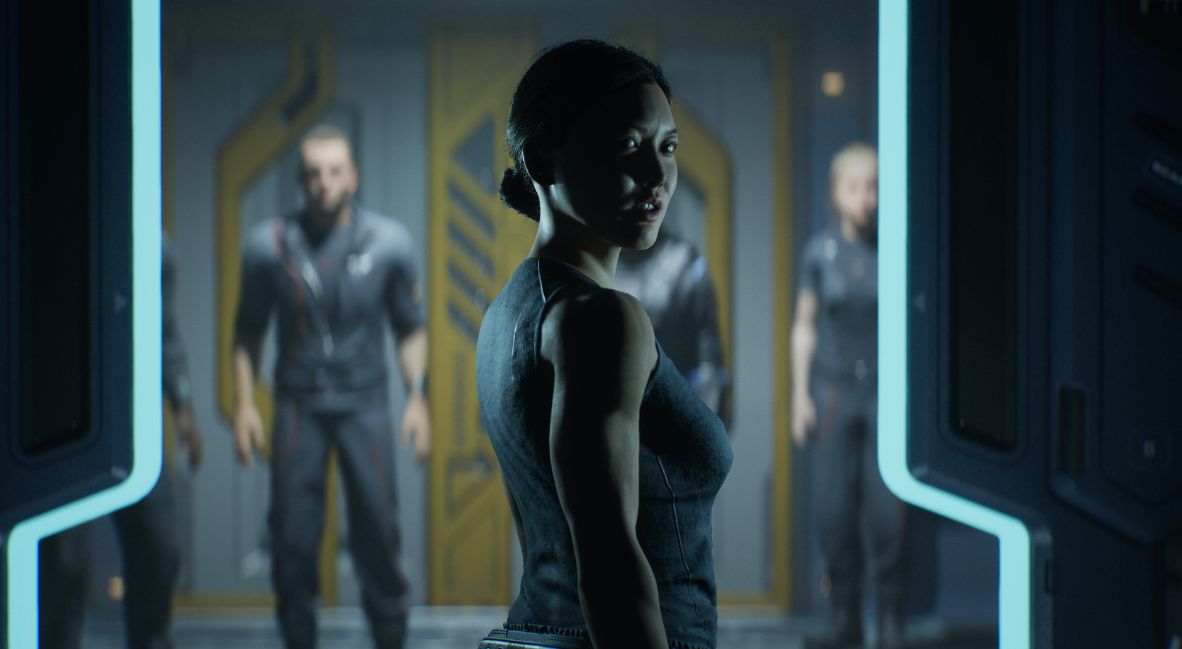
Players will have to navigate interpersonal situations as much as they have to stay hidden to make it out alive. With the choice-driven play that Supermassive Games is known for, Directive 8020, making allies and enemies is important, and thoughtfully making emergency decisions can make the difference between losing your entire team or saving them all.
The crew of the Cassiopeia is diverse in experience and background. Lashana Lynch provides mocap, likeness, and voice for Young, one of the breakout protagonists, an astronaut on the colony ship looking to honor her family legacy while processing her grief.
The rest of the team includes Williams (Kobna Holdbrook-Smith), the CEO of the company colonizing the planet, Captain Stafford (Danny Sapani), his first officer Eisele (Lotte Verbeek), the Cassiopeia’s science officer Anders (Kathryn Wilder), and engineers Mitchell (Colin Bates) and Cernan (Philip Arditti), and a former marine, Samantha Cooper (Anna Leong Brophy), who serves as the ship’s doctor.
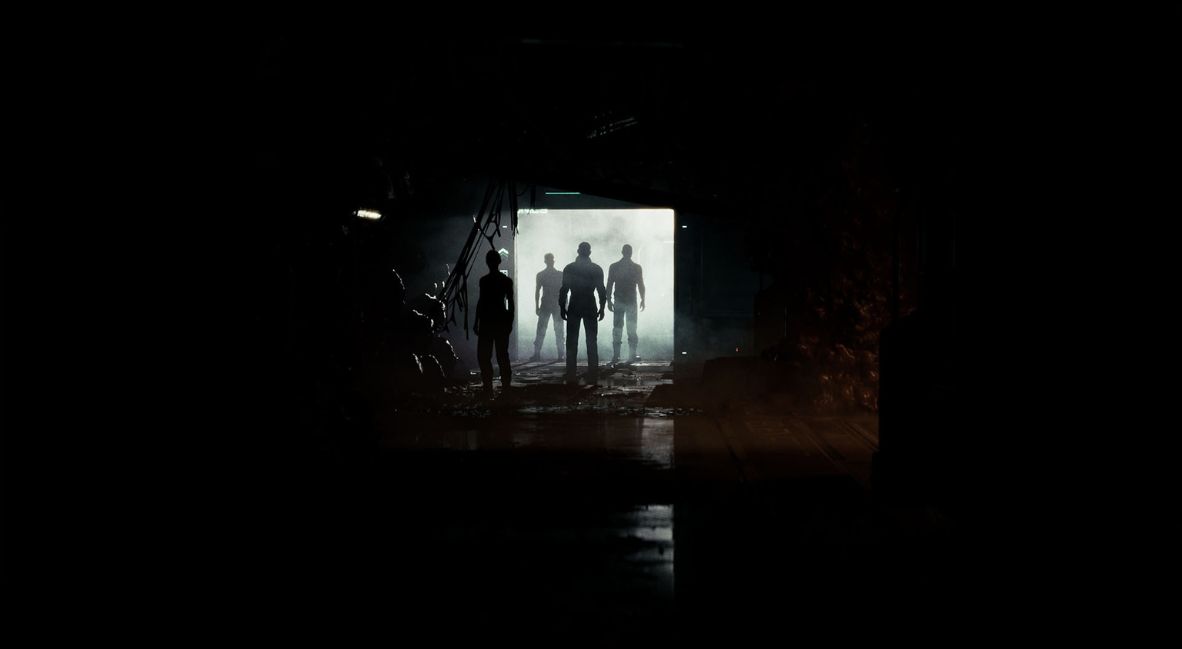
Each member of the cast boasts a well-detailed character model that never feels awkward to watch. The graphic fidelity also ensures that mocapped expressions read extremely well on screen and that, in instances where the developers have used the actor’s likeness, it doesn’t cause the player to ask “who’s that?” when they see it for the first time.
But while the visuals of the crew are the first step into creating an interesting class of characters (thank you to whoever made Cooper buff), it’s how they have been written that immerses you. Achieving cinematic quality comes through with quick time events that prompt you, and you watch cut scenes of the story. These large story elements are all excellently written, with each of the game’s Episodes teaching the player a little more about each character.
Each item you read around the ship clues you into the pasts of each character, and pulling together the small references characters that know each other well make. It’s through character interaction that Directive 8020 really thrives.
The characters in Directive 8020 have lives before we meet them. Because of that, players have to navigate the fissures among characters, relationships, and past actions to move the story forward. Interpersonal dynamics of the crew are impacted by choice, but the foundation that those choices are made on is already built, and no two are the same.
Directive 8020’s choice system gives players freedom and consequences.
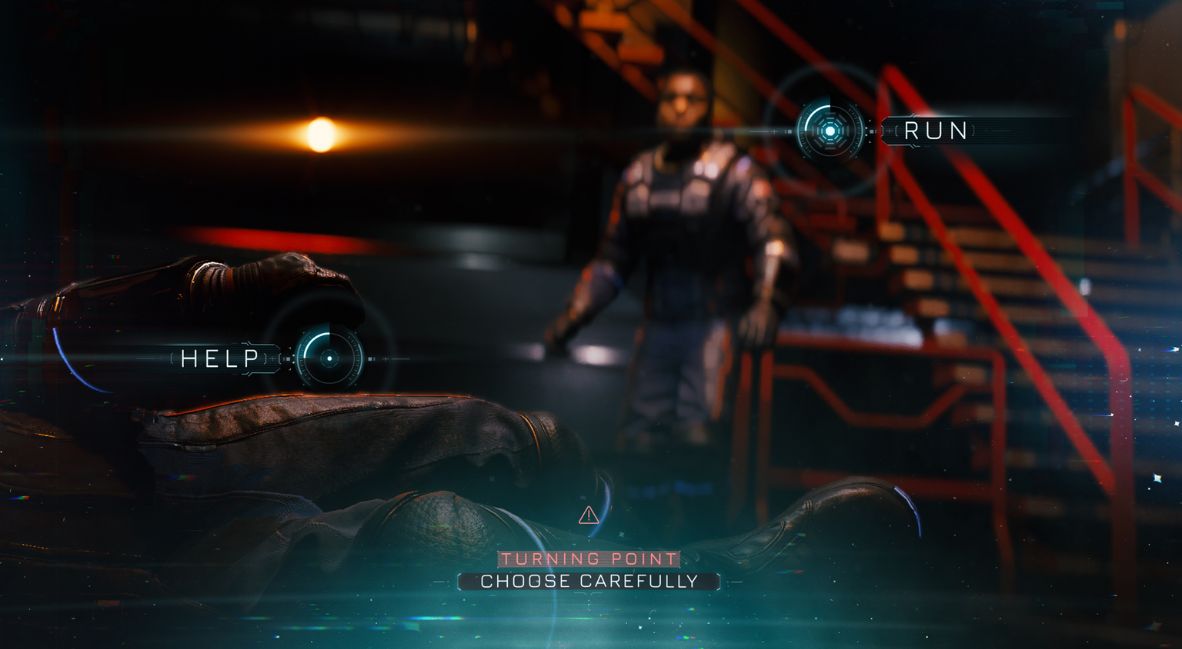
Choice selection isn’t just about the narrative-changing decisions, which the game calls “Turning Points.” Smaller conversation choices or messages sent using your scanner each cause ripples, shaping how the other members of the crew see your character. The malleable nature of each character’s choices is one of the game’s highlights, with each response creating a character profile with different traits, crafting the dialogue as you move through the game.
Because of how much Supermassive has invested in building out the choice system, the trust you build between characters becomes crucial to how you survive or die on the Cassiopeia. Directive 8020 can capture the atmosphere of anxiety and distrust that makes face-stealing horror so effective for an audience.
Throughout the game, you move hours forward in time, or days before, only to snap back to the present. This not only affects the game’s storytelling in an interesting way but also encourages the player to engage with every scene as a potential lifeline, providing clues on what to choose next.
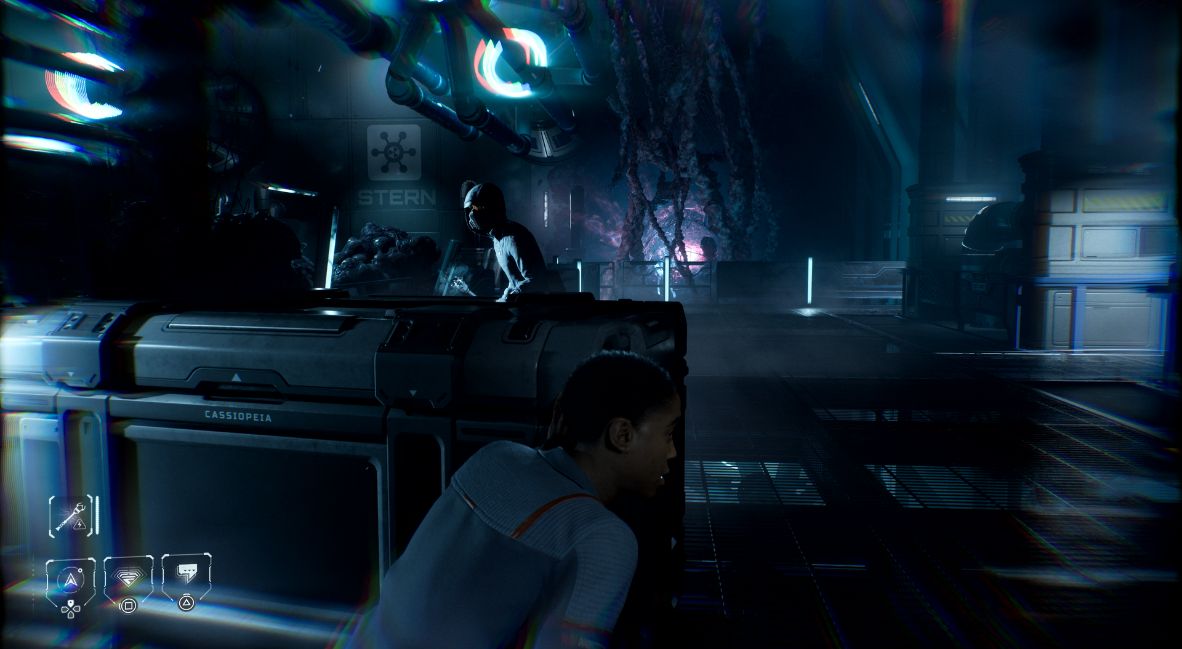
Directive 8020’s approach to setting feels familiar but never iterative, using its inspirations in clear ways but also standing unique against them. When it comes to nailing space horror, the game does so by taking time to isolate each character at some point, pushing the player to see who they are as they try to survive, and highlighting how each character responds in times of panic or fear. Add in the game’s disgusting approach to body horror, and Directive 8020 is an absolute standout as a horror game.
If you find a choice you made is a mistake, you can choose to Rewind the decisions. Embracing an episodic structure, each of the game’s eight sections has clear break points allowing players to either play through the game in one go (of about eight hours with no Rewinds) or step away and play in chunks of time instead.
That said, the episodic structure also works to organize the game’s branching narratives. This lets you pinpoint key decisions in the story, like choosing to disable the landing gear or the fire suppression system, and Rewind the story to that time, reshaping the story path you’re on. The menu screen for viewing each branching choice works as named scenes within each episode.
When unlocked, the information shares exactly what your choice was and its impact. When a node on the branches is locked, the menu shares a simplistic explanation, giving you enough to understand how to go back and unlock that new branch. Exploring each of these branches turns an eight-hour game into something much longer, with completionists probably looking at 20 to 25 hours depending on how skilled they are at stealth.

This is a feature that has made Supermassive Games a success, and it works even better than in Until Dawn. Players can also Rewind to different moments in the story that have smaller choices and larger gameplay elements as well if you find yourself getting caught and killed by the alien.
The only drawback to the mechanic is that you can not fast forward through story beats you saw before your decisions, with every branch of the story tree of the Episode needing to begin from the start. It can be taxing as you’re trying to escape the alien presence, but making one small wrong move to die, only to rewind and wait for your time to try again.
But hey, if you’re okay with letting that crew member bite the dust, then there isn’t really a problem. Additionally, deaths in the game not only trigger different endings but also different ending points. Make bad decisions the entire time, and the game can come to an end quickly.
Directive 8020 balances choice and real-time stealth to keep the player engaged.

Next to story choices, Directive 8020’s approach to taking on real-time threats is all about stealth mechanics. Crouch and hide behind cargo, walls, and tables, taking cover from the alien as it roams the corridors of the Cassiopeia. Avoid detection, but if you do get caught, you’ll be able to rely on a quick reflex and button push to survive and run away.
With simple mechanics, the game’s core features are easy to pick and make its multiplayer. Up to five players can choose characters to control in local couch co-op, a mode Supermassive has dubbed “movie night.”
While group games are fun, teaching people how to play a game they may not have played before is difficult. But Directive 8020 strikes the right balance between easy-to-pick-up, accessible mechanics and gameplay design, with narrative depth, making the experience rewarding for everyone.
Additionally, playing the game in Explorer or Survival mode changes the experience. That said, reviewers were encouraged to play the game on Explorer because a bug was being patched at launch. For the purposes of the review, I played on Explorer, but did boot up a Survival session to see the differences in the impact of choices between the two.
The game’s menus also give players information on their decisions, the secrets they find in each episode across the ship, and more information they collect through interactions with the world and the crew about the cast of characters.
In film and television, you can do a lot with a good soundtrack, and in video games, that’s no different. Directive 8020 ends every Episode with a song choice that both reflects the tone of what you just played and the jarring wake-up that a good end-credit song has after a wild cliffhanger. Nailing the soundtrack that transitions each episode of the game goes a long way to make sure that the episodic format never loses pacing.
Directive 8020 offers some of the best sci-fi storytelling in video games.

Directive 8020 is a love letter to the space horror that looks beyond just going bump in the night. The distrust sown across the small team, the dialogue choices, and the interactions all craft a game that feels like it belongs on the shelf alongside titles like Dead Space, Sunshine, Event Horizon, and even The Thing.
Whether you’re a fan of space or science fiction, this is a game that uses narrative elements of both and ultimately plays in the silence and darkness of space well enough to differentiate itself from other titles. Directive 8020 isn’t about watching a movie, like other cinematic-based experiences are.
Instead, Supermassive Games wants to immerse you, make your heart pound, and create meaningful connections between you, the characters, and the situation. It’s a world where every choice causes ripples, and while you can map out one or two, the third and fourth will leave you surprised. Walking a well-walked path in the space, Supermassive nails the execution, and for that, Directive 8020 heads to the top of my Game of the Year list.
Directive 8020 is available May 12, 2026 on PlayStation 5, Xbox Series X, and PC via Steam.
Directive 8020
-
Rating - 9.5/109.5/10
TL;DR
Directive 8020 is a love letter to the space horror that looks beyond just going bump in the night. The distrust sown across the small team, the dialogue choices, and the interactions all craft a game that feels like it belongs on the shelf alongside titles like Dead Space, Sunshine, Event Horizon, and even The Thing.