

From the slow death of traditional TV and subpar writing to a frankly bizarre release schedule, Doctor Who has been in a weird place for a while now. Still, the show keeps crawling along. Doctor Who is a stubborn old beast, just like The Doctor’s ship, the TARDIS. After all, the show was dead for almost two decades before Russell T Davies, Steven Moffat, and their team brought it back in 2005. What on Earth could kill Doctor Who again at this point? Turns out, the answer was Russell T Davies.
In September 2021, the BBC announced that Russell T Davies would be returning to Doctor Who as showrunner. Having already helped bring the series back to prominence in 2005 as showrunner, Davies left in 2009, leaving the series in Steven Moffat’s hands. Moffat ran the show until 2017, handing the series to Chris Chibnall, who announced that he was then leaving shortly before Davies was announced to be returning.
There’s a lot to be said for the way that Doctor Who has been run – a lot of negatives and a lot of positives that could be the subject of a whole other article – but the most important thing to note is that it is seemingly not a job that people want.
The amount of stress that people who work on this show go through is immense, and it can cause severe mental health issues. In his book, The Writer’s Tale, Davies himself mentions how it drove him to chain-smoke, which is part of the reason his return was such a massive deal.
Doctor Who Announcements Made the Fans Have Hope Again

In May 2022, two announcements sent shockwaves in the fandom. The first was that actor Ncuti Gatwa, famous for his role as Eric in Sex Education, would be taking over as The Doctor. The BBC announcement article in question is a bizarre one, especially looking back. The announcement states that Gatwa will become the “Fourteenth Time Lord” on the show, which isn’t true because another announcement was made just a week after Ncuti Gatwa was revealed as The Doctor.
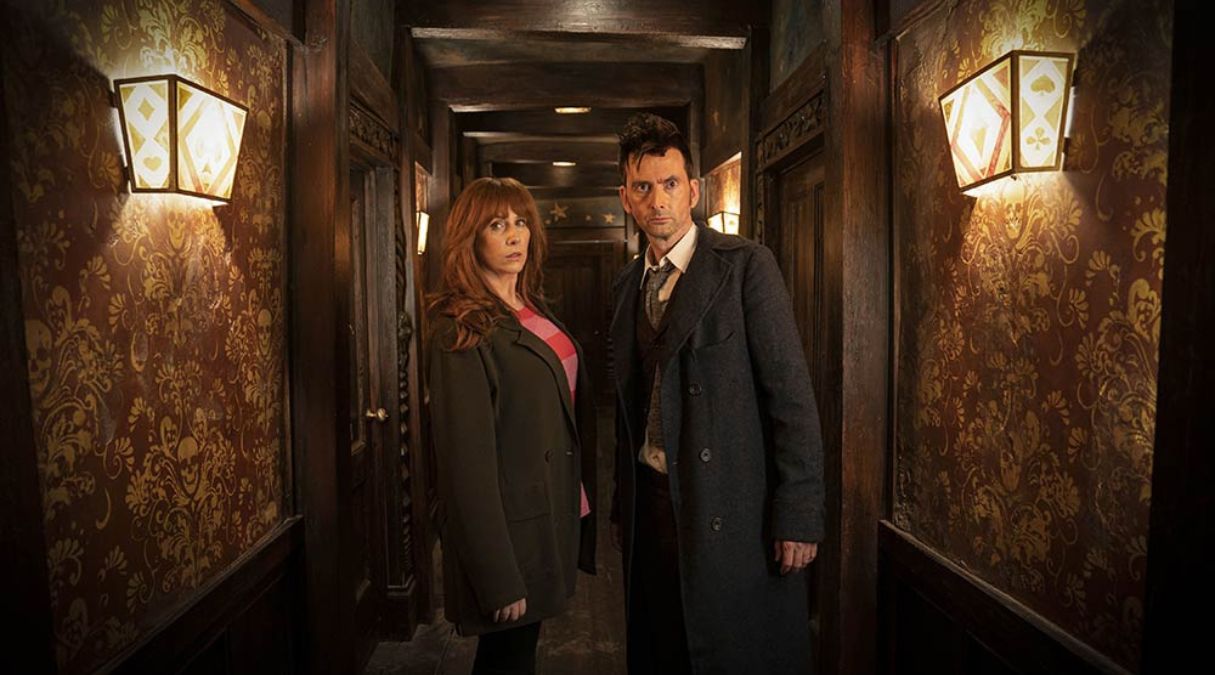
The second announcement was that actor David Tennant, who played The Tenth Doctor, widely credited with making Doctor Who into the juggernaut it was during its return run, was coming back to the role, though it wasn’t confirmed exactly how he was going to return. In the same announcement, it was stated that, alongside him, Catherine Tate, who had played Donna Noble during Tennant’s era, was returning.
This was another peculiar announcement – the tragedy of Tate’s character was that she could never remember her adventures with The Doctor, or she’d die. Both of them would be returning for the 60th anniversary celebrations of the show. This understandably led some fans to think that these might be adventures set during her time with The Doctor – anniversary specials tended to feature past Doctors, after all.
But that wasn’t the case. And when the 60th anniversary came along, things started to go wrong…
The RTD2 (a term coined by fans) era has been critically divisive, and that divisiveness started with the 60th anniversary specials. But it carried through the next two series, leaving the show in a bizarre position where nobody really knows what’s happening next. So, how did we actually get to this point?
The 60th Anniversary Specials – The Cloister Bell Starts To Ring

There’s a misconception among Doctor Who fans that anniversary specials exist entirely to reference the past and bask in the show’s history.
But all it takes is watching the specials to understand this. The Tenth anniversary special, “The Three Doctors,” does feature multiple Doctors, but it also furthers the lore and story around the Doctor’s home planet, Gallifrey, and ends with the Third Doctor being given access to his TARDIS again, setting up the future of this series. The 20th-anniversary special, “The Five Doctors,” wraps up an arc surrounding Gallifrey while also celebrating the show’s history.
Then there’s “The Day Of The Doctor,” the 50th anniversary special, which might feature the return of David Tennant as the Tenth Doctor, but also sets up the return of Gallifrey from The Time War, an event that was put into motion eight years earlier. Additionally, it sets up a storyline that won’t be paid off for another two series. None of these specials exist solely for nostalgia.
But the 60th anniversary specials feel like they do. Each 60th anniversary special feels designed primarily for nostalgia, with more meaning crammed in later in the production process. Mel, one of the Sixth and Seventh Doctor’s companions, returns only because Davies liked her as a character, even returning several times in Gatwa’s seasons.
I’m a big fan of the Doctor Who expanded universe, which uses nostalgia a lot – but there’s a difference between that and the main show doing it. The show is supposed to introduce the wider world, not the other way around.

The real first warning sign that we were stuck in the throes of nostalgia was during the closing moments of Jodie Whittaker’s final story, The Power of the Doctor. We’d known for a while that she was leaving during the episode, but we didn’t actually know who she was regenerating INTO.
The smart money was on Ncuti Gatwa, since he was the next Doctor, but there was no indication that he was actually part of the 60th anniversary specials. So, as she stepped out of the TARDIS and burst into orange flames, everybody watching leaned forward, ready to see the face that would emerge, and the face was David Tennant.
David Tennant was now the Fourteenth Doctor, and that meant two things: that the 60th anniversary specials were NOT flashback episodes, and that something was about to happen that would potentially completely undo the tragedy of Donna Noble, and Ncuti Gatwa wasn’t playing the Fourteenth Doctor. He was playing the Fifteenth.
The behind-the-scenes reasons were relatively simple. Gatwa was busy with other commitments, but Davies still wanted to celebrate the show’s history with a 60th anniversary special. While this is a fair thing to do for a franchise, it was odd to bring back Tennant as yet another incarnation of The Doctor, rather than doing a story set in the past. Still, there was potential here and a story to be told about toxic nostalgia and how we let our past carry more weight than our futures.
Nostalgia drives the RTD2 Era of Doctor Who

So fans waited for a year between “The Power of the Doctor” and the first of the 60th anniversary specials, “The Star Beast.” While various places such as Big Finish (the audio branch of Doctor Who) began celebrating the show, TV was still waiting.
When I sat down to watch “The Star Beast,” I was excited, in spite of the fact that the series hadn’t excited me for a while at that point. While I wasn’t excited for the series as a whole anymore, the fact that this was the first of three massive anniversary specials had me giddy with anticipation.
Like many fans, I was looking forward to finding out the explanation behind how they were going to handle Donna’s return without undermining everything that came before, and I was looking forward to the explanation behind David Tennant returning as The Doctor.
And you know what? It was nothing special, but it was just fine. Even though Donna’s sacrifice was indeed undermined, the episode itself was fine. Was it a nostalgia-fest? Yes, but at least it wasn’t terrible, and that was a pattern across the rest of the anniversary specials, right up until the final act of the final special, “The Giggle.“
Now, Doctor Who fans are known to be resistant to change. When Chris Chibnall rewrote the history of The Doctor with “The Timeless Children” to restore a little of the mystery surrounding the character, fans were furious. Still, there is a difference between somebody hating change because it is change, and hating something because it’s bad.
David Tennant’s return as the Fourteenth Doctor was something I could accept because I knew he was going to change again. He’d turn into Ncuti Gatwa, and we’d all move on from the anniversary. Unfortunately, that’s not what happened.
After being shot with a laser, rather than regenerating, the Fourteenth Doctor split in two – Ncuti Gatwa grew from David Tennant. Now there were two Doctors; they defeated the baddie, and the episode ended with David Tennant still alive and active on Earth, while Ncuti Gatwa was in space being The Doctor. And here lies the problem.
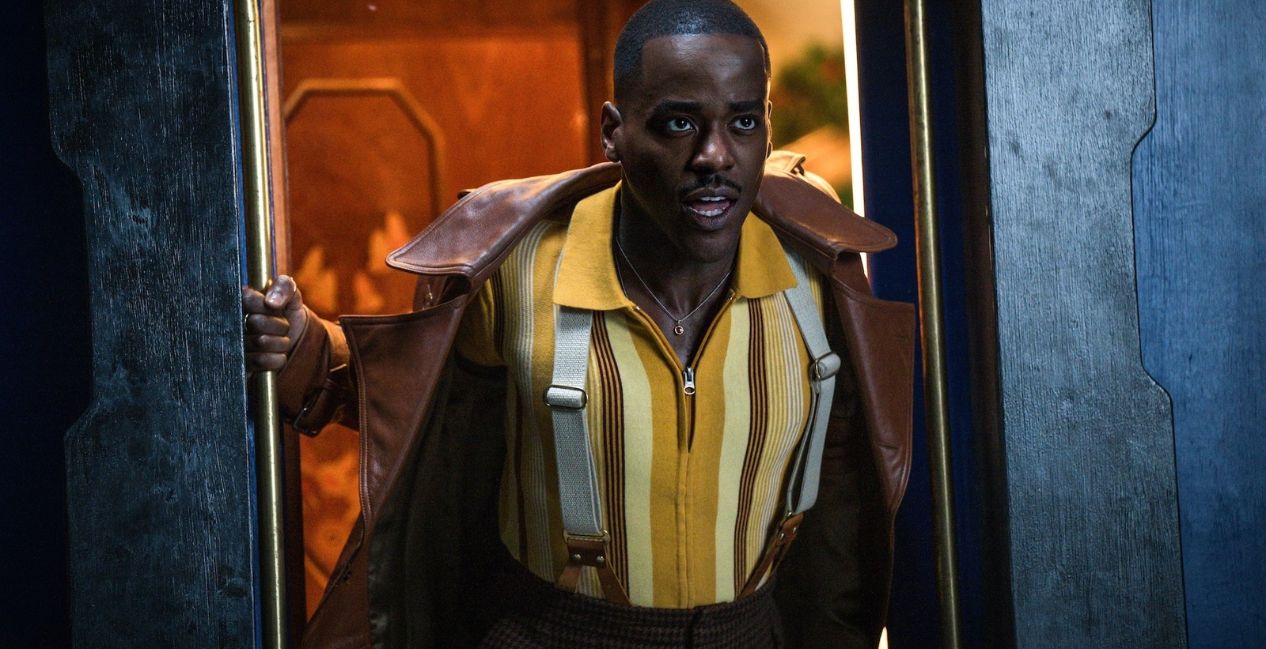
This undermines Ncuti Gatwa’s Fifteenth Doctor in a way that no other Doctor has faced – there are now two Doctors active in the universe at one given time. This means that people who only watch the show for David Tennant get a sense of vindication that their Doctor is truly the most important one, while the Fifteenth Doctor has to actively fight to keep his audience interested.
This narrative choice is not fair on Ncuti Gatwa or the impact of taking on the TARDIS. Instead of being the Fifteenth Doctor, he’s suddenly been reduced to just ‘The Other’ Doctor, and not the Gallifreyan involved in the founding of Time Lord society, although given the evidence, he’s probably that too.
To give Gatwa his credit, he does immediately step into the role with gusto – his screen presence is electric, and his Fifteenth Doctor is immediately defined as someone different for the franchise. Still, the stories going forward would have to be of incredible quality to really make him stand out against one of the fanbase’s favorite actors. Obviously, Gatwa had the Christmas Special, “The Church on Ruby Road,” up first, but the first real test would be his first episode of a proper season of his own show.
Doctor Who Season One – The TARDIS Catches Fire

Author’s note: I will be referring to the two Ncuti Gatwa series of Doctor Who as the BBC does – Season 1 and Season 2 instead of “Series.” Russell T Davies and the BBC made this decision to make the series an easy entry point for new viewers, without them feeling like they were watching a show steeped in history.
“Space Babies” aired on May 11, 2024, and served as a crushing reminder of Russell T Davies’ faults. Unlike Rose, which used the introduction of a new titular companion (Rose Tyler, played by Billie Piper) as a way to offset the weirdness of the Doctor Who universe and ease people into it with a plot that it took seriously, Space Babies instead throws viewers into the deep end.
Audiences are immediately expected to understand the type of stuff that Doctor Who does as a series, and they’re expected to accept it without question or critique. This wouldn’t be as much of a problem if the episode was treated with the same level of sincerity as something like The Eleventh Hour, Steven Moffat’s first episode as showrunner in 2010, but it isn’t. Instead, Space Babies is a farce.
Space Babies wants you to laugh and not take it too seriously. That starts with the entire premise of the episode: a group of talking babies is being stalked by a living booger. As a franchise, Doctor Who does not work if you cannot take it seriously, even with its humor across the iterations of the Doctor.

This is why nobody really rates “Timelash”, but people absolutely adore “City of Death.” There’s a reason that nobody really talks about “War of the Daleks,” but people gush relentlessly about “Alien Bodies.” You have to take the ridiculous at face value.
Being fair to Ncuti Gatwa, he is great in “Space Babies.”His Doctor shows the audience personality and fizz, while Millie Gibson’s Ruby Sunday immediately steps into the role and feels like she belongs in the franchise.
But the problem with making your opening episode like this is that the two main actors have no real personalities to bounce off each other. In some ways, this allows viewers to really get to know the new dynamic. On the other hand, it doesn’t really tell you how Ruby and The Doctor will react in a situation with other people.
The biggest sin that Space Babies commits is that it has such promise. There’s a way to do a story about talking babies that feels real, but you cannot do that on this budget, with these resources. Every single time the babies talk, it looks like somebody has used the same technique as the Annoying Orange – which works in a humorous sense, but not in anything that is trying to be taken seriously.
The Bogeyman looks fine, but its true nature undermines it. The show wants you to buy into it, but there’s just no way to do it. As a debut, this should have been a warning for what was coming. But before we skip to the final two episodes of Gatwa’s debut season, we have to look at its foundation.
Doctor Who’s investment in story arcs across its season is at its worst in the RTD2 era.

Traditionally, Doctor Who seasons are grounded by a central, impactful arc. Sometimes the arc is tied to words, like “Bad Wolf”; sometimes they’re recurring plot points, like planets going missing in Series 4. Sometimes the arc is way more overarching, like Missy’s (Michelle Gomez) arc in Peter Capaldi’s era of the show.
Unfortunately for the Fifteenth Doctor, Davies’ approach to plotting out his overarching narrative devices falls short. Russel T Davies brought back the series in 2005 with some of the franchise’s most memorable story arcs, but with Season 1, he leans into his worst tendencies.
Throughout, one actress, Susan Twist, appears in every episode. Twist doesn’t always play the same character, but she always clearly has the same appearance, making it easy for audiences to spot her. The problem, though, is that in Davies’ previous Doctor Who arcs, The Doctor never really gets a chance to interact with them until the end, which makes her appearances only impactful for the audience, not the characters.
In Doctor Who Series 1, the Ninth Doctor, played by Christopher Eccleston, doesn’t interact with “Bad Wolf” until the last few episodes of the series despite the words being scrolled across nearly every episode. In Tennant’s Series 3, the Tenth Doctor doesn’t have a clue what’s going on with Harold Saxon (played by John Simm).
And yet, both the Fifteenth Doctor and his companion, Ruby, interact with the characters played by Susan Twist in almost every episode, yet they never mention Susan’s recurring appearances until the first part of the finale. The Doctor’s failure to notice that he keeps meeting the same person shatters the idea that He is a genius and diminishes his intelligence in the eyes of the audience.

The first real interaction that The Doctor and Ruby have with the story arc is in the first part of the two-part season finale. “The Legend of Ruby Sunday” opens with The Doctor and Ruby skidding into UNIT headquarters (UNIT stands for the Unified Intelligence Taskforce) and asking them to identify the woman that they keep seeing.
In doing so, they discover that her name is Susan Triad, and that she is the head of S Triad Technology. Everybody then realizes that S Triad is an anagram of TARDIS, which feels like a parody of Davies’ ‘Bad Wolf’, but was actually a well-placed, well-seeded hint toward the show’s future. Still, this revelation shifts when The Doctor suggests the possibility that Susan Triad is his granddaughter.
Gatwa’s Doctor makes this suggestion based on one of the Doctor’s original companions, Susan (Carole Ann Ford), who was the Doctor’s granddaughter. But Susan isn’t straightforward, since there is a lot of contradictory lore surrounding her; what is important to know is that Susan left the TARDIS in 1964’s “The Dalek Invasion of Earth” because she met a guy (it was the 60s).
Since then, The Doctor has never seen his granddaughter again outside of one appearance in The Five Doctors. While there are appearances of her in the Extended Universe around Doctor Who, there is nothing defining them as canon.
“The Legend of Ruby Sunday” solidifies the RTD2 era’s fascination with nostalgia.

When the Fifteenth Doctor pulls the past into the present and suggests that Susan is his granddaughter, it has been decades since the character was in the show. Still, there is very little chance a casual viewer will know who she is, the circumstances of her departure, or why she is so important to the series.
This makes Davies’ choice to make her part of the crux of the new season’s closing adventure, one that the creatives involved wanted to be a perfect jumping-on point for the show, a questionable decision. Yet, that’s still not the strangest choice that Davies makes with Gatwa’s introductory season.
After building up the idea that Susan is S Triad, and the Doctor’s granddaughter, it’s revealed at the close of “The Legend of Ruby Sunday“ that everybody was wrong. S Triad has nothing to do with Susan, and indeed it has very little to do with the TARDIS at all.
Instead, Susan Triad Technologies is actually hiding a different name from Classic Doctor Who – Sutekh, something that the episode goes out of its way to shorten to Susan and Technologies, so this makes sense, even though it’s already a bit of a stretch.
Sutekh then proceeds to breathe dust across the galaxy and decimate almost all sentient life, except for a few select people. Obviously, this is undone in the next part, and it introduces a larger problem with stakes of this magnitude: it’s impossible to maintain them without an audience knowing they’re going to be undercut.

Still, Sutekh exists. Sutekh first debuted in the 1975 story, “Pyramids of Mars.” Not only is that his debut episode, but it’s also his ONLY episode despite the importance we see in Season 1. He’s a member of a race called the Osirans – an alien race with a massive amount of power.
In his first appearance, Sutekh thinks of himself as a God and takes on the persona of an Egyptian Deity. What’s important to note, though, is that while this race does think of themselves as Gods, they are not actually Gods.
When he returns, however, it’s clear that Davies wants to write Sutekh as a god, despite previous lore. As a god, he uses the various versions of Susan Twists across time as his harbingers to spread his dust and kill everything, everywhere.
While Davies’ choice isn’t inherently a bad one, since you can redefine a villain, as he did with the Daleks, among several others, it’s the execution that falls flat in “The Legend of Ruby Sunday” / “Empire of Death.” In order to provide context to Sutekh, there’s a scene in the latter in which The Doctor and Ruby watch Pyramids of Mars.

To coincide with this, the BBC released a newly edited version of the serial on iPlayer that is supposed to be the version which they watch – so they actively want you to watch his first appearance, despite the fact you’re going to come out of it wondering why he is acting so differently now. It’s a really baffling strategy.
“It’s very much, kind of internet-age storytelling… you just hope it’ll generate content,” Davies shared in the behind-the-scenes show, Doctor Who Unleashed (a behind-the-scenes series no longer available on BBC’s iPlayer), as he explained creating Doctor Who for the internet age.
That is what Ncuti Gatwa’s first season feels like. Television written for the internet. His Doctor doesn’t feel like a passion project the way the 2005 series does; Season 1 doesn’t feel like a labor of love. In the new RTD2 era, it feels like Davies and his team are terrified that the show is now irrelevant for this generation of fans, and they’re desperate to prove that they’re actually worth something.
The choices are as if to say, “Look at us, we have so much history!” except they never use that history interestingly or coherently, only to provoke nostalgia. And as it turns out, Season 1 was just the beginning of the problem.
Doctor Who Season 2 repeats all of Russell T Davies’ mistakes from Season 1.

As with Season 1, Doctor Who Season 2 isn’t something that we need to cover every episode to see its flaws. The first of those is the fact that, in the closing episode of the previous season, Ruby left the TARDIS. While the actress, Millie Gibson, still appears in Season 2, she isn’t in every episode anymore. Instead, she’s replaced by Varada Sethu, who plays a new companion named Belinda.
Like every companion before her, Belinda has her own character arc, and hers is that she wants to go home, but she can’t. For Season 2, there is something stopping The Doctor from landing the TARDIS in modern-day. As such, the pair are using a device, the Vindicator, which requires them to travel to various time zones and gather data so they can drag themselves back to the present, justifying the adventures they go on.
Much like in Season 1, Gatwa’s second season also features a recurring character, Ruby’s neighbor, Mrs Flood (played by Anita Dobson). First appearing in the first season, Mrs. Flood keeps showing up in different time periods and even on different planets. Only, unlike Susan, the Doctor and Belina never see her.

But to understand the issues with Doctor Who Season 2, you have to look at Episode 6, “The Interstellar Song Contest.” Broadcast on 17 May 2026, “The Interstellar Song Contest” fulfills a long-requested Doctor Who episode premise at the worst possible time.
That premise is a Eurovision-themed episode of Doctor Who, and the reason that it was a terrible time to do the episode was that Eurovision was, at the time (and as of right now, in fact), under boycott by several participants due to the fact that they are allowing Israel in the competition despite their actions in Palestine, and despite the fact that Eurovision has become a way to do political propaganda on a massive stage.
Now, this wouldn’t be so bad if the episode had something to say about the situation, something worth saying – but it somehow not only does not do that, but it says something utterly despicable about the RTD2’s version of the Doctor: that he can abide genocide.
“The Interstellar Song Contest” sees the titular contest hijacked by two members of a race known as Hellions, named Kid and Wynn, who suck almost the entire arena, including The Doctor, into space, while Belinda and a few others are stuck on the station itself.
“The Interstellar Song Contest” is one of the RTD2 era’s lowest points.

Their reason for this is that the Hellions are seeking revenge against the sponsor of the contest, PoppyHoney, who destroyed their home planet for personal gain. The Doctor finds his way back to the arena thanks to encouraging visions from his granddaughter, Susan, and finds out that one of the singers in the contest, Cora, is also a Hellion who is hiding her heritage due to discrimination.
Kid and Wynn plan to use the contest transmission wavelength to kill three trillion people watching it. The Doctor makes his way to Kid and proceeds to torture him brutally, electrocuting him and screaming at him without even considering his actions, and only stops because Belinda appears.
The two Hellions are arrested, everyone ejected into space is revived, and Cora sings a song in the native language of Hellia, revealing her heritage and earning a standing ovation. The Doctor and Belinda discover from a hologram that the reason they haven’t been able to travel to the present day is that Earth is destroyed on that date, and as they land, the TARDIS explodes.

In a post-credit sequence, it is revealed that Mrs Flood, who was at the concert and was sucked into space, is a Time Lord, the same species as The Doctor. She bi-generates into another form played by Archie Panjabi (making the original bi-generation not special at all) and reveals that she is The Rani, a villain from Classic Who.
The primary problem we need to discuss is how all of this feels very much like an allegory for what is currently happening in Gaza. On October 7, 2023, Hamas attacked several locations in Israel as a direct response to Israel attempting an ethnic cleansing of the Gaza Strip.
Around a thousand people died in the attacks, and in response to this, Israel escalated its ethnic cleansing, engaging in a full-scale genocide, as defined by the ICC (International Criminal Court), which has resulted in the deaths of over 80,000 people in the Gaza Strip, many of them civilians, and injured upwards of 200,000 people, and which has seen Israel found guilty of war crimes.
Eurovision homage was the goal; a toothless bothsidesing of genocide is what the RTD2 era does instead.
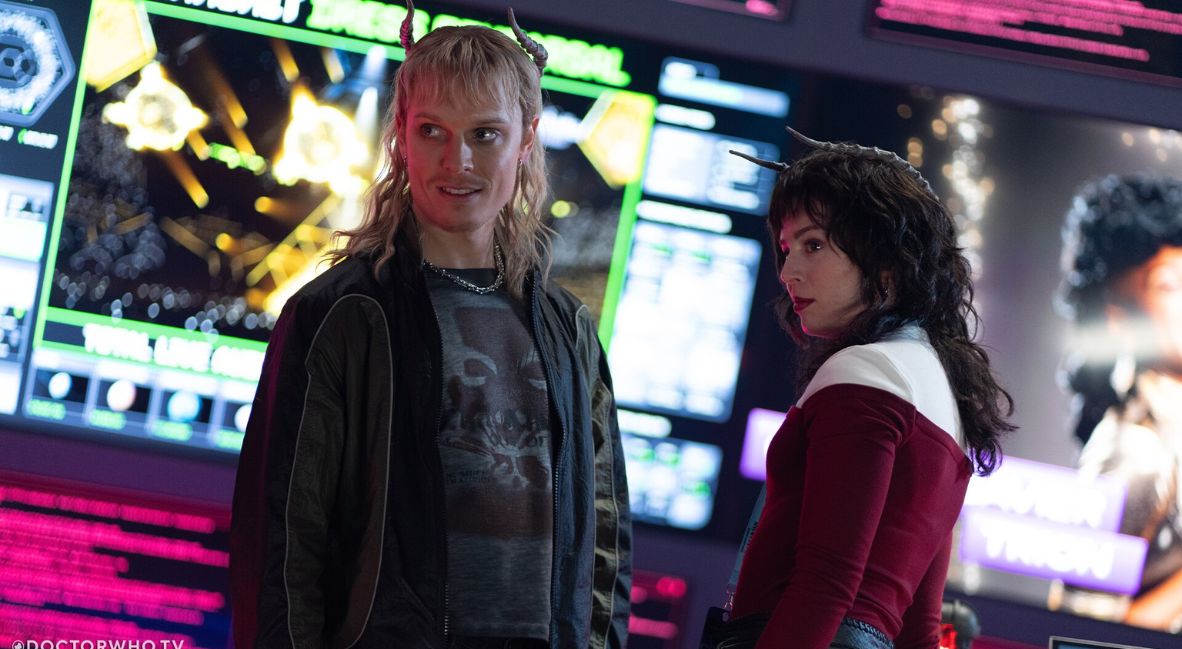
It is impossible to talk about this episode without thinking about how intentional it feels. Wynn and Kid, members of a race whose planet (Palestine) has been taken by an organization (Israel) so they can use it for their own benefit. They are fighting an organization that uses their cultural heritage to make a profit.
The organization has killed members of the species and forcibly segregated them so they cannot be a part of the society that they control. Kid and Wynn have had enough, and while their actions aren’t exactly justifiable, they’re a response to that level of hatred – a very clear allegory for the events of October 7, 2023.
The episode should show The Doctor helping to dismantle, or start to dismantle, PoppyHoney. The Doctor is not a perfect person, but he’s shown in previous Davies episodes, such as The Parting of the Ways, that he cannot abide genocide and believes it is never a solution. That should also extend here – what Kid and Wynn are doing isn’t something The Doctor can allow to happen, but he should have sympathy for the reason that they’re doing it.
Even when an episode of this era attempts to be an allegory for a real-world problem, which is something that Doctor Who does often, it cannot get away from the past. Instead of trying to say something about the present and the world in which it is made, it uses nostalgia as a tool. What should have been a sobering reminder of what we are capable of as a species is instead just a series of characters from the past cropping up to wave at the camera.
Nostalgia eats away at any real-world commentary there is in the RTD2 era of Doctor Who.

Susan appears very briefly so the audience can point and say they recognize her, and here’s a spoiler for the next two episodes – this plot point isn’t resolved. There’s no reason for her to show up here, no reason at all. She is truly there so that people can smugly grin and explain her history. It’s a really baffling decision – if Russell knew that the Susan plot wouldn’t be resolved this season, why is he using it in such a key way here?
The return of The Rani, too, feels like it exists just to excite people who watched Doctor Who in the 80s, like Russell himself. You can argue that Russell has previously brought back villains like the Daleks, the Cybermen, and The Master. But my rebuttal is this: at least people actually remember those villains, and there are stories featuring them that are considered all-time classics.
The Rani has appeared in three televised episodes before this – “Mark of the Rani,” a very mediocre Sixth Doctor adventure; “Time of the Rani,” which is considered one of the worst episodes of the entire show; and Dimensions in Time, a 1993 charity special broadcast during the period that the show was off-air, which is considered one of the most embarrassing things the show has ever done by many people. So bringing The Rani back really feels like Russell plumbing the bottom of a barrel. But put a pin in The Rani for a second.
The fact that the episode ends with neither the stand-in for Israel nor The Doctor facing consequences for his horrific actions is just a really poor decision on Dawson’s part. If you’re going to tell this story, if you really think you have what it takes to tell this story, you don’t show both sides of it. You need to give this topic a certain amount of weight, and it’s weight that “The Interstellar Song” Contest fails to give.
The twist at the end of “The Interstellar Song Contest” leads into the two-part finale, “Wish World” / “The Reality War,” which really gives more attention to The Rani.
Russell T Davies’ attempt at cultural commentary through allegory fails again in “Wish World”

Conrad Clarke (played by Jonah Hauer-King) is also an important name for the two-part finale. He first appears in “Lucky Day,” the Doctor-Lite episode of the season (this is the episode that is filmed when the actor playing The Doctor is either unavailable or busy on another episode), and is a right-wing podcaster who believes in traditional values. At the end of that episode, he’s dropped in prison, but is freed by Mrs Flood.
“Wish World” is an oddly empty episode up until the cliffhanger. The world has been put into what is best described as a version of ‘The Hex’ from WandaVision, with The Ranis and Conrad using the power of a magical wish-granting baby to change reality so that it suits Conrad’s ideal world – which includes The Doctor and Belinda, who are married here with a child.
What this means is that everything feels very much like the 1950s – the men are in charge, while the women do what they’re told. There are interesting themes to be explored here – Davies could look at how modern politics (such as those in America and the UK) are causing backslides into old rhetoric, or how a rise in right-wing grifting could have a massive impact on the youth of the world.
Instead, however, Davies doesn’t dive into these themes. It’s all window-dressing for his true twist, which is revealed at the end of the episode to be The Two Ranis trying to unleash a founding member of the Time Lords, Omega, from his prison. Omega appeared in the Classic series twice – 1972’s “The Three Doctors” and 1983’s “Arc of Infinity,” and he’s about as deep-cut a villain as Sutekh was.

In fact, Davies ‘window-dressing’ isn’t really that well done at all – within the first twenty minutes of The Reality War, all of the villains are defeated. Omega kills one of the Ranis when he is freed, the other teleports away, and Omega is sent back into his prison.
It feels like a damp squib – all of the build-up which Davies has done, all of the potential of having the Doctor confront a founding member of his race who he thought was long gone, perhaps leaning into the fact that the Time Lords weren’t actually great people, all of that is just left dangling.
Without the rest of the villains, Conrad becomes extremely easy to defeat, so Ruby just steals the Wish Baby from him and undoes his world. In doing so, she makes it so that Conrad is living a ‘happy’ life, which feels underwhelming. All of Conrad’s appearances so far have been centered around the fact that he’s not a great person, and his actions support that.
But rather than follow through and have him face consequences for his actions, Davies goes the route of ‘it’s kinder to make him remember none of this’, which just doesn’t work for his character – his story should have been wrapped up by showing how he got to the point he did, why he ended up so awful and how opinions can fester in the right circumstances to become cruel.
Davies return to Doctor Who puts women into a box with little to no range.

By undoing the wish, Ruby also undoes Conrad’s reality, which means anything created by him fades away. This should include The Doctor and Belinda’s baby. But here’s the problem – Poppy, Belinda and The Doctor’s child is a real baby.
In fact, she’s one of the babies from Space Babies, and Belinda knows that if the wish is undone, then The Doctor and she will forget her. So, The Doctor sticks her in a special room where she won’t be affected by the undoing of the wish.
Davies literally puts the main female character of the show into a box for the vast majority of her final episode, and it’s pointless anyway, as after reality is returned to normal, Poppy fades from existence, and everybody other than Ruby forgets about her.
It’s never really stated why Ruby remembers Poppy, but thematically it does make sense – Ruby was a foundling; she was abandoned by her mother and adopted. She knows what it’s like to be left alone as a child; she knows how scary it can be, and she doesn’t want that to happen to Poppy.
So she persuades The Doctor that Poppy was real, and The Doctor takes his TARDIS, alone, to fix the problem. He does this by shifting the timeline using his regeneration energy so that Poppy was always Belinda’s daughter, but this costs him his life.
RTD2 era of writing bogged down Ncuti Gatwa’s fifteenth Doctor.

Before he dies, The Doctor checks in on Belinda to find she’s happy with Poppy, who is now Belinda’s daughter (but not The Doctor’s anymore), and then he goes off into space, looking out into the cosmos as he prepares to die. But before we discuss the closing seconds of the episode, let’s talk about Belinda Chandra. Let’s talk about what The Doctor did to Belinda Chandra.
Essentially, The Doctor has given Belinda a child without her permission (Belinda only thinks Poppy is her daughter because of what Conrad did; none of this was her choice). The Doctor kills himself in order to force a child onto Belinda, and it’s just a sign of how bizarre Russell’s writing and his politics have become.
There’s nothing heroic about The Doctor doing this. Poppy already existed in the future, in an adventure that was resolved, and they were safe. This isn’t saving somebody; this isn’t Russell writing The Doctor as this great hero. It’s him writing The Doctor as somebody who does not care about the autonomy of his companion, as somebody who is doing something because he wants it.
I’m not saying that this isn’t something The Doctor should be written as – throughout The Seventh Doctor’s televised era, and his stint in the Virgin New Adventures, he was manipulative and used his companions as pawns in a bigger cosmic game.

But that was never presented as a good thing; it was always shown as part of what makes The Doctor an alien. Time Lords aren’t like us, and it’s a way of really nailing that down. Here? The Fifteenth Doctor is written as heroic, doing something The Seventh Doctor would do, which would be written as a villainous act.
And then Ncuti Gatwa’s Fifteenth Doctor bursts into orange flames, his time over, his era rather unfulfilling. But, at the very least, there was the excitement of seeing who the new Doctor was – after all, this wasn’t an announced regeneration. As the orange energy faded, I leaned forward in my chair, excited, only to be met with a familiar face. Billie Piper.
Bringing David Tennant back to Doctor Who for an anniversary special was fine, if not a little cynical. But Russell bringing back the actress who played Rose, his very first companion, as the newest regeneration of The Doctor? That was a step too far.
For me, personally, it really cemented that Russell no longer knew what he was doing – he was desperately pulling at straws in order to get people to pay attention to the show. He no longer cared about the actual story he was telling. And this meant only one thing to me – Russell T Davies had to go.
Can Doctor Who ever come back from the RTD2 Era?
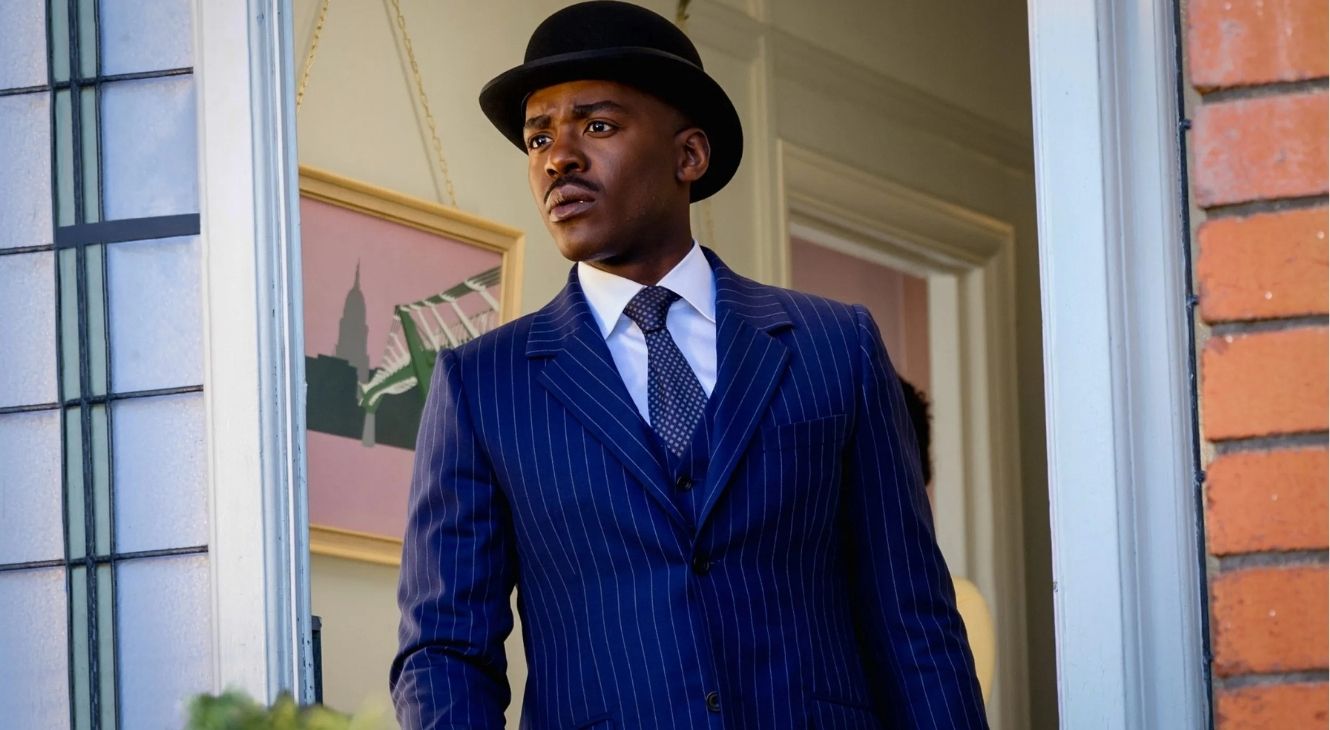
Following the broadcast of Survival Part 3 on December 6, 1989, the BBC chose not to renew Doctor Who for a new series. The Seventh Doctor and Ace simply walked into the sunset, starting a sixteen-year hiatus (with one TV movie in 1996). The show returned in 2005 with massive fanfare and was a big success.
On 10 June 2026, the BBC officially announced that it had canceled the already announced 2026 Doctor Who Christmas Special, and Russell T Davies was leaving the show for the second time. The BBC also said that it was putting the show out to competitive tender, meaning other production companies could bid for the right to co-produce and market the series.
It is not hard to see why people who lived through the former hiatus are worried that we are entering another one. But I don’t think that there’s a need to worry yet, or at all. While the show may have been off-air from 1989 to 2005, it had a whole host of books published that continued the adventures of the show and did things that the show itself could never do, and tried out concepts that it just couldn’t afford.
Sure, there’s a difference here – for starters, we actually had an established incumbent Doctor in 1989, rather than just Billie Piper, who may or may not be the Doctor. But I’m sure people smarter than me can find ways around that.
Despite everything that went wrong with RTD2, I do not think Doctor Who can ever truly die. It has been around for too long; it is too important as a British cultural export; it has too much to give to so many different audiences. Doctor Who in its current form may be done – but Doctor Who can never die. It will simply…. Regenerate.