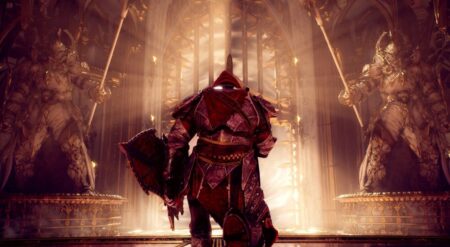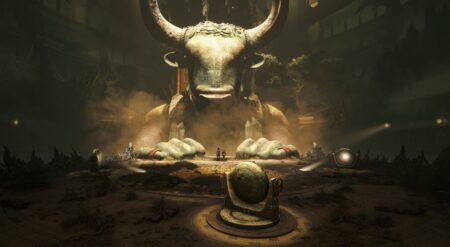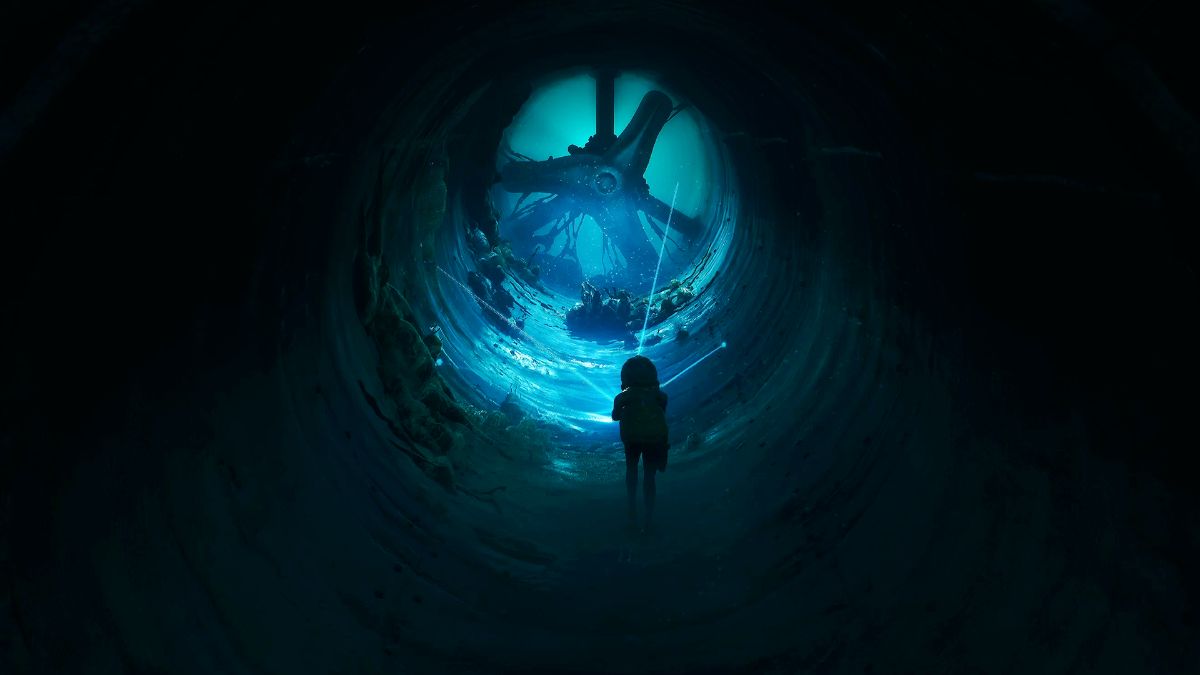
End of Abyss, by Section 9 Interactive and Epic Games Publishing, tries to set the tone for a fun, scary season. Bringing a promising mix of metroidvania exploration to sci-fi survival horror, End of Abyss attempts to redefine the horror genre. With so many different genres in its creation that don’t always marry well, there is a lot to balance to make a good, fun, scary game that meets expectations of every one of those genres alone. Sadly, it instead drops a lot in a rush to be the trendsetter for Spooky Season 2026.
End of Abyss kicks off with mystery. Players play as Cel, a Combat Technician on a team exploring a derelict facility to uncover its secrets. As Cel and the team enter the compound, its corroded machines give way to parasitic growths. Flesh grows on the walls, the dead return to life, and the keys to whatever this facility is hiding are buried under untold horrors of metal and decay.
Similar to games that say little about what’s going on, cover a story in the game, and get out without answering any questions about the setting, character origins, etc., like Little Nightmares, End of Abyss avoids answering questions directly through its dialogue and cinematics. The true story lies hidden in discoverable notes and environmental storytelling. Yet, even after hitting the credits, the biggest questions are left more to the imagination. There are multiple endings, however, and some promise to reveal more than the obscure base ending.
End of Abyss draws on metroidvania design and exploration.

The stellar setting does a lot of heavy lifting. It feels like a new take on the 1997 movie, Event Horizon, with an unfamiliar crew stepping into a grander sci-fi mystery that devolves into unimaginable terrors with something, possibly otherworldly, pulling the strings. Instead of being in space, it takes place in a retrofuturistic research facility stocked with supplies and equipment to make sure nobody can get in… or out. What they didn’t seem to expect is that the threat is biological, it seems.
For environmental design, Section 9 Interactive does a fantastic job. Of the eight-ish sectors to explore, each is distinct, showing a different way this facility fell into chaos. Players see it through the Waterworks employees having to deal with contaminated water, or managing the containment of radioactive material led to a leak of said material for an even more gruesome end. The facility was clearly hiding secrets. Anyone in the know, from the janitor and medical staff to the director, doomed everyone to a fate worse than death.
Each area offers distinct exploration and pushes players to clear every corner with a fine-tooth comb. End of Abyss is heavily influenced by metroidvania level design. Missing a door could cost you a valuable upgrade. A simple key found in one area could trigger a chain of events elsewhere that helps you reach that sector’s boss. Players can freely explore this facility early on, and discovering how to progress becomes exponentially more difficult.
Hints can be found throughout each new area, revealing crucial information.

Backtracking is also highly encouraged. A new item or weapon you get in one area might open up options to progress into the unexplored rooms of other areas. At times that progression feels counterintuitive. One sector, for example, is irradiated. As you enter, you’re warned that prolonged exposure could kill you, but your suit has some radiation protection.
You may first want to wait to explore this area until you get the right upgrade. But the use of “prolonged” is crucial and carries a lot of weight. The damage radiation deals is minimal so that you can explore a bit. This is the key to unlocking the full irradiated area. You need to dive into the radiation to find a way to be safe from it. Without giving anything away, this one item in particular was tricky to find without any guide or hint.
On the storytelling front, the notes hidden throughout every area offer hints for what you may need to unlock more doors or shortcuts. Cel carries a scanner you can use on a useful or interactable object, or even an enemy, to reveal information. This is the main way to fill out your map with info on locked doors, what you need to unlock them, and notes nearby that hint at what to look for to find the associated key or tool.
End of Abyss offers a ton to do and a variety of enemy designs.
But what is shocking is how much there is to do. Even with heavy exploration, the completion rate was only 53% after beating the final boss. Granted, that’s only with the base ending. But there is still so much to do! If you focus on the golden path, as I did, you’ll reach the end without many suit upgrades and weapons. Sector 9 has a lot of content around the main golden path, which is a plus.
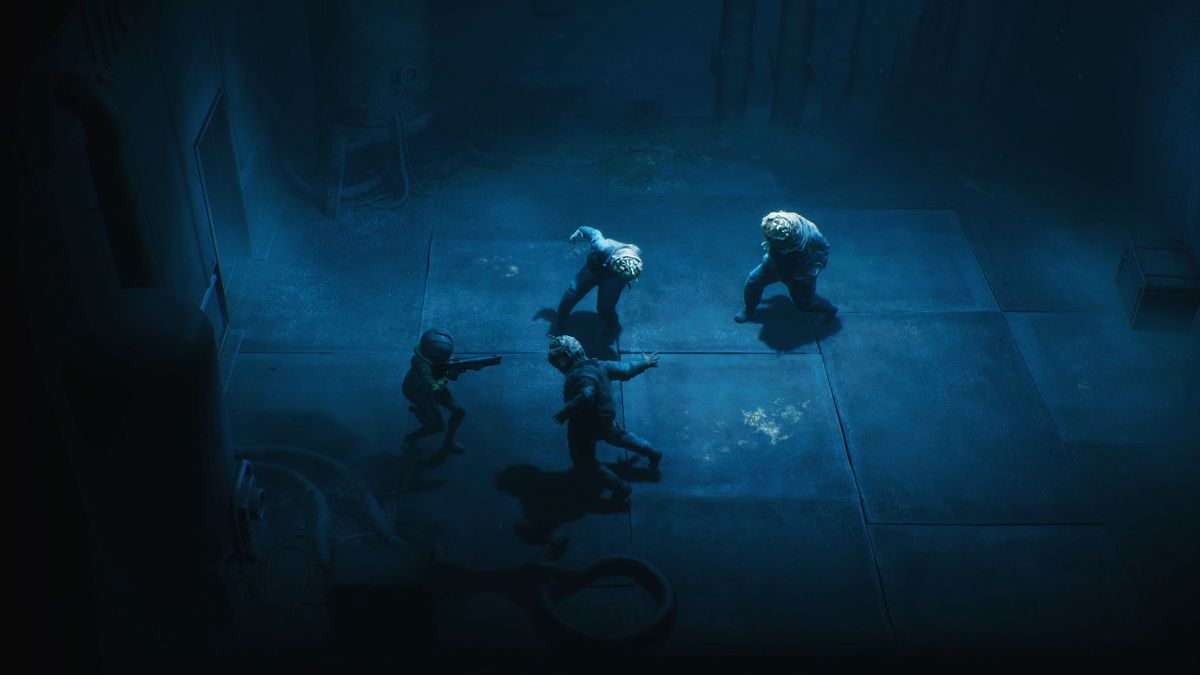
The facility isn’t just full of secrets to discover, but monsters that need to be dispatched in order to progress. Combat feels like a twin-stick shooter, given its diorama-like perspective. Your character faces wherever you point the left stick, and they aim the gun or throw explosives wherever you point the right stick. Even as a survival horror, the base weapon has unlimited ammo but inflicts little more than a scratch at first.
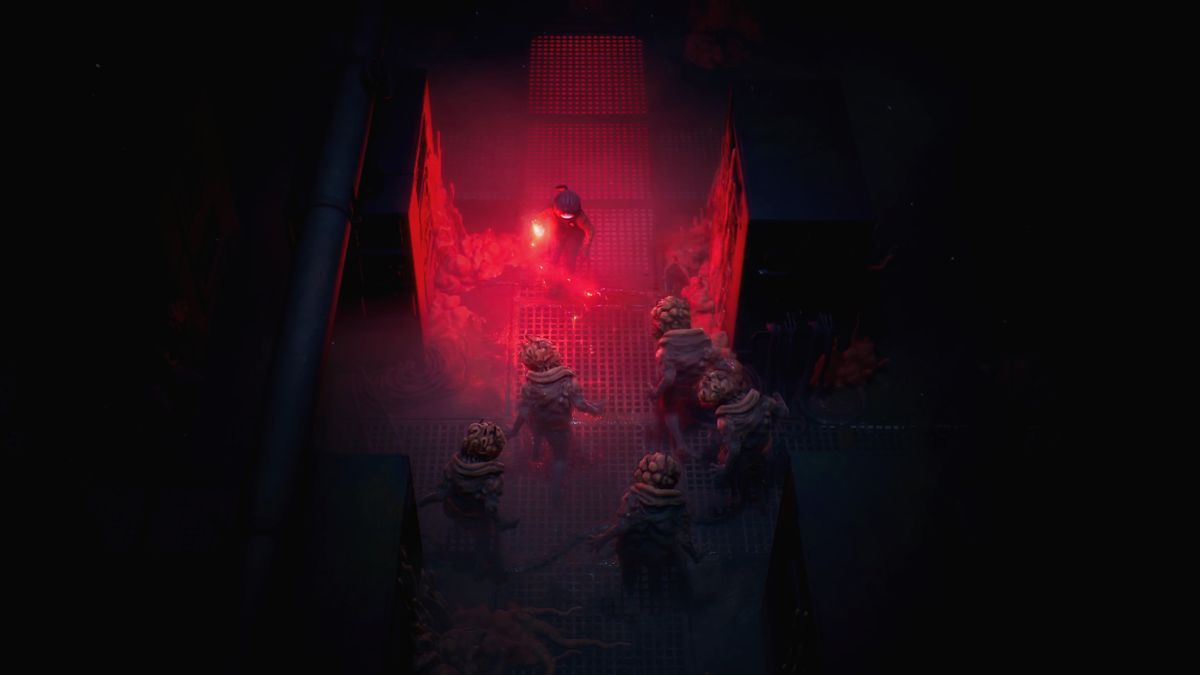
Enemies can be bullet sponges, but as you find weapons like a rifle or shotgun, they have limited ammo. Crafting, as such, is a major focus and is done through a currency called fragments. And the fragments become bountiful enough later on in the game that you can max out ammo pretty easily. Regardless, the discovery of limited ammunition weapons indirectly tells you to use them sparingly, but only if you are in grave danger. What surprised me about the combat was how much variety there was in enemy design. From defense robots still serving their purpose to Cronenberg-style, hyper-aggressive flesh blobs.
The excitement over finding a fragment lessens over time.

There are several options to avoid damage and survive. Killing enemies quickly or dodge rolling. Just like a souls-like, End of Abyss has a dodge roll that requires timing the i-frames to avoid any damage. You also have a heal and can upgrade your weapons or craft expendable items to be more kitted out for the dangers you may face. For the most part, crafting is a choice of priorities at first.
The sheer amount of fragments that drop as you progress is outrageous. By the final boss, while keeping up with making the max amount of grenades and flares, one might still have thousands of fragments with nothing to spend them on. That alone diminishes the excitement of finding a fragment node or a chest full of fragments to collect. Enemies also tend to drop more and more fragments as you continue through the game, when you’re really hoping for ammo or a key item needed to upgrade a weapon further.
Foes also fit with whichever setting you find them in. In the Reactor area, you’ll find more human-like beings in their hazmat suits with air tanks on their back that you can explode. Enemies have gained affinities that relate to where they are discovered. Like the foes found in the radiation-filled area have made the enemies be able to use it, and gave ticks a lingering radiation damage debuff if they latch on to you. The foes found in the secret lab have more tentacles and regenerative properties.
The boss fights reflect the game’s specific environments, but not all of them are challenging enough.
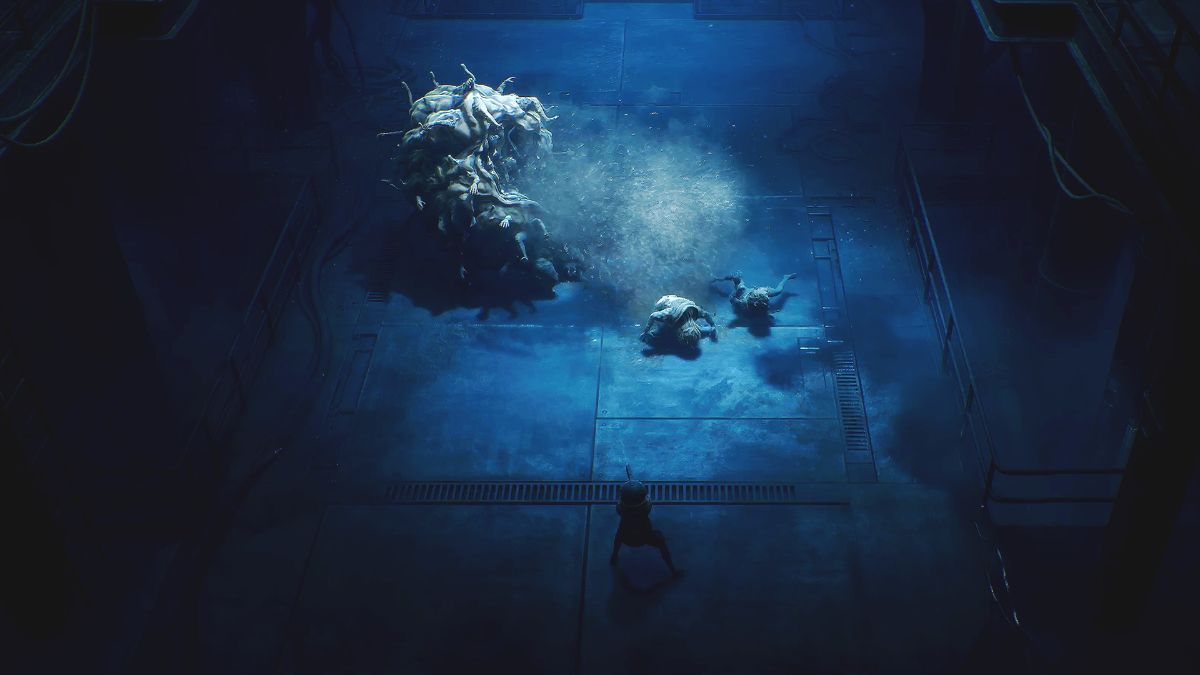
Each major area has a boss between you and that location’s primary objective. Each reflects the area’s general theme and cranks it to eleven. The first was a massive conglomeration of these goopy human-zombies that expelled individual zombies from its mass. Over time, it took more damage. Another required flames to keep its health regeneration under control. But the boss difficulty was all over the place.
The second boss, a human-like centipede monster, was by far the hardest, seemingly setting the bar for continued grueling and unique fights. However, after beating the game, this was the only truly difficult boss. The rest are easier to understand, with attacks that are more readable in the angled camera perspective or aren’t as quick with their attacks as the Centipede was. Either the centipede needs to be nerfed, or the later bosses need to be much harder for the game’s progression to make more sense. As it stands, even the final boss is a cakewalk compared to the centipede.
For the most part, End of Abyss is a fine, borderline great game. What holds it back is the numerous bugs during the playthrough. Like an invisible wall that could be passed through one way, but with no sign that you couldn’t backtrack through that same hallway.
End of Abyss is fine, but there’s room for improvement.
These issues aren’t game-breaking, but they interrupt the desired, immersive effect. It reduces the tension, adding more of a focus on working around the bugs and glitches than working through the problems the game throws at you to progress. We’ve heard from the developers that fixes for many bugs that were experienced during the review period have planned fixes in the works, thankfully.
End of Abyss tries to balance a lot, from sci-fi survival horror to souls-like metroidvania exploration. But it buckles under its own weight. Numerous non-game-breaking bugs put a damper on fun exploration. Imbalance in boss difficulty sets the wrong expectations. As a horror game, it has wonderfully suspenseful vibes but struggles with the scares. With more refinement, End of Abyss could have been great.
End of Abyss is available October 1st on PC, Xbox Series X|S, and PlayStation 5.
End of Abyss
-
Rating - 6/106/10
TL;DR
End of Abyss tries to balance a lot, from sci-fi survival horror with souls-like metroidvania exploration. But it buckles under its own weight.