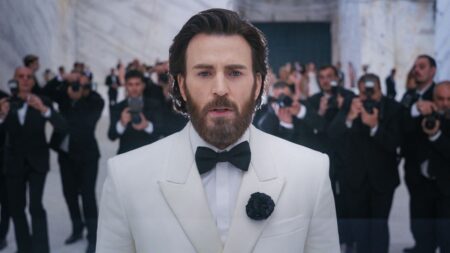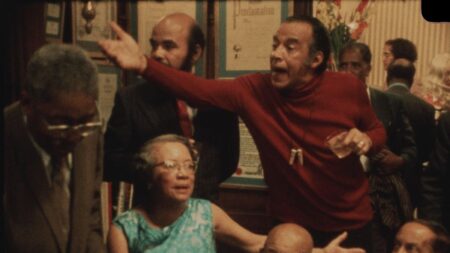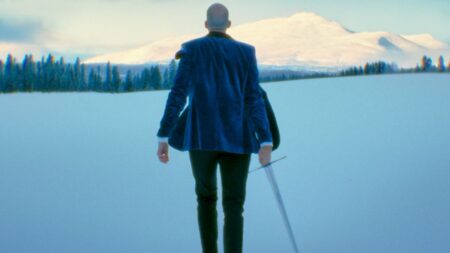

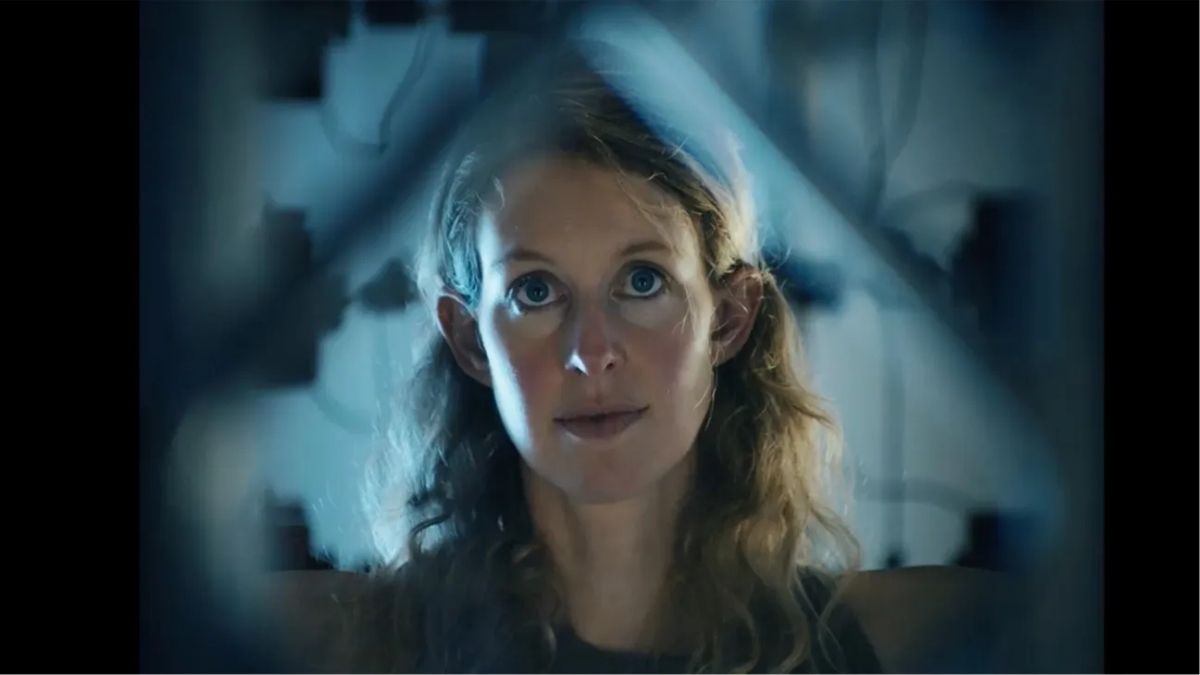
You Can See Everything, promises the latest film from A24, Nathan Fielder (The Rehearsal), and Lance Oppenheim (Primetime). How true is that sentiment? For his part, Nathan Fielder has always pushed the limits of the documentary format, such as in his “elaborate scams disguised as great business ideas” comedy series Nathan For You and its spiritual, even better successor, The Rehearsal, where he stages exhaustive rehearsals for everyday events. Through creative editing, the series have repeatedly raised the question of what can be taken at face value and what’s clever narrative construction.
With the assistance of co-director Oppenheim, Fielder brings that lingering question to the forefront. Its fulcrum is Elizabeth Holmes, founder of the health company Theranos, who was found guilty of fraud and sentenced to over 11 years in prison. By attempting to get close to its enigmatic central subject, You Can See Everything examines culpability and the rot of our current cultural moment, revealing the very limits of documentary filmmaking. In the process, You Can See Everything becomes one of the most jaw-dropping examples of the format ever made and easily one of the best films of 2026.
It’s 2023. In 34 days, Elizabeth Holmes goes to federal prison for defrauding investors over her defective blood testing machines. Holmes and her husband, Billy Evans, give documentarians Nathan Fielder and Lance Oppenheim unprecedented access to their daily lives, which eventually culminates in Fielder moving into their beach house in Southern California for the final stretch of this period.
You Can See Everything makes you question the entire documentary format.
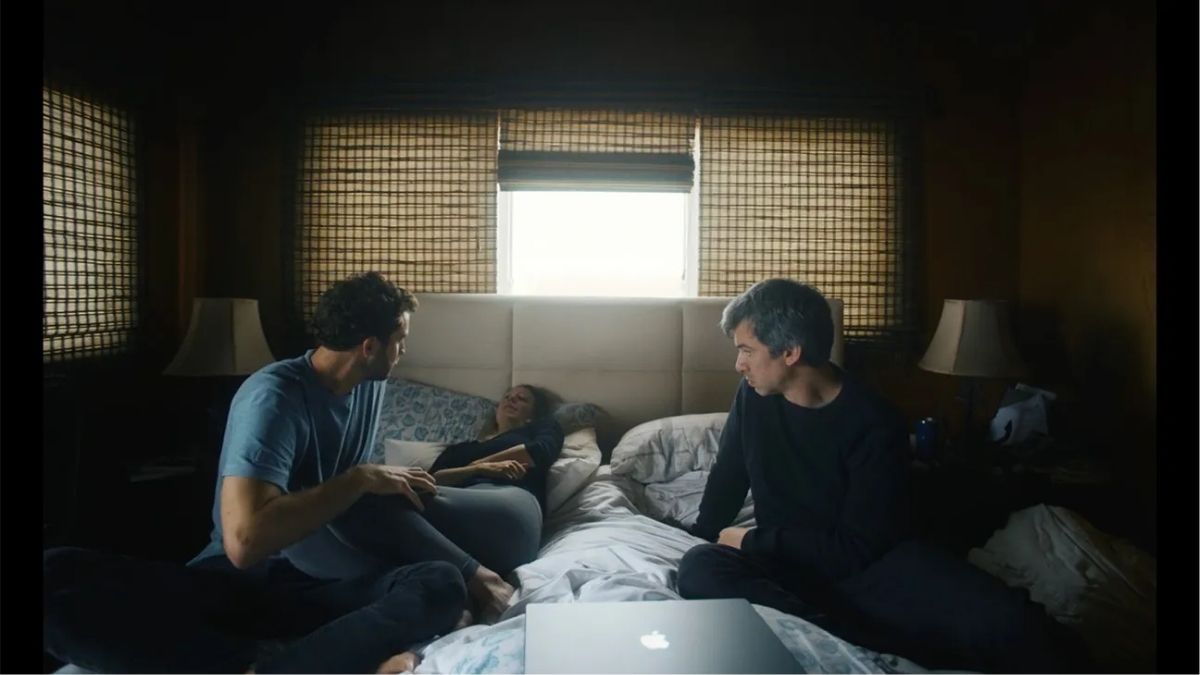
In the harshest sense, Elizabeth Holmes has been seen as a master manipulator of those around her. Through his work in the docu-comedy space, Nathan Fielder has gained a positive reputation as a manipulator himself. When these two come together, sparks fly. A significant portion of what makes You Can See Everything work so well is Nathan trying to suss out how truthful Holmes and Evans are being with him.
Nathan’s bafflement at Holmes’s evasive, or just plain odd, behavior, and Billy Evans’s, draws huge cringe laughs. It’s priceless to see Fielder baffled as Holmes claims she’s never told a lie in her life. Meanwhile, Evans acts hostile toward the crew, claims the camera equipment is interfering with the Wi-Fi, and does erratic things like watching YouTube videos at comically high speeds and rattling off unintelligible tech talk. David Bolen’s camera wisely stays intimate, capturing every micro-expression on Fielder, Holmes, and Evans’ faces to heighten the makeshift madhouse feeling.
You Can See Everything isn’t interested in merely having the audience gawk at its subjects, however. The more time we spend with Holmes, the more we begin to, against our better judgment, sympathize with her. At first, a funny moment where Elizabeth doesn’t understand what makes Abbott & Costello’s famous “Who’s On First?” bit funny turns into something strangely insightful about how her brain works.
We never view her quite as a victim, but we are invited to see her as a complex individual. But is that just another form of her manipulation? It’s an exciting question that explodes into a bigger one: How can we trust anything we see within the documentary format?
You must see You Can See Everything for yourself.

In the second half of the film, Holmes is no longer able to participate due to being incarcerated. Where this would normally be the end of another documentary, this is where the real core of You Can See Everything begins. Without its central subject, Fielder and Oppenheim are left with two parallel paths: focusing on Billy, and another approach no one in their right mind would dare reveal to those who haven’t seen the film.
For the Billy approach, what was more or less a silly “can you believe this guy exists?” examination turns into a dark journey into the mind of a sort of brainrotted “tech-bro” that increasingly sits in positions of power. Once again, my tongue must be held for fear of ruining the experience. What can be said is that Billy is a chilling microcosm of a very real type of man whose delusion, malice, and flippancy cause extensive harm. There is so much going on here that’s so hard to watch. Still, it’s impossible to look away from.
In the latter approach, Fielder and Oppenheim have to continue the narrative and reinterpret what they saw before, without Elizabeth Holmes physically there. As funny and surreal as their solution is, it obfuscates their ability to find their truth. If they’d had Elizabeth there and kept pressing forward, maybe they’d have gotten somewhere different. With a figure so notoriously unreliable, it’s in question whether that place would’ve had any more veracity. What makes You Can See Everything outstanding is that it places this notion at the forefront.
There’s never been another film like You Can See Everything.
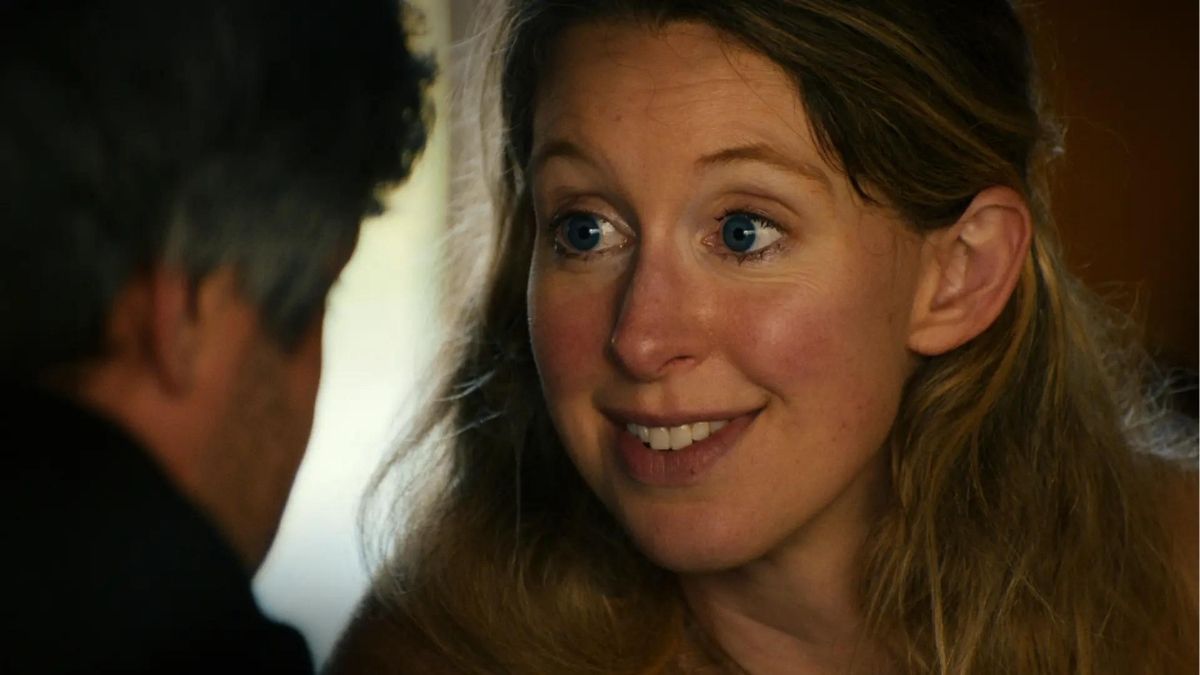
Over You Can See Everything’s epic 174-minute runtime, you can feel everything. Hilarity. Shock. Deep Sadness. Confusion. Perhaps most importantly, a feeling of guilt may even creep up. By engaging in the lives of real-life people and events in narrative form, filtered through even the apparently truthful format of documentary, we could be propagating a false narrative because the people involved could be propagating, or be buying into, a false narrative. Truly, this is a postmodern approach to documentary that’s not too dissimilar to what Digger did with media “based on real events.”
What’s apparent is that there is truth in You Can See Everything. Whether that’s truth about Nathan Fielder, Elizabeth Holmes, our own culpability, or the narrative of documentary filmmaking is in the eye of the beholder. In that way, it’s a cinematic Rorschach test. What stands out most is that there’s never been another film like You Can See Everything—an immense, perfect, cinema landscape-leveling work that keeps the audience guessing well past its final frame.
You Can See Everything is playing now in theaters everywhere.
You Can See Everything
-
Rating - 10/1010/10
TL;DR
There’s never been another film like You Can See Everything—an immense, perfect, cinema landscape-leveling work that keeps the audience guessing well past its final frame.